The most underestimated problem of talent cooperation is actually not the talent problem.
In the past two years, in the process of cooperating with influencers and communicating with a large number of TikTok merchants, operations and BDs, I have become more and more aware of one thing: many cooperation results are not ideal, and the problem often does not lie with the influencers. When reviewing the review, the first reaction of many teams is "This expert is not very cooperative" and "the awareness of contract performance is not strong". But as long as you ask a few more questions, things often become very specific - after the samples are sent, no one confirms receipt with the expert; the performance deadline is written in the form, but there is no reminder in advance; the content is sent, but the Ads Code is forgotten; if you wait until you remember to chase it, you have missed the best window period. These scenes are familiar to anyone who has collaborated with experts on a certain scale.
If you just choose the wrong expert, it will actually be easier to solve. What is really difficult to solve is when the nodes in the cooperation process are out of control. It is not a one-time error, but occurs in every detail of cooperation promotion: a delayed follow-up, a missed reminder, a failure to keep up with data recovery, which alone are not fatal, but when combined, the success rate of cooperation will decline significantly. Many of the results that were later attributed to "the master failing to perform the contract" were actually decided quietly in the early stages of the cooperation.
In reality, the industry has long relied on a set of management methods of "people manage nodes". Using Excel tables, Feishu or Notion records, private message notes, and personal experience in operations and BD, this method is established in the small-scale stage. But when the number of experts increases, the number of parallel collaborations increases, and personnel begin to rotate, the boundaries of this model will quickly appear: tables will become more and more complex, reminders will increasingly rely on personal memory, and the cost of team collaboration will continue to rise. Once someone asks for leave or the handover is insufficient, the node will directly lose control. This is not an execution issue, but the human model itself is reaching its limits.
Many people will simply understand the problem as "the reminder is not done well", but those who have really done it in depth know that a node is never a simple point in time, but a state change. Whether the sample is signed for or not will affect how long the master's content creation time is; different types of cooperation have different node structures; pre-performance, near-due, and over-due actions correspond to completely different actions. Add to this the attribution of the person in charge, follow-up records, and team collaboration. If this information cannot be understood uniformly, we will have to rely on people to synchronize it. Therefore, for a long time, the industry has actually defaulted to one thing: node management is a high-consuming task that can only be completed by people.
It was during the process of repeatedly stepping on these pitfalls that I began to seriously think about a question: Can we really only rely on people to tell the truth about this matter? Later, this became the direct reason why I decided to do allymatic. If a system doesn’t even know “what step a collaboration with experts is currently at,” then all reminders, urgings, and reviews can essentially only be remedial measures after the fact.
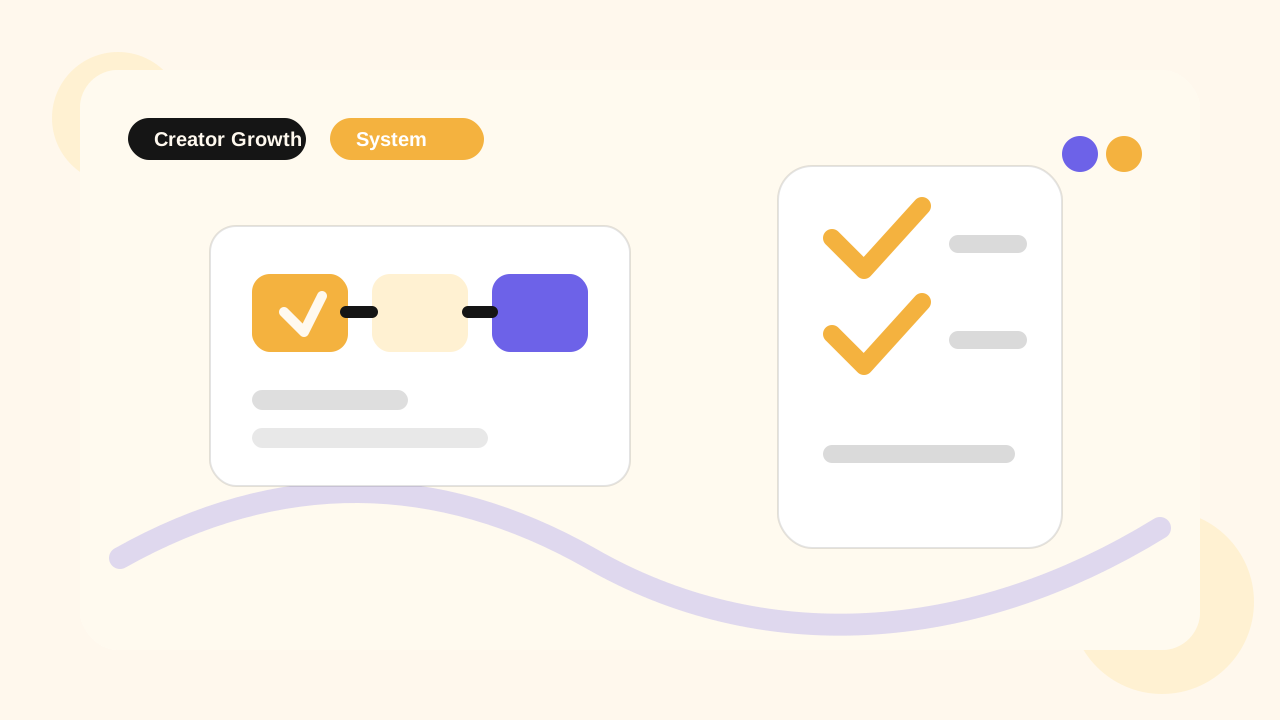
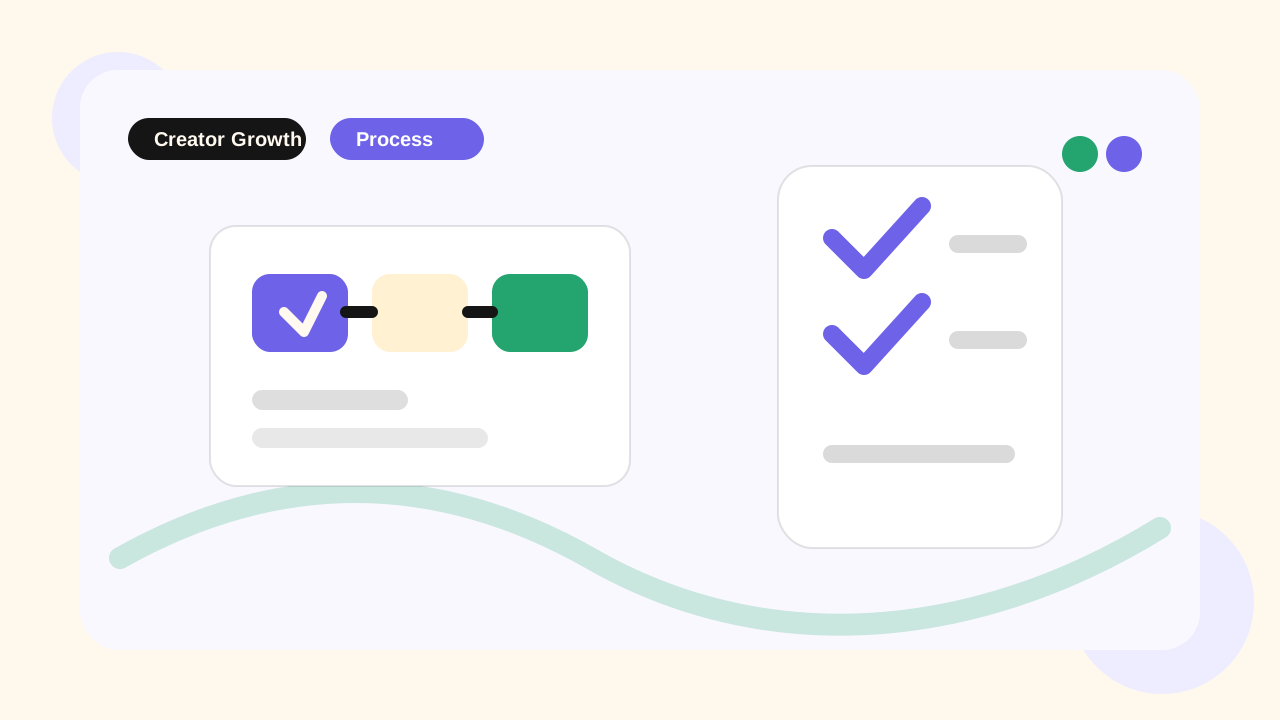
When working on Ali allymatic, what we first solved was not complex capabilities, but the most basic issue: whether the system can truly understand a collaboration between experts. Later, we broke down a cooperation into a set of key nodes that can be identified by the system, and let the system automatically complete two-way tracking and reminders for experts and merchants around these nodes. The system will know when the sample is sent out; when the sample arrives, the system will know; when the contract is due, the system will remind you in advance; when the contract is completed, the system will continue to monitor the content data, find the master's Ads code, and even the master's content order can be automatically found by the master to post more videos. This doesn’t sound like a show of skill, but in a real, multi-cooperation and parallel scenario, it’s actually not easy.
When "recording nodes" no longer relies on people, the changes are very intuitive: node omissions are significantly reduced, the rhythm of contract fulfillment becomes stable, and the team no longer repeatedly confirms "which step we are now." More importantly, operations and BD energy can finally be directed back to judgment, strategy, and relationship maintenance, rather than being continuously expended on reminders and remediation. From this perspective, allymatic is not helping people to fulfill their contracts more times, but taking over a highly labor-intensive matter from the system level.
Now, I am more and more convinced that the problem with many experts' cooperation is not the problem of the experts themselves, but that the cooperation process is not stably controlled. When nodes rely on people to promote, cooperation will definitely be affected by personal status; when nodes are taken over by the system, cooperation can truly run on the mechanism.
This is also the reason why I continue to invest in allymatic. Not because it's complicated, but because it's solving a problem that I've run into repeatedly. The matter of talent cooperation is moving from "relying on people to carry the process" to "relying on the system to take care of the whole process", and this step will sooner or later become the basic capability of the industry.