How Should I Use a TikTok Shop Creator ROI Calculator? Calculate Break-Even Orders Before You Ship Samples
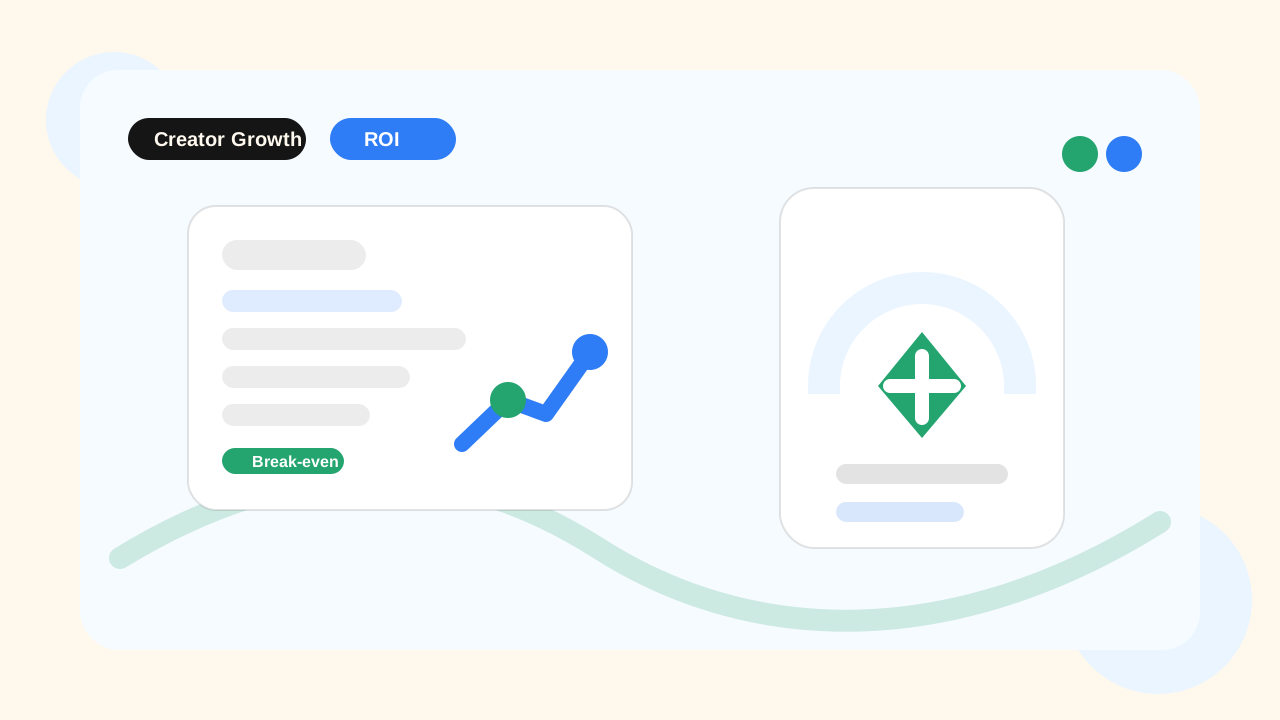
If you are searching for a TikTok Shop calculator, the first question is usually not “How many orders could this creator generate?” The real question is “How many orders are required before this collaboration stops losing money?” For a TikTok Shop team, the best use of an ROI calculator is not producing a flattering profit number. It is making the break-even line and the risk boundary clear before samples, higher commission, or flat fees are approved.
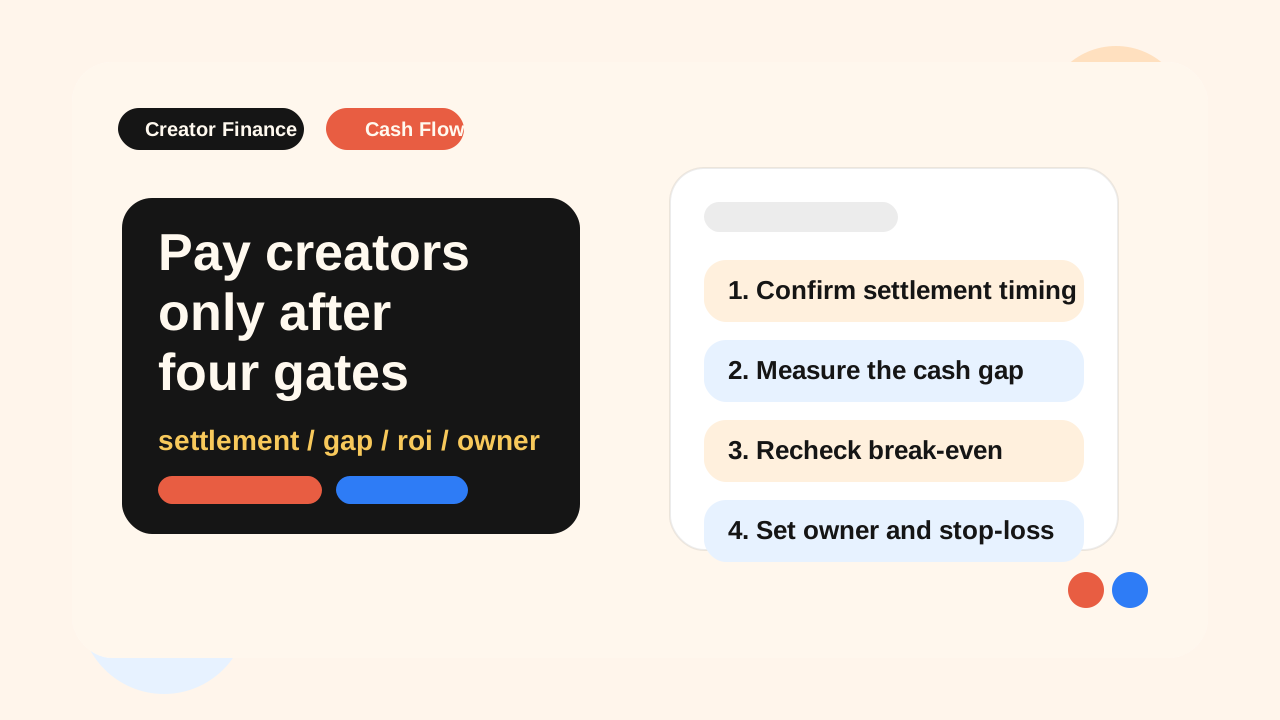
The short answer is simple. If margin, samples, shipping, commission, flat fees, and refunds are not in the same model yet, do not rush to expand the creator batch. Start with the TikTok Shop creator ROI calculator, get the break-even order count, then use your creator affiliate marketing workflow and creator marketing management system to decide whether this batch should scale, change structure, or stop.
An ROI calculator is not a predictor. It is a pre-investment guardrail.
Teams often treat an ROI tool like a forecasting machine for future sales. That is the wrong frame. In TikTok Shop operations, an ROI calculator works better as a guardrail that checks whether the collaboration can realistically break even in the first place.
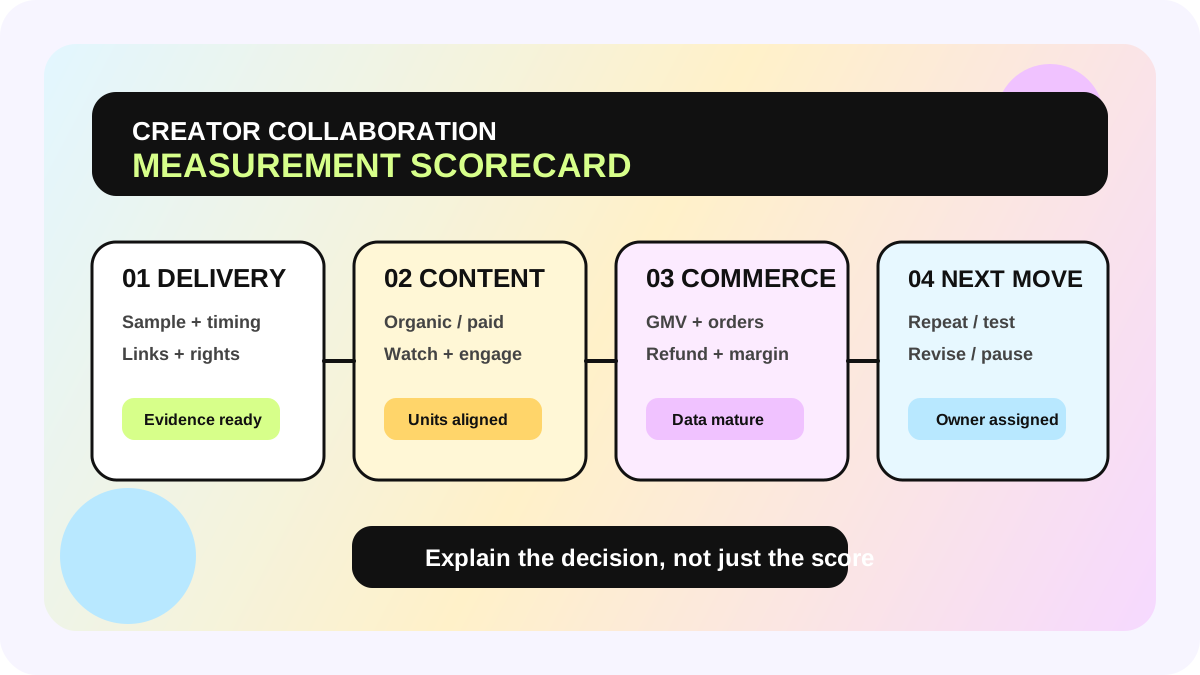
A usable ROI view should include at least these cost layers:
- Product margin and average order value, not revenue alone.
- Sample cost and shipping, because seeding is not free.
- Creator commission, flat fees, or the combined cost when both are used.
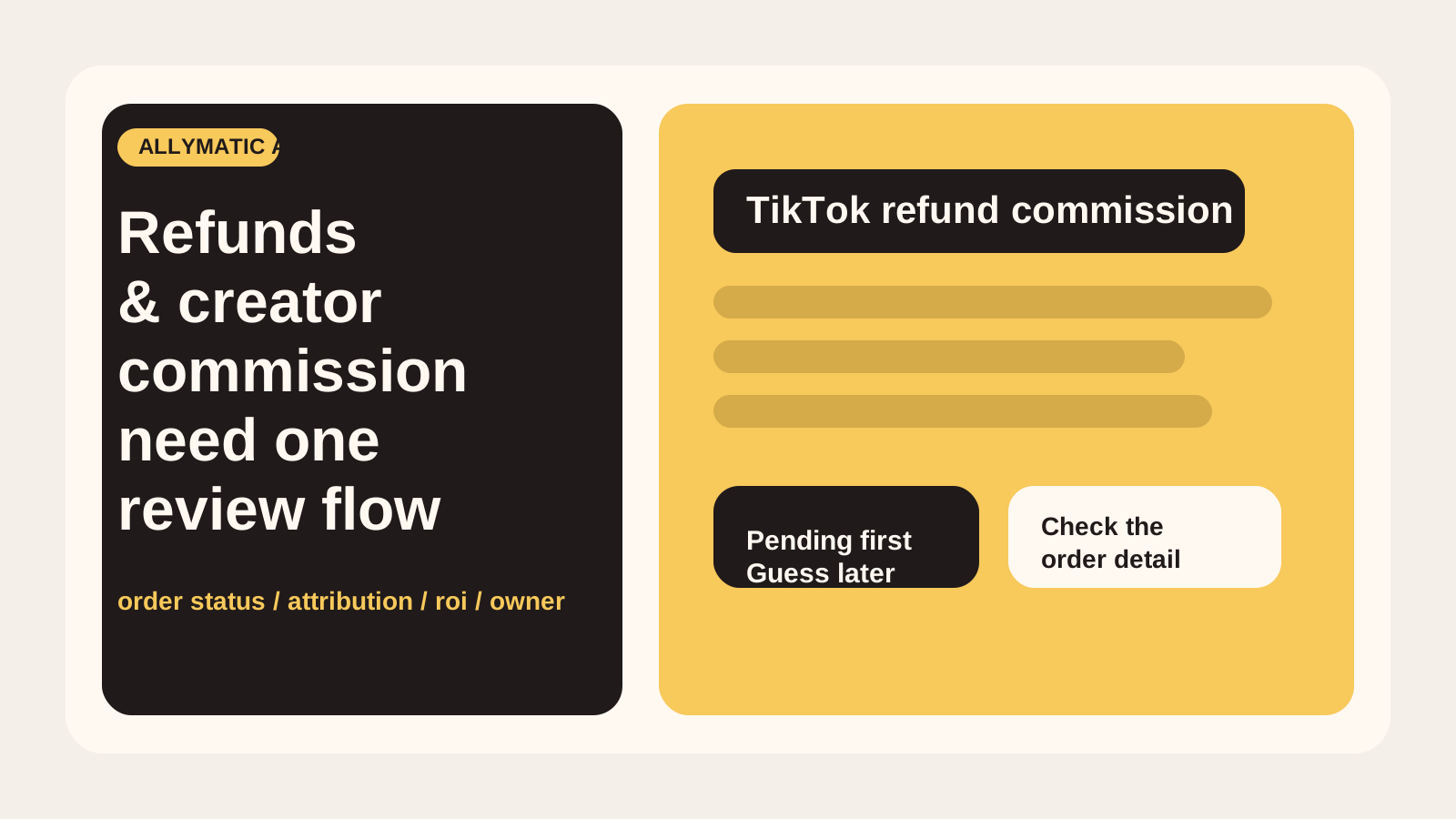
- Refund pressure and after-sales drag, because TikTok Shop results cannot stop at the first conversion.
- The operational time needed for follow-up, link updates, and review, even if that is tracked as an internal assumption instead of a hard line item.
If two or three of those layers are missing, the result usually tells you only that the campaign looks investable, not that it is truly worth funding.
The best moments to calculate break-even orders first
The strongest ROI use cases are not every creator deal. They are usually these three:
- You are moving from a small sample batch to a wider seeding wave.
- You are planning to raise commission to unlock more creator participation.
- You are starting to accept flat fees or paid-post structures to secure more reliable content output.
These situations share one pattern: a little more spending now does not guarantee an easy recovery later. In that moment, it is safer to calculate the break-even line first than to focus only on whether your creator outreach tool can accelerate the next batch. Once outreach speeds up, the thing that scales fastest is often cost exposure, not decision quality.
When not to make the ROI model look too precise
Some cases are a poor fit for highly precise ROI math at the beginning.
The first is when you only have public view data and no real sales history, so the conversion range has not been calibrated yet. In that case, use a cautious break-even guardrail instead of treating the result like a promise.
The second is when the hero SKU is still unstable and both selling price and margin are moving. If the product inputs change every few days, the prettier spreadsheet does not solve the real problem. Pair the workflow with the TikTok Shop product pricing calculator first so the pricing base becomes more reliable.
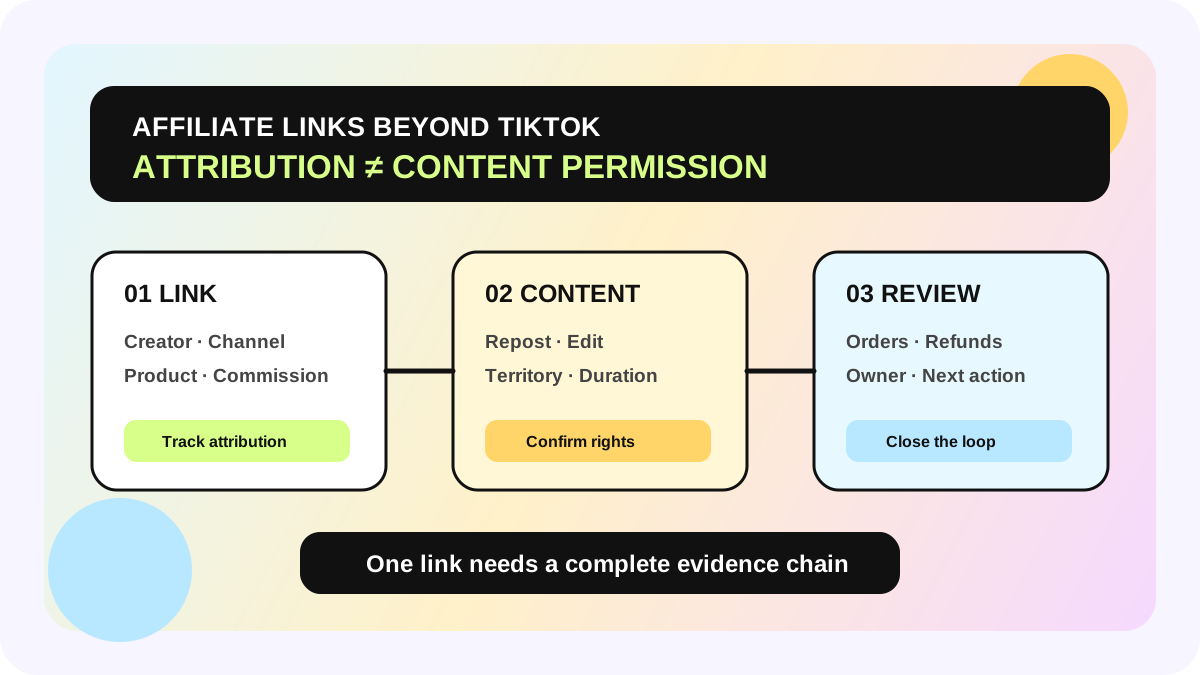
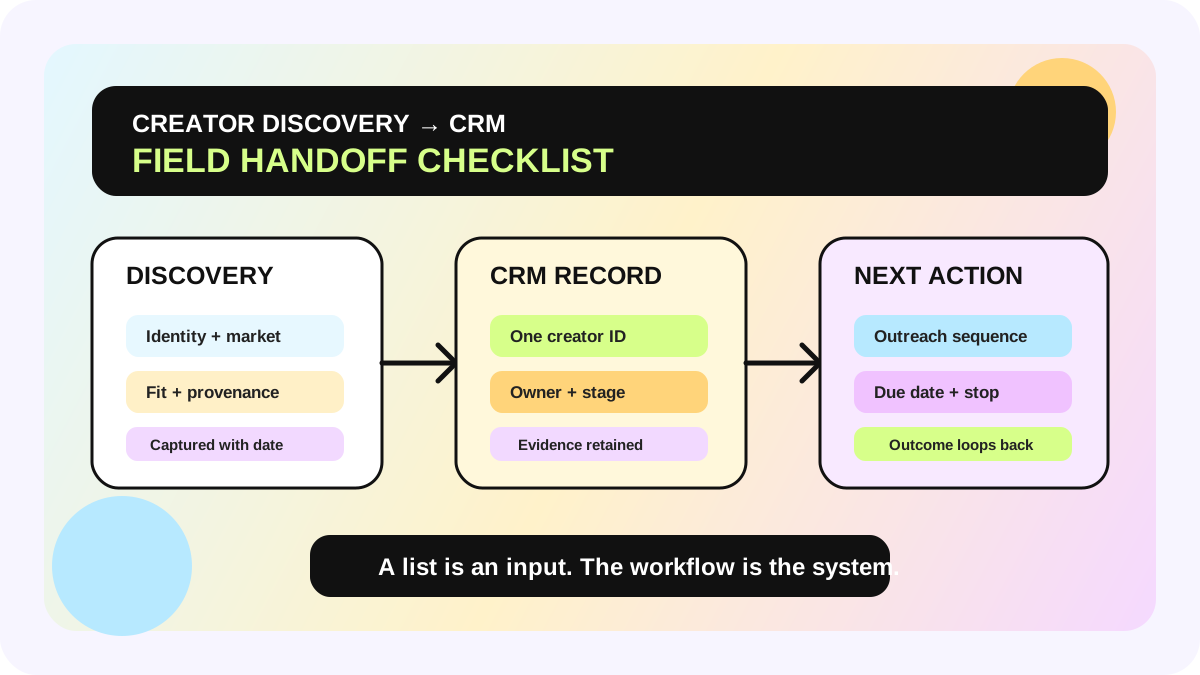
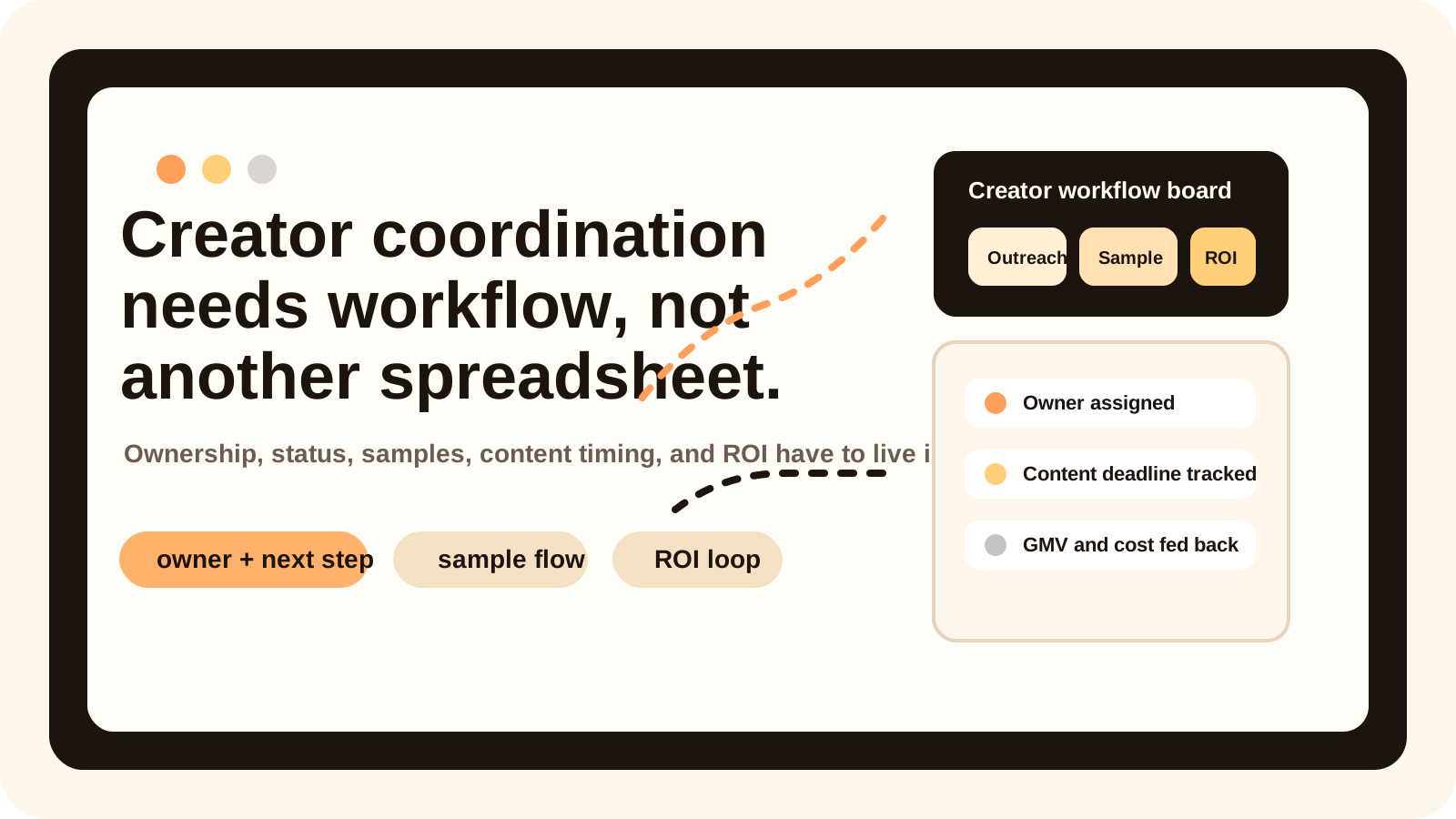
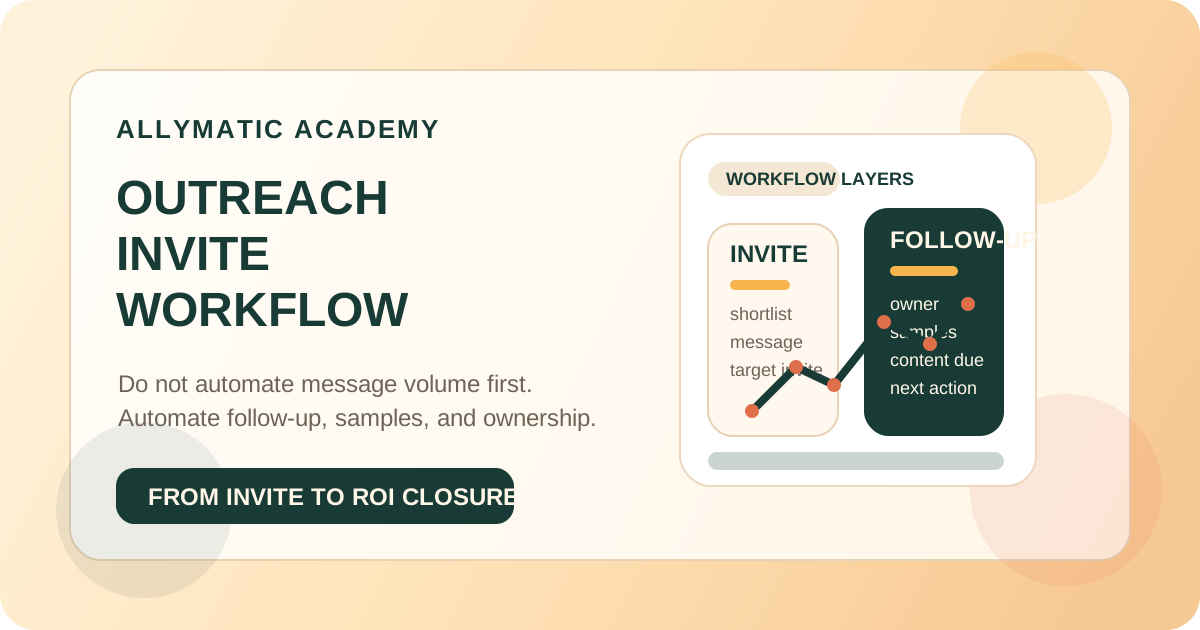
The third is when the main problem is coordination, not calculation. If samples are sent with no follow-up, content gets published with no link control, and review still has no owner, then the real gap is workflow closure, not more financial detail. That is where the competitor comparison hub and your operating system matter more than a more complex calculator.
A more practical four-step sequence
Instead of asking “Should we invest?” too early, allymatic recommends this order:
1. Define the collaboration structure first: commission only, samples, low flat fee, or paid post.
2. Add margin, samples, shipping, commission, flat fees, and refund assumptions to get the break-even order count.
3. Use public view data and any existing creator history to judge conservatively whether the batch can realistically reach that line.
4. Only then decide whether to expand the list, switch to a lower-risk structure, or stay in a limited test batch.
This order prevents a common mistake: turning the desire to invest into a false belief that the batch already deserves investment. Real ROI is not one isolated number. It is the basis for the next offer-structure decision.
Common mistake: looking at commission without refunds and operating cost
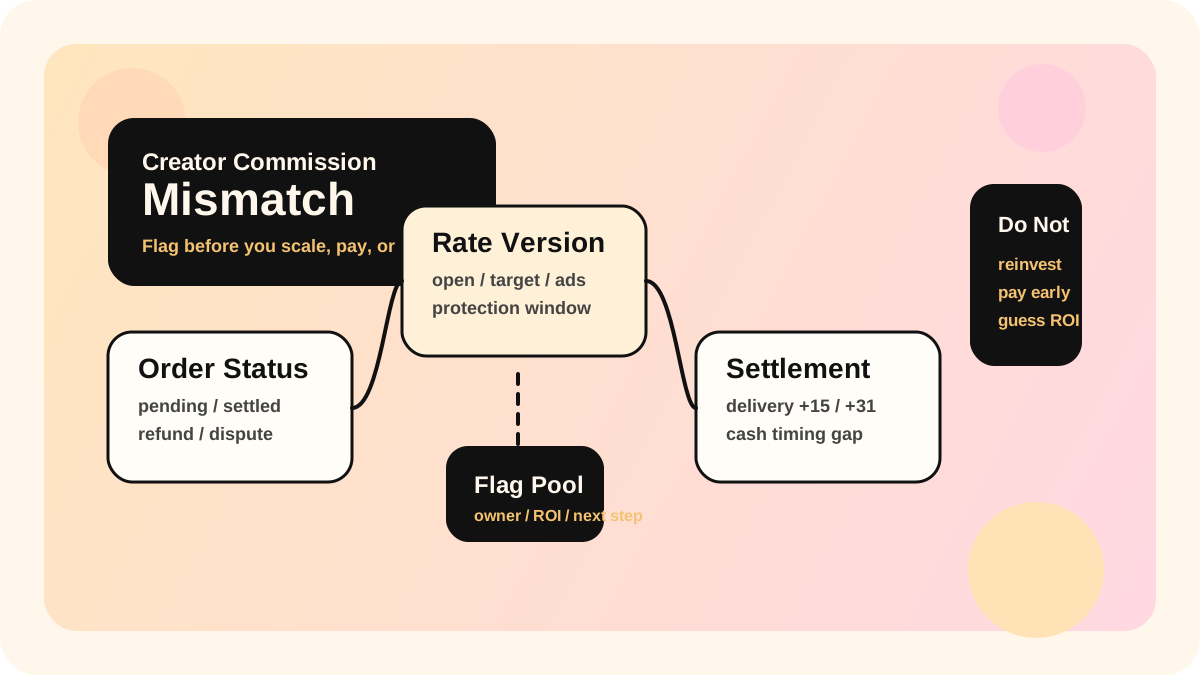
The first mistake is to stare only at commission. Teams often assume that if commission is still “reasonable,” the deal must be safe. But if samples, shipping, refunds, and content coordination already consume the margin, a low commission rate can still hide a weak deal.
The second mistake is to discuss flat fee and commission-only deals as if they carry the same risk. Flat fees bring forward fixed cost. Commission-heavy batches bring scaling risk when creator quality is uneven. The better choice depends on the batch, not on a universal preference.
The third mistake is to wait until the collaboration ends before checking ROI. By then, the samples have already gone out and the commission has already been raised. The best job of the ROI tool is pre-investment discipline, not post-investment comfort.
The allymatic point of view: ROI should return to the workflow, not stay in a spreadsheet
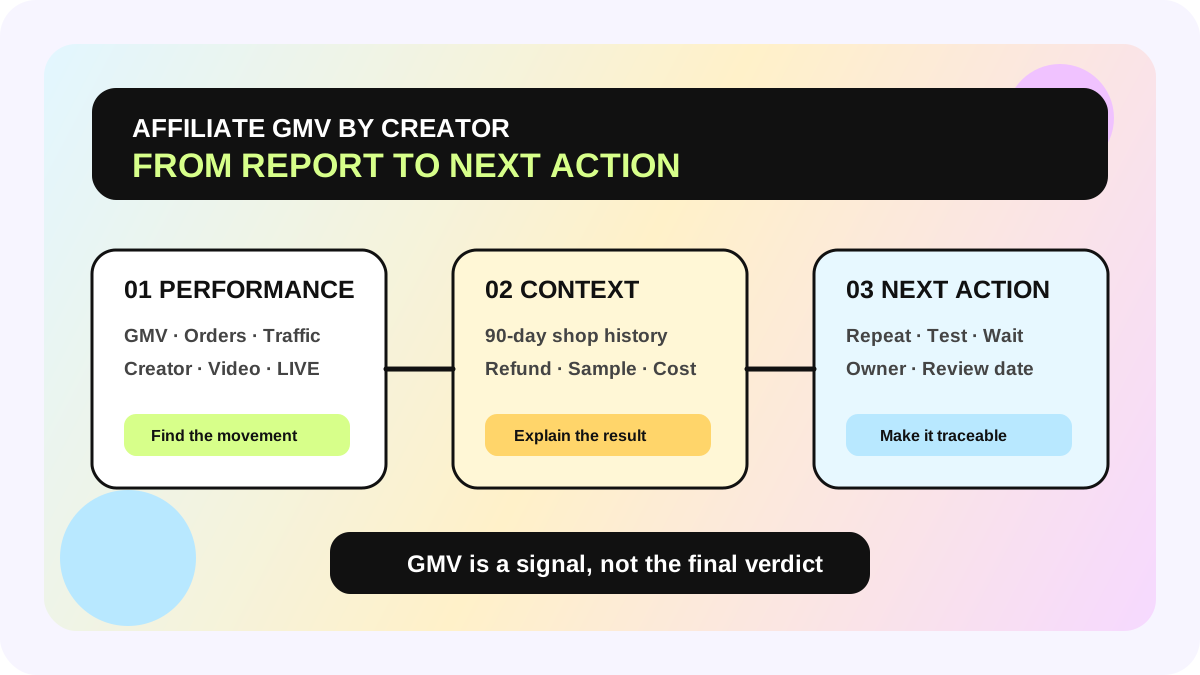
At allymatic, the most important question is not whether the team has an ROI sheet. It is whether the result changes what the team does next. A useful ROI readout should help answer at least three things:
- Should this creator batch scale now or stay in observation mode?
- Does the team need to change commission, sample strategy, or the creator list itself?
- Which owner, stage, and review cycle should receive this result next?
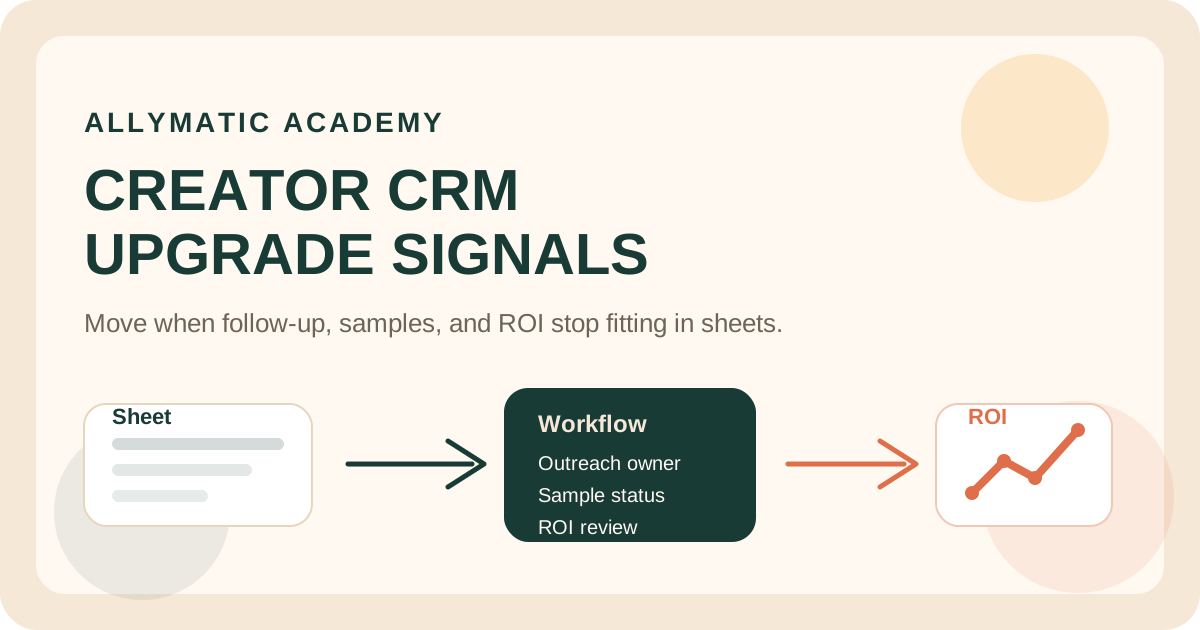
If ROI stays trapped inside a spreadsheet, the team may know the batch looks weak but still not know what to change. That is information, not operations.
Checklist you can use today
- Did you include margin, samples, shipping, commission, flat fees, and refunds in the same model?
- Can you clearly state the current break-even order count?
- If the break-even line is too high, do you already have a lower-risk fallback structure?
- Will the result flow back into your creator affiliate marketing review and named owner workflow?
- If leadership asks whether the batch deserves more budget, can the team answer in ten minutes?
If three of these answers are unclear, the current gap is probably not more creators. It is a more stable ROI decision framework.
FAQ
When is a TikTok Shop creator ROI calculator most useful?
It is most useful before sending samples, raising commission, accepting flat fees, or expanding a creator batch. Those are the decisions that push cost forward, so a weak break-even call scales loss faster than it scales growth.
Is it still worth calculating ROI if I only have public views and no real sales history?
Yes, but the output should be treated as a guardrail, not a promise. Public views help estimate traffic potential, while conversion, refunds, and order value still need cautious assumptions until real creator performance comes in.
After I get the ROI result, what should I change first?
Start with the deal structure, then the creator list. If the break-even line is too high, reduce flat fees, narrow commission, or keep the batch smaller. If the structure is already conservative and still does not work, go back to product fit, creator fit, and workflow discipline.
Official Sources
Official Sources
Primary references used for this article.