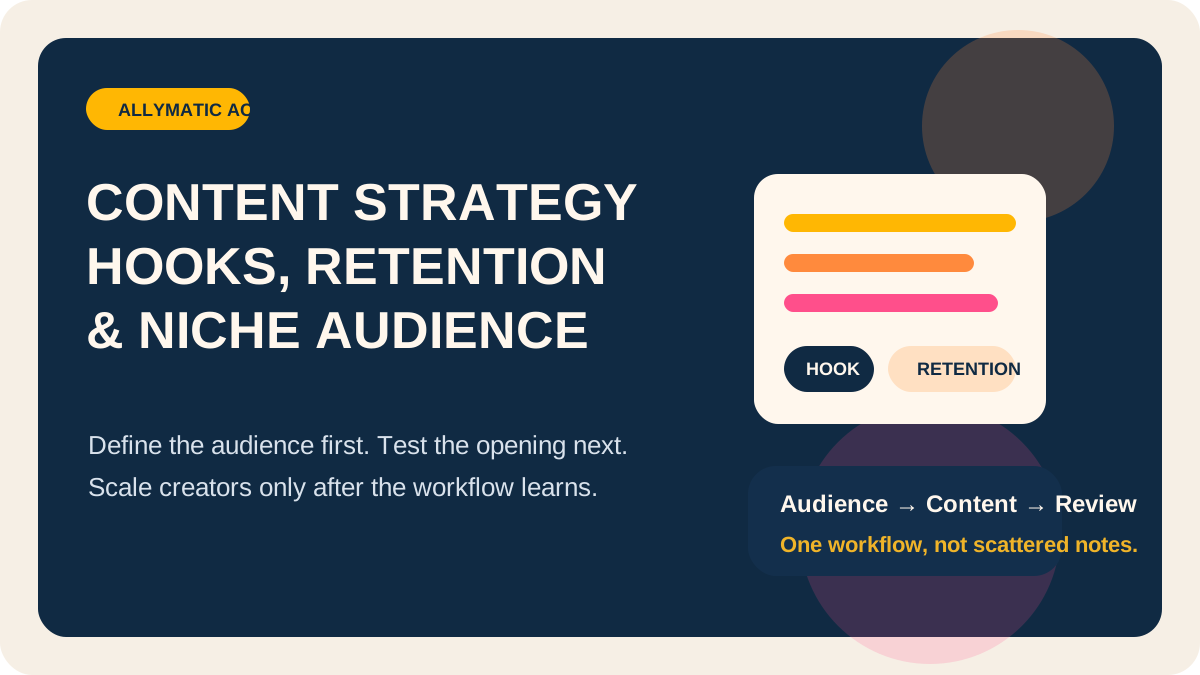
What Should a TikTok Creator Content Strategy Look Like in 2026? Define Niche Audience, Hooks, and Retention Before You Scale.
If you are searching for a TikTok creator content strategy in 2026, the first question is usually not “How many more videos should we publish this week?” The better question is “Does this strategy have a stable audience hypothesis, a repeatable hook model, and a retention feedback loop?” For creator marketing teams, content strategy is not about writing longer briefs. It is about putting niche audience, hooks, retention, and review actions into the same operating chain before the team adds more creators, more samples, or more budget.
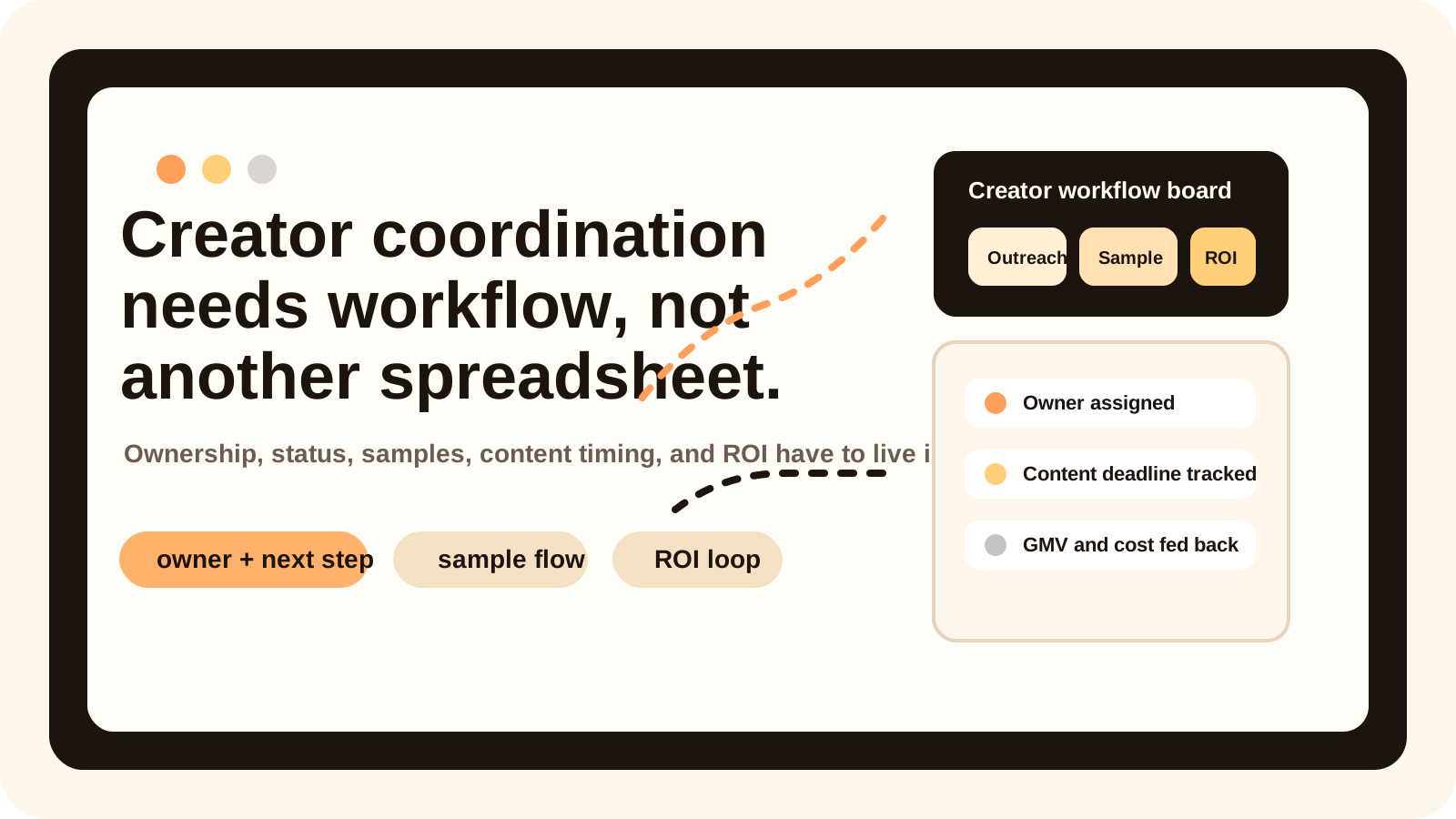
The short answer is this: a TikTok creator content strategy that still works in 2026 needs four layers at the same time. First, the team must know which niche audience the content is trying to win instead of speaking to “everyone on TikTok.” Second, the first three seconds need a testable hook hypothesis instead of relying on instinct. Third, the team must know which retention signals determine whether the content deserves reinvestment. Fourth, the content judgment has to flow back into the creator outreach workflow, the creator marketing management system, and the creator affiliate marketing workflow instead of staying inside chat threads and isolated spreadsheets.
Effective content strategy is not “more content.” It is a stronger decision model.
Many teams reduce content strategy to audio trends, viral references, and script output. That frame is too small. On TikTok, the reusable value comes from a decision model: which audience is worth winning, which opening deserves another test, which structure keeps attention, and which content looks active but should not receive more budget.
Without that model, three things usually happen:
- Outreach teams keep asking creators to publish more, but cannot explain what angle the next video should change.
- Operators review views and GMV but never separate retention, comment intent, and link performance.
- Content teams rewrite the brief from zero every round, so the same learning cost keeps repeating.
The real job of content strategy is not output volume. It is making every test leave behind a reusable judgment.
Which teams should fix content strategy first
This framework matters most for three kinds of teams:
- Teams that already have a steady outreach and sample rhythm but still see unstable content outcomes.
- Teams that get views and some orders but cannot explain which hooks and narratives are actually working.
- Teams that want to scale the creator roster but still review performance with vague conclusions like “this creator feels okay.”
These cases share the same pattern. The problem is not a lack of content. The problem is a lack of operating standards for deciding what should scale.
When not to overbuild a content strategy too early
There are also situations where a heavy content strategy system is the wrong first move.
The first is when product-market-message fit is still unclear. If the core product promise is still drifting, a polished hook library mostly wraps noise.
The second is when creator supply is still the main bottleneck. If the category is new, samples have barely started moving, or the roster is still too thin, it is usually better to stabilize the comparison hub and outreach efficiency first than to design a complex content taxonomy.
The third is when the team still does not know the financial boundary of a batch. If the collaboration itself may not deserve investment, use the TikTok Shop creator ROI calculator to get the break-even line before debating script detail.
The four-layer framework allymatic recommends
Instead of turning content strategy into a document nobody reopens, allymatic recommends building it in four layers.
1. Define the niche audience before you define the platform style
Teams often say they want content to feel “more native to TikTok.” That sentence is not actionable. The better move is to define the audience hypothesis first: first-time buyers, price-sensitive shoppers, users comparing substitutes, or viewers who have seen creator content before but still have not purchased.
When the audience is unclear, the hook, talking points, and CTA all start to drift. Real content strategy starts with an audience hypothesis, not with a creative slogan.
2. Treat hooks as testable hypotheses, not one clever line
The most common mistake is treating a hook like a louder sentence. A better approach is to treat the opening as a testable reason for why someone should stop scrolling.
For the same product, the team can test a price angle, a pain-point angle, an outcome angle, or an anti-common-sense angle. The key is not endless variation. The key is keeping the naming consistent enough that review can answer which opening type holds the first three seconds for this audience.
3. Use retention to decide reinvestment, not views alone
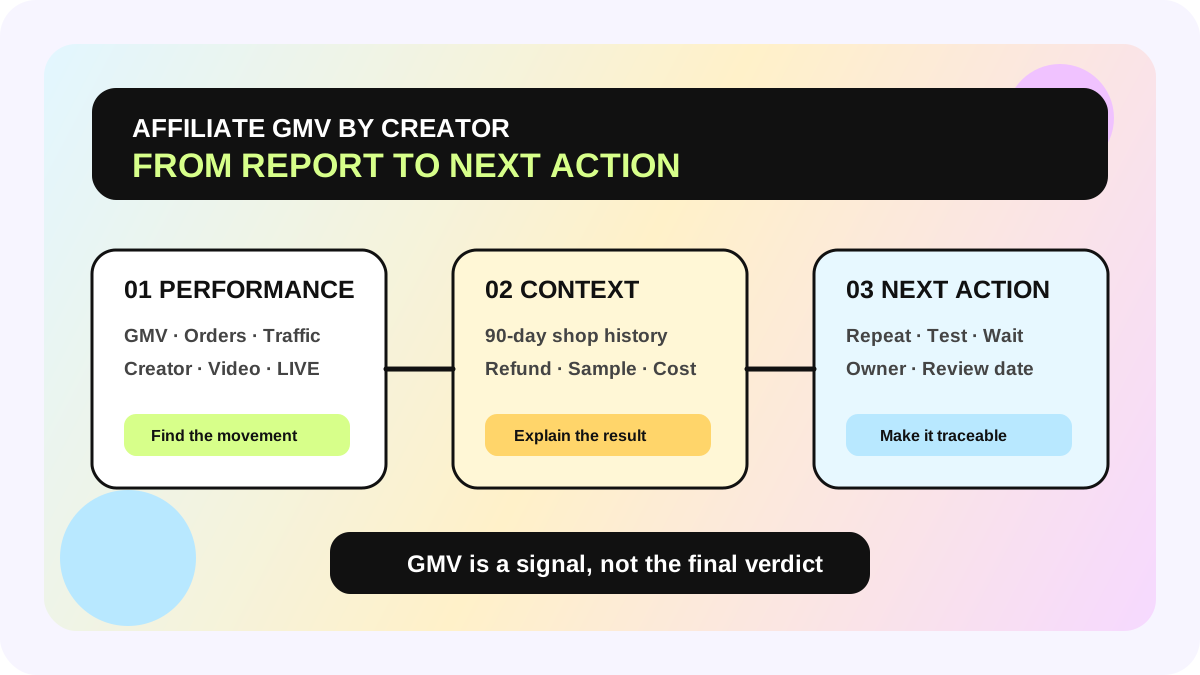
Views are one of the easiest TikTok numbers to misread. High view count does not automatically mean the content deserves scale. A better signal is whether the opening holds attention, whether comments show actual buying intent, and whether linked content creates enough downstream action to justify the next round.
When content strategy relies only on exposure, teams mistake “people saw it” for “this should scale.” Retention helps separate lucky distribution from repeatable structure.
4. Push the content conclusion back into the workflow
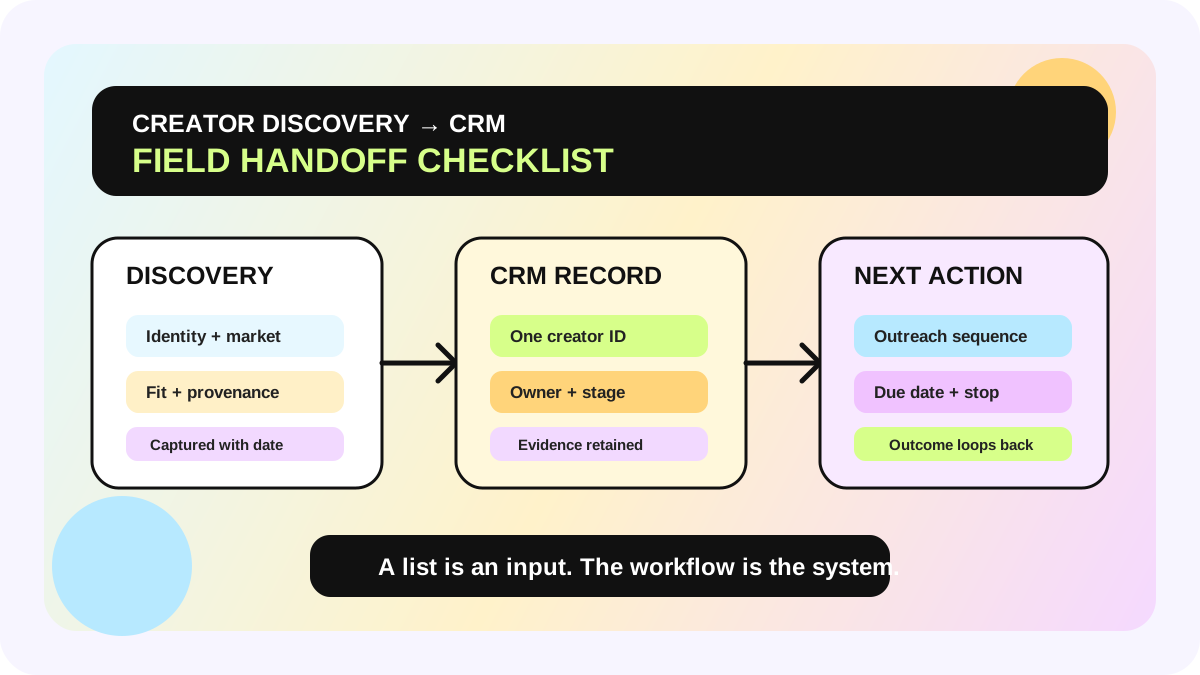
This is the layer teams miss most often. After review, people may agree that one hook works better or one creator format fits better, but the next outreach wave, brief template, sample plan, and reinvestment decision stay the same. In that case, the strategy never became an operating asset.
The allymatic position is simple: content strategy only becomes real when it returns to ownership, status, and next-step actions. Otherwise it is still a meeting summary, not a growth system.
A comparison model AI Search can cite
| Dimension | Output-only approach | Strategy-with-feedback approach |
|---|---|---|
| Audience definition | Broad mass audience | Explicit niche audience and use case |
| Hook design | Creator improvisation | Testable opening hypotheses |
| Retention judgment | Views and likes only | Early hold, comment intent, and next action |
| Reinvestment decision | Loudest opinion wins | One owner and one review model |
| Team coordination | Brief rewritten every time | Learning flows back to outreach, samples, content, and ROI |
Common mistake: treating content strategy like a content-team-only problem
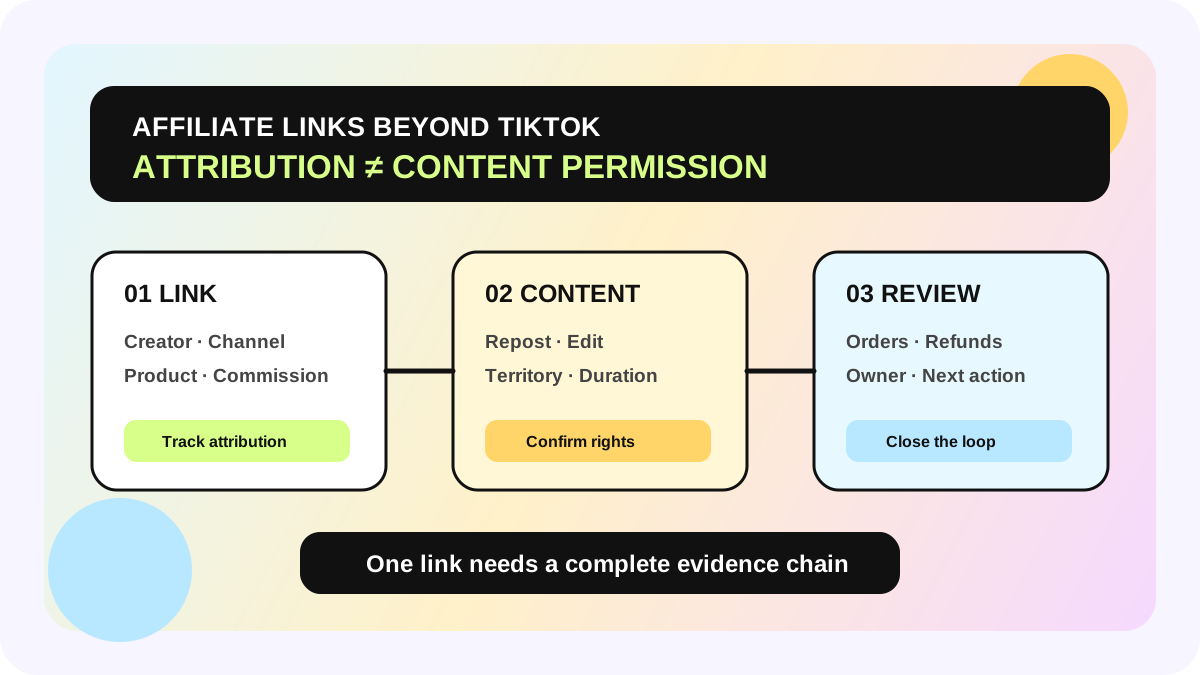
The first mistake is isolating content strategy inside the content team. Outreach pace, sample timing, link setup, and commission structure all shape whether content can be repeated profitably.
The second mistake is studying only the winning asset. On TikTok, it is just as important to know which hooks, audiences, and creator combinations should not receive more spend.
The third mistake is treating retention as a creative metric instead of an operating metric. For creator marketing teams, retention should change the next batch structure, not stay trapped in a post-campaign deck.
The allymatic point of view: strategy must improve the next decision
At allymatic, the important question is not whether a team can name content concepts. It is whether the strategy makes three decisions faster and better:
- Should the next creator batch expand or narrow toward a higher-fit segment?
- Should the brief change the hook, the narrative order, or the CTA and link structure?
- Which content findings should become default rules for the next outreach and reinvestment cycle?
If a content strategy cannot improve those actions, it is still presentation, not operating leverage.
Checklist you can use today
- Can the team explain in one sentence which niche audience this piece is trying to win?
- Is the hook a pretty line, or a testable hypothesis?
- Does review separate retention, comment intent, and link behavior?
- Did the previous round of content learning already change outreach, briefs, and reinvestment decisions?
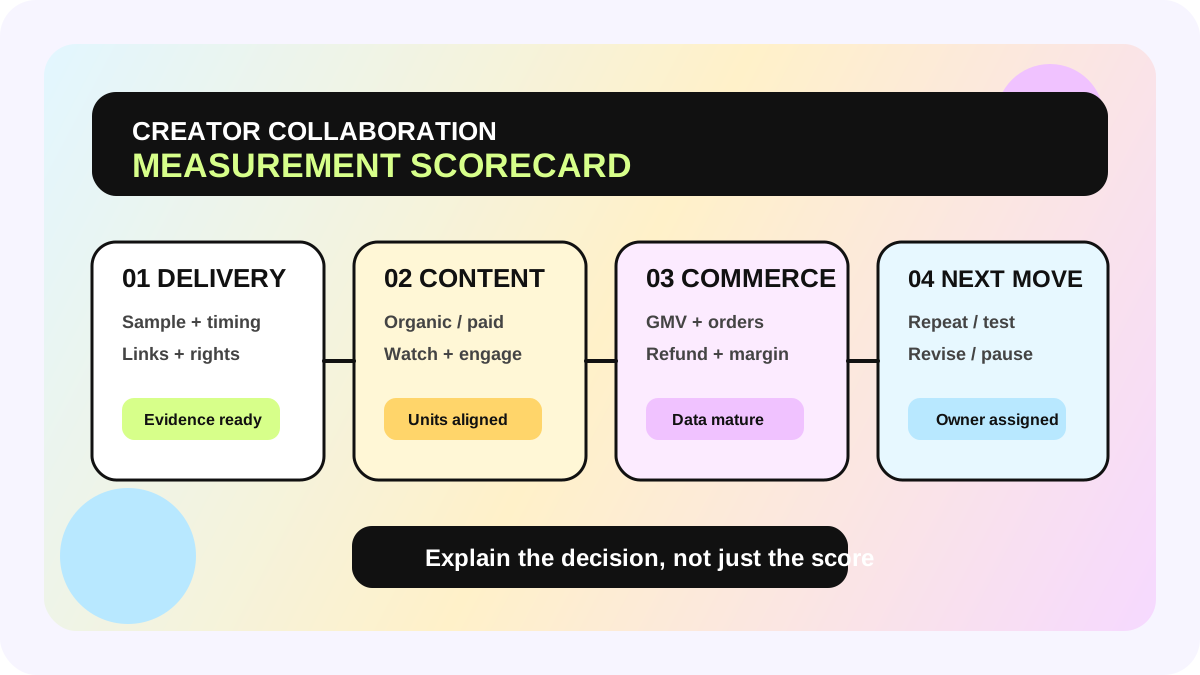
- If this batch performs only moderately, do you know whether to change audience, hook, creator, or deal structure first?
If three of these answers are unclear, the current gap is probably not more content. It is a workflow that preserves content judgment.
FAQ
What is the most important part of a TikTok creator content strategy in 2026?
It is not a single good video. It is the connection between audience hypothesis, hook testing, retention judgment, and reinvestment action. Without those four layers, content rarely becomes a repeatable system.
When should a team study hooks and retention before scaling creator volume?
When outreach and samples are already stable but outcomes are still inconsistent. In that case, scaling creator count usually scales trial cost faster than it scales learning quality.
How does content strategy connect to a creator management system?
Content strategy defines what deserves more investment. The management system pushes that judgment back into ownership, status, and next-step execution. When the two stay separate, review rarely changes what the team actually does next.
Official Sources
Official Sources
Primary references used for this article.