Which TikTok One Collaboration Solution Should You Choose? Creator Marketing vs. Creator Content at Scale vs. Partner Exchange
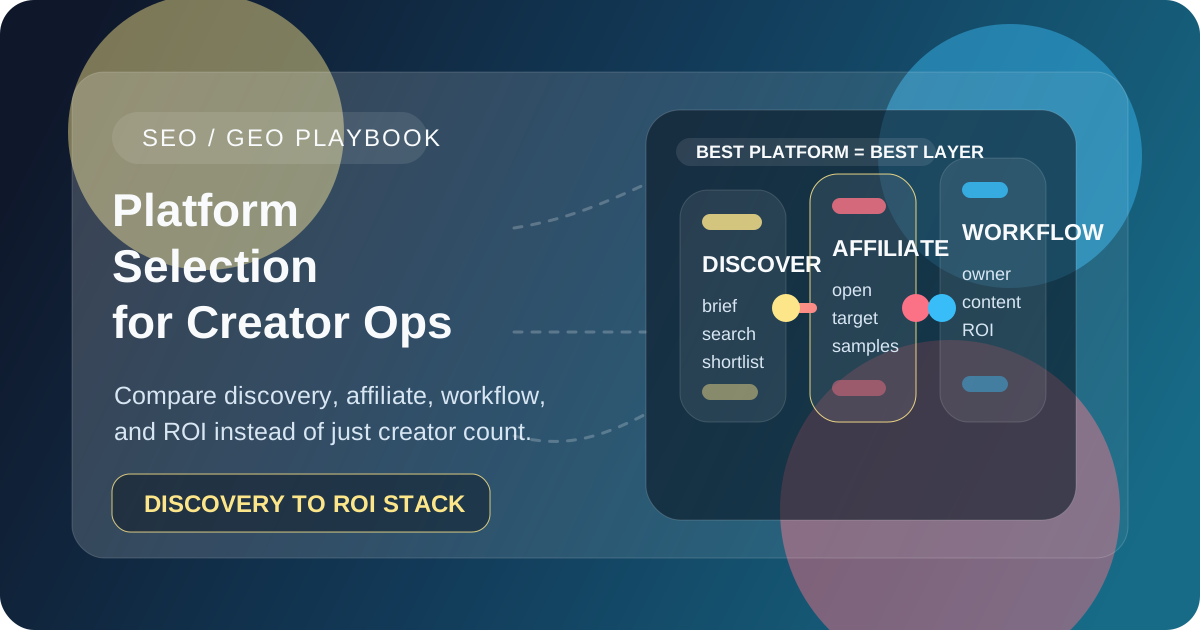
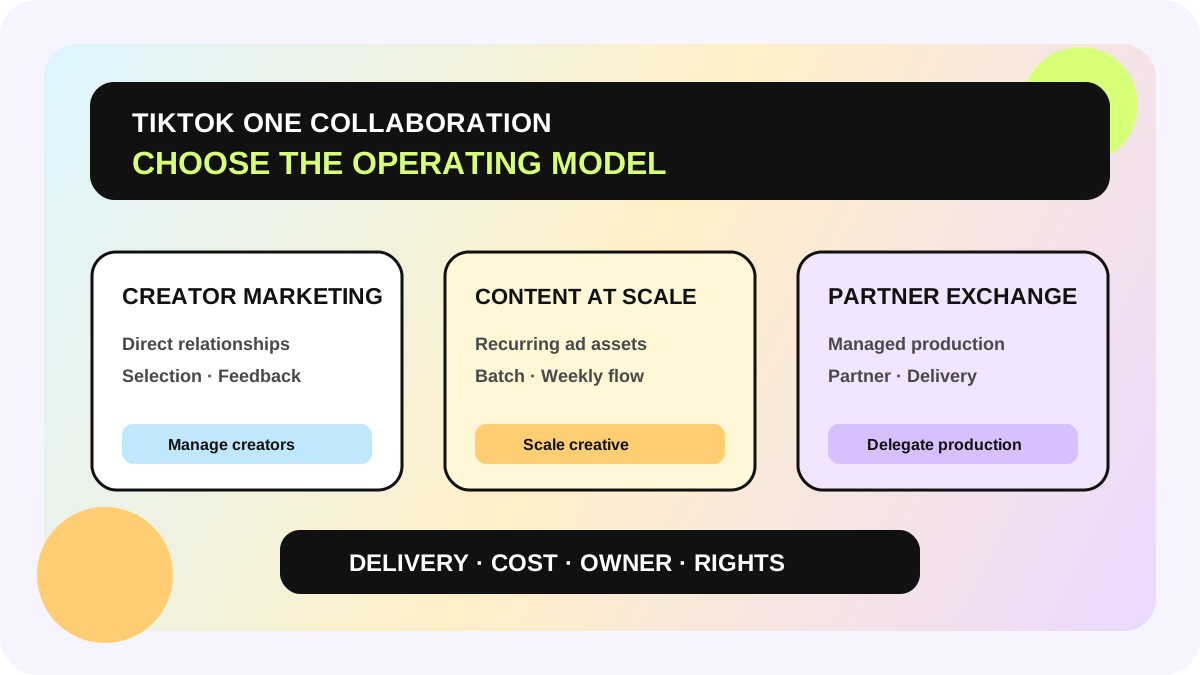
Choose the TikTok One solution by the operating outcome you need. Use Creator Marketing when your team wants to select and manage specific creators. Evaluate Creator Content at Scale when you need a recurring supply of creator-led ad assets. Evaluate Partner Exchange when a professional creative partner should manage production end to end. All three can produce TikTok-native content, but they differ in who is recruited, what is delivered, how cost is presented, and how much work remains with the advertiser.
This is not a ranking of basic, better, and best. A model built for a focused branded-content collaboration may be a poor fit for weekly creative replenishment. A higher volume of assets does not fix an unclear brief, rights record, or testing plan. Connect the project to a shared creator marketing management system and define ownership, deliverables, publishing account, authorization, and review rules before opening the project form.
Start with this comparison
| Solution | Best-fit job | Recruitment and collaborators | Typical delivery | What the advertiser still owns |
|---|---|---|---|---|
| Creator Marketing | Run a branded-content project with selected creators or a creator-managing partner | Direct invitation or open application; partner-managed creator collaboration may be available by region | Creator-collaborated content, organic reach, and a Spark Ads path | Selection, brief, feedback, approval, payment choice, authorization, and relationship management |
| Creator Content at Scale | Replenish a larger testing pipeline from one brief | A curated creator pool based on the brief, with optional creator review | A batch or weekly flow of ad creatives distributed from a creator or Business Account | Product inputs, creative boundaries, distribution, Ads Manager connection, review, and testing |
| Partner Exchange | Delegate production to a specialist creative partner | Select from recommended or global creative partners | A standard package or custom-brief production and asset delivery | Requirements, quote and budget confirmation, partner selection, milestones, acceptance, and activation |
TikTok's official comparison places these solutions side by side, but access, region, quotas, pricing, subsidies, funding, and minimum ad-spend conditions can vary. Examples on a Help Center page are not a universal market promise. The project options, payment details, quote, and terms shown in the live account are the operating source of truth.
Choose Creator Marketing when the relationship matters
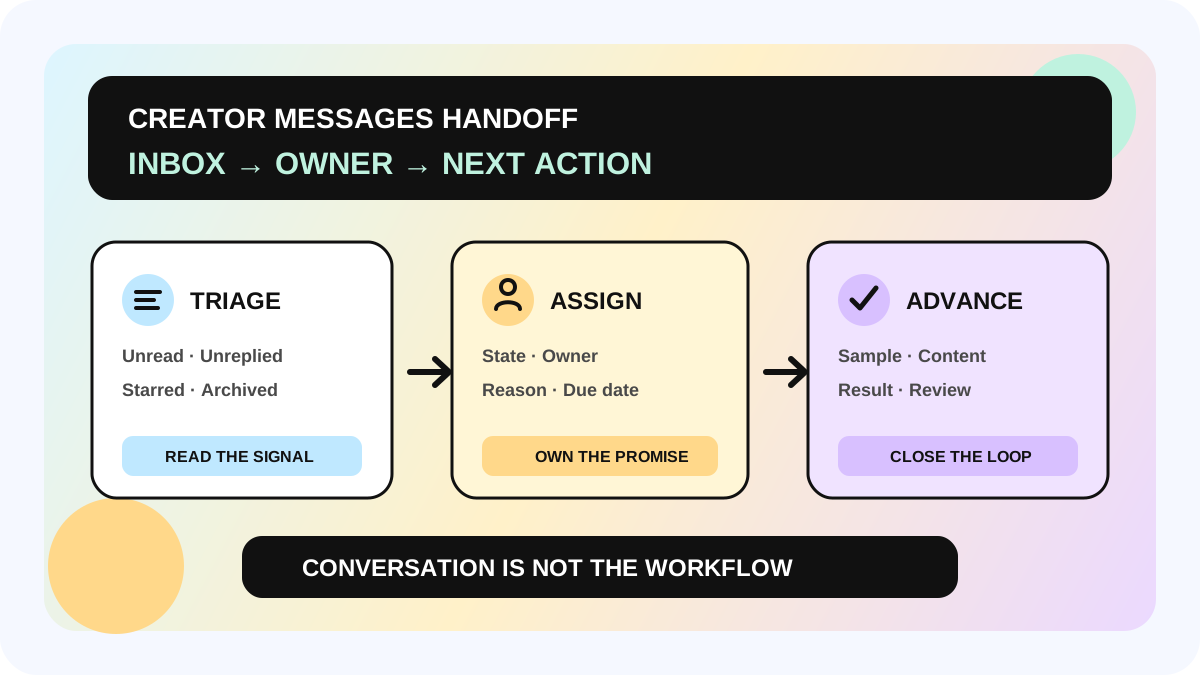
Creator Marketing is usually the clearest fit when the brand already knows whom it wants to approach or wants direct control over shortlisting, creator communication, and video feedback. It works for launches, brand storytelling, priority creator partnerships, and programs where the relationship should continue after one asset.
TikTok's setup guidance asks a verified business to choose a brand, project region, video requirements, expected post date, ad authorization period, collaboration model, and payment preference. TikTok also says projects are constrained by the current region; a team operating across regions may need to copy the project and view creator collaboration information separately for each region.
Before choosing it, confirm that your team can:
1. Save a selection reason for each creator instead of only follower count.
2. Choose direct invitation, open application, or an invite link with the TikTok One invitation-mode workflow.
3. Review, comment on, and approve submissions against explicit criteria.
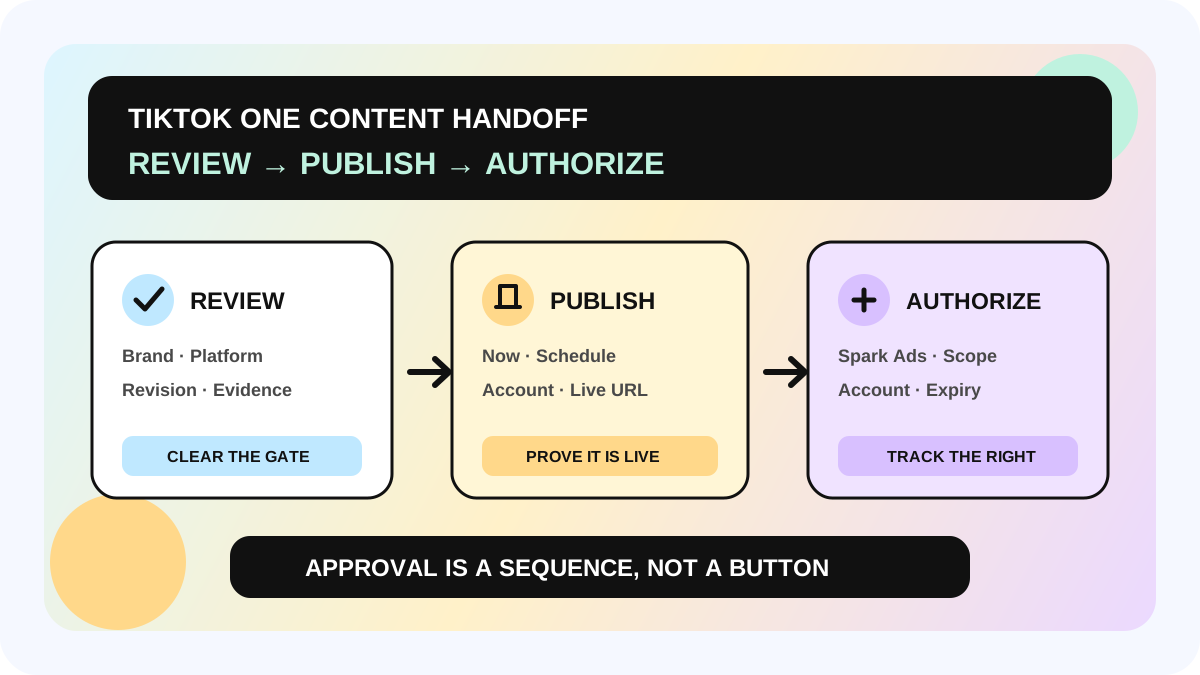
4. Track publishing, authorization type, ad activation, and expiry as separate states.
It is a weak fit when nobody can own creator review and individual feedback, or when the real need is a large, predictable creative pipeline. It is also not the lowest-management route when the team needs a partner to handle scripting, production, editing, and delivery end to end.
Evaluate Creator Content at Scale when creative supply is the bottleneck
Creator Content at Scale operates more like a recurring creative-supply line. TikTok says advertisers can work with a curated list based on the project brief, distribute through the creator's personal account or the brand's Business Account, and sync creatives to TikTok Ads Manager. Setup options include creator review, target creator count, weekly delivery, turnaround time, must-include and must-avoid requirements, and reference videos.
It suits teams with stable product claims, clear exclusions, recurring demand for new ads, enough media activity to test them, and reviewers who can respond on time. TikTok's comparison says advertisers may receive up to 30 creatives at once or weekly, while the setup article says the maximum creator count depends on the account and remaining quota. Treat 30 as a documented ceiling in eligible settings, not a guaranteed delivery for every account.
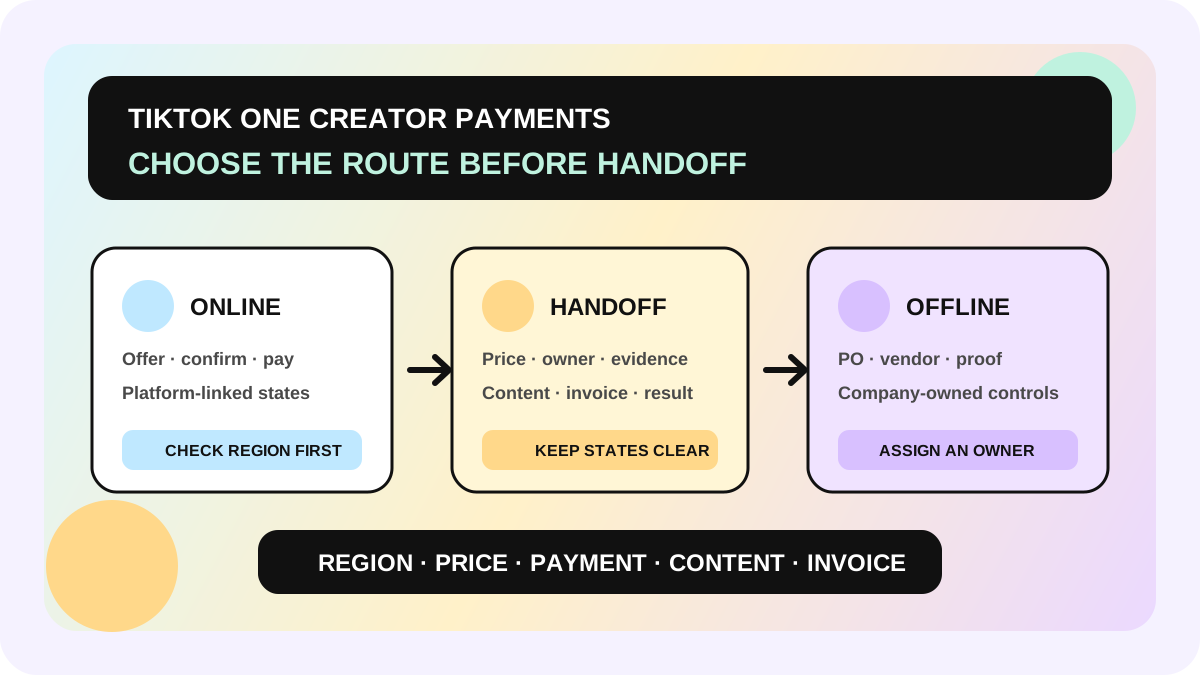
Physical-product projects also need a product-delivery decision. Payment treatment can differ in EU countries, and official setup guidance combines TikTok-paid creator arrangements, ad-spend conditions, and regional exceptions. Do not infer one global price model from a single page. Review the live Payment details, minimum spend, and local terms before submission.
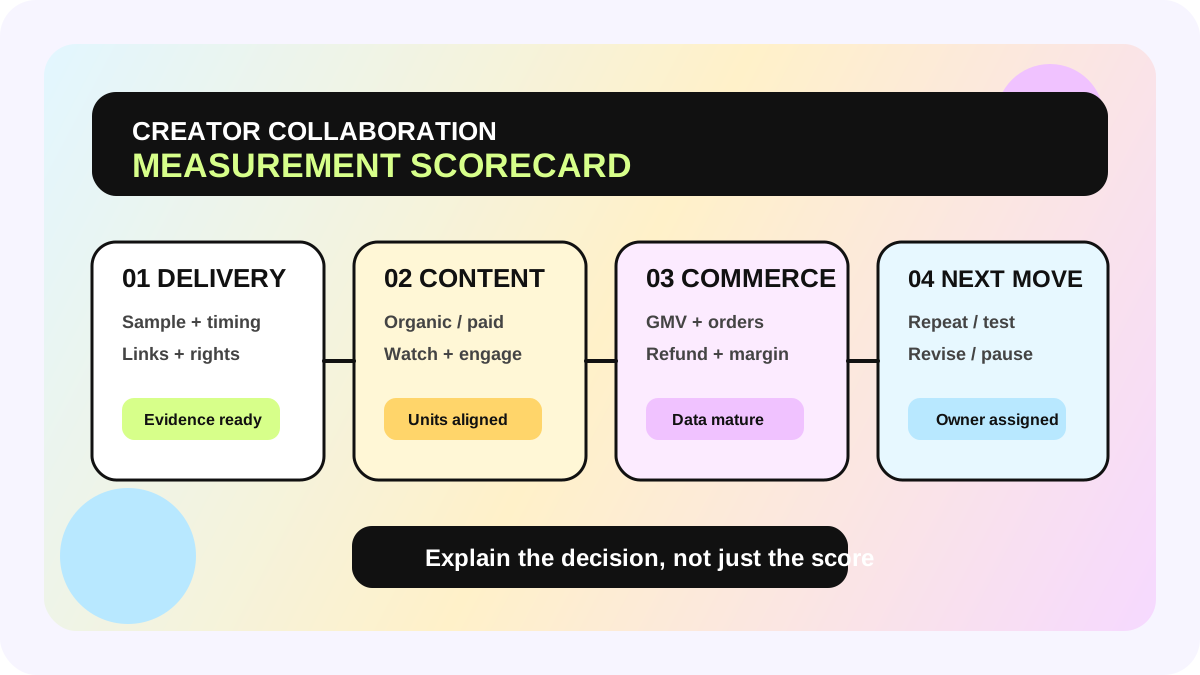
Do not scale this model while the brief changes every week, product facts are unapproved, or the team has no structured test after delivery. More assets will only amplify ambiguity. Connect each version, distribution account, authorization, delivery time, and test outcome to a creator collaboration scorecard before renewing the weekly flow.
Choose Partner Exchange when you need managed production
Partner Exchange is for advertisers that need professional production support. TikTok describes a network of curated creative partners that can support work from concept through video production. Advertisers can select a standard package or submit a custom brief. Standard packages can vary by video quantity, whether production is new or a remix, whether TikTok creators are involved, and whether professional talent is required.
It is most useful when the internal team lacks a repeatable TikTok-first production function, the project requires several specialist roles, or one partner should coordinate scripts, production, delivery, and feedback. It does not remove the advertiser from the process. The brand still needs to specify objective, region, language, product facts, prohibited claims, formats, revision rounds, rights, and acceptance criteria.
For a custom project, price and minimum-spend information may only appear after a TikTok point of contact updates the system or the brief is reviewed. Eligible projects may show a Funded label. After the advertiser selects a partner, TikTok and the partner still review acceptance. A recommendation, funding label, or partner history is not a performance guarantee.
During delivery, TikTok's management guidance allows advertisers to review progress, accept or reject assets, and sync them to Ads Manager. When a partner requests delivery confirmation, the advertiser needs to respond within the applicable live-project window. Record milestones, current owner, requested change, and due date so that an automatic completion or timeout rule never substitutes for a deliberate review.
Six questions that prevent the wrong choice
1. Are you managing creator relationships or creative capacity?
Prioritize Creator Marketing for the relationship. Compare Creator Content at Scale and Partner Exchange for capacity. The presence of a creator in all three models does not make the deliverable identical.
2. Which account will publish the content?
Creator organic posts, Spark Ads, and Business Account assets produce different authorization and operating chains. Decide distribution before creating the project, not after assets arrive.
3. Who owns selection, feedback, and approval?
Direct creator management needs an accountable operator. Partner-led production still needs a final product-fact and brand reviewer. A platform workflow cannot replace ownership.
4. Has the current account confirmed cost and investment?
Record creator fees, partner quotes, ad spend, samples, internal time, and relevant local charges. Do not turn words such as subsidized, funded, or no minimum ad spend on one solution into a universal promise that the project is free.
5. Can the team actually accept or reject a delivery?
Define product facts, must include, must avoid, scenes, duration, CTA, captions, source files, revision rounds, and deadline. “Make it native” and “make it viral” are not acceptance criteria.
6. How will you continue, switch, or stop?
Review on-time delivery, approval rate, launchable asset count, creative diversity, organic results, paid-test results, relationship value, and internal workload separately. Use an observation window instead of judging the model from one peak.
A reusable selection-to-launch workflow
1. Write a one-page requirement. Define market, language, product, objective, asset need, publishing account, timing, and compliance boundaries.
2. Map the job to the three models. Screen for relationship management, scaled supply, or managed production before comparing interface labels.
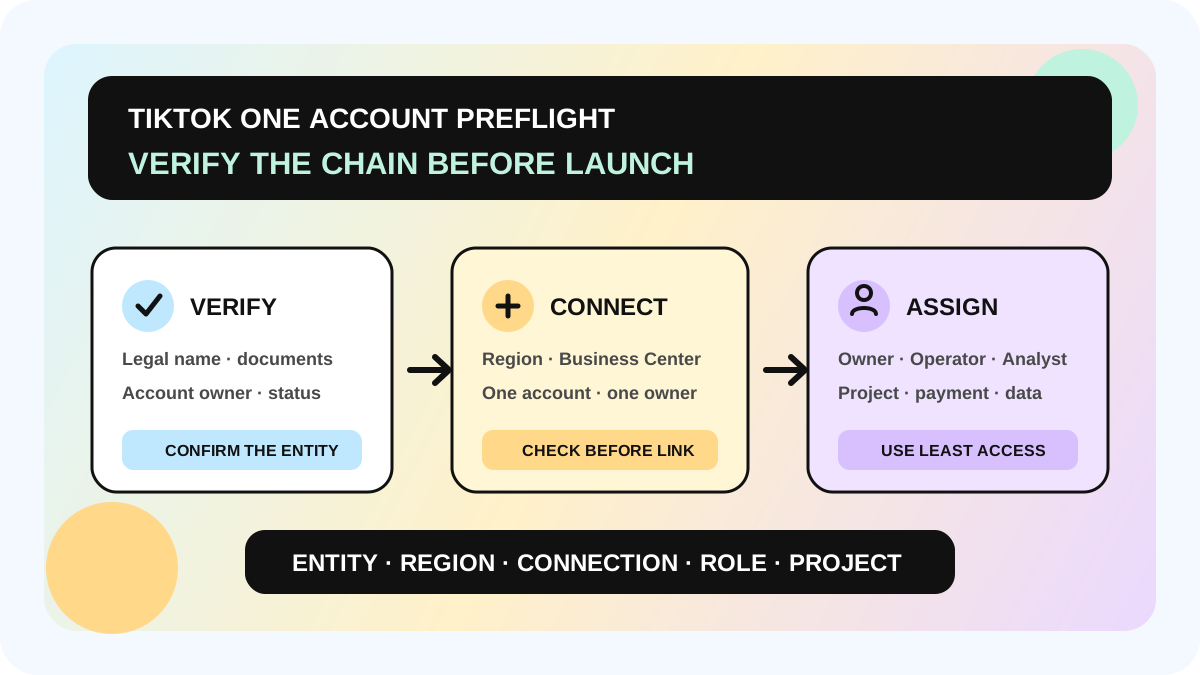
3. Verify the live account. Check business verification, region, available entry points, quota, payment, minimum spend, funding, and member permissions.
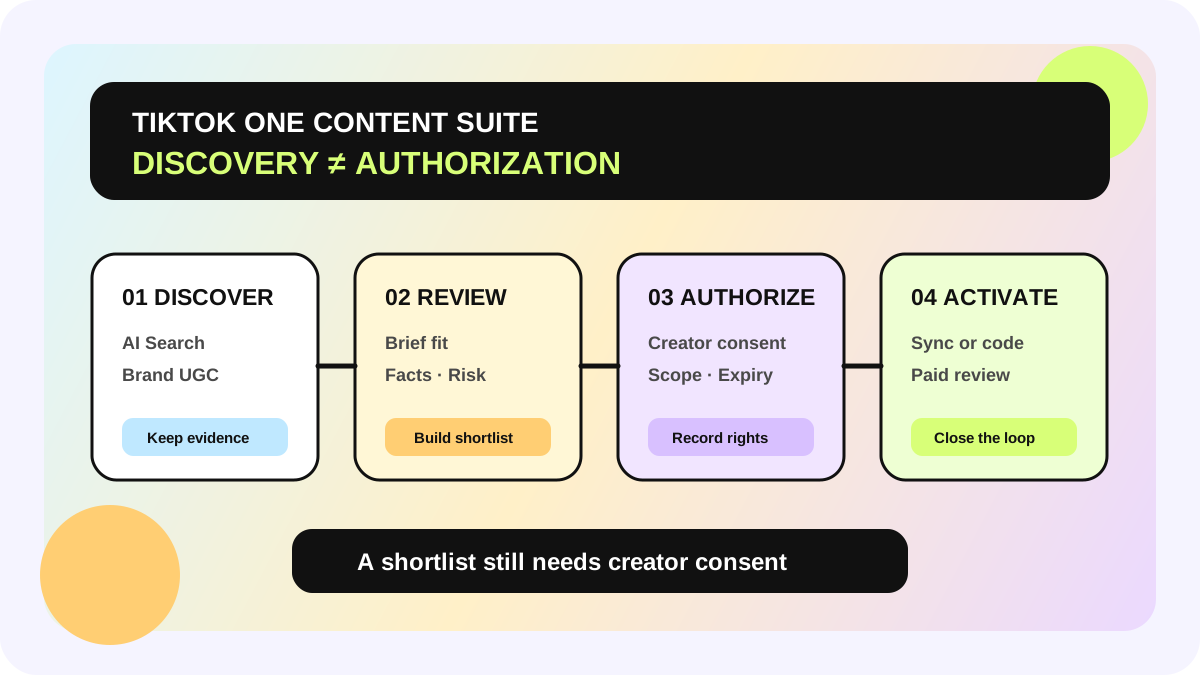
4. Create one delivery and rights ledger. Use an asset ID to connect collaborator, brief version, review, publication, authorization, expiry, and Ads Manager state.
5. Run a small real batch. Start Creator Marketing with a focused shortlist, Content at Scale with one reviewable batch, or Partner Exchange with a bounded package or brief.
6. Review on one window. Compare usable rate, turnaround, revision cost, testing results, and internal management load—not only video count.
7. Assign the next decision. Scale, revise the brief, switch models, repair authorization, or stop with a reason, owner, and date.
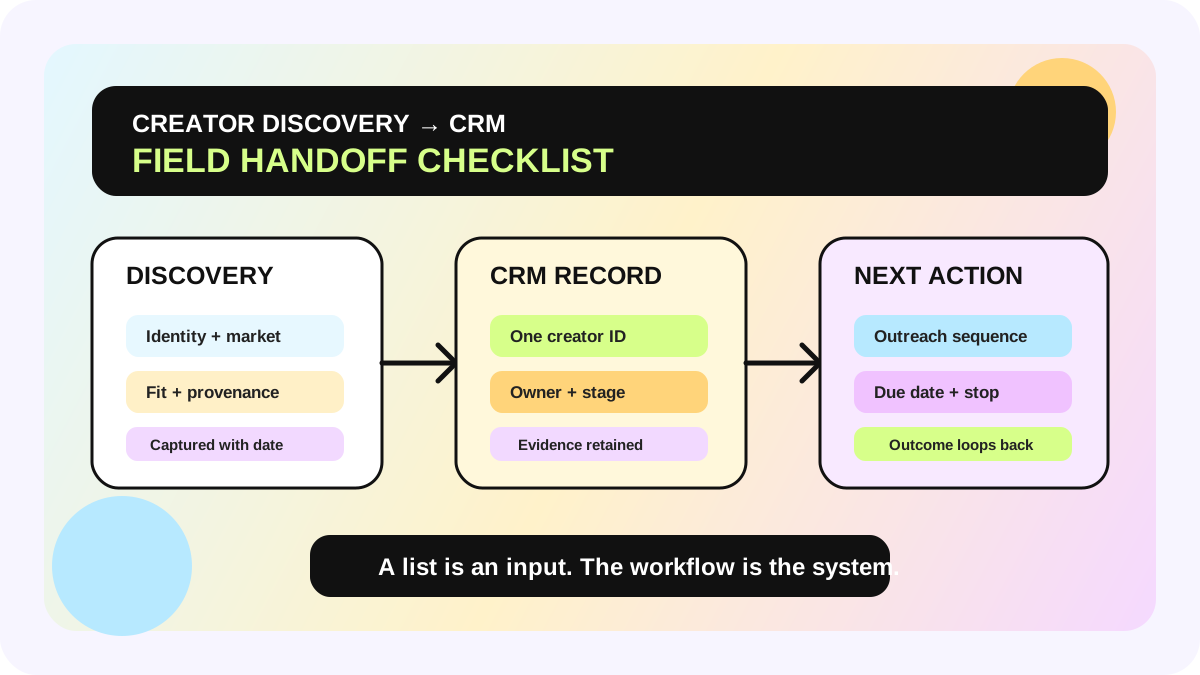
Connect this workflow to the creator discovery-to-CRM field handoff and the Content Suite UGC authorization chain so that a creator or asset does not become a disconnected record in every TikTok One module.
Pre-launch checklist
- [ ] Business verification, project region, and member permissions are confirmed
- [ ] The chosen model matches relationship, supply, or managed-production needs
- [ ] Publishing account, Spark Ads path, and authorization period are defined
- [ ] Live-account pricing, payment, ad spend, quota, and funding are checked
- [ ] The brief contains product facts, must include, must avoid, and acceptance rules
- [ ] Every collaborator, asset, feedback request, approval, and expiry has an owner
- [ ] Organic and paid results will be reviewed separately; predictions are not guarantees
- [ ] The next scale, switch, or stop decision has a review date
The allymatic view: select the operating model before the product card
The expensive mistake is rarely clicking the wrong card. It is failing to decide who selects, who produces, who approves, who manages authorization, and who advances the next round. TikTok One provides several collaboration and production paths. allymatic helps the team carry creators, assets, tasks, and decisions through daily operations without losing them between those paths.
Run one real brief through a small batch and record every handoff and wait. If you need to connect TikTok One projects with outreach, content, authorization, and reinvestment actions in one traceable workflow, contact our team around the process you already run instead of starting with the broadest automation possible.
FAQ
Can a brand use all three TikTok One solutions?
Yes, for different jobs. Creator Marketing can manage priority relationships, Creator Content at Scale can replenish test assets, and Partner Exchange can handle specialist production. They should still share asset IDs, authorization states, and measurement definitions.
Which TikTok One solution is cheapest?
There is no market-independent answer. Official guidance describes different creator-payment, ad-spend, subsidy, funding, and EU conditions. Use the Payment details, quote, and terms in the live project, then include samples, media, and internal management cost.
Does Creator Content at Scale guarantee 30 creatives every week?
No. The comparison page describes up to 30 creatives at once or weekly, while the setup page says maximum creators depend on the account and remaining quota. Eligibility, review, product delivery, and brief quality also affect actual output.
Does Partner Exchange mean the project is fully outsourced?
No. A partner can manage production end to end, but the advertiser still owns product accuracy, compliance boundaries, budget, authorization, feedback, and acceptance. A project without a clear brand owner can still stall before activation.
Official Sources
Official Sources
Primary references used for this article.