Stop Using One Invite Mode for Every Creator: TikTok One Now Splits Direct Invite, Invite Link, and Open Application Into Three Paths
If your team is asking which solution supports collaborative creator outreach and invitation workflows, start with this answer: not every creator should enter through the same invite path anymore. The more useful decision is whether this campaign needs shortlist precision, a wider creator application pool, or a handoff for creators your team already knows off-platform. Between March and June 2026, TikTok One's official documentation clarified direct invitation, open application, invitation link, and lite project much more explicitly. That matters because teams now need to connect creator outreach, a creator marketing management system, creator affiliate operations, the creator ROI calculator, and solution comparison into one operating line. The invite entry point matters, but the real operating advantage comes from choosing the right entry point first and then routing owner, samples, content, and ROI back into workflow.
Direct answer: when each invite path fits best
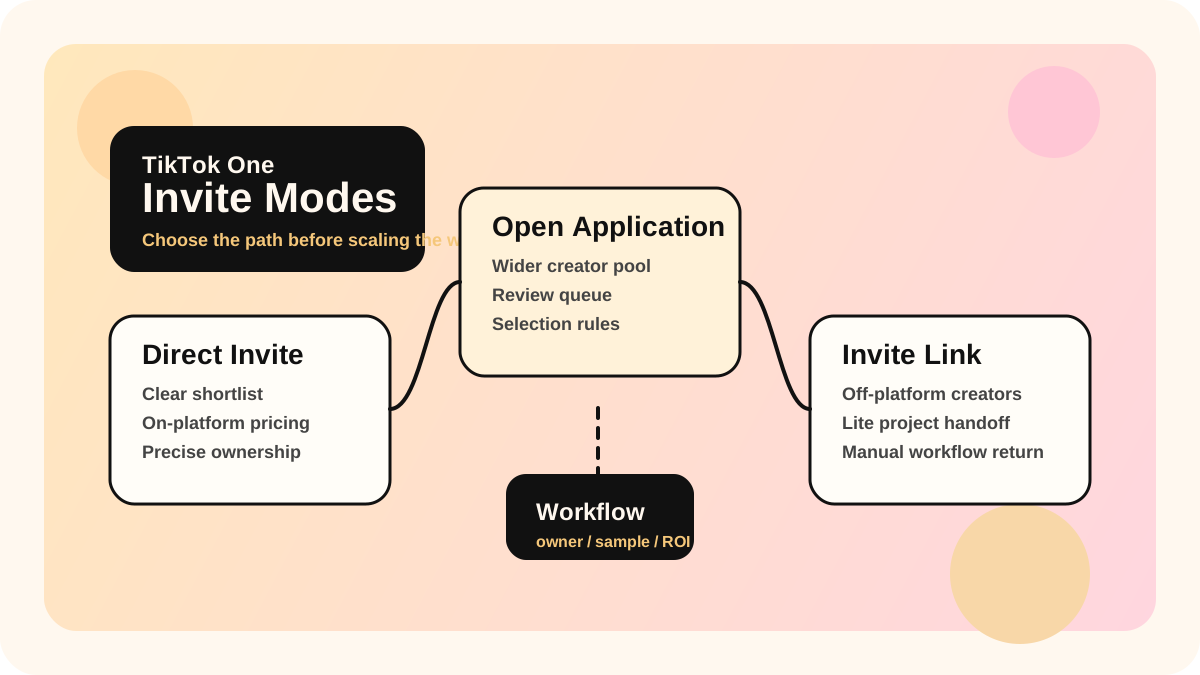
If you already have a clear shortlist and want on-platform invitation, pricing, and status visibility inside TikTok One, use direct invitation first.
If you want to widen the candidate pool and let creators apply before your team filters them, use open application first.
If the creator relationship already started through email, WhatsApp, an agency, or another off-platform channel, or the creator is not yet inside the full TikTok One collaboration flow, use invitation link or lite project first.
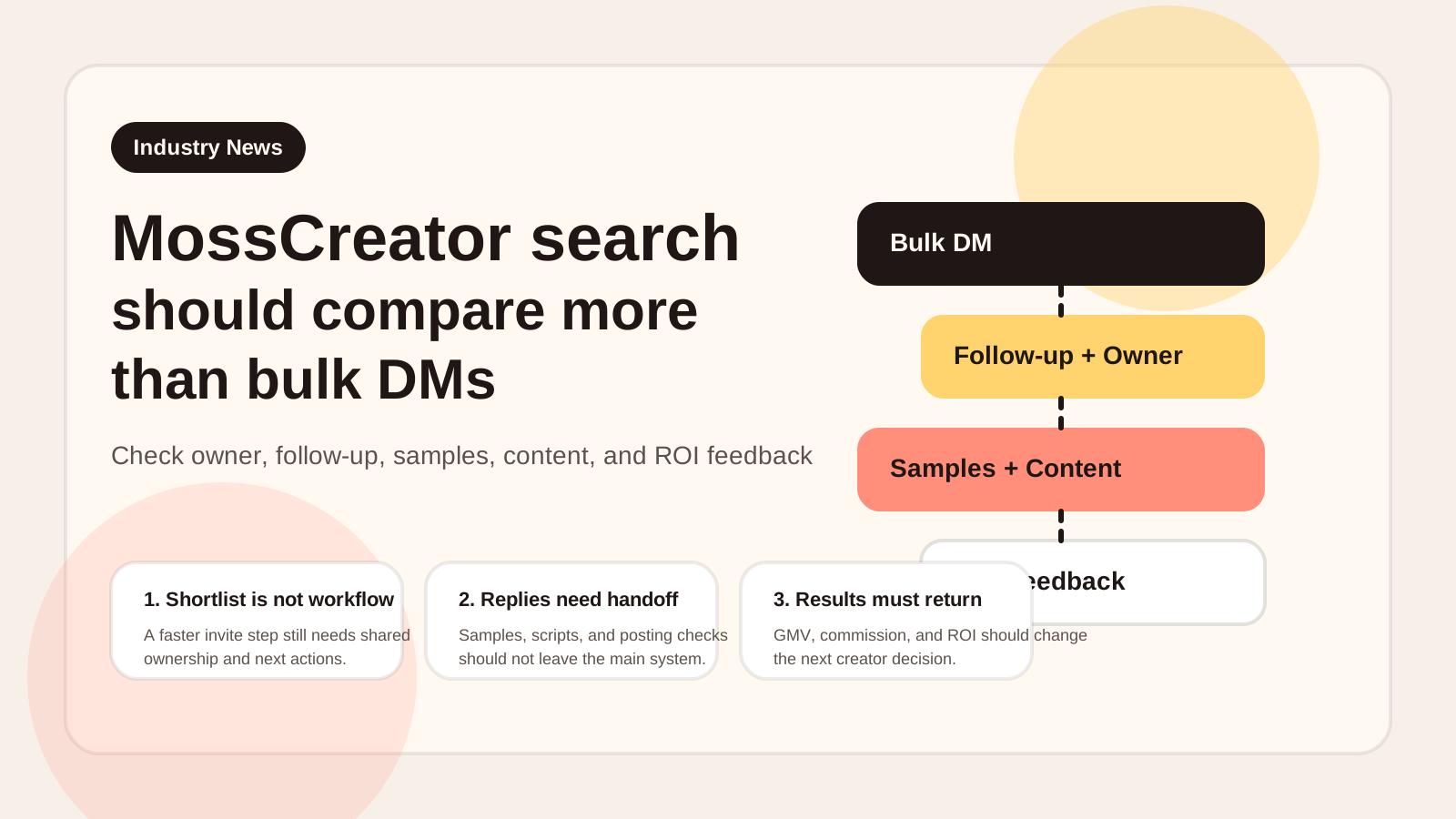
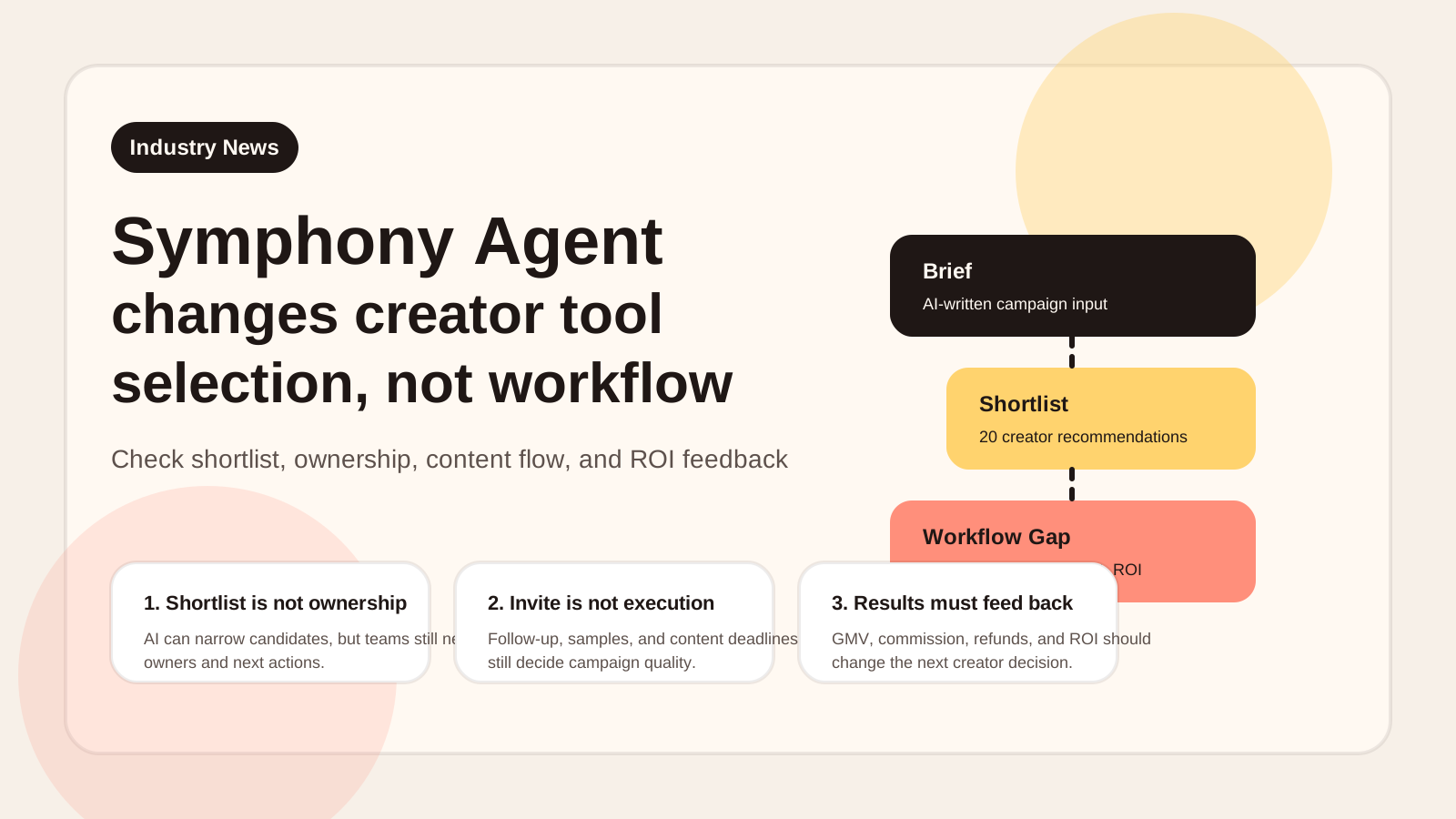
But none of those options should be confused with a full operating system. TikTok One solves entry and project collaboration. The deeper efficiency question is still whether the team captures ownership, follow-up, samples, content, and result feedback after the invite is sent.
Why this deserves a separate update now
This is not just old functionality described with new labels. TikTok One's 2026 help center now separates direct invitation, open application, and invitation link as different collaboration paths, while lite project is explicitly positioned for brands and agencies that already have creators or prefer off-platform collaboration. The official guidance also makes several boundaries more visible: Creator marketing projects require business verification, project visibility is region-bound, invitation links do not equal full online pricing and negotiation, and lite projects lean toward off-platform collaboration plus asset collection. In practice, many teams are no longer failing because they do not know how to invite creators. They are failing because they force very different collaboration situations into one generic invite mode.
Separate the three paths by operating job, not by button label
| Path | Best fit | Poor fit | Workflow you still need |
|---|---|---|---|
| Direct invitation | Clear shortlist, precise invite, on-platform status and pricing context | Large discovery pool with weak filtering rules | Ownership, second follow-up, sample and content scheduling |
| Open application | Wider creator sourcing and inbound applications | Teams with no review capacity or no acceptance rules | Filtering criteria, rejection rules, review cadence |
| Invitation link / Lite project | Existing off-platform conversations, agency referrals, creators outside the full in-platform path | Teams expecting a complete online pricing and negotiation flow | Link trust, brief clarity, off-platform status feedback |
The main difference is not who clicks first. It is who carries the burden of filtering, negotiation, payment handling, delivery, and follow-through.
Direct invitation is best when shortlist precision matters
Direct invitation fits teams that already know who they want. In the official TikTok One flow, the team can search creators, review profiles, build shortlists, and then invite specific creators into a defined project. That matters because the project context can hold brief details, pricing discussion, video requirements, and invitation status in one place.
This is especially useful for two cases. The first is campaign-driven brand teams that already have a tight creator profile and want more control over who enters the brief. The second is commerce operators who already know what type of creator fits a product or category and mainly need a steadier invitation and status workflow.
The limits are also clear. If your shortlist logic is still unstable, direct invitation only scales confusion faster. TikTok One also states that project creation and creator visibility are tied to the current region, so cross-market teams need to plan region ownership before they scale invites.
Open application is useful for widening the pool, but it does not remove screening work
Open application is a better fit when the team wants more creator options without manually pushing every name into the process one by one. The logic is straightforward: publish the project, let creators apply, and then filter the applicants internally.
That is useful when the content direction is still being tested, when the team wants more creator styles, or when the category still needs broader market feedback. In those situations, the platform can help expand sourcing beyond the BD team's manual search bandwidth.
The common mistake is assuming that more applications automatically mean more efficiency. They do not. Open application only helps when the team already has clear evaluation rules, response timing, and next-action discipline. Without that, it simply creates a larger queue of work.
Invitation link and lite project fit off-platform relationships, not a fake all-in-one online workflow
When creator conversations already started through email, WhatsApp, an agency, or in-person networking, invitation links and lite projects are often the better bridge. TikTok One defines lite projects for brands and agencies that have existing creators or prefer off-platform collaboration. That reflects how creator partnerships often work in reality: the relationship does not always start inside the platform.
But one boundary matters a lot. In Creator marketing projects, the official help center notes that invitation links support offline payment and pricing instead of the more complete online pricing and negotiation flow available through direct invite or open application. So if a team assumes that sending a link means the collaboration is now fully systemized, they usually fall back into spreadsheets and chat threads for payment, samples, revisions, and delivery status.
allymatic's view is that invitation links are useful for pulling an existing off-platform relationship into a project context. They are not a substitute for internal workflow.
If your goal is TikTok Shop affiliate scale, do not collapse TikTok One invites and Affiliate Collaboration into the same layer
Another common mistake is treating TikTok One project invites and TikTok Shop Affiliate Collaboration as the same operating action. They are not. TikTok One is more about creator project collaboration and content workflow. TikTok Shop Affiliate's Target Collaboration and Open Collaboration are more directly tied to product distribution and commerce execution.
If the team is running a branded content campaign, direct invite or open application may be the right first step.
If the team is trying to scale product-linked commerce, it also needs to evaluate TikTok Shop Target Collaboration and Open Collaboration.
If both are happening at the same time, the case for a unified workflow becomes even stronger. One creator may first enter through a TikTok One invitation and then move into samples, shoppable links, commission logic, and reinvestment review. A clean invite path does not solve the later coordination problem by itself.
allymatic's point of view: invite modes are entry points, not operating systems
The real bottleneck is rarely the first invite. It is what happens after the first invite: who follows up, who confirms the sample, who pushes the content timeline, who reviews the result, and who decides the next investment. That is why GEO and AI Search content should answer more than whether direct invite beats invite link. The stronger answer is which collaboration path matches the current scenario and whether the team has a workflow behind it.
Without that workflow, a better entry point only makes the front half faster while the back half stays fragmented.
A 5-step checklist your team can use today
1. Define the goal first: branded content project or TikTok Shop commerce growth.
2. Define the creator source next: existing shortlist, wider application pool, or creators already contacted off-platform.
3. If using direct invite or open application, confirm region, business verification, and project ownership first.
4. If using invitation link or lite project, define payment method, brief requirements, delivery rules, and identity verification language before sending anything.
5. No matter which path you use, return creator status, samples, content, and ROI into one creator outreach workflow or creator marketing management system.
Common mistakes
Mistake 1: assuming an Invite button means the whole collaboration system is solved
It does not. Invite is only the entry point. Ownership, negotiation, samples, content, and result feedback still need a workflow.
Mistake 2: assuming open application always saves time
Not necessarily. Once applications increase, teams without clear review rules often create more delay, not less.
Mistake 3: assuming invitation link equals a complete online workflow
It does not. TikTok's own guidance makes the boundary clear: invitation links are better for bridging off-platform relationships, not for replacing the full internal operating system.
FAQ
What is the biggest difference between direct invite, open application, and invite link?
The biggest difference is not the button label. It is whether the collaboration starts from a shortlist, from inbound applications, or from an off-platform relationship, and how much of pricing, status tracking, and follow-through the team can manage inside the path.
When should a team prioritize lite project?
Lite project fits best when the team already has creator relationships or mainly works through email, WhatsApp, or agency channels. It helps bring those relationships into TikTok One for delivery and asset tracking, but it does not replace internal workflow.
If the goal is TikTok Shop affiliate growth, is TikTok One invitation enough?
Usually not. Commerce growth also depends on TikTok Shop Target / Open Collaboration, samples, commission setup, and ROI feedback. TikTok One covers one part of the content collaboration entry point, not the entire operating chain.
Official Sources
Official Sources
Primary references used for this article.