Payouts Are No Longer Just a Finance Issue: TikTok Shop Is Binding Affiliate, Risk Control, and Cash Flow Into One Chain
Many teams still manage TikTok Shop affiliate operations as separate tracks. Creator partnerships sit with BD or affiliate teams. Sample budgets sit with marketing or operations. Payout timing and reserves sit with finance. Risk-control notices are treated as something to handle only after the dashboard turns red. The org chart may look neat, but TikTok Shop's June 2026 policy set shows the platform is no longer thinking in those separate boxes.
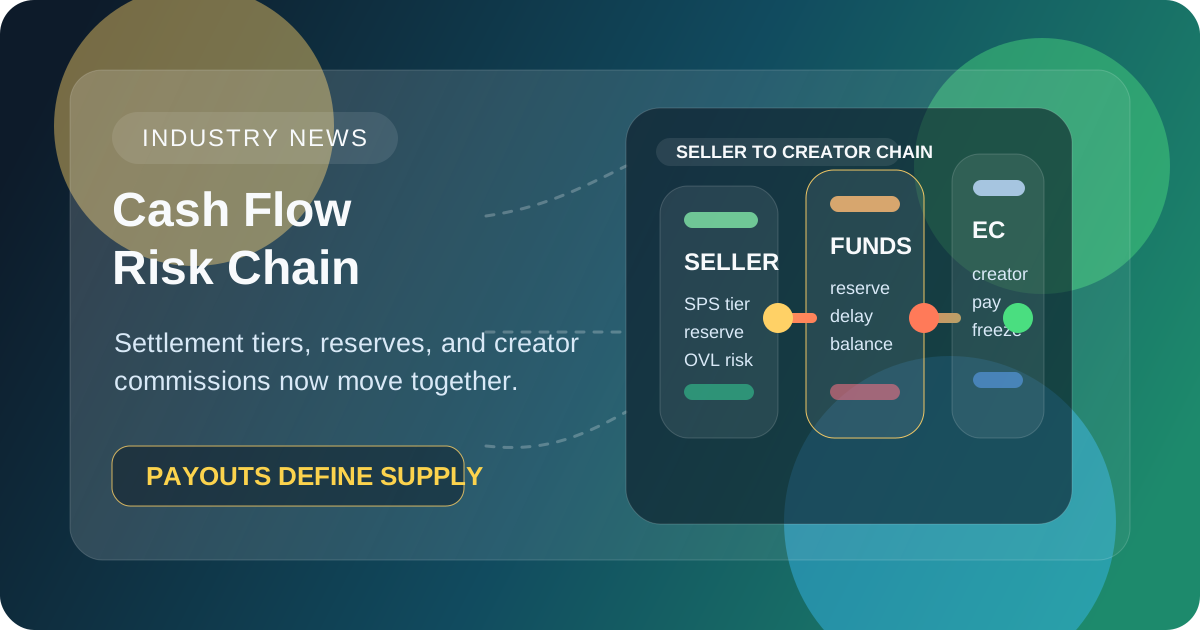
Taken together, the new Dynamic Settlement and Reserve Policy, Seller Enforcement Policy, Negative Account Balance Requirements, and Creator Enforcement Policy all point to the same shift: TikTok Shop is turning settlement timing, reserves, negative balances, seller penalties, creator commissions, and linked-account permissions into one connected operating chain. For cross-border brands and TikTok Shop teams, creator affiliate can no longer be managed only as a content question. It is also a payout-speed question, a funding question, and a permission-stability question.
TikTok is no longer managing only your profit line. It is managing your cash timing.
The June 30 Dynamic Settlement and Reserve Policy makes that explicit. TikTok Shop reviews seller performance on the first day of every month and uses Shop Performance Score, delivered-order volume from the previous 15 to 45 days, and any temporary restrictions to assign both a settlement tier and a reserve level. In other words, payout speed is no longer just a fixed T+N timetable. It is becoming a dynamic operating privilege tied to store quality.
The reserve rule matters just as much. TikTok states that a portion of funds from delivered orders can be held for 30 days to cover potential returns and refunds. If the platform is still conducting security checks, a shop can be moved into Deferred Settlement at any point during the month. For brand teams, that means today's sales result is not the same thing as today's usable cash. Sample expansion, creator incentives, and media budgets can all be constrained by the real payout rhythm behind the dashboard.
When cash flow deteriorates, creator operations are often the first place where it shows up
One of the most important signals in this rule set is that TikTok Shop now treats negative balance as an operating switch, not just a finance warning.
The June 2 Negative Account Balance Requirements say sellers must keep account balances above zero at all times. If refunds, platform fees, or referral fees push the account negative, TikTok may charge the seller's linked US credit card to resolve the shortfall. More importantly, the consequences do not stay in the finance layer. If the negative balance reaches 250 dollars for more than 10 days, TikTok may disable new Shipping Fee Discount promotions, ban Free Sample Display and Application, and suspend withdrawals. If the negative balance reaches 500 dollars for more than 30 days, the account may be deactivated entirely.
That matters for affiliate operations because it means samples are not independent from cash flow. Many teams still think of sampling as a marketing budget and creator collaboration as a content workflow. TikTok's rule design says otherwise. Once the account's cash position deteriorates, sample entry points, withdrawal ability, and the pace of creator cooperation can all tighten at the same time. The damage starts before the monthly finance review. It begins while your content supply is still supposed to be scaling.
Seller risk is now designed to travel through linked creator accounts
The third shift is that seller-side risk now explicitly transmits into creator-side operations.
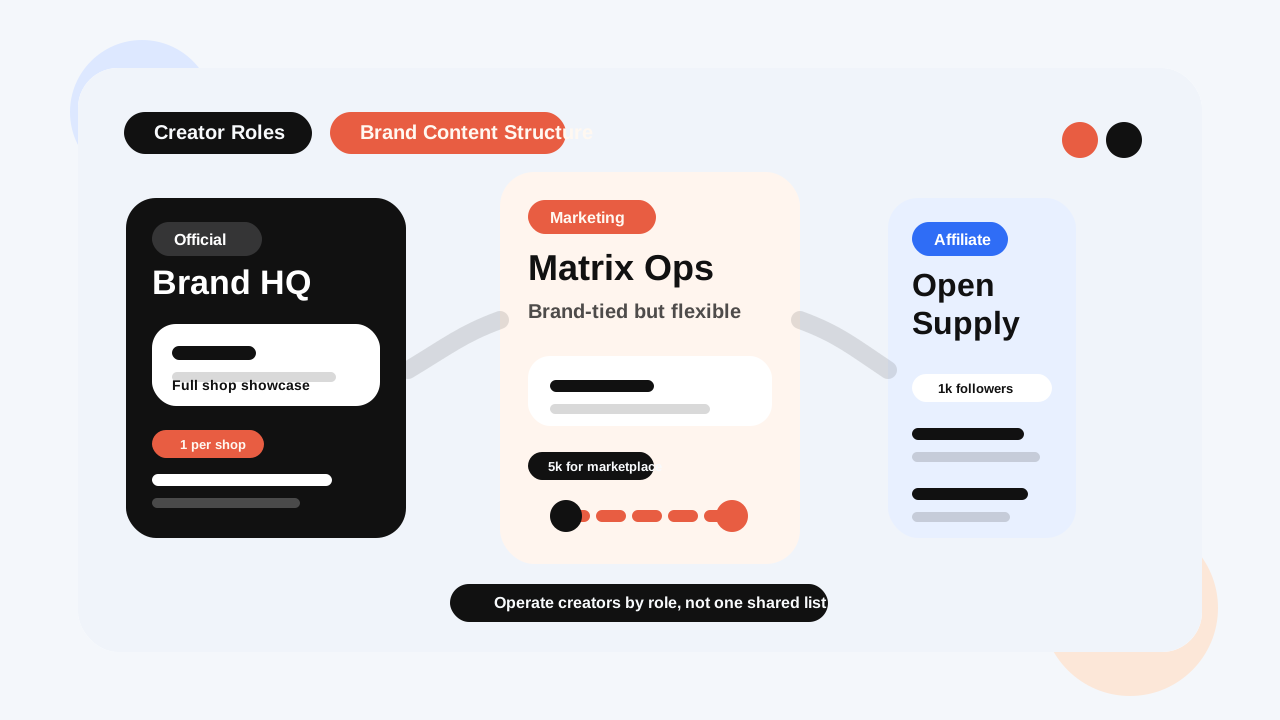
The June 25 Seller Enforcement Policy states that if a seller's shop is deactivated, or if its Order Volume Limit drops to zero, the e-commerce permissions of associated Official Accounts and Marketing Accounts will be blocked simultaneously. That means store problems no longer stay inside Seller Center. They can flow directly into the accounts responsible for content and commerce execution on the front end.
The creator side follows the same logic. The Creator Enforcement Policy states that repeated violations can remove e-commerce permissions and freeze commissions. It also adds a more practical constraint: during additional security or policy checks, some creators may be placed into temporary deferred settlement, which can extend commission settlement to 15 to 31 days after delivery or longer until disputes, refunds, and return requests are resolved. In other words, creators are no longer worrying only about whether content clears policy. They also have to worry about when the money behind that content will actually settle.
Once settlement tiers, reserve levels, OVL, creator commission freezes, and linked-account permissions are tied together, affiliate is no longer just a content collaboration chain. It becomes a full risk-and-cash-flow operating chain. Stores with weaker performance, thinner cash buffers, or slower violation recovery will pass that pressure into their creator network much earlier.
How allymatic reads this shift
From the allymatic perspective, the right adjustment is not just another finance SOP. It is to treat cash-flow health as an upstream creator-operations metric.
First, sample budgets, commission plans, and media budgets should be evaluated together with settlement tier, reserve pressure, and negative-balance exposure. Second, seller risk should not be reviewed only when the dashboard flags a problem. Teams should monitor SPS, OVL, refunds, and negative-balance exposure weekly so they can anticipate creator-supply disruption earlier. Third, creator relationships should not be assessed only by content output. Teams also need to ask whether the underlying store is facing payout drag, commission-freeze risk, or permission instability across linked accounts.
TikTok Shop is moving store operations away from pure sales output and toward a system where cash, content, and account permissions move together. Teams that accept this earlier will be better positioned to build creator affiliate into a durable growth engine instead of a collaboration chain that stalls the moment cash flow tightens.
Official Sources
Official Sources
Primary references used for this article.