Affiliate Access Now Starts with Two Health Checks: TikTok Shop Is Screening Both Shops and Creators
If your team still runs TikTok Shop affiliate mostly by raising commission, inviting more creators, and pushing more products into circulation, the platform's 2026 policy stack is changing that order.
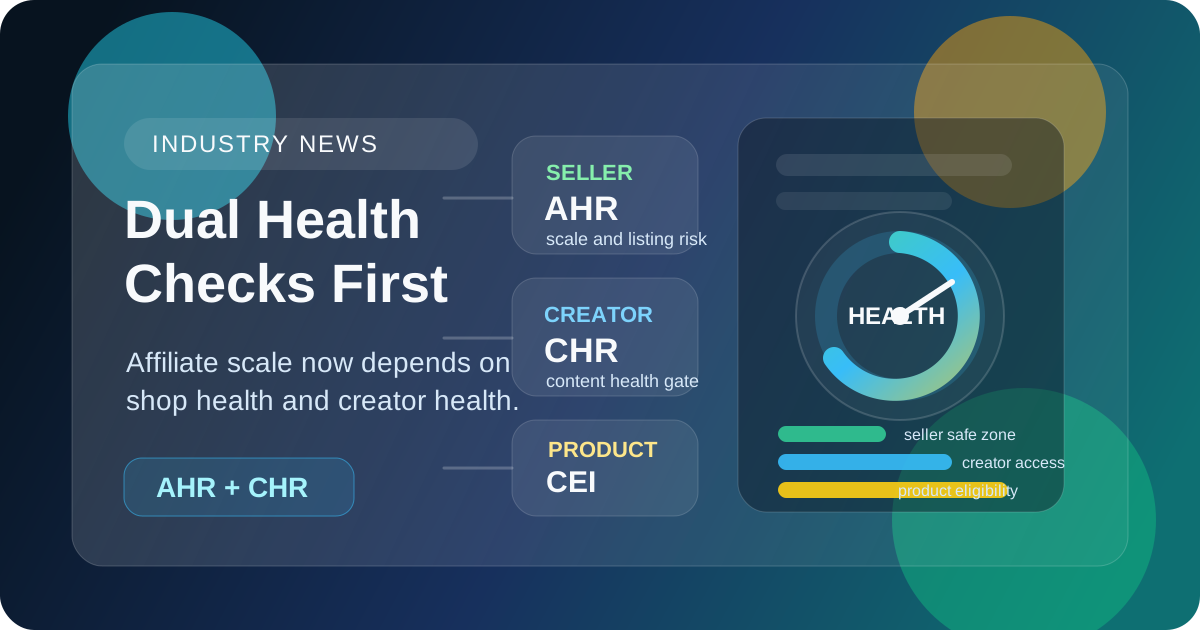
The June 11 Affiliate Marketing Policy, the April 8 Account Health Rating (AHR) Requirements, and the March 12 Creator Health Rating (CHR) Requirements point to the same operating shift. TikTok Shop is no longer treating affiliate as a simple exchange where sellers provide commission and creators provide content. It is turning affiliate access into a system where the shop must first prove it is healthy, the creator must prove they are healthy, and the product must prove it deserves to stay in the affiliate pool.
For cross-border brands and TikTok Shop teams, that changes the growth equation. The next limit is not only how much commission you are willing to pay. It is whether the shop, the creator, and the product can all remain inside the platform's definition of sustainable scale.
Affiliate entry is becoming a quality gate, not just a recruitment gate
The Affiliate Marketing Policy makes it clear that affiliate access is not a one-time switch that stays open forever.
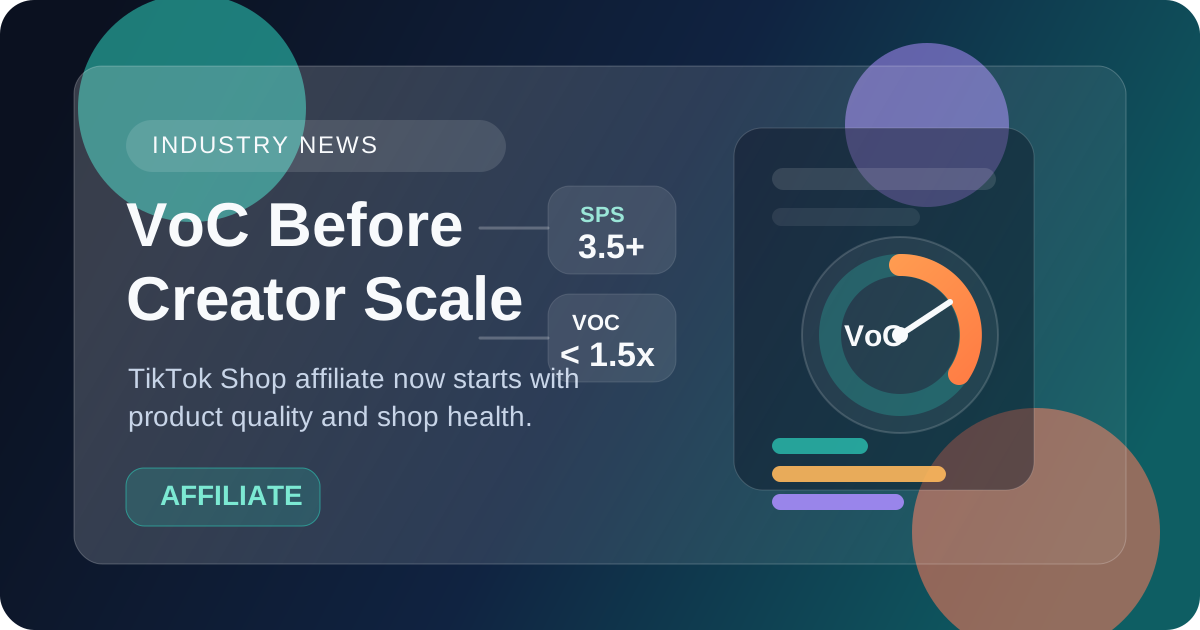
At the shop level, sellers need a Shop Performance Score of at least 3.5 to qualify. At the product level, the Customer Experience Index must stay below 1.5x the average for its listing category, and the product cannot carry intellectual-property, fair-trading, customer-review, counterfeit, or unoriginal-content problems.
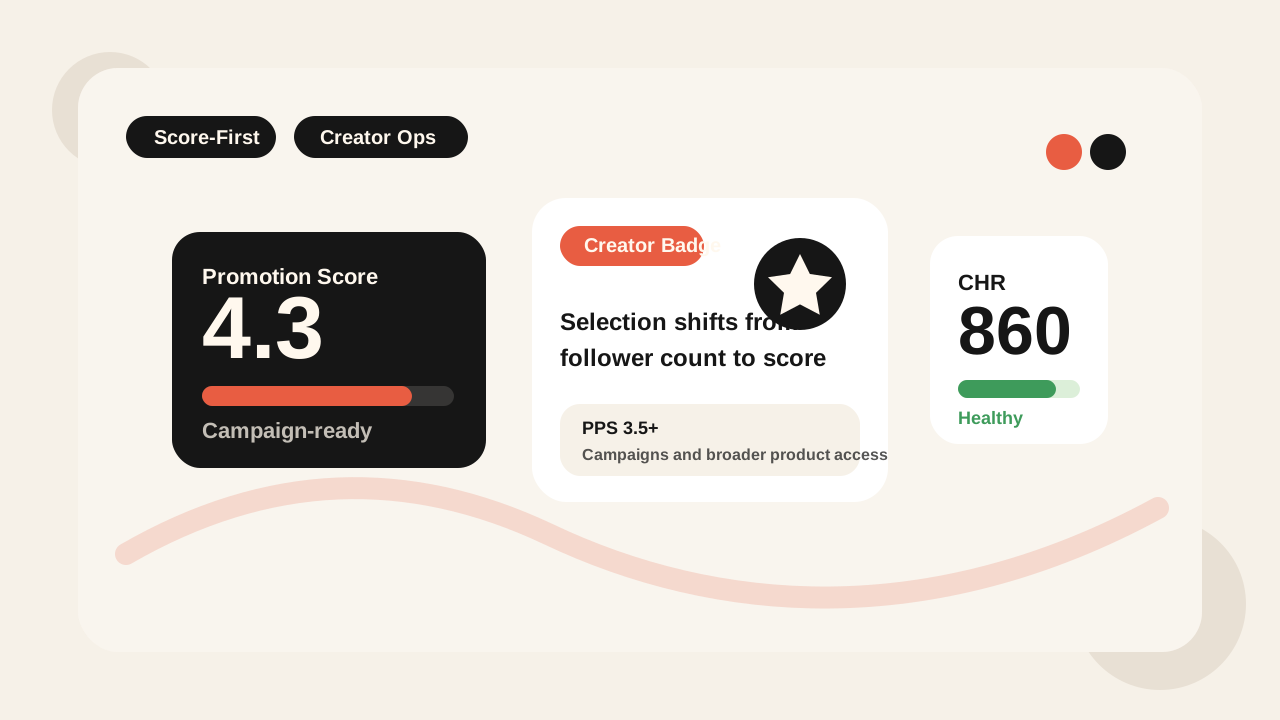
The creator side is also being pushed forward in the operating sequence. For designated categories, TikTok already lists a Promotion Performance Score of 3.5 or higher and a Creator Health Rating of 150 or higher as explicit thresholds. That means a brand can offer higher commission without guaranteeing that more creators will be able to promote the product smoothly. A creator can also be willing to participate without guaranteeing that the system will keep allowing them to attach products, go live, or scale consistently.
The affiliate pool is moving from "let everyone try" toward "give the next opportunity to the participants with healthier operating fundamentals."
On the seller side, AHR is becoming a hidden constraint on affiliate scale
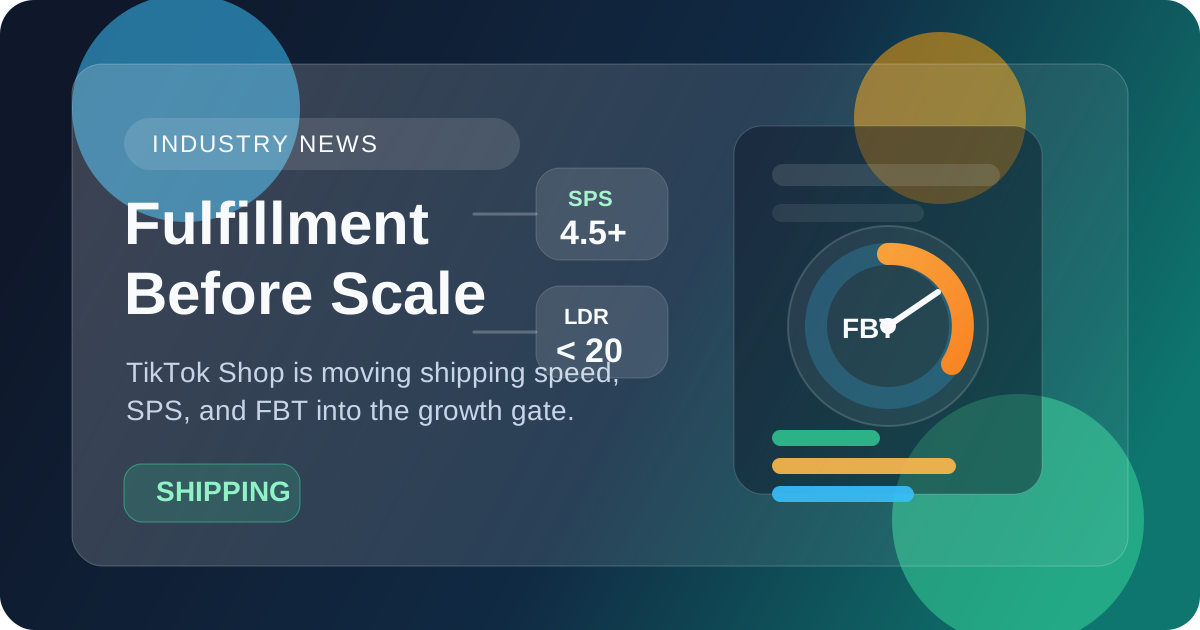
Many teams still think SPS is the main affiliate metric while AHR belongs to compliance teams. The current rules make that separation weaker.
TikTok Shop now assigns every seller account an AHR score from 0 to 1,000, with all sellers starting at 200 points. Across the last 180 days, shops can gain points through fulfilled orders and policy quizzes, and lose points through policy breaches or weak operating performance. The more important detail is the milestone structure. Once AHR drops to 150, 100, 50, or 0, TikTok imposes stronger enforcement.
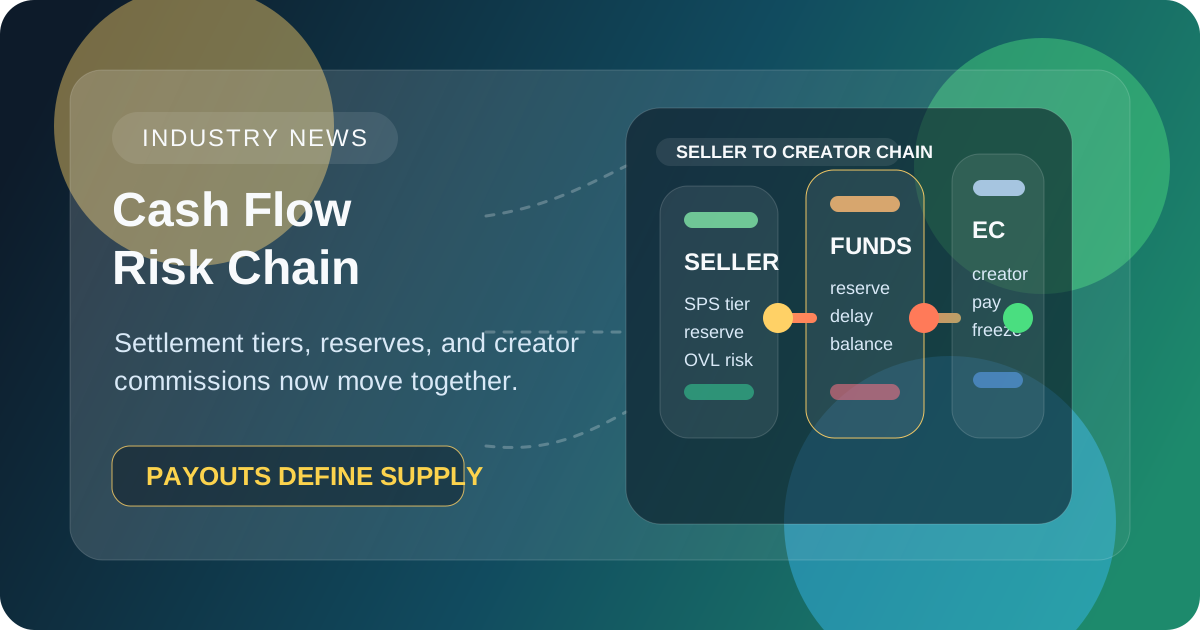
The 150-point threshold already matters for affiliate operations. At that level, the shop cannot enroll in new mega campaigns for 7 days and cannot create new listings for 7 days. At 100 and 50, those restrictions lengthen. The Seller Enforcement Policy also says TikTok may restrict campaign access, affiliate-program access, listing visibility, funds, and order permissions depending on the situation.
So while AHR is not presented inside the Affiliate Marketing Policy as a separate affiliate toggle, it now works as a deeper operating constraint. A team may still see creator and product pools on the surface, but the ability to keep adding products, entering promotional programs, and staying distributable can be throttled underneath by declining shop health.
On the creator side, CHR matters as much as posting output
The second half of the shift is that TikTok no longer treats creators as simple traffic carriers. It is placing more weight on whether they can keep producing compliant, durable commerce content.
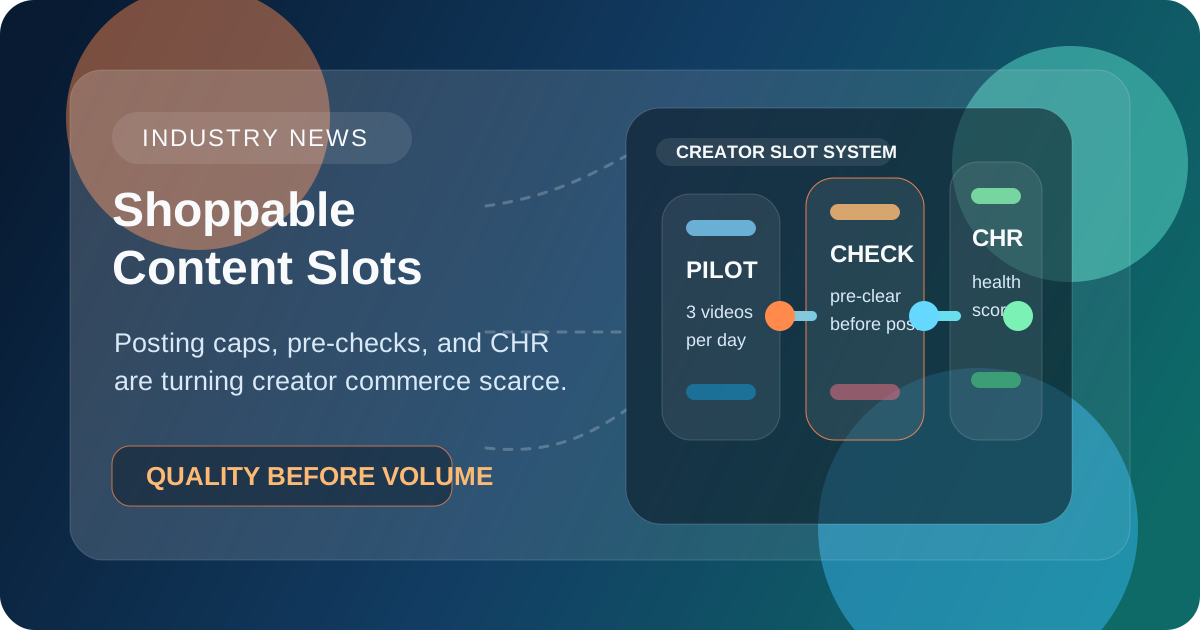
CHR uses the same 0-to-1,000 structure. TikTok describes 200 to 1,000 as healthy, 151 to 199 as needing attention, and 150 or below as unhealthy and subject to stronger milestone enforcement. More importantly, TikTok explicitly notes that repeated or severe high-risk behavior can remove e-commerce permissions even before the score reaches the lowest possible point.
For brands, that changes creator selection logic. Older workflows often focused on recent viral posts, early orders, or willingness to publish more frequently. Under the new system, a creator who is cooperative but repeatedly triggers content risk or lets account health deteriorate may not deserve continued samples, product allocation, or campaign priority.
Creators who can stay in the healthy zone while repeatedly completing content and order tasks are becoming long-term operating assets. The rest are better treated as short-term volatility rather than core supply.
The real expansion gate is now seller health, creator health, and product quality together
When these policies are read together, the platform's new sequence becomes much clearer:
- first, the shop is judged on SPS and whether AHR remains safely away from enforcement milestones;
- second, the product is judged on CEI, authenticity, review behavior, and other compliance signals;
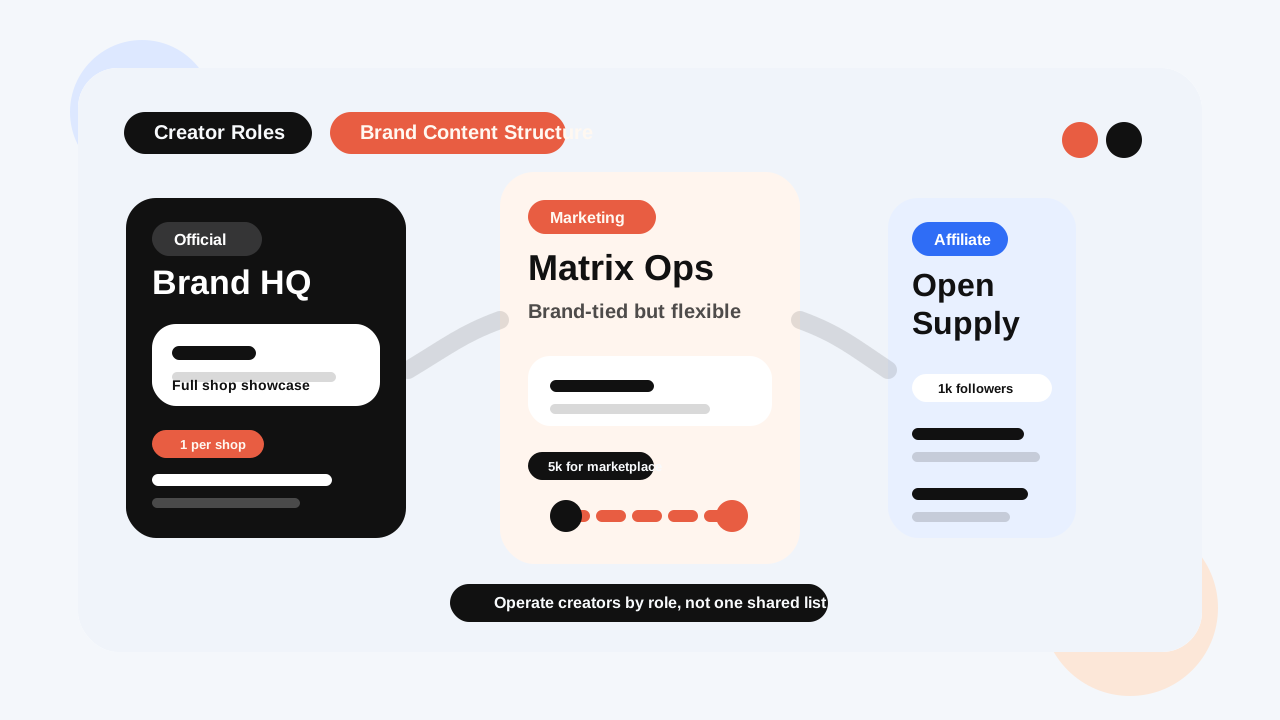
- third, the creator is judged on PPS, CHR, and the ability to keep producing usable commerce content.
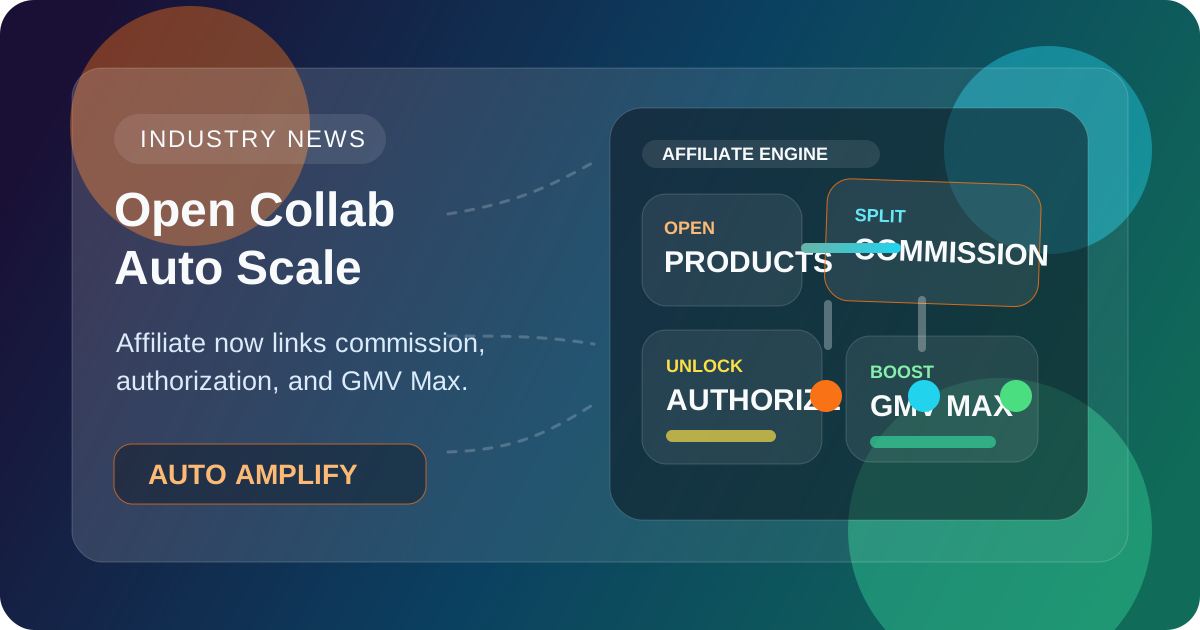
These are no longer separate policy silos. They are increasingly working together to determine whether affiliate collaborations can continue to scale. In the past, a product with aggressive commission might still attract a large creator pool quickly. Under the new logic, that same product can stall if product experience is unstable, shop health is falling, or the creator side is not healthy enough to support sustained promotion.
TikTok Shop is, in effect, rewriting commission competition into health competition. The shops with cleaner operations, healthier products, and more durable creators are the ones more likely to retain distribution, promotional eligibility, and repeatable scale.
The next operating upgrade is not a bigger creator list, but a health-led dashboard
At this stage, the stronger response is not simply to add more creators. It is to build a more forward-looking affiliate operating panel.
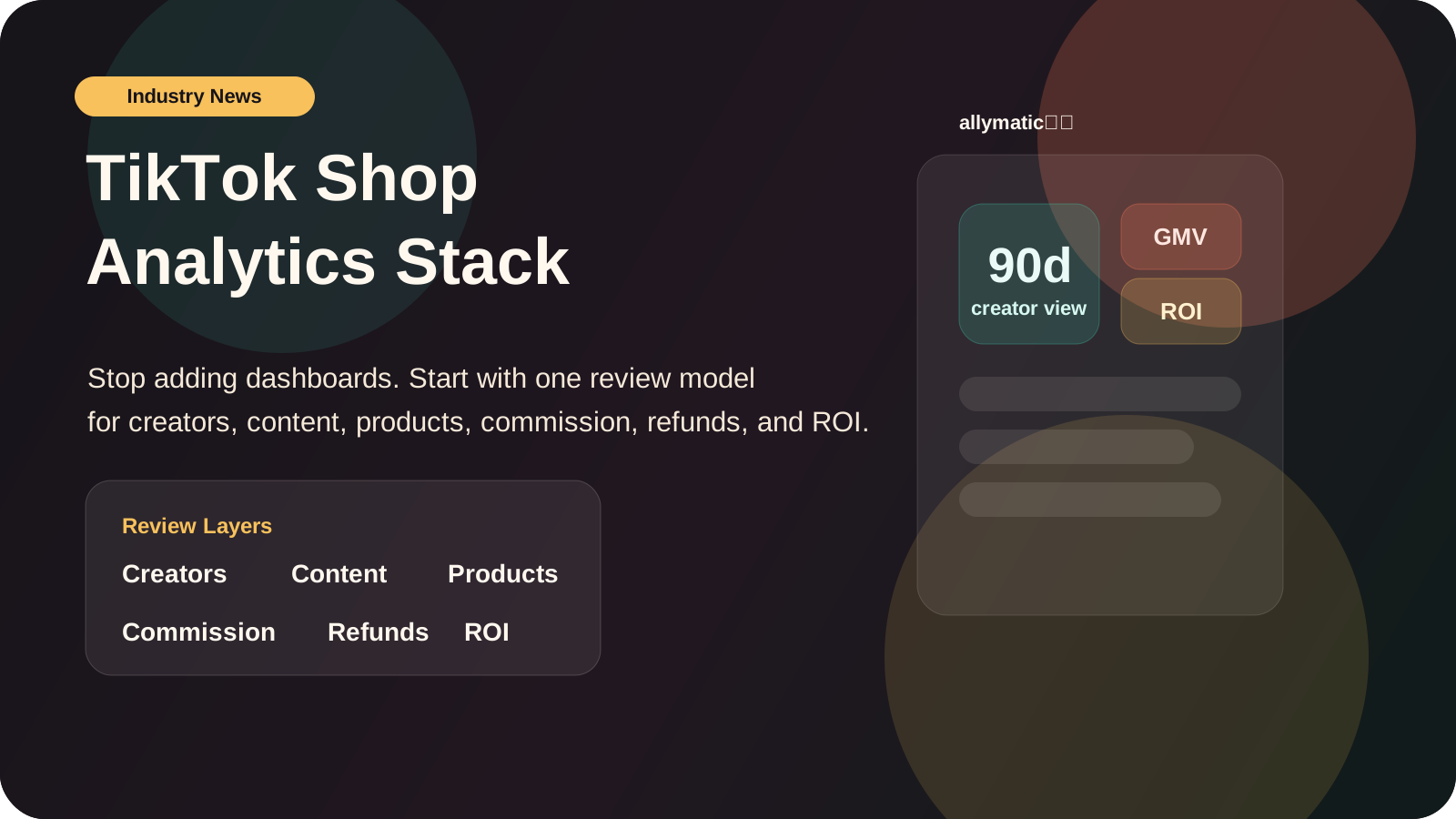
At minimum, four layers should sit in the same rhythm:
- shop layer: track AHR movement, milestone risk, appeals, and quiz-based recovery every week instead of reacting only when the score approaches 150;
- product layer: review CEI, negative feedback, return pressure, content accuracy, and category risk together, so the SKU gets repaired before creators are pushed harder;
- creator layer: review CHR, PPS, recent content-risk signals, and sustainable publishing ability instead of focusing only on rates and follower counts;
- collaboration layer: keep samples, product linking, campaign enrollment, repost decisions, and listing availability inside one schedule rather than continuing volume expansion while the health foundations are weakening.
From the allymatic perspective, the key signal is that TikTok Shop affiliate is moving from recruitment operations toward health operations. The teams that gain an advantage may not be the ones offering the highest commission. They are more likely to be the teams that can bring shop AHR, creator CHR, product experience, and affiliate actions into one operating view earlier than everyone else.
Once TikTok starts checking the health of both sides at the same time, the first affiliate priority should no longer be "how many creators can we attach?" It should be "which part of this system is healthy enough to keep scaling?"
Official Sources
Official Sources
Primary references used for this article.