Fix the Product Before Recruiting Creators: TikTok Shop Has Moved Affiliate Access Upstream to Product Quality and Shop Score
Many TikTok Shop teams still approach creator affiliate by asking three familiar questions first: how much commission to offer, how many samples to send, and how many creators to recruit.
But TikTok's official updates across May and June 2026 have quietly changed the real sequence.
The platform is now signaling more clearly that affiliate is not an isolated traffic tool. It is an extension of shop quality. Product reputation, shop performance, and after-sales stability are now directly shaping whether a SKU can enter affiliate programs and whether it can keep attracting creator supply.
That helps explain why some teams feel that affiliate is technically still available in Seller Center and open collaborations can still be created, yet application volume, scalable SKUs, and sustained order quality all feel weaker than expected. In many cases the problem is not that creators are unwilling to work. It is that the shop and the products have already entered a much stricter platform filter.
The first thing TikTok changed was not the creator side. It was the product and shop side
In the policy changes that took effect on May 7, TikTok Shop shifted the core product-eligibility logic for affiliate toward Voice of Customer, or VoC.
In practice, that means TikTok is no longer only watching whether a product has reviews that look bad on the surface. It is comparing complaint and customer-experience signals against the norm of that product's category and asking whether the product is materially underperforming.
TikTok Shop's Affiliate Marketing Policy updated on June 11 makes the logic explicit:
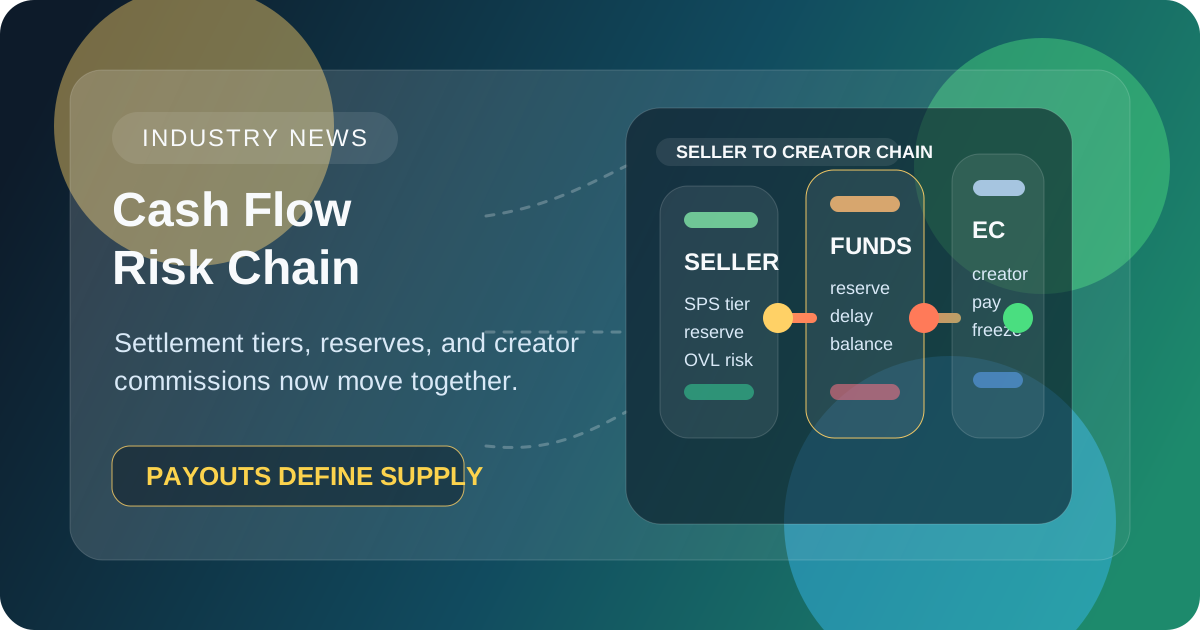
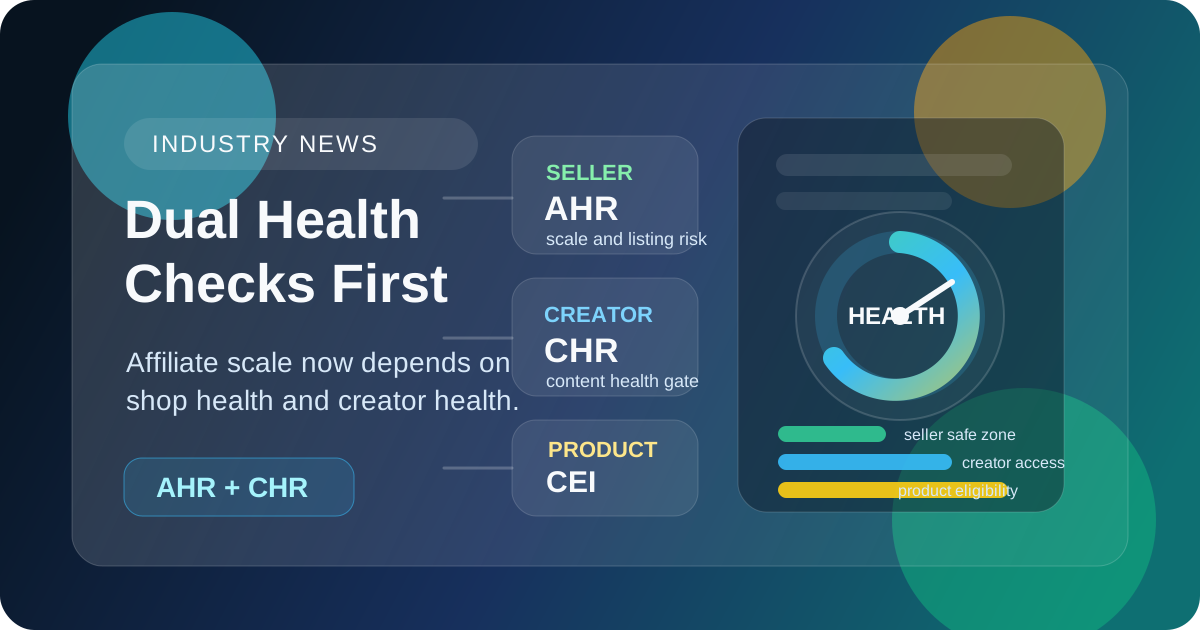
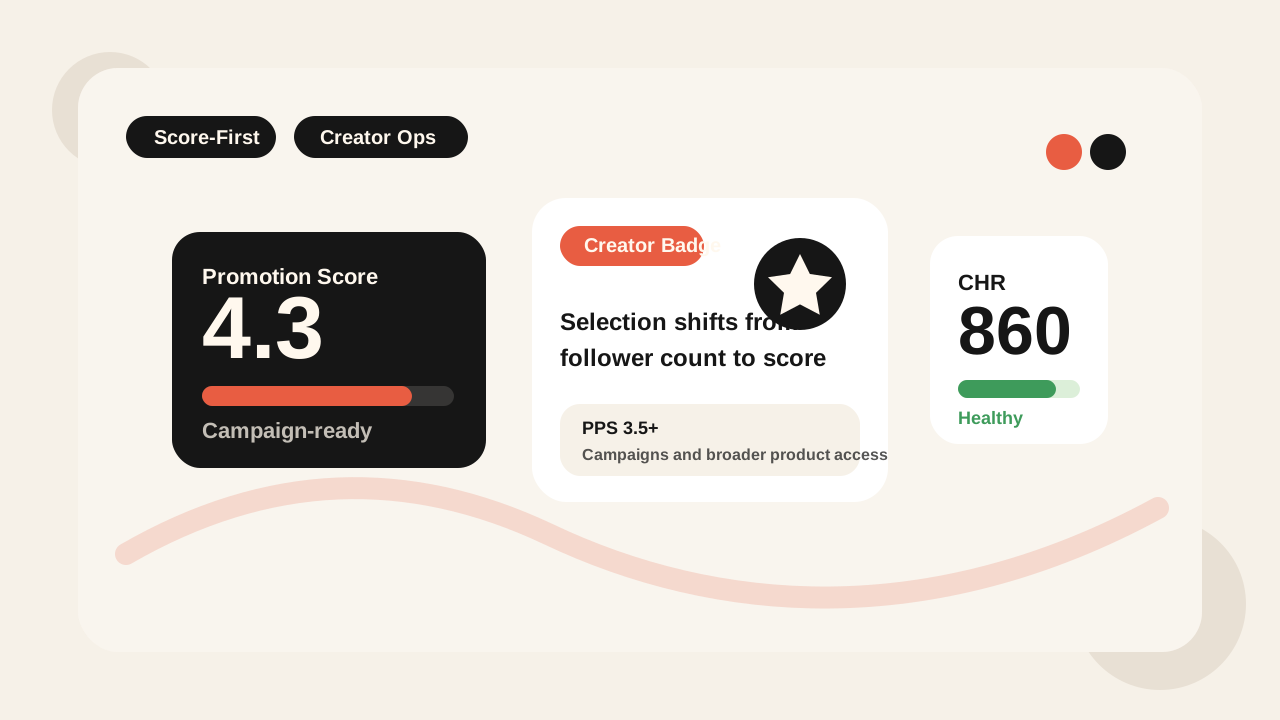
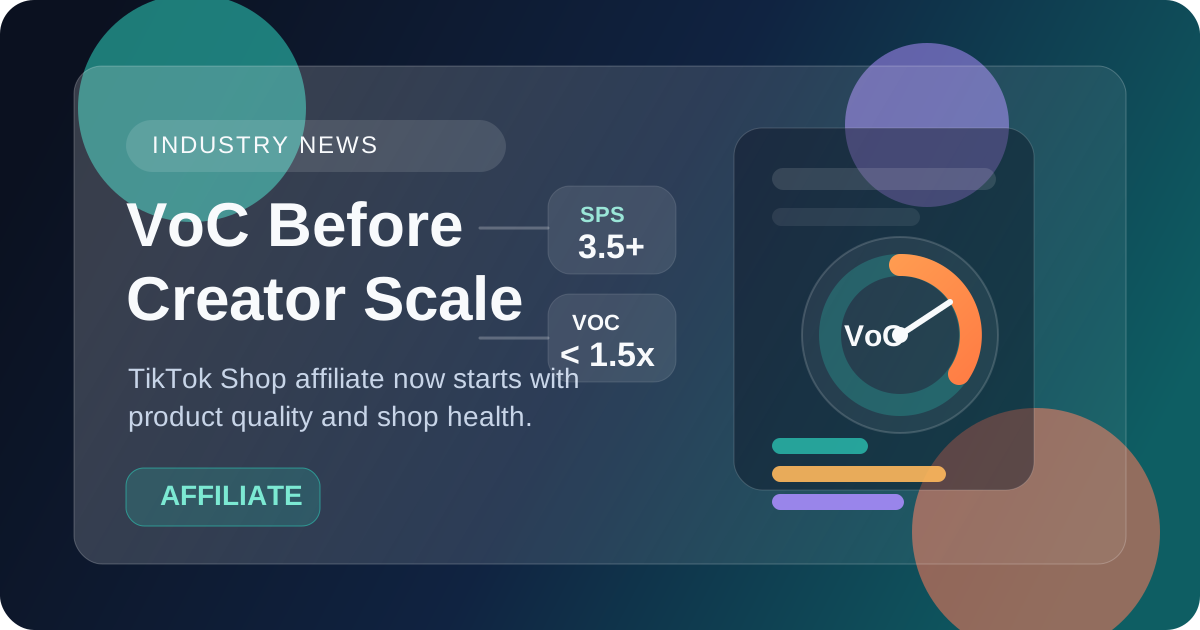
- A shop generally needs to maintain a Shop Performance Score of 3.5 or above to stay comfortably eligible for affiliate expansion.
- If SPS falls into the 3.0 to 3.5 range, the shop may lose the ability to add new affiliate products.
- If SPS drops below 3.0, the entire shop can be disqualified from affiliate access.
- At the product level, a SKU can lose affiliate eligibility when its Customer Experience Index or VoC-related quality signals rise too far above the category baseline, and more severe cases can trigger product-level removal from affiliate programs.
The important point is not the exact numbers by themselves. It is that TikTok has now formally connected post-purchase quality with front-end creator distribution.
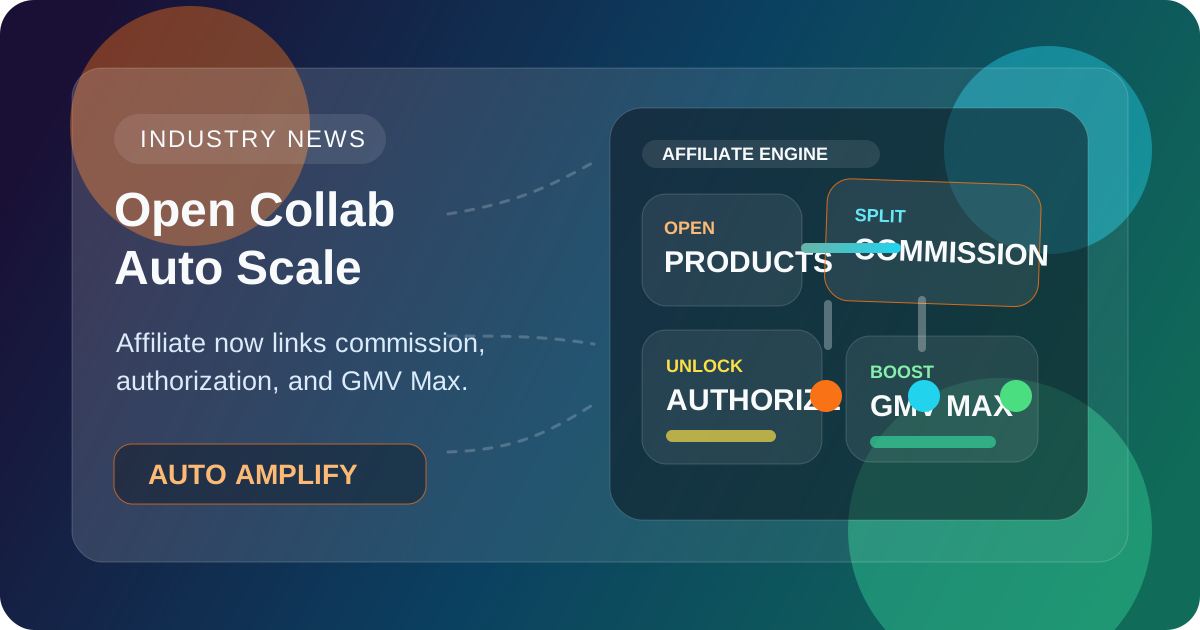
In the old mindset, brands treated affiliate like a recruitment action: list the product first, then see whether creators pick it up. TikTok is now moving in the opposite direction. The platform is evaluating whether the shop and the product deserve creator distribution before that distribution scales.
Creator affiliate is turning from a recruitment pool into a quality pool
Once that shift is clear, many marketplace patterns make more sense.
Why do some products still struggle to sustain creator pickup even when commissions are not low? Because commission is no longer the only thing the platform surfaces into the system. Product experience, fulfillment stability, and historical customer signals increasingly shape whether that product remains promotable.
Why do some shops manage to start creator relationships but fail to turn them into repeatable supply? Because if product quality is unstable or after-sales issues pile up, affiliate stops behaving like a scalable channel. Creators become more cautious, and so does the platform.
Why can two shops launch similar open collaborations but get very different outcomes over time? Because one shop is operating inside the platform's acceptable quality line, while the other must increasingly rely on manual creator selection to compensate for products the system is less willing to distribute broadly.
From this angle, affiliate is no longer only a BD question. It is a product-governance question. TikTok is increasingly deciding whether a product is fit for creator distribution before the outreach team ever tries to scale it.
The dashboards worth watching now are no longer only creator dashboards
For brand and TikTok Shop teams, the most useful operational upgrade is not to make the creator list longer first. It is to make product screening before affiliate more disciplined.
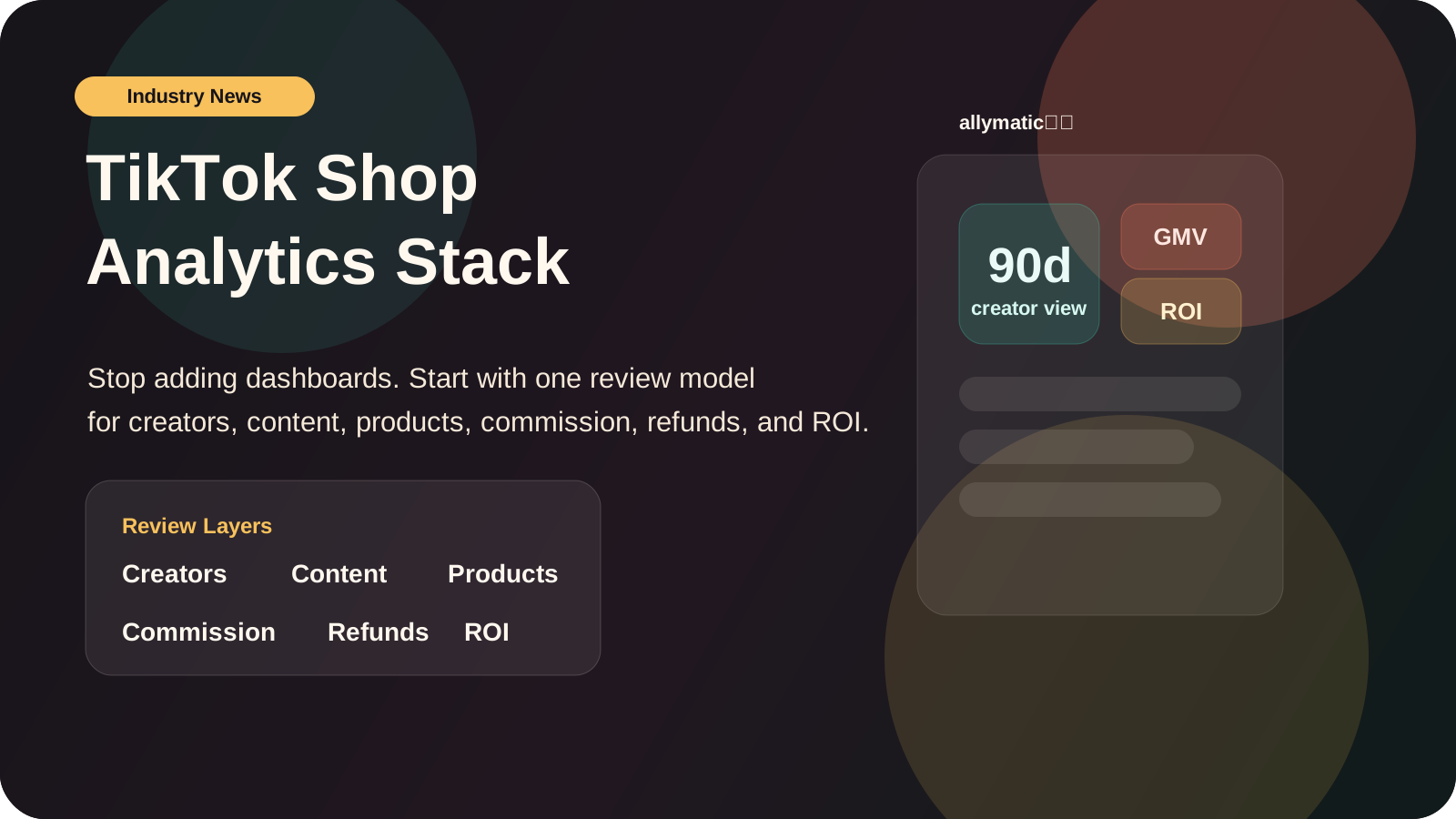
At minimum, four groups of signals now need to sit in the same operating view:
- Shop level: whether SPS is approaching the line where new affiliate products become constrained.
- Product level: whether VoC, Customer Experience Index, review themes, and return reasons are drifting away from category norms.
- Content level: which SKUs can earn authentic engagement on their own and which ones need aggressive commission just to attract attention.
- Collaboration level: which products are ready for open collaboration and which products should stay in targeted or limited testing first.
This matters because affiliate eligibility is increasingly being constrained by product experience. Teams can no longer run merchandising, after-sales, and creator operations as if they were separate tracks. The samples the creator team sends this week may be redefined by returns and reviews two weeks later. Problems the after-sales team fails to contain today may show up next week as a smaller affiliate-ready SKU pool.
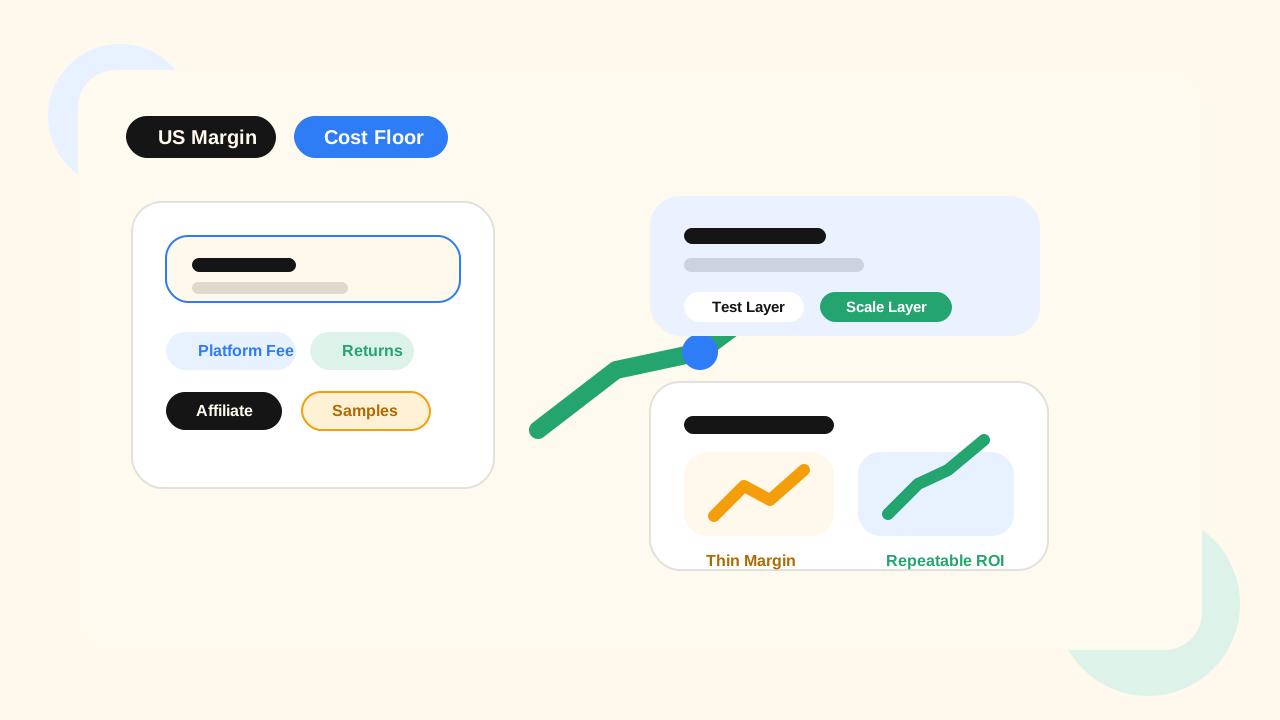
A more realistic operating model is to split affiliate SKUs into three layers
If I were running TikTok Shop creator affiliate today, I would start by splitting products into three layers.
The first layer is traffic-testing SKUs. These products have content potential, but their reputation data is still thin. They are better suited to smaller targeted collaborations that test content response and real buyer feedback before broad creator expansion.
The second layer is stable-scaling SKUs. These products have healthier reviews, smoother after-sales signals, and stronger content behavior. They are the right candidates for open collaboration and larger creator supply.
The third layer is repair-risk SKUs. These products are already showing reputation volatility, concentrated return reasons, or rising explanation cost. They should not be propped up with higher commission alone. They need fixes in listing quality, fulfillment, product explanation, and after-sales handling first.
Many teams used to tier affiliate around creator size. A more effective approach now may be to tier around how safely each product can be amplified through affiliate.
The allymatic view
From the allymatic perspective, the most important part of this shift is not that TikTok added one more threshold. It is that the platform is redefining the entrance to creator affiliate.
The stronger TikTok Shop teams from here will not just be the ones that find creators faster, negotiate commission better, or chase content harder. They will be the ones that connect product reputation, after-sales anomalies, sample cadence, creator feedback, and affiliate scaling into one operating rhythm.
TikTok is already using VoC and shop score to run the first layer of filtering for you. Teams that connect their internal workflow around that logic will have a better chance of turning affiliate into steady growth. Teams that still treat creator distribution as something to blast first and repair later will keep running into invisible scaling ceilings.
At bottom, TikTok Shop is not rejecting creator commerce. It is telling brands more clearly: fix the product until it deserves creator distribution, then recruit at scale.