Follower Count Is No Longer Enough: TikTok Shop Is Turning Creator Selection into a Score-First System
If your team still chooses TikTok Shop creators by looking first at follower count, content style, and commission rate, that order of operations is about to get slower and less reliable.
The latest round of official updates is pushing creator evaluation much earlier in the workflow. Promotion Performance Score (PPS) now sits at the top of Creator Center, Creator Health Rating (CHR) is replacing the old violation-point mindset, and campaign access, product eligibility, LIVE Giveaways, sample coupons, and even visible creator badges are increasingly being tied to these scores.
This matters because TikTok Shop is not just giving creators another dashboard metric. It is gradually turning creator quality, reliability, and platform trust into a formal collaboration layer that brands can read before they invest more budget.
For brands and TikTok Shop teams, the implication is simple: what matters going forward is not only how many creators you can find, but how quickly you can tell which creators are actually ready to scale with you.
The first visible shift is that trust is becoming part of the entry point
Start with PPS.
According to TikTok Shop's latest guidance, PPS is a daily dynamic score from 0 to 5. It evaluates two things: the quality of the products a creator chooses to promote and the quality of the content that creator publishes. In other words, TikTok is no longer only asking whether a creator is active. It is increasingly measuring whether that creator promotes good products and produces content that deserves broader distribution.
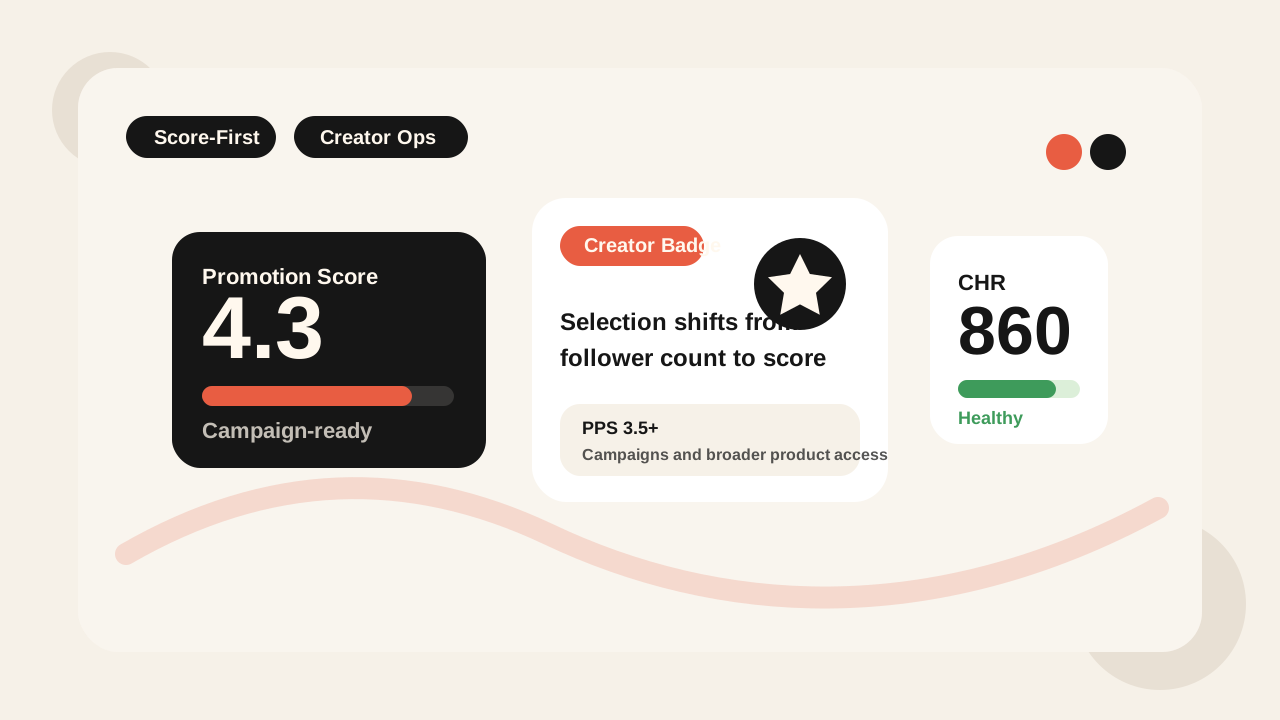
More importantly, PPS is not only for creators themselves. TikTok explicitly says the score may be shown to sellers and customers so they can judge whether a creator is trustworthy as a partner and advocate. Starting in June, creators with PPS at 4.0 or above can also earn a visible creator badge.
That is a strong signal.
In the past, most brands built their own screening spreadsheets around follower count, recent views, prior GMV, commission rate, or response speed. TikTok is now standardizing part of that judgment into platform scoring and platform signaling. The first layer of creator selection is becoming less dependent on internal instinct alone and more shaped by TikTok's own trust markers.
Put differently, the platform is making trust part of the collaboration gateway.
High-value opportunities are now gated not just by performance, but by account health
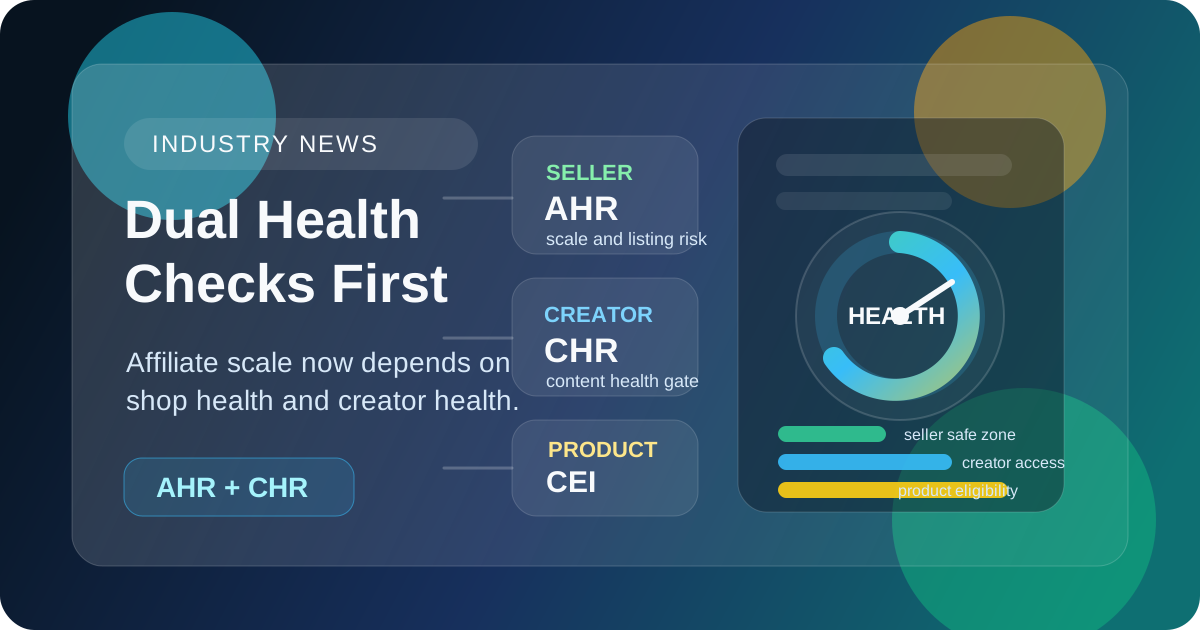
If PPS represents selling quality and content quality, CHR represents whether an account is stable enough to keep operating inside the system.
TikTok defines CHR as a 0 to 1,000 creator health score. New creators start at 200 points. Compliant content and successful orders can help them earn points back or grow their score, while violations, fulfillment issues, or high-risk behavior reduce it. TikTok has also made the ranges much clearer:
- 200 to 1,000 points means the account is healthy.
- 151 to 199 means it needs improvement.
- 150 and below means the account is at risk and may trigger stronger restrictions.
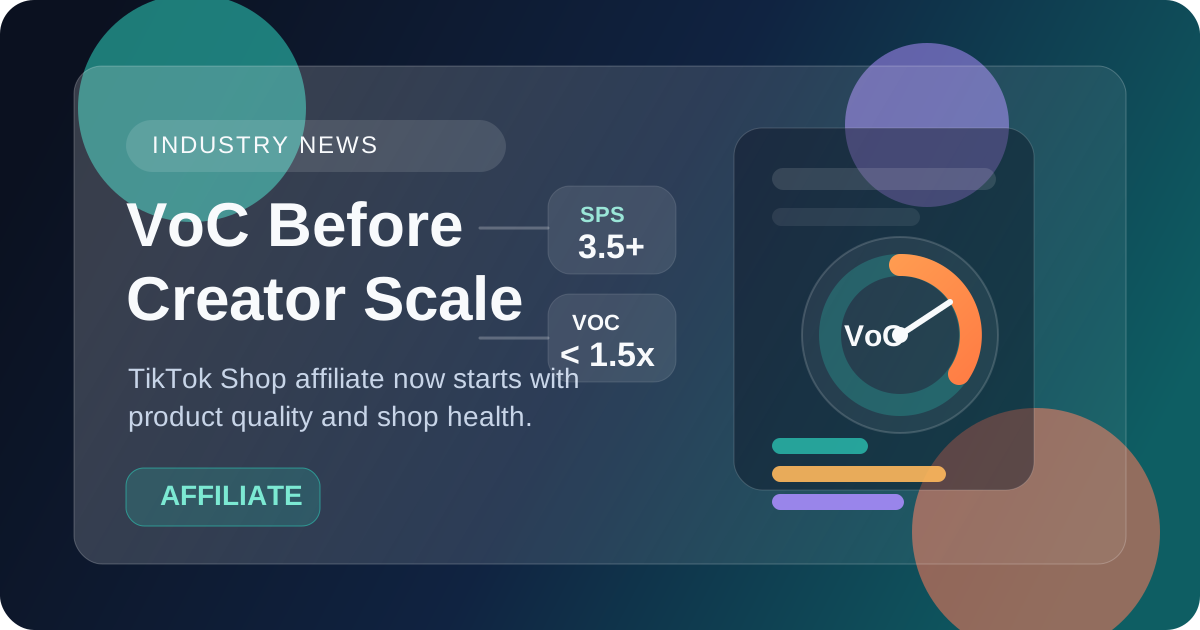
The key point for merchants is that CHR is not a metric to look at only after something goes wrong. It directly affects campaign eligibility. TikTok has already stated that to enroll in TikTok Shop Campaigns, creators need a PPS of at least 3.5 and a CHR above 150.
That changes how brands should think about talent selection.
A creator may have the right content format and an acceptable quote, but if their account health is unstable, they may still be a weak fit for major campaigns, launch moments, or high-priority inventory. TikTok is signaling that a collaboration partner should not only be able to post content, but also be able to keep delivering inside the rules over time.
That is different from the older logic of simply checking whether someone has violation history. CHR works more like an operating credit system than a one-time compliance filter.
Product access is also being layered. Not every creator can touch the same inventory
The deeper change is that TikTok is now connecting creator status directly to product-level opportunity.
The Affiliate Creator Product Selection Policy updated in March states this clearly: a creator's ability to promote certain products is no longer determined only by whether affiliate permissions are enabled. Eligibility can depend on PPS, CHR, sales track record, and the creator's ongoing ability to produce high-quality content. Some categories also remain invite-only.
That is a meaningful structural move. TikTok is not just scoring creators. It is using those scores to decide what kinds of opportunities they can access.
Higher PPS is not just cosmetic. It unlocks real collaboration advantages:
- Eligibility to participate in campaigns and gain broader platform visibility.
- Access to a wider range of affiliate creator products.
- Eligibility to run LIVE Giveaways.
- Opportunities to receive sample coupons.
- A visible creator badge once PPS reaches 4.0 or above.
Taken together, these mechanisms are turning creator supply into a more explicit tiered market. On the surface, everyone is still called a creator. In practice, the platform is using score thresholds, product eligibility, sample incentives, and campaign access to separate creators who are technically available from creators who are strategically investable.
For brands, that changes the screening order. The question is no longer only whether the creator feels right for the audience. Increasingly, it is whether the creator is already sitting in the right platform state for the kind of cooperation you want to run.
The real operational upgrade is to change pool structure, not just shortlist faster
The most practical implication of these updates is not that teams need to memorize two new acronyms. It is that they need to rebuild how they layer their creator pool.
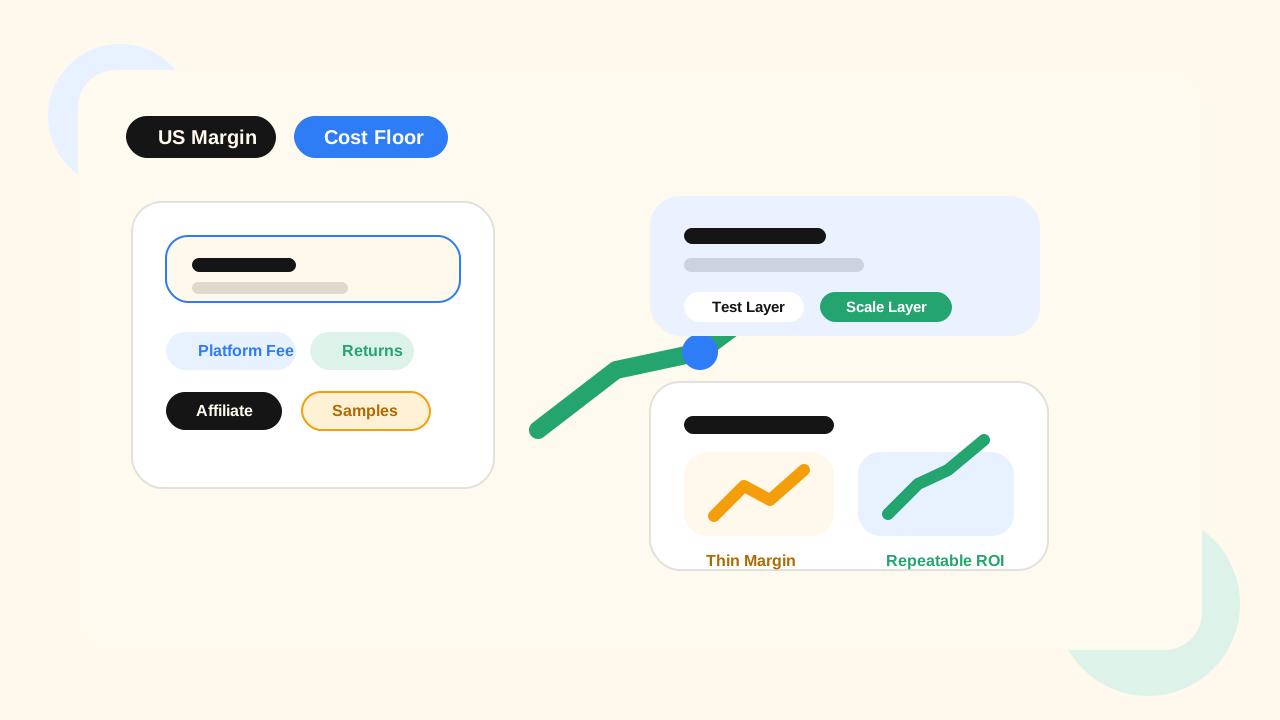
A more useful operating model is to stop tagging creators only by follower size or content vertical and add a platform-state layer as well. At minimum, teams can think in three tiers:
- Watchlist tier: creators whose style fits, but whose score or health status is not stable enough yet. Good for observation, not for heavy sample investment or major campaign moments.
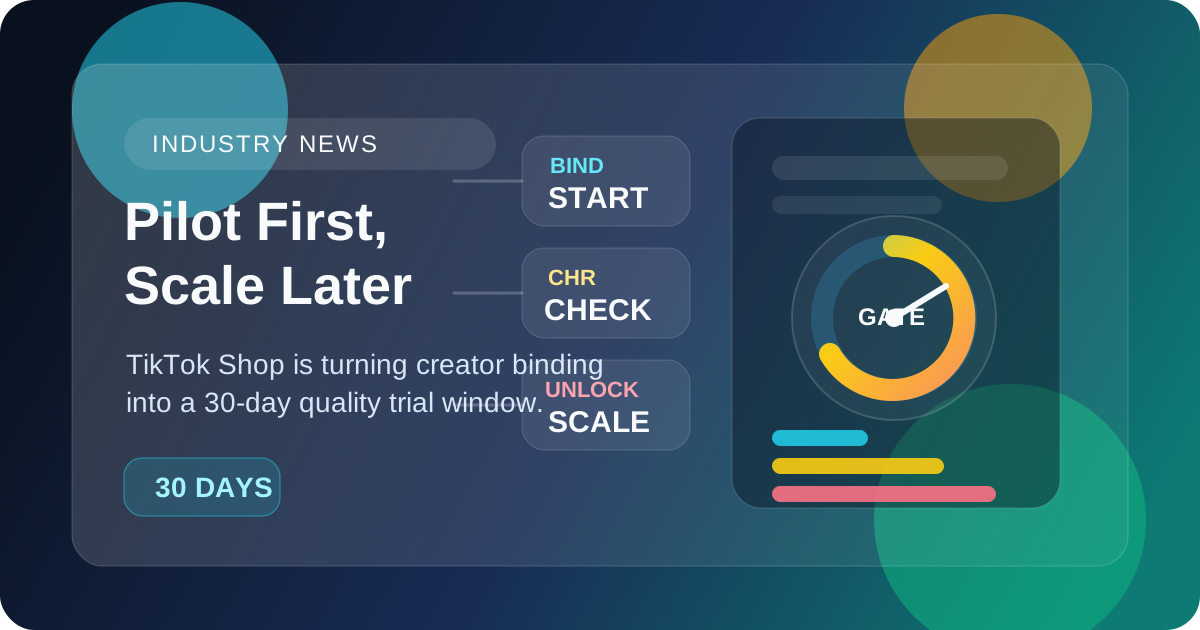
- Test tier: creators who have basic collaboration eligibility and can be used for smaller samples, low-risk product tests, or baseline affiliate execution.
- Scale tier: creators with stronger PPS, stronger CHR, clearer category access, and more stable track records. These are the ones better suited for campaigns, priority SKUs, LIVE moments, and downstream amplification.
This tiering creates a much more honest working view. It helps teams distinguish between creators who merely look promising on a list and creators who are already operationally ready inside TikTok Shop's own system.
Many teams do not actually have a top-of-funnel problem. They have an interpretation problem. Their lists are long, samples go out, conversations happen, but the share of collaborations that move forward cleanly remains low. Often the issue is not that the creators are unusable. It is that the team never made platform state part of the decision model.
If TikTok is now doing the first round of scoring for you, there is little reason to keep managing every creator with the same rhythm.
How allymatic sees this shift
From the allymatic perspective, the bigger signal is that TikTok Shop is moving creator collaboration away from volume-first prospecting and toward state-based selection.
The teams with the strongest advantage will not necessarily be the ones with the largest creator database. They will be the ones that connect creator score, health status, sample allocation, campaign eligibility, and scale-up decisions inside one workflow earliest.
In practical terms, brands can start with three changes:
- Add PPS, CHR, category eligibility, and recent collaboration status into the creator pool instead of storing only followers, pricing, and notes.
- Prioritize samples, campaigns, LIVE moments, and high-commission products for creators whose platform state is already more stable.
- Upgrade the team question from "Did this creator reply?" to "Is this creator worth pushing forward right now?"
TikTok is already redefining what a usable creator looks like. The next step for brands is not simply to find more names, but to recognize much earlier who has actually reached the next level of collaboration readiness.