Stop Waiting Until Launch to Find Creators: TikTok Shop Is Building Local Creator Supply as Infrastructure
Many brands still enter a new market in a familiar order: open the shop, list products, run some ads, and only then start taking local creator partnerships seriously. In that logic, creators are a downstream growth lever. The store comes first, and creator supply gets added later.
TikTok Shop's recent moves across markets suggest that this sequence is now reversing.
From TikTok Shop Japan's first seller-creator matching event in March 2026, to the Philippines' Summit Pilipinas and Creator Awards in May, to TikTok LIVE Community Fest launching a global Creator Academy on June 8, the signal is highly consistent: TikTok is no longer only giving sellers storefront and ad tools. It is actively building, training, recognizing, and activating local creator supply.
For cross-border brands, that changes the operating model. Local creators are no longer just traffic support that can be added after launch. They are becoming infrastructure that needs to be prepared during market entry.
TikTok is not only matching partners. It is operating the supply side
Look closely at the recent platform activity and it already goes beyond ordinary merchant marketing events.
In Japan, the seller-creator matching event was not just a branding exercise. More than 60 sellers and more than 240 creators met face to face around category fit, product stories, content design, affiliate execution, and LIVE selling potential. TikTok also pulled official partners, creator education, and sales-path design into the same environment. The real significance was not the event itself. It was TikTok shortening the distance between "a seller has products" and "local creators know how to sell them."
The Philippines offers an even clearer example. Summit Pilipinas gathered brands, sellers, creators, and ecosystem partners around one idea: discovery e-commerce growth now depends on the tighter convergence of short-form video, LIVE commerce, and creator-led recommendation. The Creator Awards pushed the same story from another angle. It did not just reward visibility. It highlighted creator-led commerce as a serious operating layer, celebrating creators, agencies, and creator-entrepreneurs who are building repeatable business outcomes on the platform.
Then there is Community Fest Creator Academy, launched on June 8. Its curriculum is not about one-off campaign tricks. It covers LIVE fundamentals, the first five minutes of audience connection, community building, and sustained creator growth through platform tools. In other words, TikTok is systematizing creator-side education itself. Brands used to wonder whether a creator could really go LIVE well, explain products clearly, and stay active long enough to matter. Now the platform is doing part of that pre-training at ecosystem level.
Put those signals together and one conclusion stands out: TikTok Shop's next phase is not only about adding more sellers. It is about expanding local content and creator supply that can actually convert.
Why this changes the launch sequence for brands
Many teams still think about market entry in three steps: open the shop, buy traffic, then recruit creators. That sequence is workable in shelf-based e-commerce, but it is increasingly weak inside TikTok Shop's discovery-led model.
The reason is simple. Users often do not arrive with clear intent and search keywords. They meet products inside content, understand them through creator recommendation, and convert through short videos or LIVE sessions. That means content and creators are not just downstream amplifiers. They are front-end launch assets.
When local creator supply is not ready, the usual problems appear quickly:
- The shop is open, but the first wave of content lacks local context, so users can see the product without understanding why they should buy it.
- Products are available, but there are not enough local creators ready to participate, so open collaboration stays live without real momentum.
- Promotional moments arrive, but the pool of creators who can go LIVE, explain the offer, and support a timed campaign is still too thin.
- Samples get shipped, but there is no stable loop for feedback, content recovery, and second-round amplification, so supply remains stuck in trial mode.
Inside TikTok Shop, the store launch date is increasingly different from the real scale date. Scale begins when local creators understand the product, know how to talk about it, and can participate in an ongoing operating rhythm.
The next competition is not who opens first. It is who organizes local creator supply first
This helps explain why TikTok is expanding seller access and creator-side systems at the same time. Matching events, training tracks, awards, and creator community mechanisms all reduce the friction for creators to enter commerce while increasing the likelihood that strong creators stay active and keep improving.
For brands, that creates a very practical new requirement. The question is no longer just, "Can we find some creators?" The better question is, "Can we organize a local creator layer earlier than competitors?"
That organization is much more than building a list.
It includes:
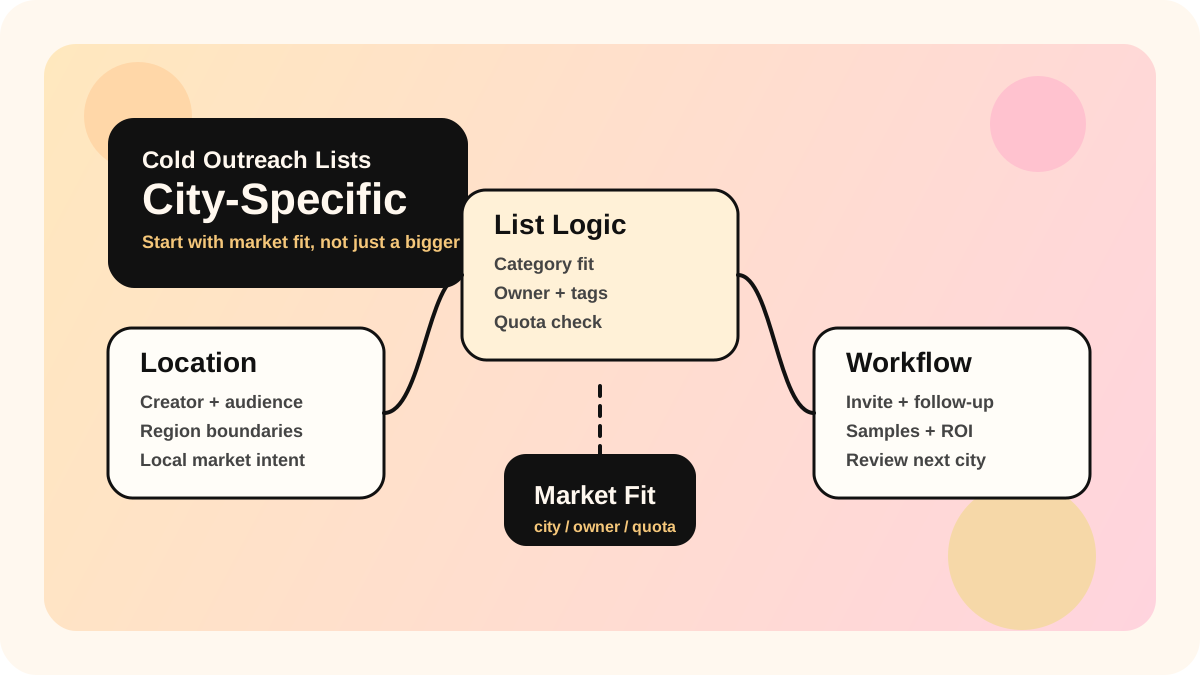
- Which creators are best for organic testing, which are right for campaign pushes, and which are suitable for LIVE.
- Which products can scale through open collaboration and which require target collaboration with tighter management.
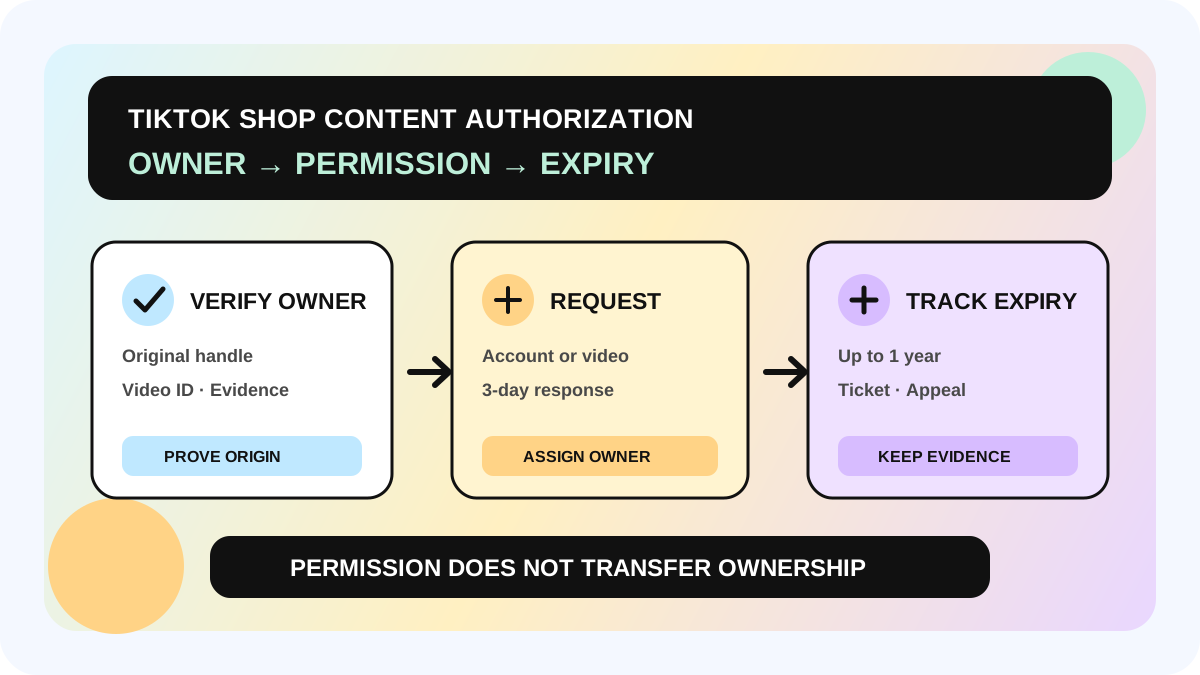
- Which creator content deserves authorization, paid reuse, and long-term partnership, and which should remain a one-off test.
- Whether samples, feedback, content recovery, review, and the next collaboration cycle are already linked into one operating flow.
Many brands do not fail because they found no creators at all. They fail because the creators they found never became structured, reusable supply.
What brand teams should prepare now
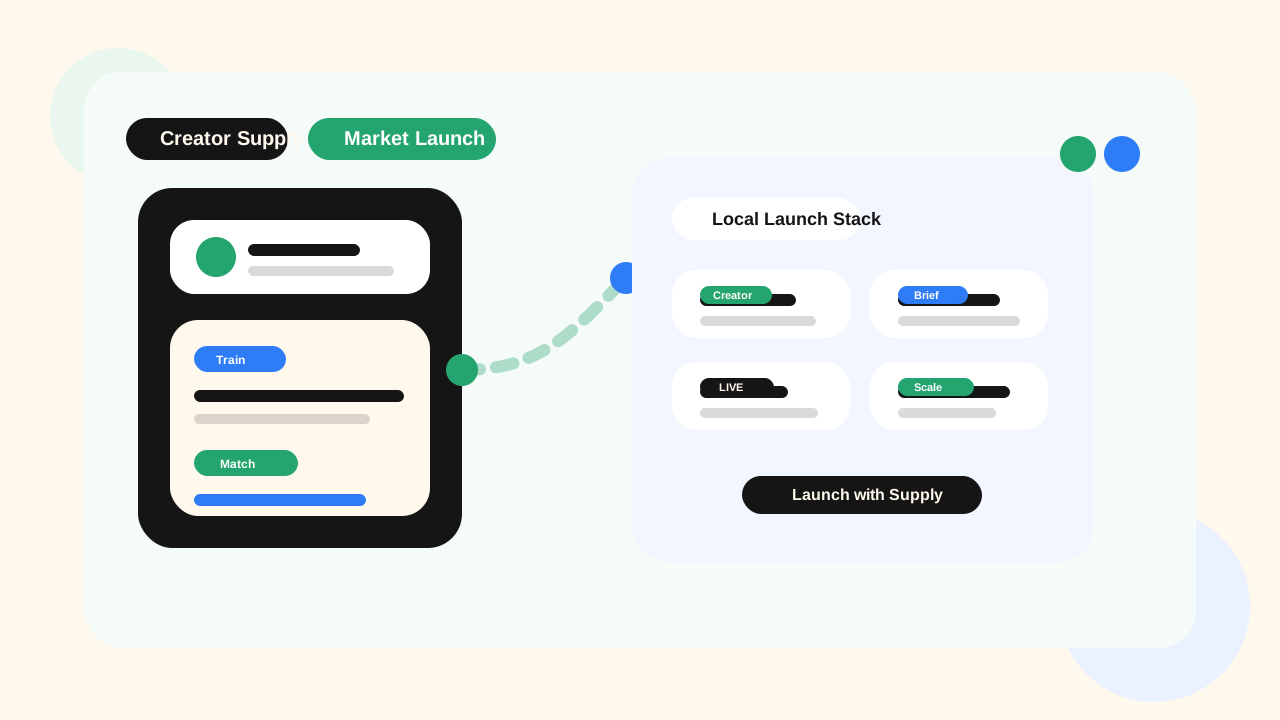
If you are entering a new TikTok Shop market, creator supply should move earlier in your launch sequence.
- Do not wait until the store is live to build your first local creator pool. Prepare the first layer at least two to four weeks earlier.
- Do not tier creators only by follower count. Tier them by content scenario, category fit, LIVE capability, sample responsiveness, and collaboration reliability.
- Do not treat briefs, samples, authorization, and campaign timing as separate tasks. They should be designed as one chain before collaboration starts.
- Do not judge the effort only by single-post ROI. Measure whether the local creator layer is becoming durable supply for future products, campaigns, and paid amplification.
Once TikTok itself starts operating creator supply, any brand team that still treats creator collaboration as an ad hoc project will lose speed.
How allymatic reads this shift
From the allymatic perspective, the important change is not that TikTok Shop has hosted a few more creator events. The important change is that local creator supply is being treated like market infrastructure.
The teams that build local creator CRM, sample cadence, collaboration status, content recovery, authorization tracking, and campaign scheduling earlier will be the teams that complete market cold start faster. The strongest operators will not simply be good at finding creators. They will be good at building local creator supply the way they would build a sales channel.
In the next phase of TikTok Shop competition, the real edge may belong less to the brand that enters first and more to the brand that organizes local creator supply first.