Late Delivery, Ratings, and Returns Are No Longer One Bucket: TikTok Shop Is Rewriting Fulfillment Accountability
Many brand teams still treat fulfillment problems on TikTok Shop as one generic operational category: logistics went wrong, customer service will clean it up, and the business moves on. But TikTok Shop's June 2026 updates point in a different direction. The platform is no longer treating late dispatch, late delivery, in-transit damage, logistics-driven reviews, and return reviews as one blended issue.
Instead, TikTok Shop is separating fulfillment accountability into different ledgers. One part still belongs to the seller. Another part is now more explicitly assigned to platform logistics. A third part determines whether shop metrics, product reputation, and future scale stay healthy. For cross-border brands and TikTok Shop operators, this is not just a support topic. It is becoming part of the operating system that protects growth permissions, creator efficiency, and margin stability.
The core shift is not faster shipping. It is clearer accountability
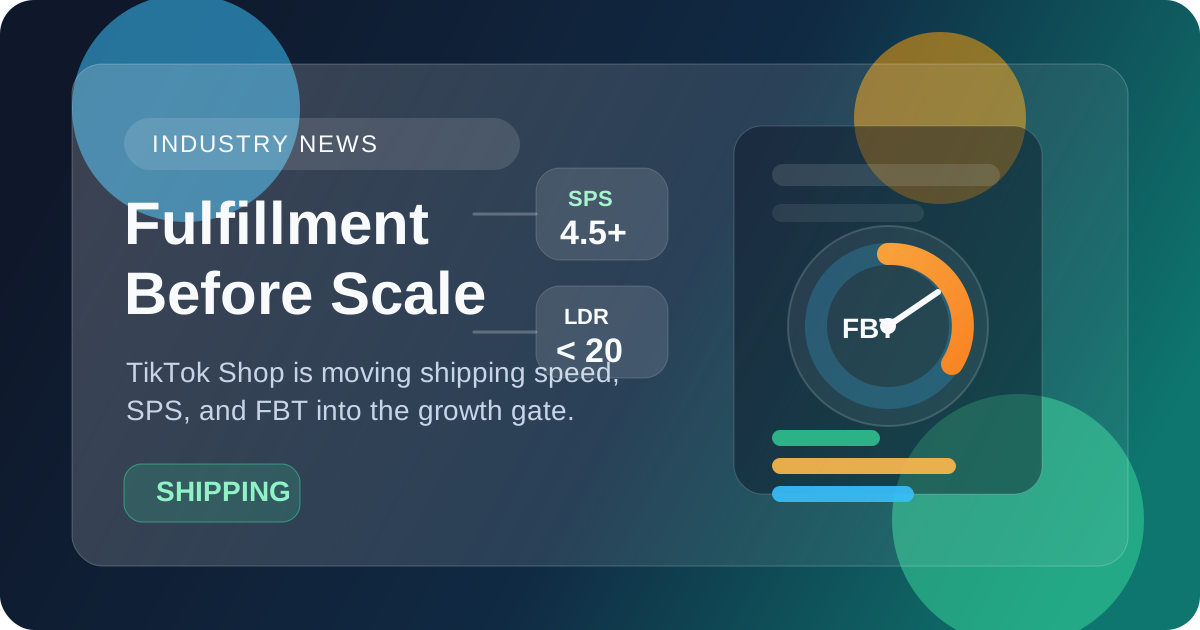
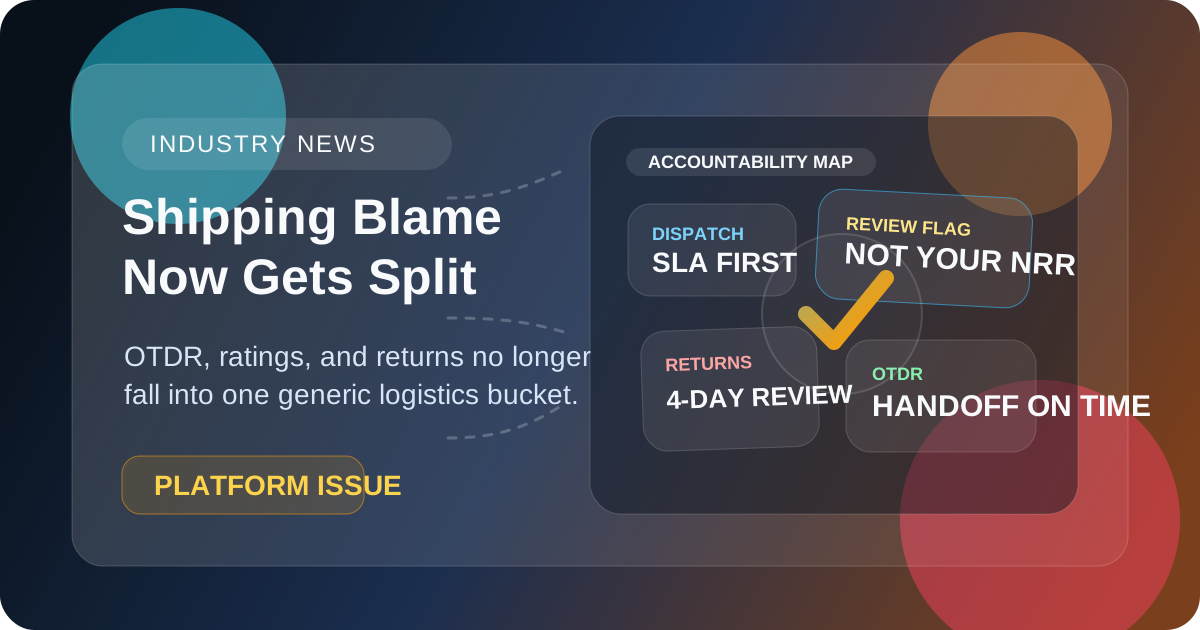
The June 5 Policy Pulse already made the direction clear. TikTok Shop updated how On-time Delivery Rate, or OTDR, works for Upgraded TikTok Shipping and Collection by TikTok. If the seller dispatches within the required dispatch SLA, downstream carrier delays no longer keep dragging OTDR lower. At the same time, Fulfilled by TikTok orders remain excluded from OTDR.
That is a meaningful operating change. TikTok is effectively saying that sellers will increasingly be judged not on whether every package arrives perfectly under all conditions, but on whether they completed the handoff correctly inside the part of the process they actually control. Delivery outcome still matters, but the platform is drawing a sharper line between seller execution and carrier or platform-logistics performance.
This breaks with the way many teams still react to fulfillment declines. Historically, a falling OTDR would trigger a full-company scramble across warehouse staff, carriers, customer support, and operators. Now the first question should be different: did the issue happen before dispatch, or after dispatch? If it happened after a compliant handoff into platform logistics, the shop may no longer need to absorb the entire consequence.
Product ratings are also being split so logistics blame does not automatically become product blame
TikTok's June 2 Product Ratings update pushed the same logic even further. For sellers using FBT or supported TikTok Shipping 4PL partners, the system now automatically identifies reviews that are purely about platform logistics. Those reviews are marked as "Platform Issue." They still remain visible to shoppers, but they no longer count toward Product Rating or Negative Review Rate.
The important part is not just the exclusion. TikTok is also stepping in to own the response. The platform can automatically reply on the seller's behalf and acknowledge that the issue came from TikTok or its logistics partner. That means the seller does not need to manually appeal, manually explain, or continue treating every post-purchase complaint as if it reflected product quality or support quality.
This changes how operators should read product signals. The real task is to separate the things that need a product fix such as experience, packaging, listing clarity, or expectation setting from the things caused by platform logistics. If logistics-caused reviews are stripped out of the product score, teams should stop overreacting by rewriting the SKU strategy, creator brief, or support script every time a ratings dip appears.
Returns and refunds are also being standardized into a review discipline
The same Policy Pulse update also unified the returns and refunds review flow. With the separate Speedy Refund appeal queue removed, aftersales requests now move through one standard two-step review path with a fixed four-business-day review window. On the surface that sounds like a small workflow cleanup. In practice it reduces the space for improvised aftersales judgment.
Once review timing, review logic, and metric impact are standardized, the business no longer wins by simply responding faster. It wins by keeping a stronger evidence chain. When was the order handed over? Was the tracking movement genuine and verifiable? Did the listing clearly set expectations? Did package damage come from product packaging, pickup handling, carrier transit, or customer misuse? These details increasingly shape appeal success, After-Sales Handling Time, ISRR performance, and whether the shop can remain in a healthy operating zone.
TikTok Shop is turning aftersales from a support habit into an evidence-management discipline.
The most valuable capability now is not recovery speed. It is evidence organization
This is the part many teams will underestimate. These changes are likely to reshape internal operating roles.
Brand teams often still treat fulfillment as a warehouse or logistics function while creator, ad, and product teams stay focused on the front end of growth. But once accountability is separated more precisely, evidence organization becomes part of the foundation for the entire growth chain.
Future campaign access, creator scale, and SKU expansion all depend on the same operating health system. If a seller uses Seller Shipping, tracking accuracy, carrier performance, deliver-by SLA compliance, and appeal materials remain the seller's burden. If the seller uses TikTok Shipping, Upgraded TikTok Shipping, or FBT, part of the logistics blame can move out of the seller ledger, but only if dispatch execution and event records are kept clean from the start.
The stronger teams will usually reinforce three habits first:
- they split fulfillment dashboards into dispatch, carrier, delivery, review, and returns layers instead of looking at one blended logistics error rate;
- they write the responsibility boundary between Seller Shipping and TikTok Shipping directly into SOPs so customer support, operations, and warehouse teams stop pushing the same issue back and forth;
- they feed recurring aftersales causes back into PDP copy, creator briefs, and packaging standards so avoidable returns and avoidable reviews get prevented upstream.
Creator operations will feel this shift too
It is easy to assume that fulfillment accountability matters only to shop operators. In reality, creator teams will feel the effect just as directly.
TikTok is refining content rules, affiliate access, and campaign resources on one side while tying aftersales, fulfillment, and reputation more tightly into the same operating system on the other. If logistics problems keep weakening ratings, aftersales handling, or shop health, creator collaboration becomes less stable even when commission is attractive. On the other hand, if platform-logistics issues are correctly identified and separated from product reputation, brands have a better chance of protecting the SKUs that deserve scale instead of slowing down creator momentum because of one bad batch of deliveries.
That is why stronger creator teams should not look only at commission and posting schedules. They also need to understand the fulfillment model behind the product they are trying to scale. Which SKUs are safe to push through platform logistics, which still require tighter carrier control, and which products are most likely to trigger review damage or return cost if something breaks are all now part of collaboration quality.
The real filter is who can remove the wrong blame from the business first
From the allymatic perspective, TikTok Shop is not simply improving shipping experience. It is rewriting a more platform-native way to allocate accountability. When the issue belongs to platform logistics, TikTok is increasingly trying to own that responsibility. When the issue belongs to seller dispatch, product experience, or aftersales judgment, the seller is increasingly expected to leave a clear evidence trail.
That makes the next stage of competition more practical. The stronger team is not the one that never has an exception. It is the one that can quickly identify where an exception belongs, remove unfair blame from its own operating metrics, and keep fixing the SKUs, packaging, listing clarity, and support actions that truly belong inside its system.
Once late delivery, ratings, and returns are no longer treated as one bucket, logistics stops being just a cost center. It becomes a responsibility-management capability inside the growth stack.
Official Sources
Official Sources
Primary references used for this article.