Campaign Access Now Has a Price Tag: Smart Promotion Is Rewriting TikTok Shop Promo Budgets
Since April 2026, many TikTok Shop teams in the US market have started running into a new reality: joining major campaigns no longer begins with submitting products, adjusting discounts, or rushing creators. It begins with turning on Smart Promotion.
That sounds like a small Seller Center feature change, but the real shift is bigger. TikTok's May documentation shows that Smart Promotion is no longer just an automation tool for discounts. It is becoming the operating layer that connects major campaigns, Flash Sale, Premium Offer, weekly promotional opportunities, and platform-funded incentives through a fixed-fee structure. For brands and TikTok Shop operators, that means promo budgets, creator timing, and profit logic now have to be planned in a different order.
Smart Promotion is becoming the front door to campaign inventory
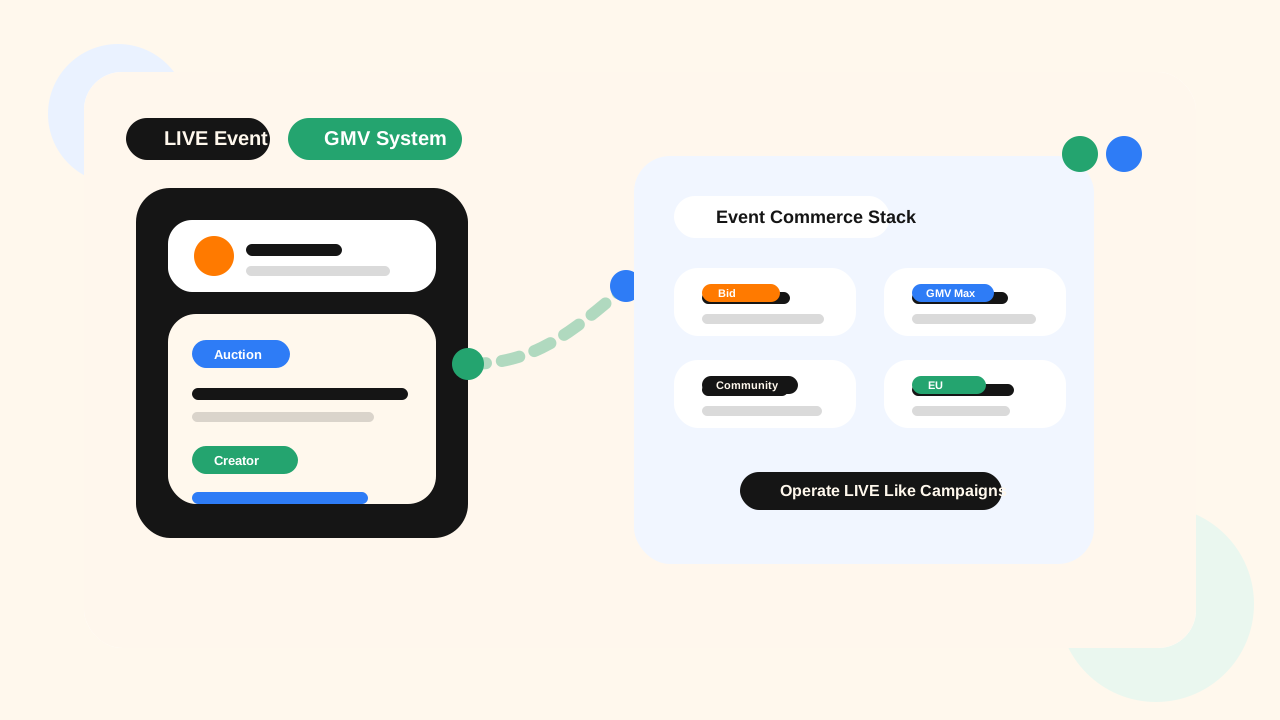
TikTok Shop's official explanation is already clear. Smart Promotion can connect sellers to platform activities, product discounts, coupons, shipping incentives, and bonus points inside one setup flow. More importantly, since April 2026, sellers need Smart Promotion enabled to keep accessing major campaigns and the related platform-funded resources attached to them.
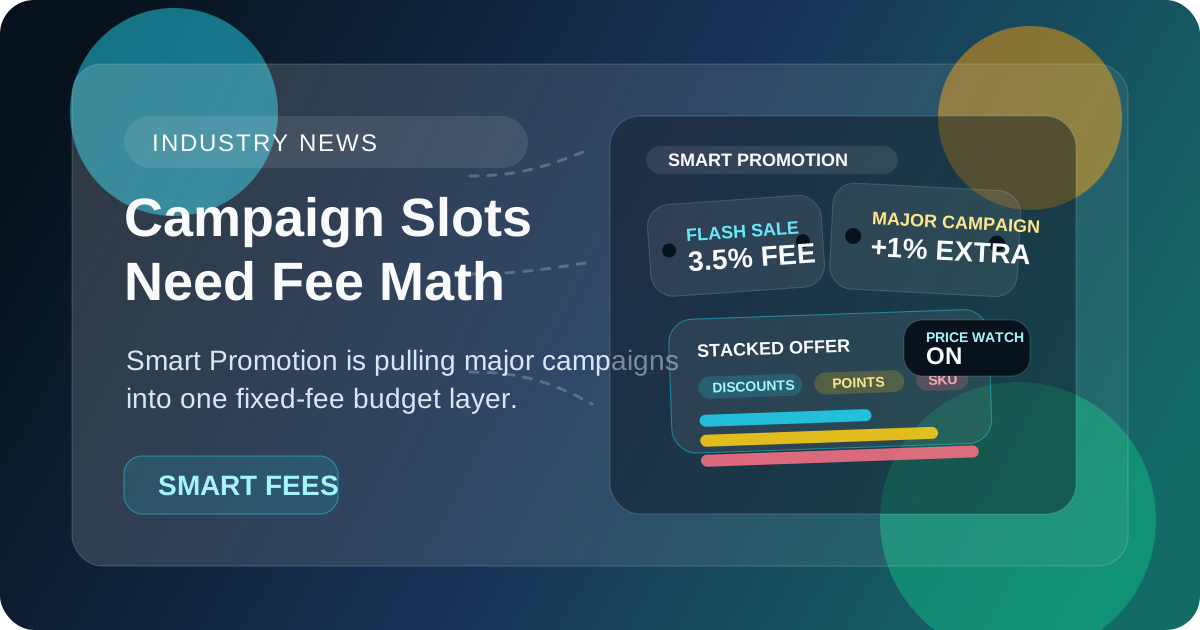
The charging logic matters just as much as the feature logic. During standard periods, participating products carry a fixed promotional fee. During major campaigns, an additional fee layer applies. Once TikTok replaced the old Co-funded Promotion path in March, campaign registration stopped being a simple yes-or-no submission choice. It started becoming a profitability decision about whether the seller is willing to give part of each order back to TikTok's promotional system in exchange for access and scale.
That is a bigger operational change than it may first appear. Campaign inventory is no longer something teams casually apply for at the last minute. It is something they enter only after accepting the platform's promotion structure.
Budget planning is shifting from fragmented ownership to fixed-fee-first math
Many teams still plan campaigns in silos. Paid media owns ad spend. Creator teams own commission. Shop operators own discount depth. Shipping incentives and platform subsidy logic often get handled late in the process.
That workflow becomes much weaker once Smart Promotion acts as the common entry layer.
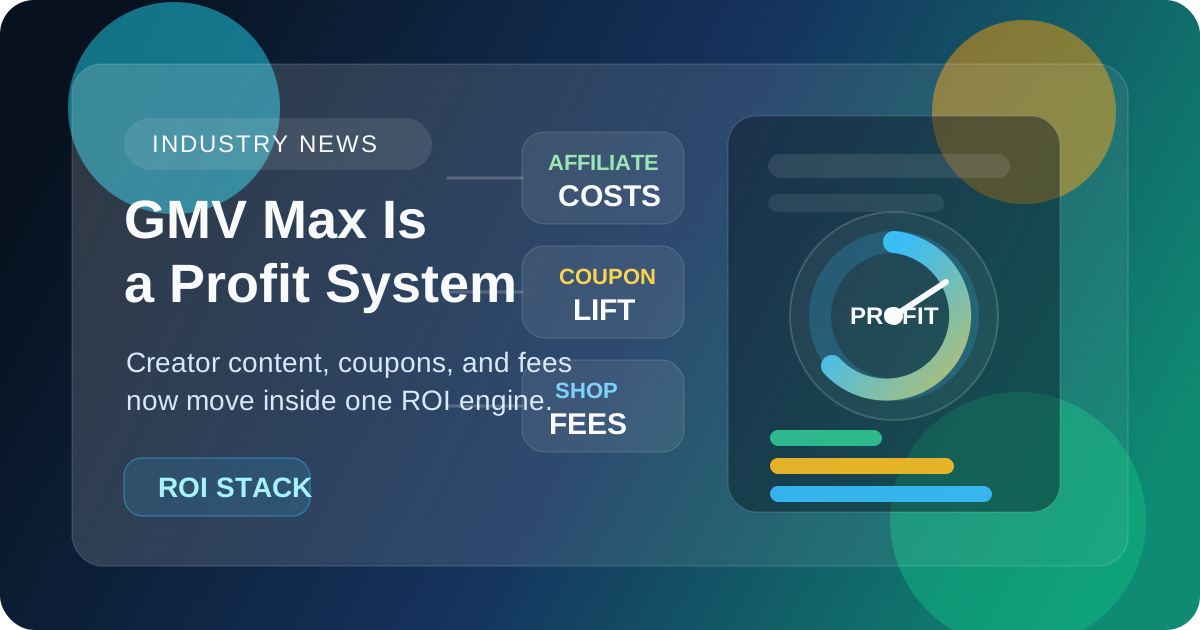
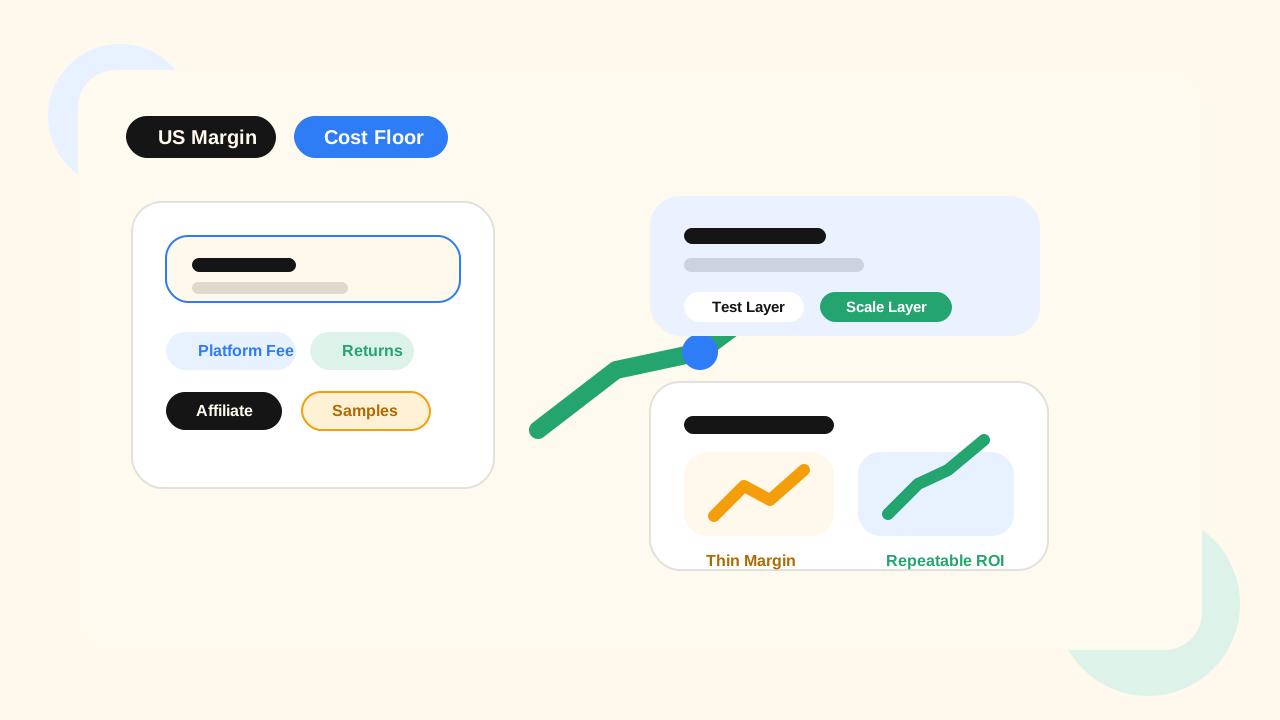
The first question is no longer only whether the SKU has a strong enough selling point or whether creators have enough content ready. The real first question is what margin remains after fixed promotional fees, discounts, points, coupons, and creator commission start stacking on the same product.
This is where brands are most likely to make the wrong call. Campaign access can look easier, promotional resources can look richer, and order volume can rise faster, while the actual profit structure gets thinner. The reason is simple: before, teams often paid coupons and commissions independently. Now TikTok is standardizing part of the promotional cost upfront and linking it directly to campaign access. If a team does not model that margin first, later scaling actions may increase GMV without improving operating quality.
Price Watch shows that TikTok is pairing promo scale with price discipline
If Smart Promotion is rewriting the campaign entrance, Price Watch is adding discipline to the pricing side of that same system.
TikTok's May update explains that Price Watch monitors price changes on-platform and helps sellers understand whether their current offer is still genuinely competitive. At the same time, TikTok is encouraging sellers to stack platform-funded points with product discounts and seller coupons in more visible ways. In other words, the platform is not just giving brands more switches to turn on. It is asking them to take clearer responsibility for the final customer offer that appears during promotional periods.
For cross-border brands, that is a practical warning. Future campaign planning cannot focus only on discount depth. Teams also need to review historical pricing, category price bands, and whether the fully stacked promotional offer is still healthy enough to protect long-term margin. Without price discipline and margin discipline together, Smart Promotion can accelerate revenue while also accelerating profit leakage.
Creator operations now need to work backward from the campaign calendar
Another consequence is that creator operations can no longer sit downstream from campaign registration.
Many teams used to win a campaign slot first and then rush through samples, product links, and creator posting. That sequence becomes more expensive in a Smart Promotion environment.
Once campaign resources are centralized into one promotional layer, the real constraint is not whether the campaign exists. It is whether the team already prepared the right SKU mix, creator assets, discount range, and points structure before the traffic window opens. If not, fixed fees and discounts start absorbing budget immediately while creator supply is still incomplete, forcing the brand to compensate with even deeper subsidies.
A stronger workflow is to let the campaign calendar shape creator planning in advance. Which SKUs deserve major-campaign exposure, which creator assets should seed demand before the event, which videos should convert during the event, and which products should use points rather than deeper coupons all need to be decided before registration, not after the slot has already been secured.
The stronger teams will treat Smart Promotion as a fixed-fee operating layer
From the allymatic perspective, the most important takeaway is not that TikTok Shop introduced another promotion term. It is that the platform is shifting campaign operations from event-by-event execution to continuous operating management.
The teams that respond well will usually strengthen four habits first:
- they model SKU-level margin with fixed fees, discounts, points, commission, and fulfillment cost in the same sheet;
- they segment campaign eligibility instead of assuming every product deserves major-campaign exposure or the deepest subsidy stack;
- they plan creator content across pre-event seeding, in-event conversion, and post-event amplification rather than treating all content as one generic asset pool;
- they review price discipline before chasing extra inventory, so the campaign does not damage long-term pricing logic and gross margin.
What TikTok Shop is really changing here is the way campaign resources get allocated. Before, brands mostly competed on who could register and execute promotions faster. Now the competition looks more like who can calculate a sustainable growth equation earlier across platform fees, promo mechanics, and creator content.
Once campaign access starts carrying a visible price tag, budget design itself becomes a new growth gate.
Official Sources
Official Sources
Primary references used for this article.