A Creator Video Now Has Three Operating Lives Inside TikTok Shop
Many TikTok Shop teams still manage creator affiliate content as if one video only has one job: get published, see whether it can win organic orders, and then decide whether that creator is worth working with again.
That habit is becoming too shallow for the second half of 2026.
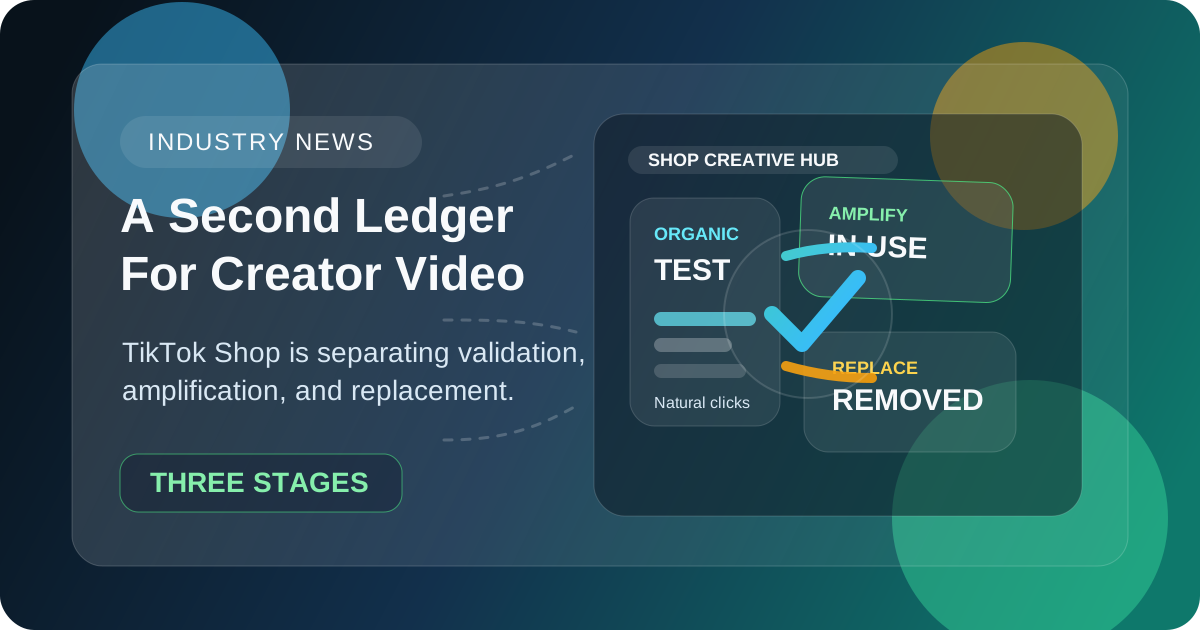
TikTok's recent Product GMV Max and Shop Creative Hub guidance points to a deeper operating shift. The platform is no longer asking only whether a creator video was posted. It is increasingly separating whether that asset is still in organic validation, already inside an amplification layer, or ready to be replaced. For brands and TikTok Shop operators, that means one creator video no longer has a single commercial chance. It usually goes through at least three operating decisions.
On the surface, this may look like a few extra report pages. In practice, it changes the management sequence around creator content. The stronger teams will not necessarily be the teams publishing the most videos. They will be the teams that start managing content across validation, amplification, and replacement much earlier.
TikTok is creating a second ledger for every creator video
Historically, the main ledger behind creator affiliate content was simple: did the product link get attached, did orders come through, and did the commission still make sense.
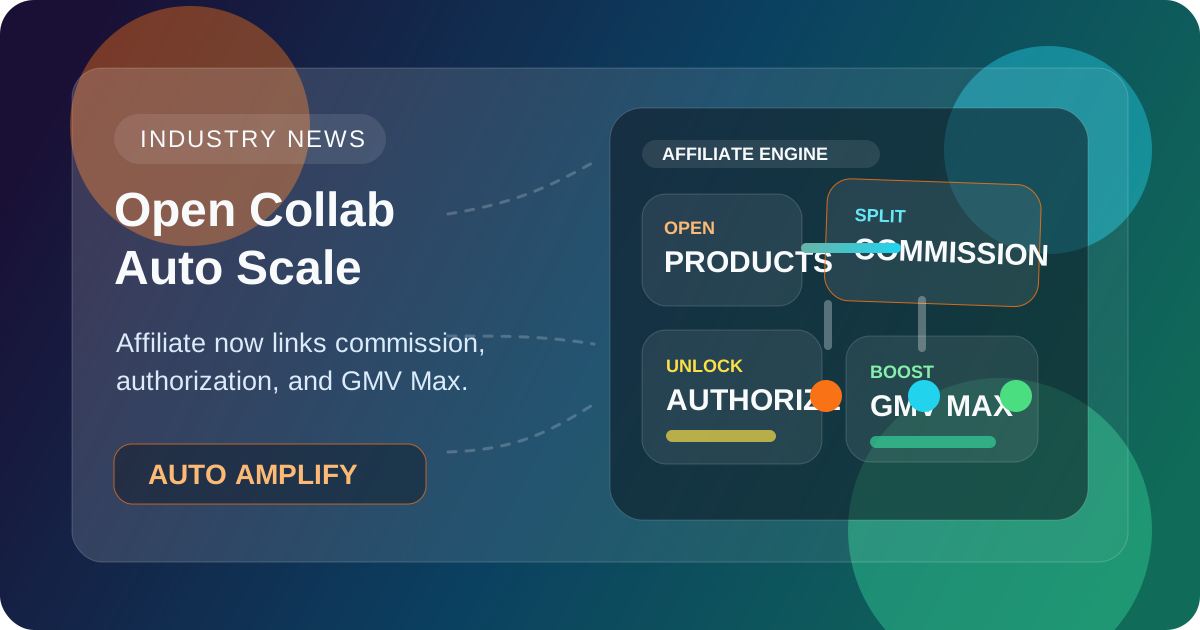
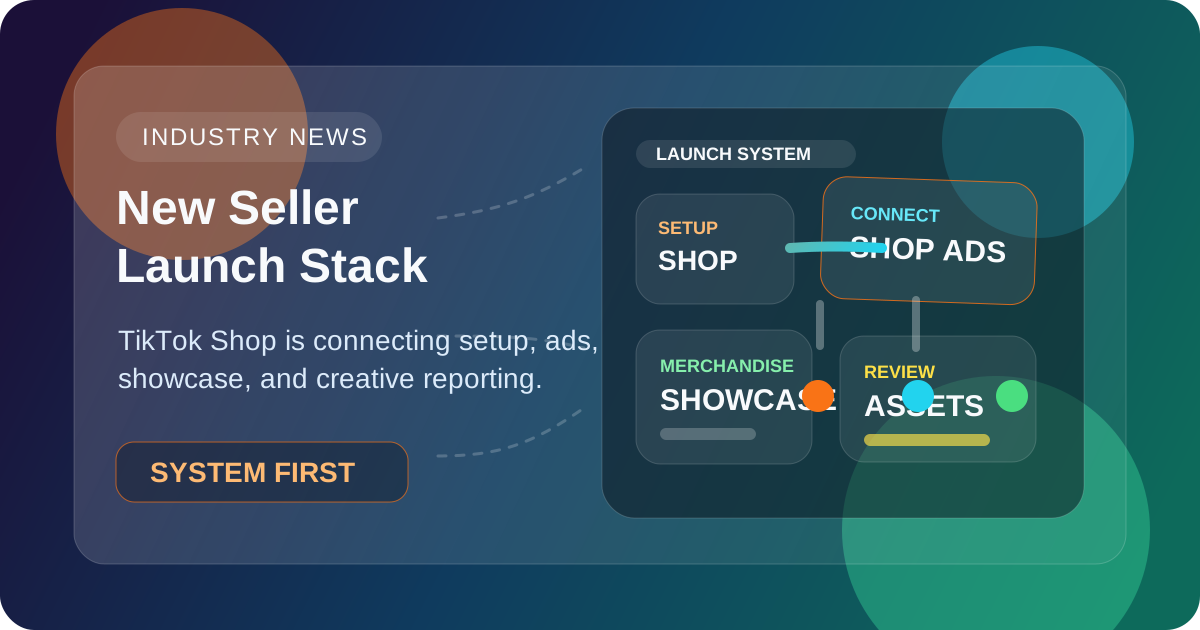
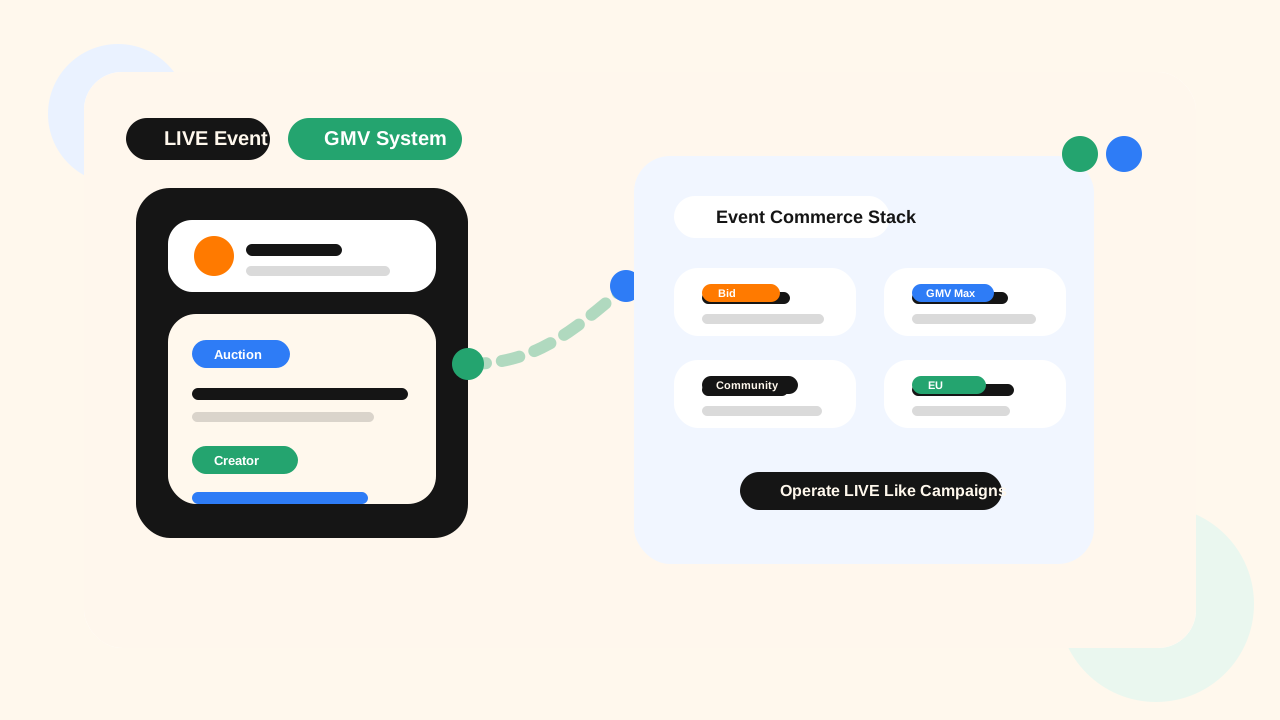
Shop Creative Hub now signals something different. TikTok has started placing creator and video reporting into one operating view. Teams are not only looking at organic sales anymore. They are also separating which assets are already in use inside GMV Max, which remain unauthorized, and which have already been removed from the amplification flow. TT123's June 30 explanation of the GMV Max shop creative center made the same structure even clearer: `In Use`, `Unauthorized`, and `Removed` are not just interface labels. They represent three different operating stages.
That effectively creates a second ledger for every creator video.
The first ledger is still the organic commerce ledger. Once a video goes live, clicks, viewing quality, comment tone, and organic orders tell the team whether the content has any real foundation.
The second ledger is the amplification ledger. Once a video is authorized and moved into GMV Max or related paid traffic, the team should stop looking only at organic orders. It now has to care about total revenue, ad spend, conversion efficiency, creative fatigue, and whether the asset still deserves budget.
Many teams still record only the first ledger, which creates a familiar kind of waste. A video may already be proving itself organically, but no one moves fast enough on authorization, no one connects it to amplification, and no one tracks its second-stage performance. The content ends up realizing only part of its value.
The same asset now usually moves through three operating decisions
This is the most important implication. TikTok is not merely adding another analytics tool. It is pushing teams toward a three-stage content operating model.
The first stage is organic validation.
When a creator video first goes live, the main question is not whether budget should be added immediately. The first question is whether the content actually explains the product correctly. Did users understand the selling point? Do the comments show real buying interest? Are the product clicks and orders healthy after the product link is attached? If the answer is no, more spend later will only amplify noise.
The second stage is authorized amplification.
Once content proves itself organically, TikTok increasingly wants teams to move it into a scalable layer quickly. The Shop Creative Hub and GMV Max combination is essentially helping sellers identify which assets are already strong enough for second distribution. At this point, the identity of the creator video changes. It is no longer just one creator's delivery. It becomes part of the brand's own creative inventory and starts competing for budget and ROI.
The third stage is replacement or rebuild.
Not every scaled video should stay in the system forever. The fact that TikTok now separates `Removed` and unauthorized states also implies that creative decay is assumed. Content ages, loses efficiency, or stops fitting the product story. Teams should stop focusing only on how many new posts were published today and instead keep asking which assets deserve extension, which should exit, and which selling angles need to be rebuilt with new creators.
Once these three stages are connected, the operating unit changes. Teams are no longer managing one posting action at a time. They are managing a portfolio of video assets that continuously move in and out of system value.
The real rewrite is the collaboration sequence inside the team
Many brands will first react by asking media buyers to check one more dashboard or by asking BD teams to add one more authorization step. That still misses the point.
TikTok is not asking for one extra task. It is pushing the full content collaboration sequence further upstream.
A common old sequence was simple: find creators, send samples, push for publication, watch organic orders, and review at the end of the month. A more durable sequence now looks different: define what kind of content deserves the amplification layer first, then arrange samples, briefs, publication timing, and authorization around that goal.
That changes at least four things.
- Samples are no longer just a way to get another post. They are a way to source potential reinvestable creative.
- Briefs are no longer only about keeping creators on message. They help determine whether a piece of content can ever be worth scaling later.
- Authorization is no longer just a legal check. It becomes the switch that moves content from the organic layer into the operating layer.
- Review is no longer only about which creator generated orders. It is about what the content contributed in the organic stage versus the amplification stage.
That means creator teams, content teams, and paid teams can no longer afford to review separate outcomes with separate logic. TikTok is already treating the video as one continuous asset chain. If the team still manages it through three disconnected systems, it becomes very easy to end up with strong content that no one picks up, budget that gets spent without clear asset attribution, and plenty of creator activity without durable creative inventory.
What brands need next is not simply more creators, but cleaner creative segmentation
For cross-border brands, the most valuable next step is often not adding more creators immediately. It is segmenting existing creative by operating status first.
The first layer is content suited only for organic validation. It may be worth watching longer, but it does not justify immediate budget.
The second layer is content worth authorizing and scaling. Those assets should move into the system quickly and be tracked for second-stage efficiency right away.
The third layer is content that needs replacement. Maybe the selling point is weak, or maybe the creator expression has already decayed. Either way, it should not keep sitting in the pool pretending to be useful.
Once content is segmented this way, many previously fuzzy decisions become much clearer. Which creators deserve another sample, which SKUs deserve more content supply, which videos should stay organic, which deserve paid support, and which assets should be retired all become easier to judge consistently.
That is also why allymatic continues to put more emphasis on a content operating ledger than on raw creator posting volume. The scarce asset is not the video file itself. It is whether the team knows which operating stage that video belongs to right now.
How allymatic reads this shift
From the allymatic perspective, the biggest signal is not that TikTok added another backend tool. It is that the platform now clearly assumes a creator video's lifecycle should be continuously managed.
For years, many teams treated creator content as a front-end traffic motion. A video went live, ran its course, and then effectively disappeared. TikTok is now pointing in a different direction. Organic conversion becomes the first screening layer, authorized amplification becomes the second operating layer, and replacement becomes the third supply-refresh layer. The teams that organize creator collaboration around that logic earlier will be much more likely to turn content into a reusable, reinvestable, continuously replenished growth asset.
Once a creator video starts carrying a second ledger, creator affiliate management changes with it. The next real competitive gap will not only be who found more creators. It will be who knows what operating layer each piece of content should enter next.