Official, Marketing, Affiliate: TikTok Shop Is Rewriting How Brands Organize Creator Collaboration
Many teams still run TikTok Shop creator operations as if every content account were simply "someone who can attach a product link." If an account can post, go LIVE, and tag products, it gets pulled into the same spreadsheet and managed by follower count, rates, and category fit.
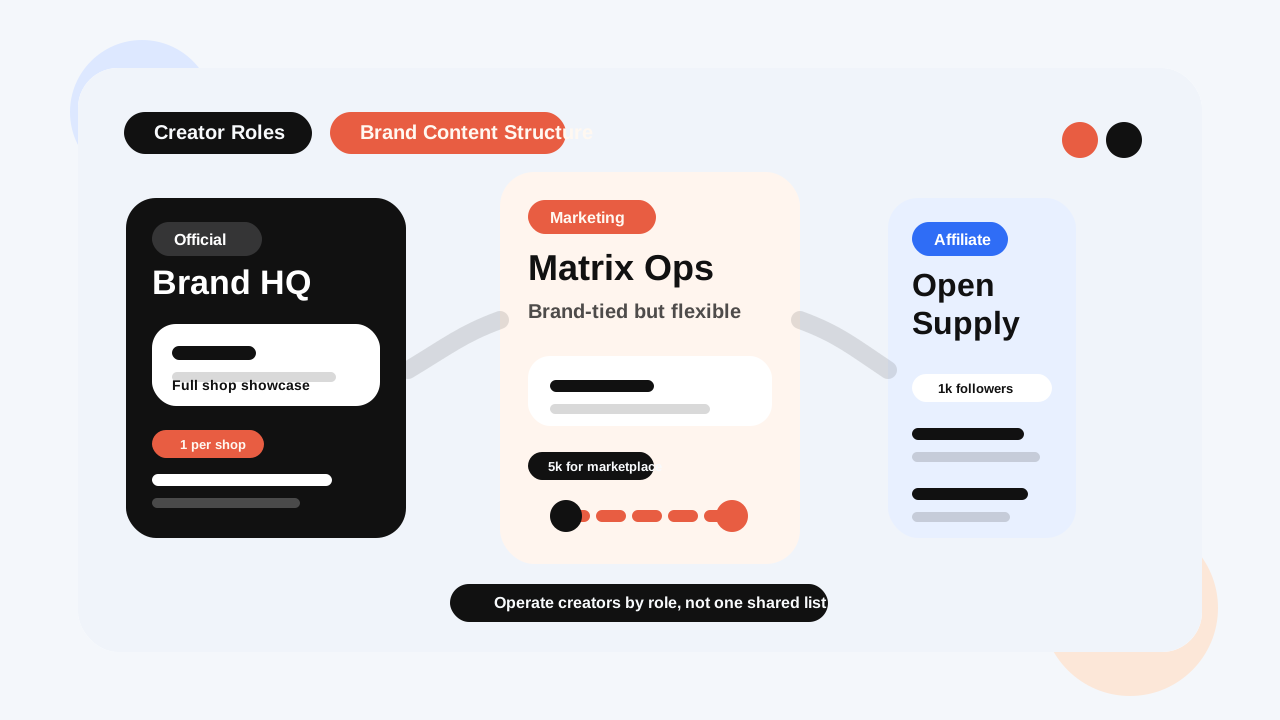
TikTok Shop's recent official guidance is moving in a different direction. The platform is no longer describing one vague creator identity. It is defining three distinct operating roles: Official Shop Creator, Marketing Creator, and Affiliate Creator. Their binding methods, product scope, showcase behavior, identity requirements, and even growth rhythm are not the same.
That matters for brands because TikTok is sending a deeper message: creator collaboration should no longer be treated as "whoever has traffic can sell." It should be organized as three different operating lines: brand-owned content, brand-matrix content, and external affiliate supply.
The platform is not just changing creator volume. It is changing role definition
TikTok Shop's official guidance updated in April and June 2026 makes the three roles much clearer.
The official account is bound to the shop through an official creator bind. It represents the shop's official identity, shares the same name as the shop, can only sell products from that shop, and cannot access the Product Marketplace for other sellers' goods. In practice, it functions more like the storefront identity and owned-media base layer of the brand on TikTok.
The marketing account is bound through a marketing creator bind. It is still tied to the brand, but it does not need to share the same account name as the shop. That makes it more suitable for brand matrices, format-specific channels, regional accounts, or different creator personas operated around the brand. It can promote products from the bound shop and, once eligible, also access the Product Marketplace.
The affiliate creator is the more traditional marketplace creator role. It does not need to be bound to a shop first. It mainly works through the Product Marketplace, takes products from sellers, and earns commissions. It is open supply, not a brand-owned asset.
All three roles can drive commerce. But TikTok has already separated "brand-owned selling infrastructure" from "external creator collaboration supply" at the structural level.
The deeper shift is that brands are now expected to organize content accounts by function
Many teams still try to make one account do everything: brand storytelling, shop self-selling, and creator-style affiliate execution. That may feel efficient at the start, but it becomes harder to manage over time.
The reason is simple. TikTok has now embedded different responsibilities into official and marketing accounts.
The official help guidance states that each TikTok Shop can link only one official account, and the same account cannot act as both the official and marketing account for the same shop. Once linked, the official account is automatically upgraded to a Business Account. If the shop name changes, the account name changes with it. And after unlinking, the account cannot be switched back and forth immediately.
That means the official account is not just "one more account that can post content." It is meant to be a stable, trusted, long-term brand asset. It is better suited for brand narrative, shop trust, hero product explanation, and sustained content consistency.
The marketing account behaves more like an expandable content matrix layer. TikTok's own policy makes this clear: a Marketing Creator can represent a specific brand while still retaining more flexible marketplace potential after meeting eligibility thresholds. In other words, the platform is allowing brands to keep a branded content structure while still running more agile, differentiated content operations.
That is very different from the older model of treating every commerce account like a semi-independent creator relationship. TikTok is increasingly pushing brands to organize their own content structure first, then decide which content should stay in owned channels and which content should be amplified through external creators.
Showcase and product scope are also being separated. Not every account is the same shelf
Another important shift comes from TikTok for Business's explanation of TikTok Shop and Showcase.
TikTok explicitly says that an official account's Showcase displays all products from the shop. Marketing and affiliate accounts, by contrast, work more like curated shelves. They can display some brand products and, in some cases, products from more than one shop. The official account behaves more like the full store page, while marketing and affiliate accounts behave more like selected commerce displays built around specific content contexts.
That directly changes how brands should plan content.
If an account is functioning as the official store entrance, its content should not be optimized only for breakout reach. It also needs to reinforce brand consistency, product logic, shop conversion, and consumer trust. By contrast, if an account is functioning as a marketing matrix channel, it can be more flexible in style, persona, topic choice, and featured assortment.
Affiliate creators are different again. They are not a brand shelf. They are platform supply. The management question for brands should no longer be "how do we push the full catalog to this creator?" It should be "which small set of products best matches this creator's content environment?"
Eligibility and pilot rules are also pushing teams away from the one-account-for-everything mindset
If role separation is the conceptual shift, eligibility and pilot rules are the operational constraint that forces teams to take it seriously.
Under TikTok's official rules, Affiliate Creators need at least 1,000 followers to apply for TikTok Shop creator access. Marketing Creators need at least 5,000 followers if they want to promote products from other sellers through the Product Marketplace. Official accounts have no minimum follower threshold, but they can only self-sell.
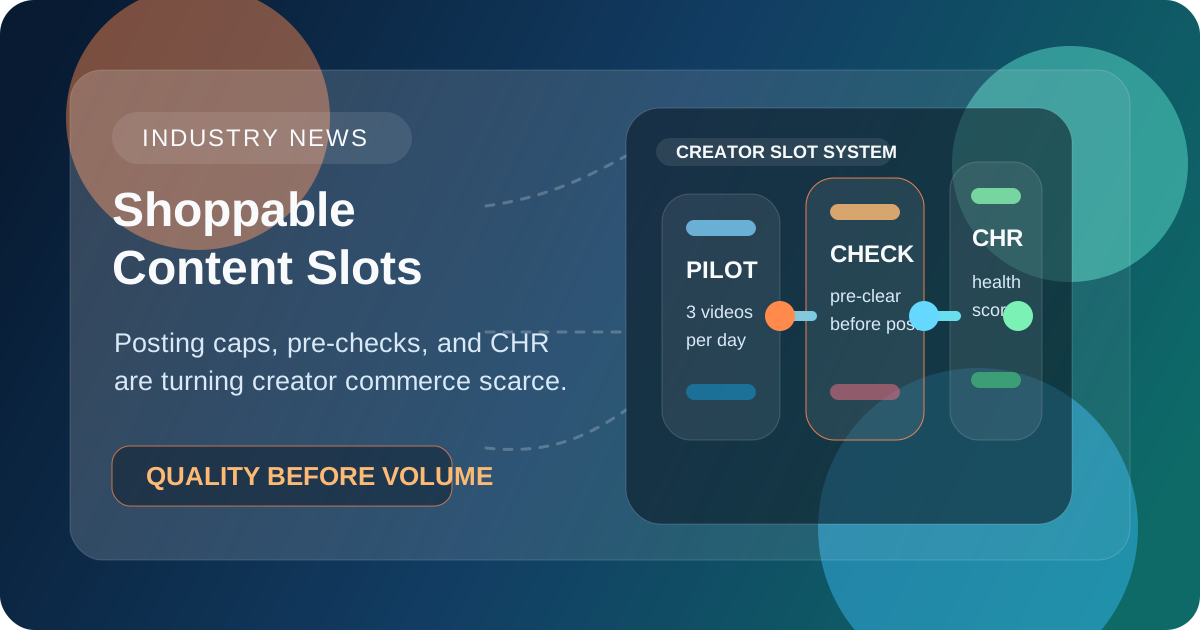
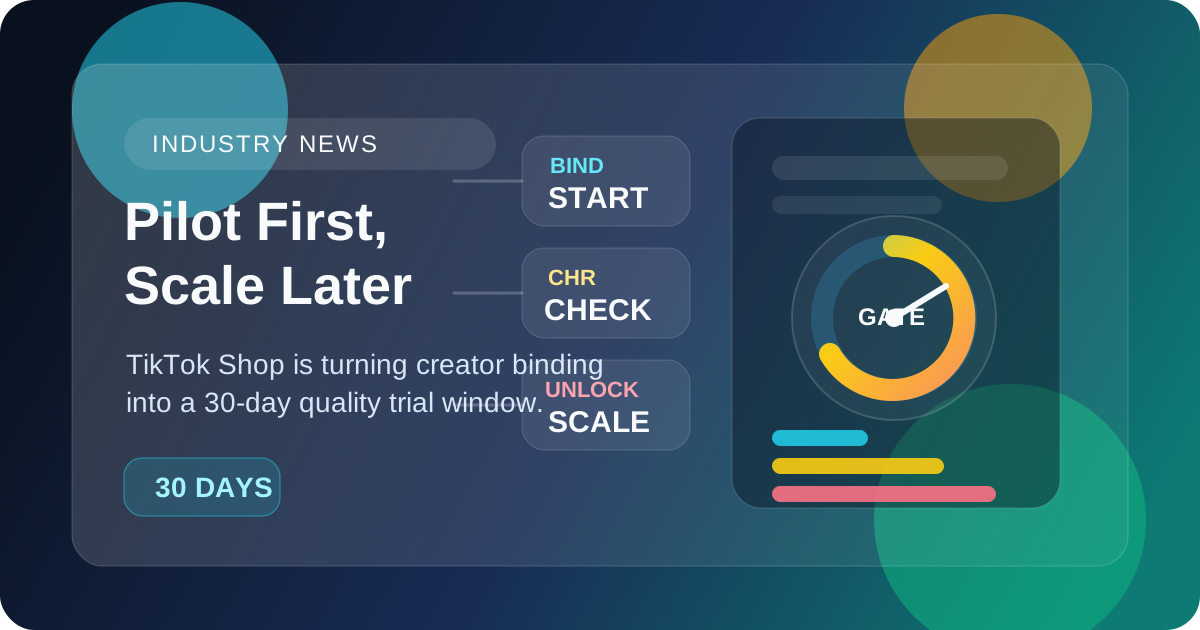
More importantly, newly bound official and marketing creators may automatically enter the Early-Stage Pilot Program for at least 30 days. During that period, some capabilities can be limited. One visible example is a cap of up to three e-commerce videos per day. Graduation depends on binding duration, follower level, and compliance evaluation.
That means brands cannot assume that once an account is linked, it will immediately behave like a mature commerce account with full operating freedom. TikTok is increasingly managing brand-owned commerce accounts with a more explicit trust-and-security growth path.
This also explains why some teams feel that after binding an account, the account exists but does not yet feel fully scalable. In many cases the issue is not workflow confusion. It is that TikTok has already placed that account inside a controlled development path.
The real upgrade for brands is to rebuild the organization model
From the allymatic perspective, the most important part of this update is not whether one more account can carry one more product. It is that brand teams now need to split creator operations into three workflows.
The first is the official-account workflow. Its priority is brand trust, shop conversion, hero product explanation, and long-term operating consistency.
The second is the marketing-account workflow. Its priority is matrix-style experimentation, creative segmentation, audience slicing, and higher content testing efficiency within the brand's operating boundary.
The third is the affiliate-creator workflow. Its priority is product selection, commissions, samples, collaboration speed, and external scale.
If those three lines remain mixed together, the usual outcome is predictable: the official account starts behaving like an affiliate creator, the marketing accounts start behaving like customer-service channels, and external creators never receive the product set that actually fits their format. On paper there are many accounts. In practice, none of the lines are operating cleanly.
A better model is to define roles first, then assign catalog, content, and KPI logic accordingly:
- Official accounts should be measured on shop trust, hero products, and brand consistency.
- Marketing accounts should be measured on test efficiency, matrix reach, and curated-shelf conversion.
- Affiliate creators should be measured on sample efficiency, collaboration success rate, and external revenue scale.
Once TikTok Shop writes creators into three different roles, the worst response from a brand is to keep managing every account with one old creator-list mindset.
The system has already written role separation into the product. The teams with an advantage from here will not simply be the ones with the most accounts. They will be the ones that start operating by role earliest and build different workflows for each line.