AI Is Not the Problem. Fake Interaction Is: TikTok Shop Is Turning Content Quality into a Commerce Gate
If your team is still wondering whether AI can mass-produce shoppable videos, whether AI voice can replace a human host, or whether a product image plus subtitles is enough to hold a livestream together, this is the moment to reset that assumption.
TikTok Shop's latest content-quality updates send a very clear message. The platform is not rejecting AI. It is drawing a harder line between two very different things. One is using AI as a productivity layer. The other is using AI to replace real interaction, real product presentation, and real trust-building. Once content crosses that line, the question is no longer whether it looks polished. The question is whether it still qualifies as commerce-ready content.
That distinction matters for cross-border brands, creator affiliate teams, and TikTok Shop operators because the platform is no longer tightening a small creative preference. It is tightening the baseline standard for content that is allowed to sell.
The real shift is not anti-AI. It is anti-absence
Start with what TikTok Shop has recently clarified in its official requirements for high-quality videos and LIVEs. Some formats that many teams previously treated as "good enough" are now clearly inside the non-compliant zone.
For LIVEs, TikTok Shop now requires real-time spoken or sign-language interaction, live explanation, live demonstration, and real-time responses. AI-generated voices, pre-recorded audio, or broadcast-like audio tracks do not count as acceptable live hosting. At the same time, still images, screenshots, slideshows, scrolling images, and looping animation that dominate too much of the screen can be treated as still-frame content and are not acceptable for product promotion.
Short-form shoppable videos are being judged through the same lens. The platform says these videos should show dynamic content in a real-world environment, include people, include the physical product, and actually explain how the product works and why it matters. TikTok Shop even sets a practical floor: at least three seconds of dynamic content, rather than a full video built around static or pseudo-dynamic visuals.
That tells us something important. TikTok Shop is increasingly treating "does this feel like a real person is actually here?" as a hard operating threshold. Many teams used to think that as long as a product was linked, the copy was fast, and the CTA was clear, rough content was acceptable. The platform now seems to care much more about whether a real person is explaining a real product in a way users can trust, rather than whether a team can assemble a sales asset quickly.
TikTok is actually defining where AI belongs more clearly
If you only look at industry headlines about banned AI voiceovers, it is easy to misread this as a broad crackdown on AI content. That is not what the official policy says.
TikTok Shop's AI-generated content guidance is explicit: the platform supports reasonable and responsible AI usage as long as content remains compliant and does not mislead users. AI is not the violation. Misrepresentation is.
The permitted use cases are broad:
- AI can help with titles, product descriptions, short-video scripts, and livestream script support.
- AI can handle translation, subtitles, dubbing, and multilingual adaptation.
- AI can improve video and image quality, adjust lighting and color, reduce noise, smooth motion, and clean up backgrounds.
- AI can generate virtual scenes, diagrams, or moderate animation that helps explain a product, as long as the product information itself stays accurate.
The restrictions are equally clear:
- AI cannot fabricate product presentation in a misleading way.
- AI cannot replace the real interaction users expect from promotional content and LIVE commerce.
- Fully generated or significantly AI-edited content may require disclosure.
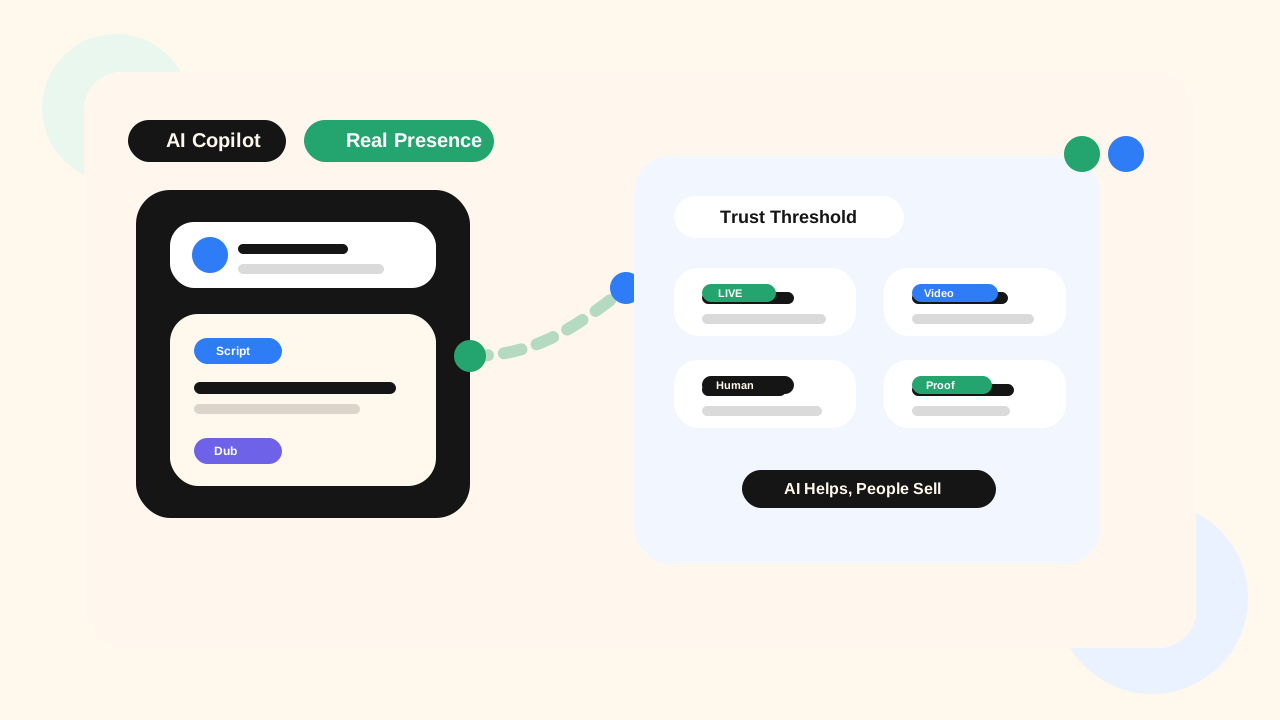
The platform's position is coherent. AI can participate in production, but it cannot take over the trust layer.
Why TikTok is pushing AI and authenticity at the same time
This makes more sense when you place several recent official signals side by side.
On one side, TikTok World '26 keeps pushing AI as a way to improve creative velocity, increase insight quality, and connect discovery to purchase more efficiently. On the other side, TikTok's own authenticity research argues that users increasingly skip content that feels overly polished, ad-like, or emotionally false.
Those two messages are not in conflict.
What TikTok appears to want is not "AI instead of content," but "AI to help brands make more content that still feels human, native, and trustworthy." AI is supposed to accelerate the workflow. It is not supposed to replace the human presence that makes content believable in the first place.
That is also why the platform is not only updating policy. It is adding operating tools around the policy.
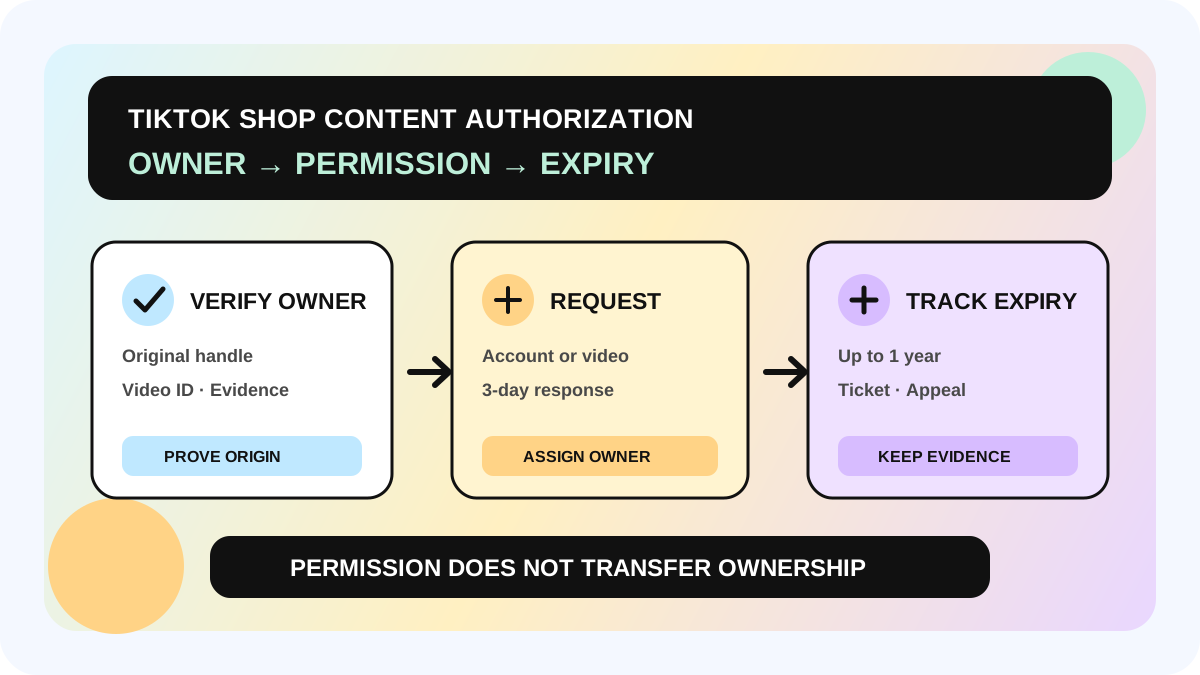
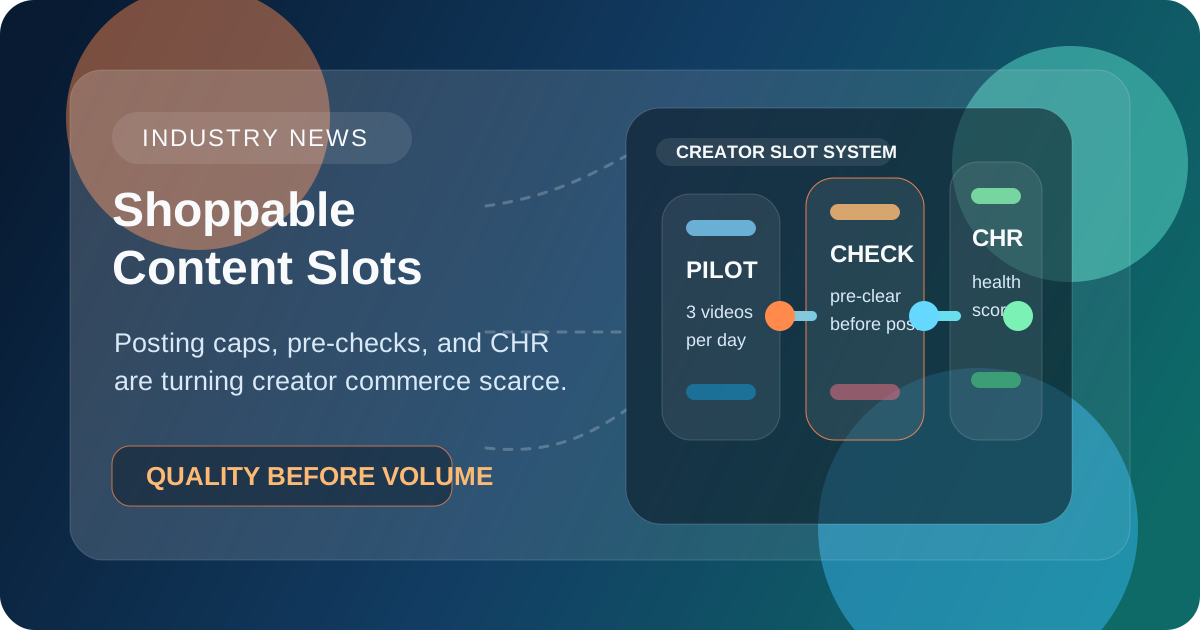
TikTok Shop now provides a Video Pre-Check Tool that helps creators identify common low-quality or unoriginal content risks before posting. It is also introducing more visible warning messages during LIVE setup so sellers can spot products with issues that may hurt livestream performance. This suggests the platform is moving the quality gate upstream. The new logic is not "publish first, get punished later." It is "clear the quality threshold before traffic arrives."
For brands, that matters because content quality is no longer just a creative taste issue. It directly affects account health, livestream performance, product conversion, and future scale.
The real adjustment for brands is workflow, not ideology
The most common mistake right now is not using AI at all. It is placing AI in the wrong part of the operating system.
There are three especially common failure patterns.
The first is using AI as a substitute.
Teams try to replace human product narration with AI voice, or use static visuals plus automated script generation to push out a wave of "good enough" videos with product links attached. Internally, that can feel efficient. From the platform's point of view, though, it removes the exact signals that matter most: real explanation, real demonstration, real-time presence, and the trust those signals create together.
The second is using AI as camouflage.
Sometimes a product has unclear selling points, weak footage, or a creator who has not genuinely tested the item. Teams then try to use AI packaging to make the asset look complete. TikTok Shop's current direction moves against that instinct. The platform seems to prefer content that is slightly imperfect but clearly understandable over content that is visually polished while hiding a weak or fabricated product story.
The third is using AI as a copy-paste engine instead of a localization layer.
AI is at its best when it helps teams adapt one product logic across markets, creators, languages, and formats more quickly. It can structure briefs, generate subtitle variations, rewrite scripts, and help localize FAQ handling. But when brands push the same template across many creators and only swap out the product name or accent, the result usually feels least native to TikTok.
So the key question is no longer whether to use AI. It is where AI should sit in the workflow.
A more durable operating model usually looks like this:
- Use AI to organize product claims, FAQ responses, restricted wording, and demo sequencing.
- Use AI to prepare translation, subtitles, script drafts, and structured briefs for different markets.
- Let the creator or host reinterpret that material through real experience instead of reading it mechanically.
- Keep human presence, physical product handling, real-world demonstration, and comment interaction as non-replaceable core steps.
That is when AI amplifies real content instead of manufacturing fake content.
Which teams will gain from this shift
From the allymatic perspective, the most important signal here is not that TikTok Shop added another policy rule. It is that the platform is turning "real interaction capability" into a more measurable operating advantage.
The teams that understand that early are the teams more likely to scale cleanly later.
The stronger teams from here are likely to share a few traits:
- They will use AI for script prep, localization, content organization, and production speed.
- They will not let AI replace human hosting, product demonstration, or LIVE Q&A.
- They will connect sampling, creator review, pre-post quality checks, and LIVE risk warnings inside one workflow.
- They will treat authenticity as a conversion asset, not a visual style preference.
For TikTok Shop, content quality is shifting from "could this be better?" to "is this sellable at all?" For brand teams, the more important question is no longer whether low-cost AI can generate more output. It is whether AI can improve speed without eroding the human presence that makes users trust, stay, and buy.
That is what this round of policy change is really trying to filter out. The target is not AI. The target is content that lacks real interaction, real demonstration, and real trust underneath the surface.