Open Collaboration Is No Longer Just a Commission Listing: TikTok Shop Is Turning Affiliate Into an Auto-Scaling Engine
Many TikTok Shop teams still run affiliate the old way: choose a few hero products, publish a commission rate, wait for creators to pick up links, and only later decide whether a strong post should be authorized, advertised, or scaled further.
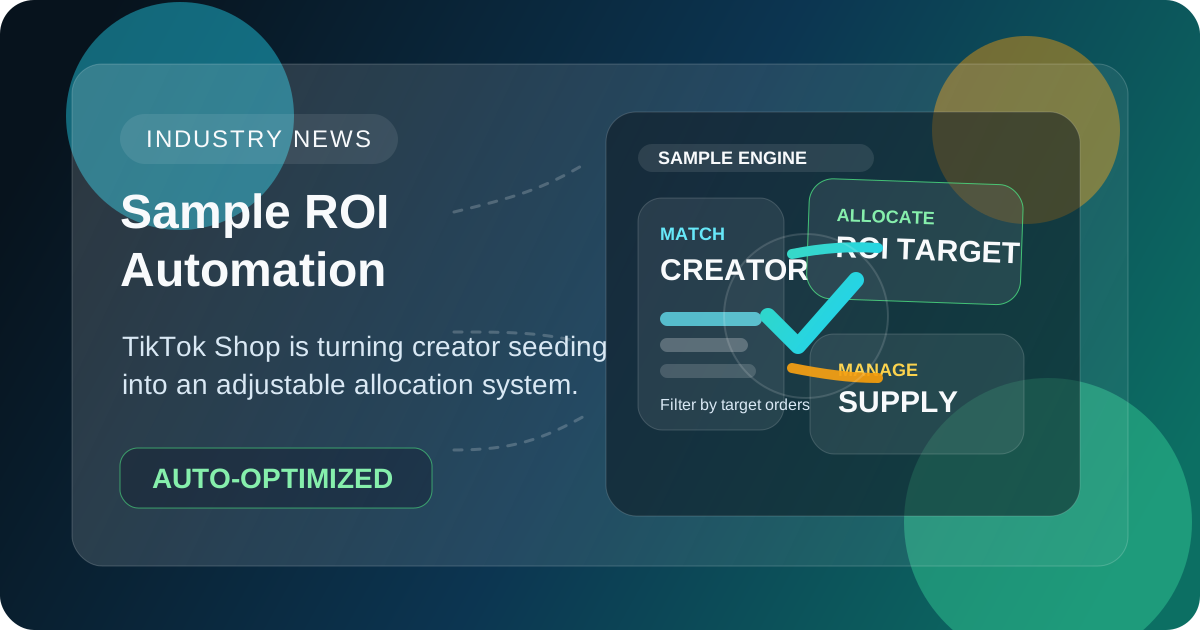
That approach is not completely broken. But if you connect TikTok's official updates from late June 2026, the platform is clearly moving beyond the idea of "set a commission and wait." TikTok Shop is now linking open collaboration, Shop Ads commission, creator authorization, and Product GMV Max into one scaling chain. Affiliate is gradually shifting from a manually managed traffic supplement into a system that can continuously source content and automatically filter what deserves amplification.
That change matters for cross-border brands and TikTok Shop teams because affiliate is no longer just a BD channel or a commission settings page. It is increasingly behaving like a semi-automated operating system. The teams that start managing products, creators, and creative through that lens earlier will be the teams that turn affiliate content into durable assets.
TikTok is turning open collaboration from a listing entry into an operating entry
The first important change is the setup logic of open collaboration itself.
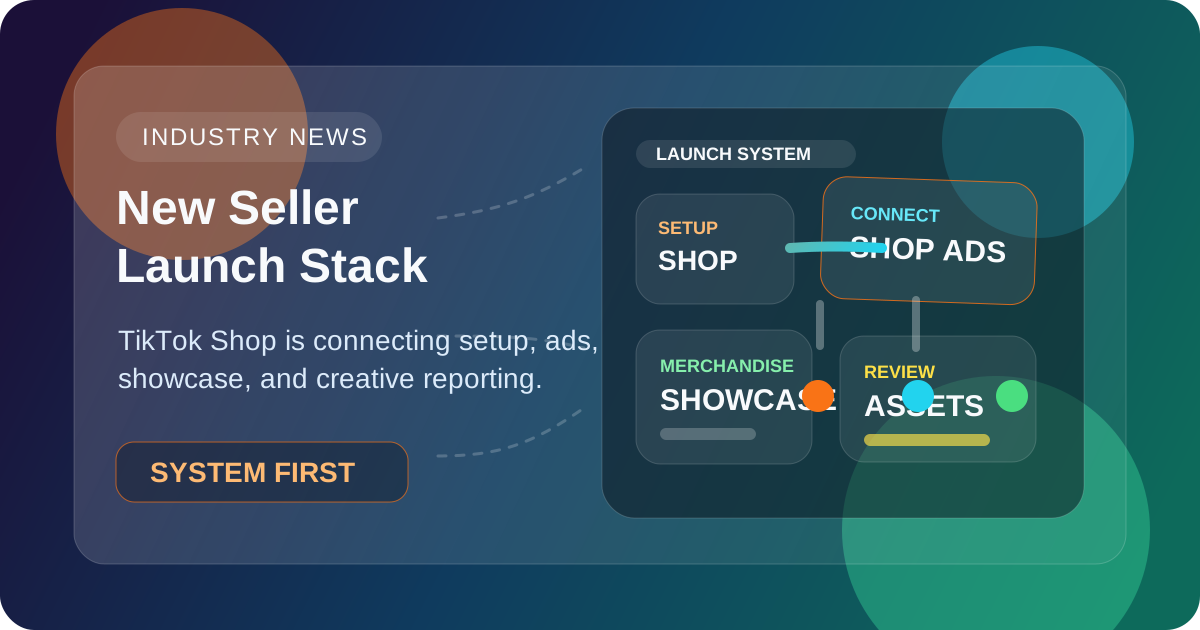
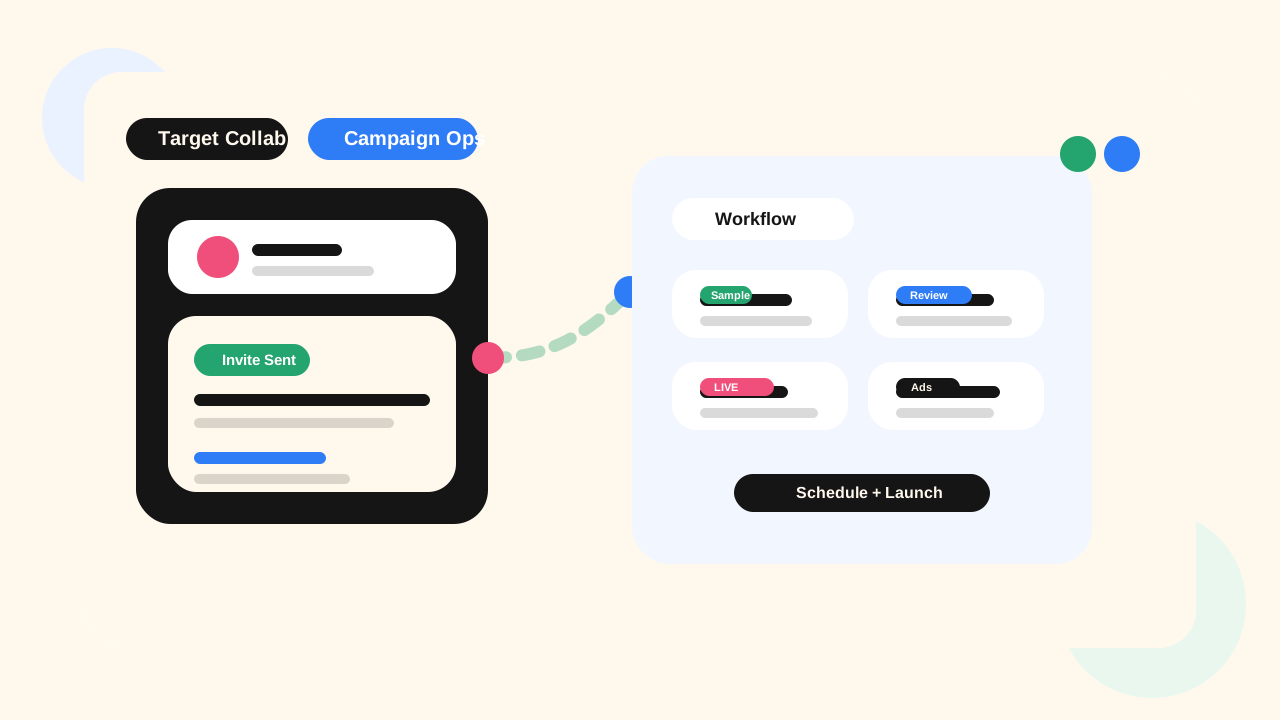
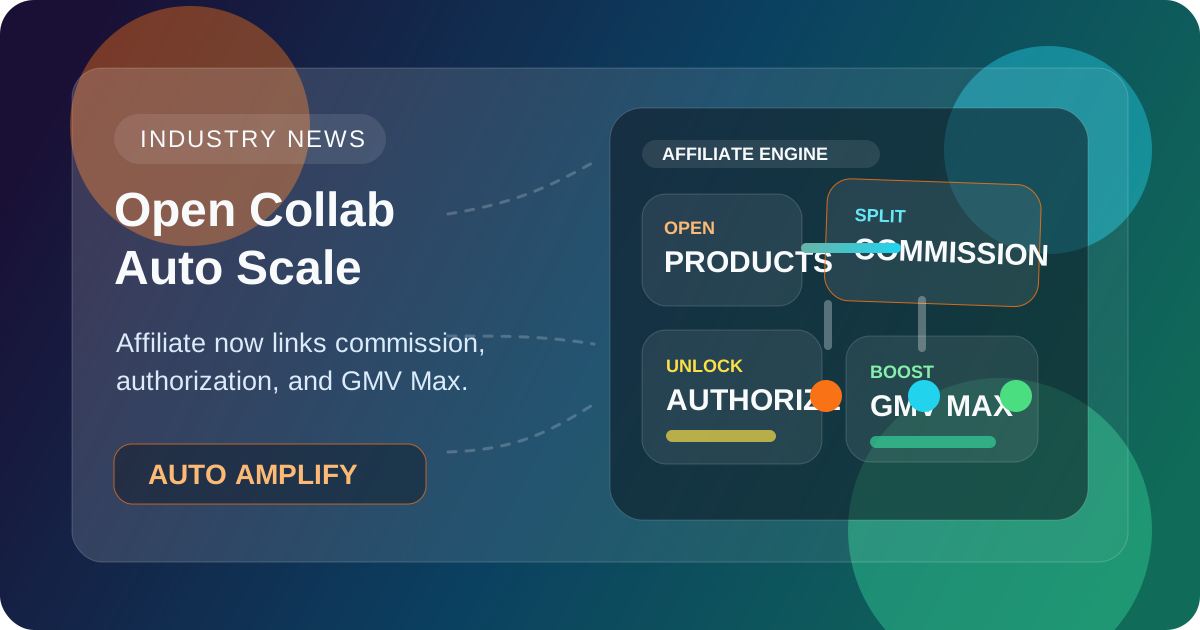
TikTok's current setup flow is no longer just about adding products and filling in a base commission. In the Open Collaboration page, sellers can set a Standard commission, turn on Shop Ads commission rate, and also enable Boost orders with GMV Max. In other words, the same group of products can now be placed into a three-part structure from the start: organic affiliate incentives, ad-driven commission logic, and an automated scaling target.
That is very different from the older sequence of "open the public plan first and decide on paid support later." The platform is now effectively telling sellers that if products are entering open collaboration, the team should already be deciding how those products will be rewarded in organic affiliate sales, how they will be priced for ad-supported orders, and whether they deserve to enter the automated optimization chain.
The more revealing signal is Auto-add new products inside the same open collaboration workflow. This is not a minor convenience feature. It is a product-level statement. TikTok is showing that open collaboration should no longer be treated as a manual list of a few experimental SKUs. It can become an expanding surface that keeps feeding new products into the creator marketplace.
Once automatic product addition appears, the meaning of open collaboration changes. It is no longer just a place to assign commission to a handful of items. It becomes an open layer that continuously absorbs creator content and tests product-content fit at scale.
Commission is no longer one number. It now reflects two operating logics
The second change is TikTok's clearer separation of commission structure.
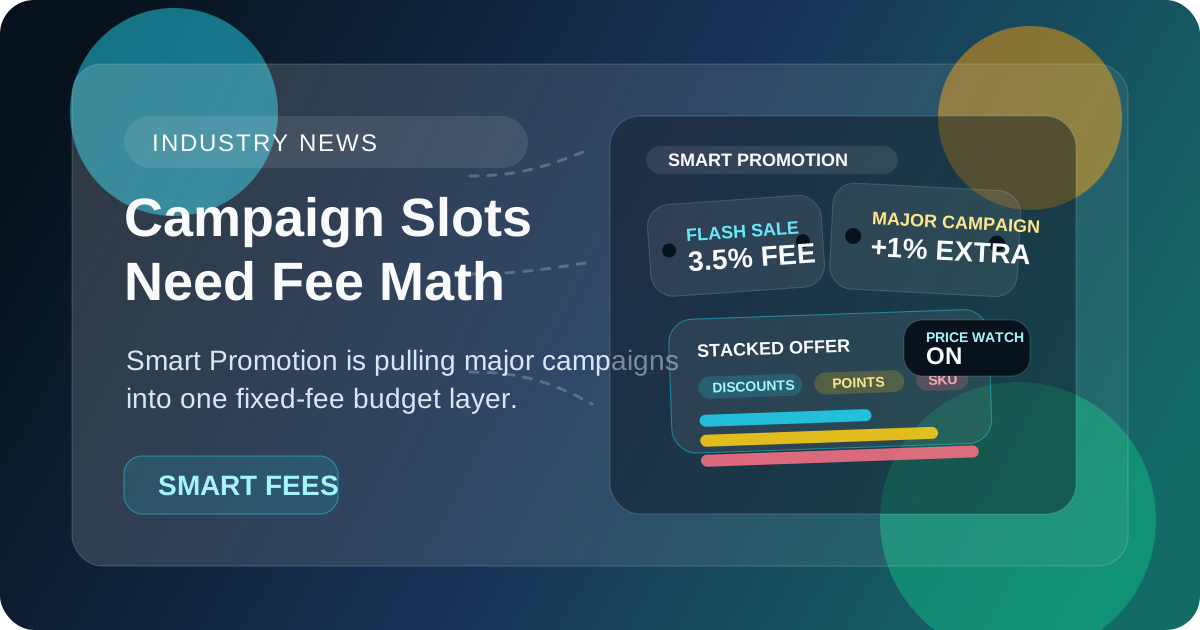
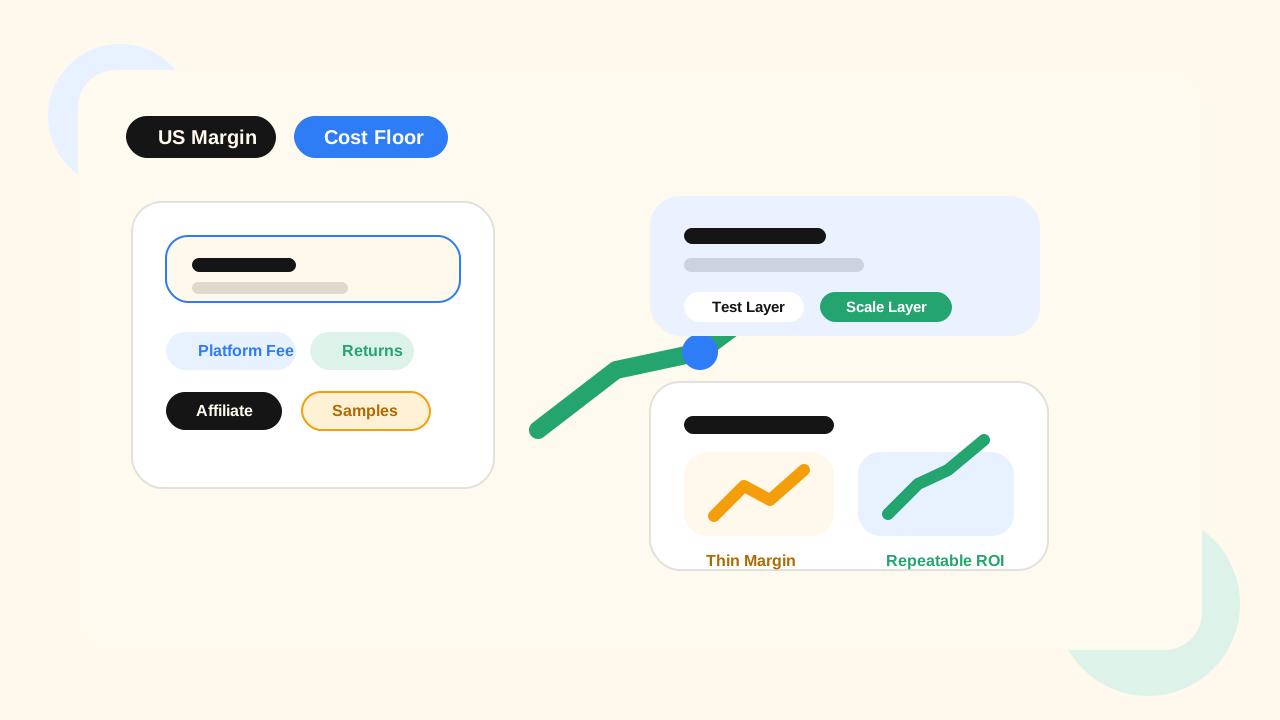
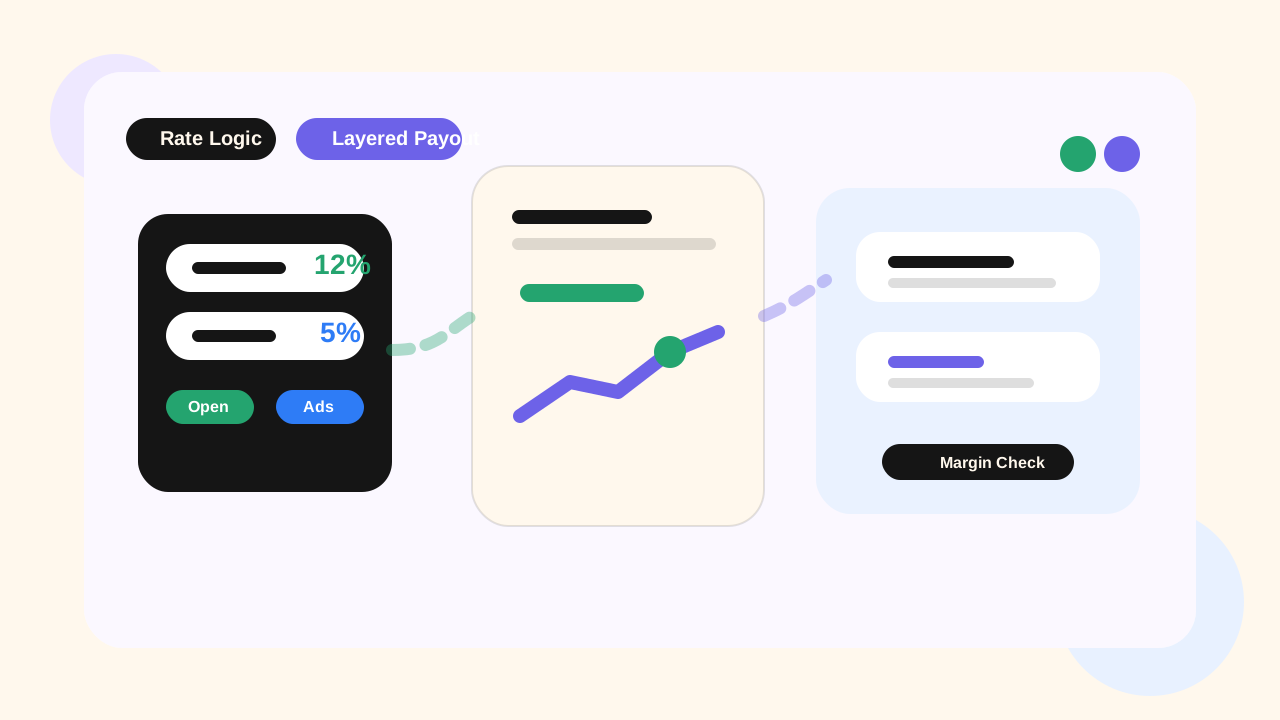
TikTok's March 2026 guidance on Shop Ads commission states the distinction plainly: Standard commission applies to organic sales, while Shop Ads commission applies to orders generated with ad support. If a seller does not set a separate Shop Ads commission, ads using affiliate posts will still default to the standard commission. If the seller does set a separate ad commission, those ad-driven orders follow a different rate.
This matters much more than a pricing tweak. It means commission now directly governs two different decisions:
- Whether the seller wants creators to test the product organically.
- Whether the seller wants to keep scaling that content later under a different cost structure.
That means affiliate teams should stop trying to use one number to cover every stage. The organic layer is about making the product attractive enough for creators to try. The ad layer is about making sure the content still works economically once it is amplified. If those two layers are not separated, teams usually fall into one of two traps: either the organic commission is so high that scaling destroys margin, or the ad commission is set so low that the team becomes afraid to scale content that already proved itself.
The lower-bound rule matters too. TikTok states that the Shop Ads commission in Open Collaboration cannot be lower than 30% of the Standard commission. This is more than a technical constraint. It signals that the platform allows sellers to distinguish between organic and ad-supported economics, but it does not want creator earnings to be almost entirely cut off once their affiliate content enters the paid system.
Once authorization and GMV Max are connected, affiliate content enters true automated filtering
The third shift sits between authorization and GMV Max.
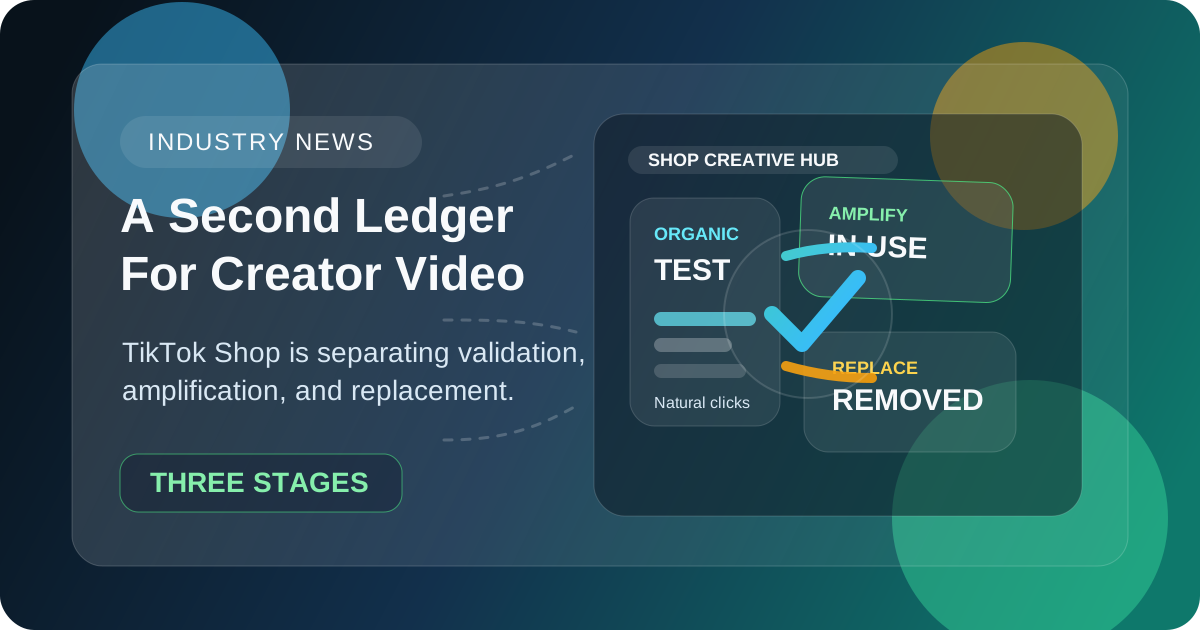
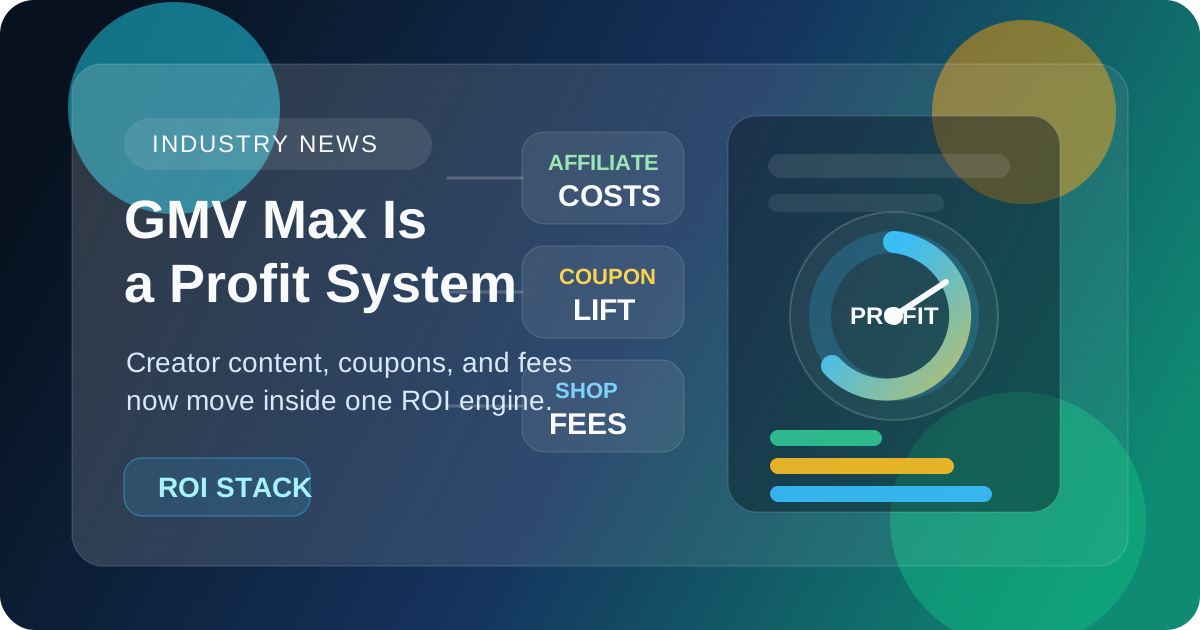
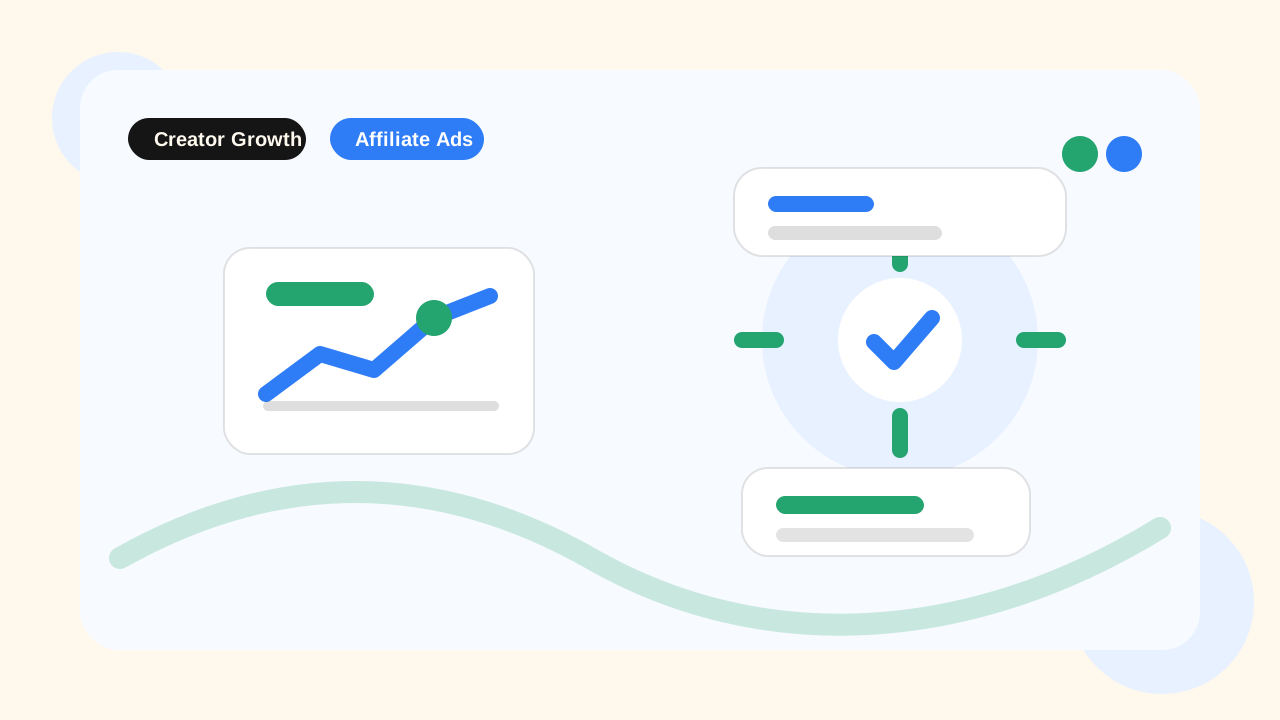
TikTok's June 2026 Product GMV Max guidance is explicit: the system automatically uses all available creative assets and automatically includes authorized affiliate videos that feature the selected products. At the same time, the guidance on affiliate mass authorization explains that when creators enable account-level authorization, those posts can appear directly as Affiliate Post sources when sellers create Video Shopping Ads or set up GMV Max.
This is the moment when affiliate content starts entering a genuine automated filtering system.
For many teams, the most labor-intensive part of creator affiliate work used to happen after the post was live: deciding which asset deserved more spend, chasing authorization, figuring out which videos could be pushed into ads, and screening creative once the pool grew larger. TikTok is increasingly absorbing that layer into the platform. Once products are already in open collaboration, once commission logic is in place, and once authorization is connected, GMV Max can keep screening the existing asset pool for stronger opportunities.
That changes the team's real upstream work. The requirement is no longer simply learning more media-buying buttons. It is making affiliate setup feel more like system configuration:
- Are the right products suitable for a continuously open creator layer?
- Is commission already separated between organic and ad-supported stages?
- Is authorization friction low enough for strong content to enter paid eligibility quickly?
- Does the team know which SKUs deserve ongoing creative supply?
If those basics are not connected early, GMV Max can only keep rotating inside a thin content pool.
The 6.6 sale data suggests TikTok wants affiliate to become a continuous supply layer
This shift is not only visible in help-center documentation. TikTok's June 29, 2026 official summary of the 6.6 Birthday Mega Sale already points to the commercial outcome.
TikTok said affiliate creators generated twice the number of sales compared with an average day during the campaign. LIVE hours streamed by affiliate creators increased by 1.3x, with a corresponding 170% increase in affiliate LIVE GMV. Put together, these numbers suggest the platform is no longer treating affiliate as a simple add-on for finding people to sell products. It is increasingly treating affiliate as a stable supply layer that can be systematically amplified during major commercial moments.
For brands, that changes the operating logic. Affiliate creators are no longer only there to publish more content. They are continuously supplying fresh creative, new LIVE sessions, and additional conversion surfaces into TikTok's automated scaling machinery. Teams that still manage affiliate by counting outreach volume, sample volume, and headline commission rates will underestimate the amount of asset value that can actually be scaled later.
How allymatic reads this shift
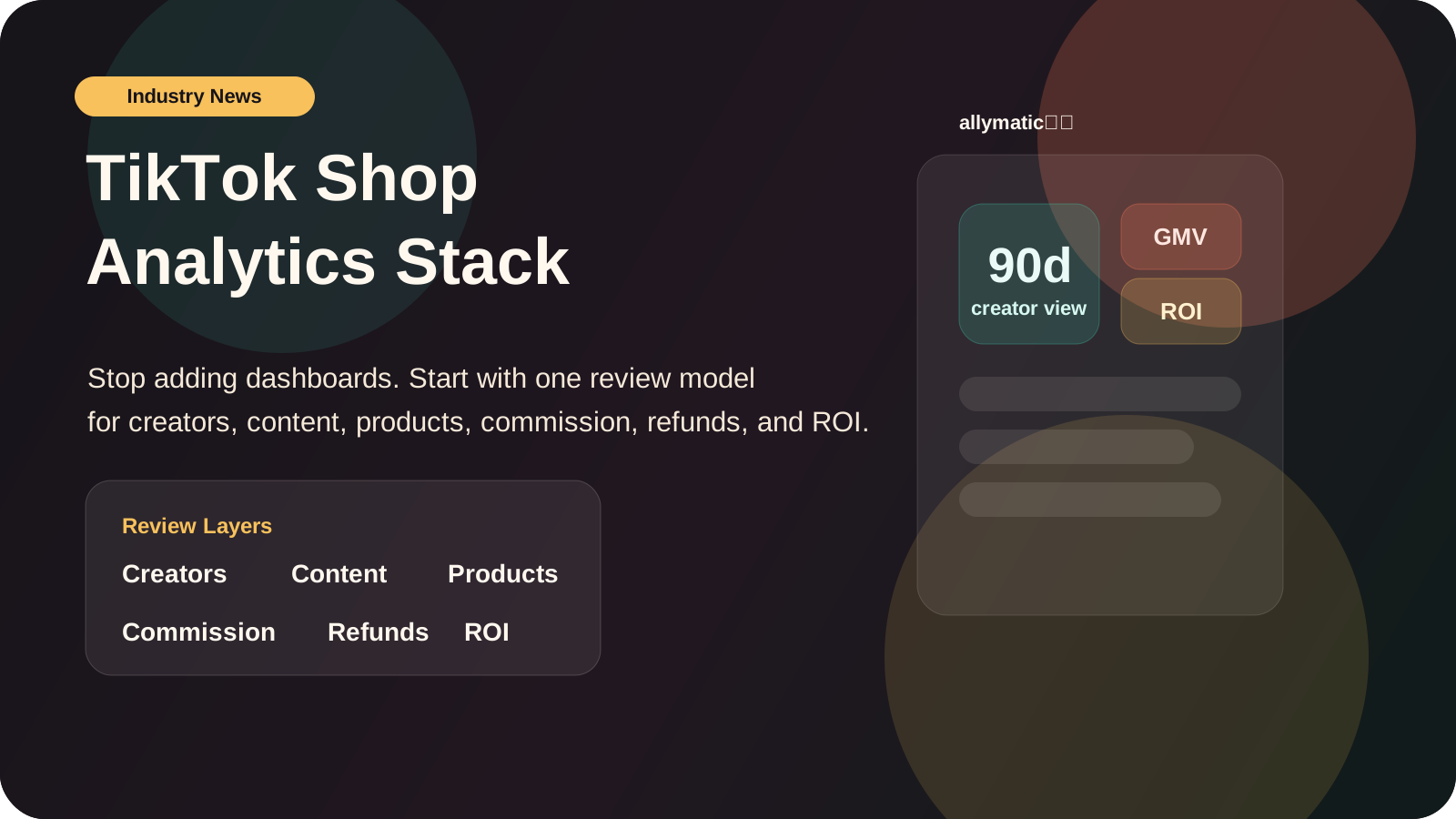
From the allymatic perspective, the real change is not that Open Collaboration now has a few more switches. The bigger shift is that TikTok Shop is moving affiliate from manual matchmaking toward system-led scaling.
The more effective teams will not necessarily be the ones manually contacting the most creators every day. They will be the teams that connect four things earlier: an open product layer, segmented commission structure, smooth authorization, and continuous creative replenishment. Once those four parts are connected, Open Collaboration stops being a place to list commission. It becomes an intake layer that continuously sends content opportunities into GMV Max and Shop Ads.
That also means creator affiliate management will keep moving upstream. The harder questions are no longer only whether a creator agrees to collaborate. The real questions are whether a product belongs in the open layer, whether the commission structure can support two-stage economics, whether authorization can happen quickly enough, and which content deserves to keep receiving system traffic.
The teams that turn affiliate into an auto-scaling engine earlier will be the ones that turn creator collaboration from scattered projects into an operating asset that keeps compounding.
Official Sources
Official Sources
Primary references used for this article.