Before GMV Scales, Fulfillment Has to Qualify: TikTok Shop Is Turning Shipping Execution into a Growth Gate
If your team still treats fulfillment in TikTok Shop as a back-end support function that can be fixed after creator content starts working, ads start scaling, and orders begin to rise, the latest official updates in June 2026 are enough to show that this sequence is no longer safe.
The seller guide for Deals For You Days ties campaign access directly to shop performance. TikTok's May policy round-up reframes OTDR and reserve logic more clearly around execution quality. Around the same time, Fulfilled by TikTok surfaced itemized return-fee changes, a new rate card effective June 18, and a temporary cashback incentive for merchants willing to move inventory into a more standardized logistics structure.
Read together, these signals point to a broader shift. TikTok Shop is not merely asking warehouse teams to perform better. It is moving dispatch speed, delivery stability, after-sales handling, and settlement efficiency upstream into the conditions that shape traffic, campaign participation, and growth rhythm.
For cross-border brands and TikTok Shop operators, the real adjustment is not to find a few more creators or add a little more budget. It is to put fulfillment design inside campaign design from the start.
TikTok is raising the activity gate before the traffic gate
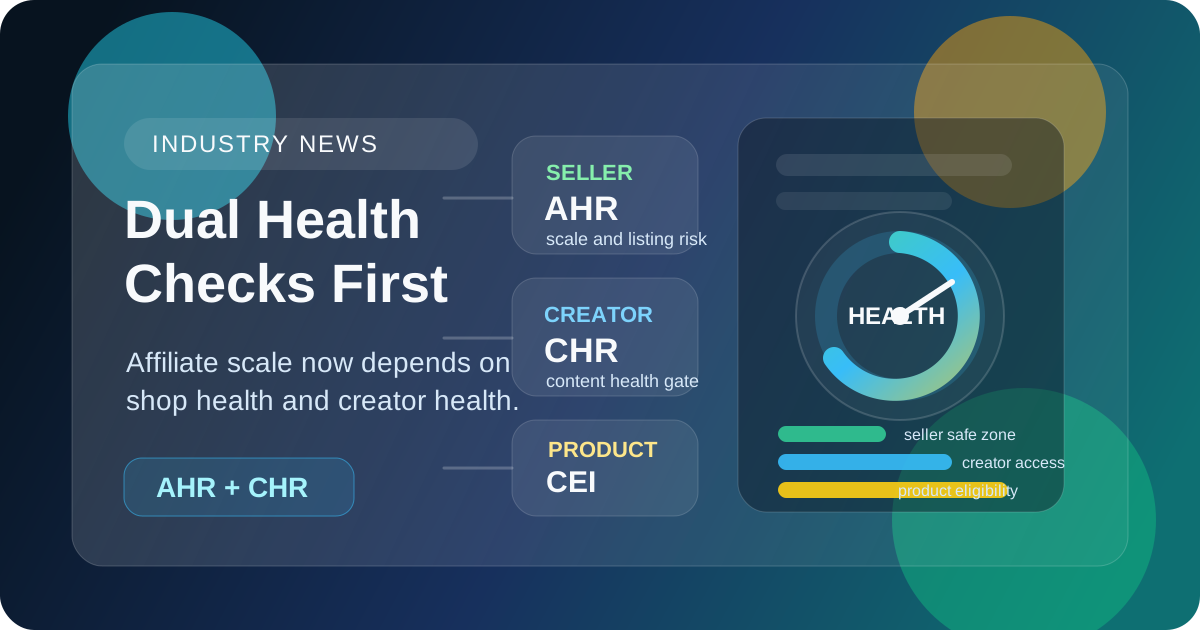
Deals For You Days, which began on June 18, is not framed as an open invitation for every seller. The official seller guide places core operating signals such as Shop Performance Score and Late Dispatch Rate directly in the qualification logic.
That matters because it changes how brands should interpret promotional readiness. TikTok is no longer saying that anyone who wants traffic should be able to join the event. It is signaling that sellers who can receive orders, ship reliably, and absorb after-sales pressure are more deserving of event demand.
Many teams still prepare for major moments in three disconnected stages. Marketing and creator teams build content first, paid teams prepare to buy traffic second, and operations teams are asked to support the outcome at the end. TikTok's direction is increasingly the reverse. If fulfillment is unstable, campaign access, demand absorption, and the next round of scaling all become less reliable.
Fulfillment is no longer only an execution issue after the orders arrive. It is increasingly one of the filters that determine whether a shop gets the growth opportunity in the first place.
Fulfillment is now affecting traffic, cash flow, and risk at the same time
The shift is bigger than "do not ship late."
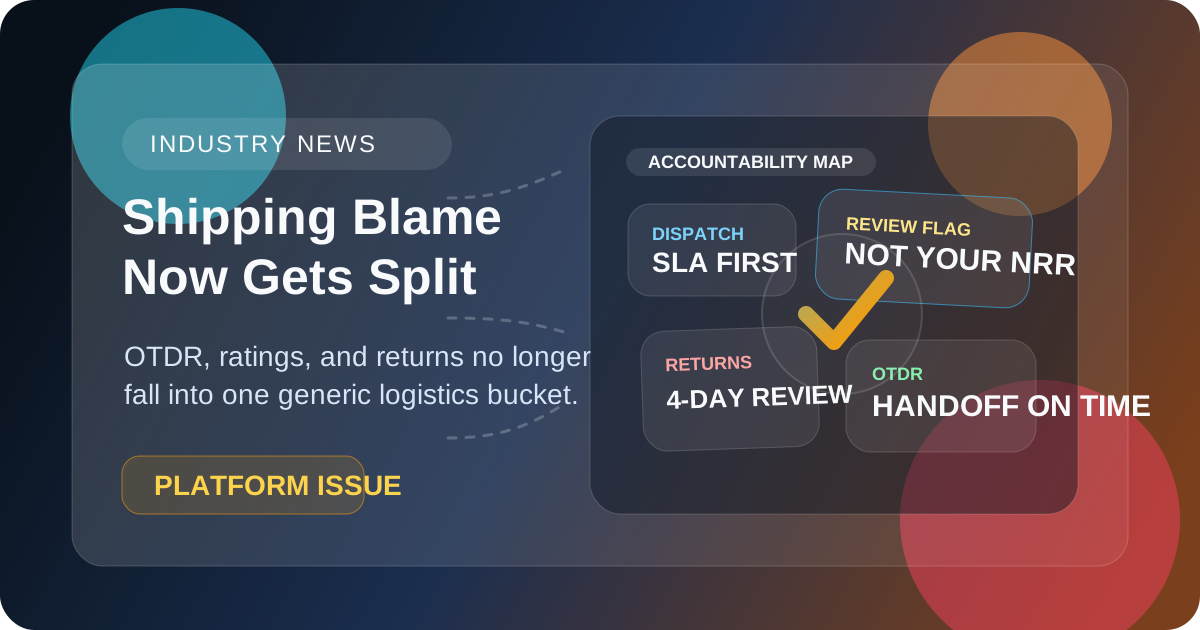
In TikTok Shop's May policy round-up, the platform updated the logic behind OTDR and made the relationship between execution quality and dynamic reserves more explicit. TikTok is not watching one warehouse metric in isolation. It is connecting fulfillment behavior to a broader operating judgment.
Another signal that matters even more for operators is the cash-flow meaning of Shop Performance Score. TikTok's SPS guide makes clear that higher-scoring shops can receive settlement faster. That turns SPS from a cosmetic metric into a working-capital variable.
This changes the feel of the business for brand teams. Slow dispatch and unstable delivery used to be treated mainly as customer-service or warehouse problems. They are now also growth problems and cash-flow problems. If creators and ads do their job on the front end but dispatch, delivery, and after-sales do not hold on the back end, the platform can restrict campaign opportunity while the merchant also feels more pressure in the settlement cycle.
FBT is no longer just a logistics option. It is becoming a growth tool
That is why TikTok's recent FBT moves deserve to be read together.
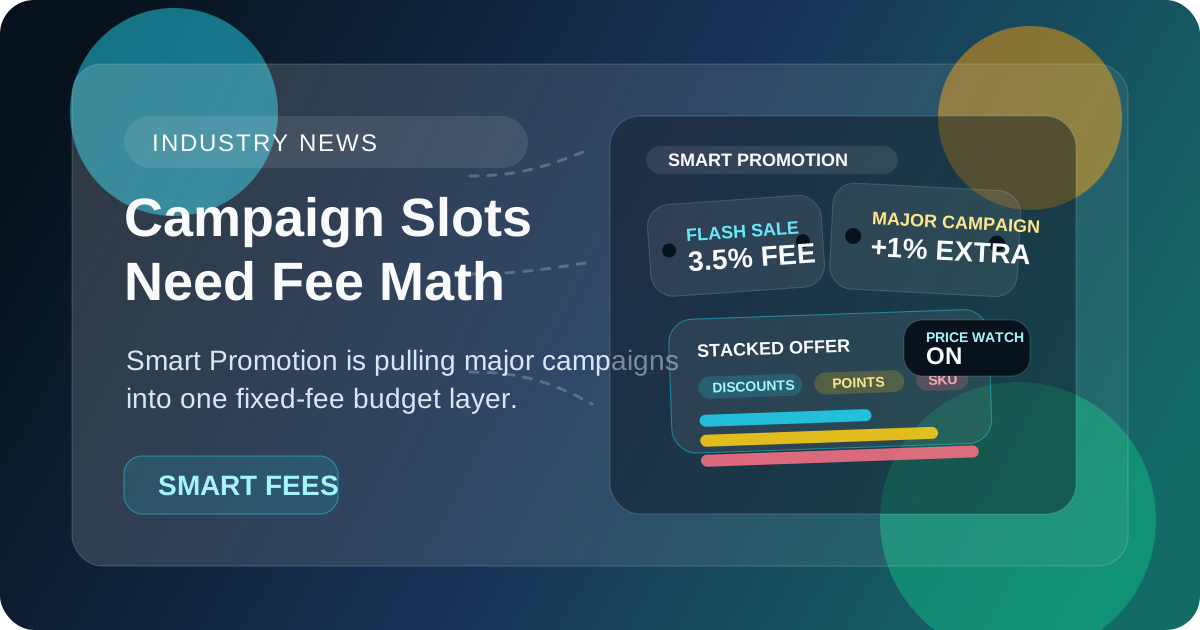
On one side, TikTok continues to position Fulfilled by TikTok as a way to unlock faster shipping, platform-side free-shipping support, and a more stable buyer experience. On the other, it has brought itemized return-fee changes effective June 1, a new rate card effective June 18, and a 10% cashback incentive running from April through September into the foreground.
Taken together, the message is clear. TikTok is not just offering a warehouse service that merchants may or may not use. It is actively nudging sellers to migrate some core SKUs into a more standardized, more controllable fulfillment structure.
The practical question for brands is not whether every SKU should move to FBT. The more important question is whether fulfillment strategy can still be treated as something decided after campaign planning is already done. A healthier sequence is to decide earlier which SKUs are suitable for promotional bursts, which ones need a more reliable logistics path before scale, and which products would undermine event performance if they stay on an older fulfillment chain.
By the time a major campaign is already live, it is usually too late to design that logic well.
Creator affiliate, paid media, and fulfillment now need to be managed on one operating sheet
This shift also changes the role of creator teams.
Many merchants still assume that if content and orders can be generated first, fulfillment only needs to avoid obvious mistakes. But once TikTok starts linking campaign access, SPS, LDR, settlement speed, and FBT incentives together, creator operations have to adapt as well.
Front-end work such as creator outreach, sample dispatch, livestream scheduling, and promotional bursts creates highly concentrated order peaks for the back end. If inventory, warehouse SLA, and refund handling are not prepared in advance, the more successful the front-end collaboration becomes, the easier it is to damage shop score and fulfillment metrics afterward.
That means the real object to manage is no longer just the creator list or the ad budget. It is a shared growth schedule. At minimum, teams should align four kinds of information in one view:
- which SKUs are promotional priority products and therefore require stronger dispatch and delivery reliability,
- which creators or livestreams are likely to create concentrated order spikes and therefore require inventory locks and service readiness,
- which products should enter FBT or another higher-standard fulfillment lane and which should remain in small-scale testing,
- and which shop metrics are already nearing activity, settlement, or risk thresholds and therefore cannot absorb rough scaling.
If those decisions still live in separate chats across different teams, the real bottleneck is no longer traffic. It is organizational response speed.
A more realistic model is to tier the assortment by fulfillment resilience first
If I were preparing a TikTok Shop team for the second half of the year, I would split products into three layers.
The first layer is event-scale inventory. These are the SKUs appropriate for major sale moments, creator bursts, and paid-media expansion. The requirement is not simply that the content story works. The product also has to survive peak order volume, after-sales pressure, and the settlement rhythm that follows.
The second layer is steady-state test inventory. These products can continue running through creator content and controlled paid media, but they are not ready for aggressive promotional moments yet. The operating focus here is dispatch consistency, refund reasons, and review volatility rather than short-term GMV alone.
The third layer is repair-watch inventory. These products may still have content potential, but fulfillment, after-sales, or customer experience is already starting to drag. They should not be pushed harder through events and creator scale. They should go back into listing quality, expectation management, service scripts, and operational repair first.
Many teams used to tier products by creator size. A more durable approach now may be to tier them by whether the fulfillment system can safely carry scale.
The allymatic view
From the allymatic perspective, the most important part of this shift is not a single logistics rule. It is that TikTok Shop is moving fulfillment from a back-office execution item into a front-office growth item.
Campaign eligibility is watching fulfillment quality. SPS affects settlement speed. Policy updates keep tightening the operating meaning of dispatch. FBT is adding incentives around more standardized execution. Put together, TikTok is effectively telling brands that the teams with the strongest long-term advantage will not be the teams that generate spikes most aggressively. They will be the teams that can orchestrate creators, ads, inventory, shipping, and after-sales as one system.
Traffic still matters. But from June 2026 onward, the teams that turn fulfillment into growth infrastructure first are more likely to convert TikTok Shop's event traffic into repeatable growth.