More Shoppable Posts No Longer Mean Better Results: TikTok Shop Is Turning Creator Commerce Into Scarce Slot Management
Many brand teams still approach TikTok Shop creator commerce with a strong early-platform instinct: if enough creators are recruited and enough shoppable posts are published, sales will eventually stack up. That mindset pushes teams to chase more SKUs, more linked videos, and more LIVE sessions, treating volume itself as the clearest growth lever.
But TikTok Shop's late-June 2026 official updates point in the opposite direction. If you read the Creator Eligibility Policy, Policy Pulse, Video Pre-Check guidance, LIVE Content Warnings, and CHR rules together, they all signal the same shift: shoppable content is no longer an unlimited publishing action. It is increasingly becoming a scarce operating slot that is capped, screened, and scored.
For cross-border brands and TikTok Shop teams, that means creator affiliate management has to move further upstream. The more important question is no longer who published the most linked posts today. The real question is who reserved limited commerce slots for the right products, the right scripts, and the right creators.
TikTok is cutting the fantasy of unlimited volume before it cuts creator scale
The first important change is that TikTok Shop is now writing posting frequency directly into capability boundaries.
The June 30, 2026 Creator Eligibility Policy states that U.S. merchants and creators have posting limits for shoppable content. Under standard conditions, accounts may publish up to 30 shoppable short videos and 60 shoppable photo posts per day. That may still sound generous, but TikTok adds a more important layer before those limits: newly onboarded accounts do not begin with full operating capacity.
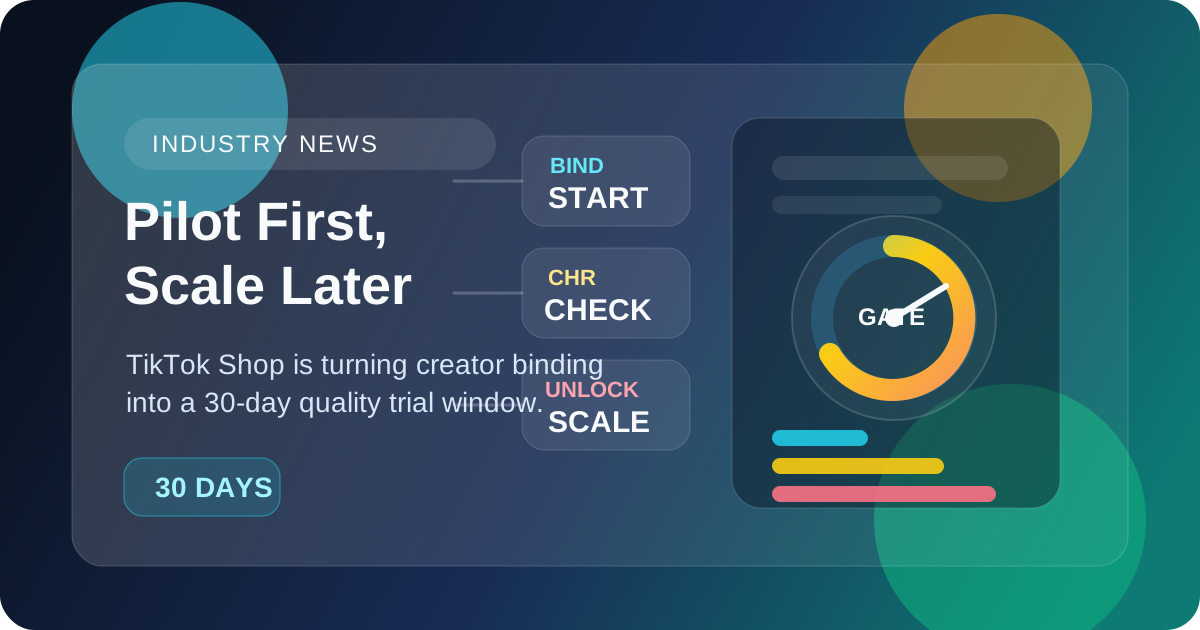
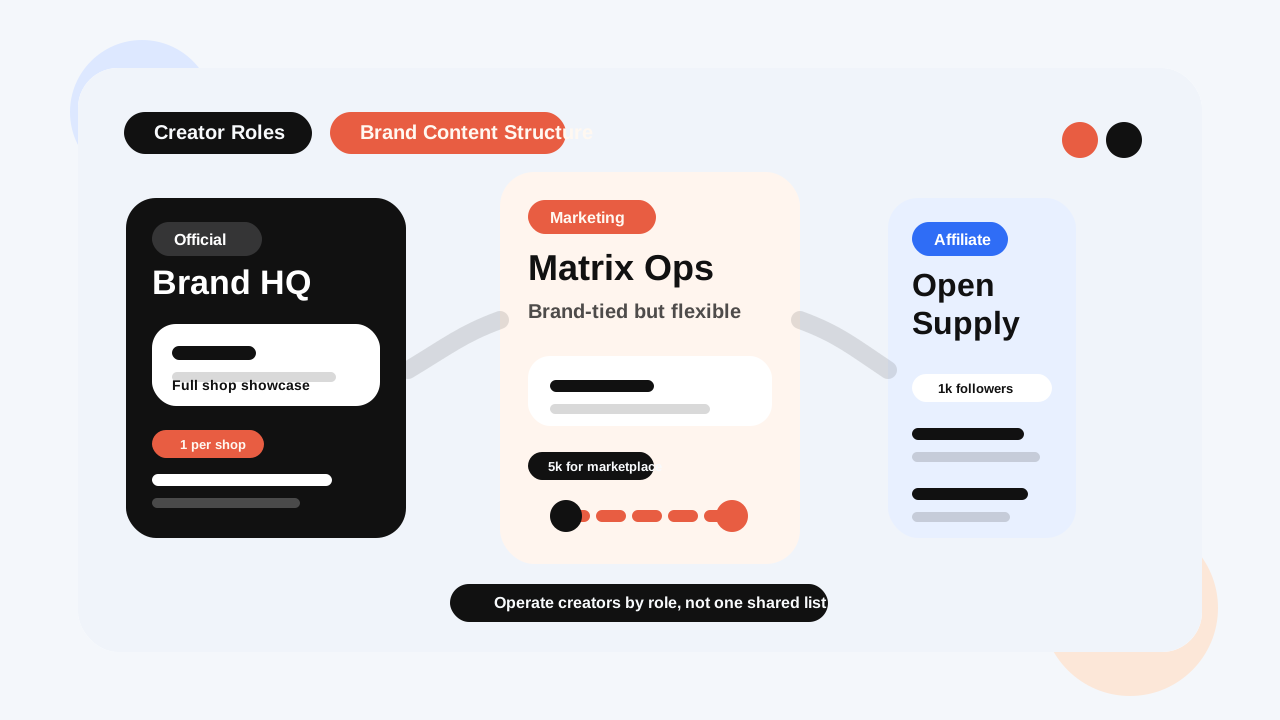
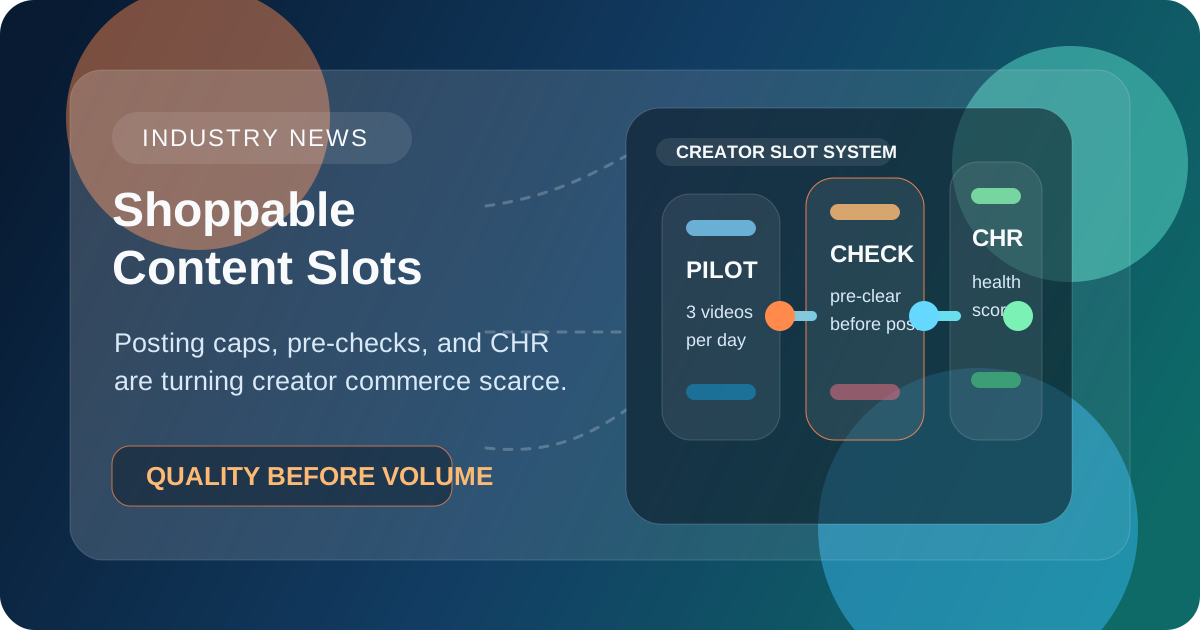
New Official Creators and Marketing Creators who enter the early-stage pilot may initially be limited to up to 3 e-commerce videos per day. Affiliate Creators with fewer than 5,000 followers are automatically placed into a pilot period of at least 30 days, during which they may publish up to 3 shoppable videos per day and 3 shoppable LIVEs per week. They are also restricted to products with a Shop Performance Score of at least 95% and cannot join campaigns during that period.
This means TikTok is no longer asking whether an account can simply publish more. It is asking whether that account is qualified to use limited commerce slots on safer, stronger products. Once account rules, product rules, and campaign rules are layered together, shoppable content changes in nature. It stops behaving like an infinitely expandable traffic tactic and starts behaving like scarce inventory that has to be allocated carefully.
Every commerce slot is starting to look like a pre-cleared media action
If posting limits are the first gate, publishing checks are the second.
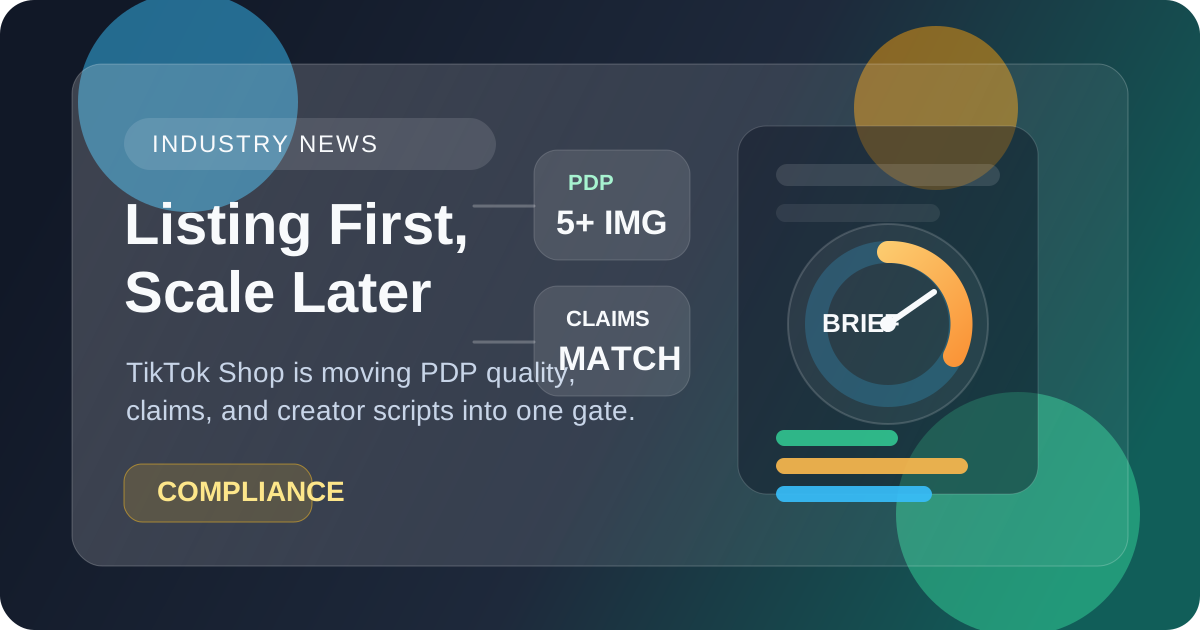
The Video Pre-Check Tool guidance published on June 26 is no longer just educational material. TikTok explicitly says the tool scans text, visuals, audio, product links, and descriptions before a shoppable video is published. It can detect common risks such as unoriginal content, irrelevant promotion, and still-frame content. Entry-level accounts get at least 2 pre-checks per day, stronger creators can unlock more checks, and eligible accounts can even auto-post once a video clears review.
That reflects a clear product direction: TikTok wants shoppable content to go through an automated quality screen before it enters distribution. Publishing is not the end either. LIVE operations are now connected to a second layer of real-time control. In the June 18 LIVE Content Warnings guidance, TikTok introduced a three-level system of reminders, warnings, and LIVE interruption. Repeated violations can lead to product-link removal, violation points, or the LIVE ending immediately.
In other words, shoppable content is increasingly becoming an operating chain that must pass pre-checks first and real-time monitoring later. It is no longer a casual action where teams can keep stacking links and volume with little consequence. Brands that still manage creator output as "push for more posts" will underestimate how much platform governance is now shaping content supply.
Future scale will depend more on account health and quality than on content density
The third shift is that TikTok Shop is moving creator commerce away from a quantity race and toward a health-and-quality race.
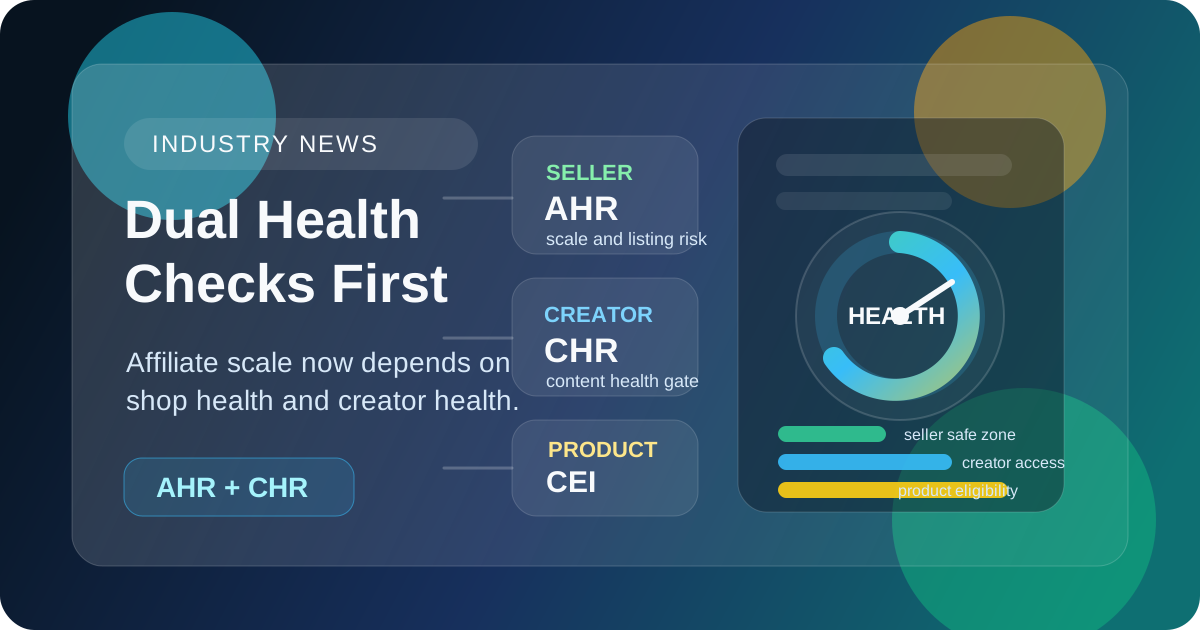
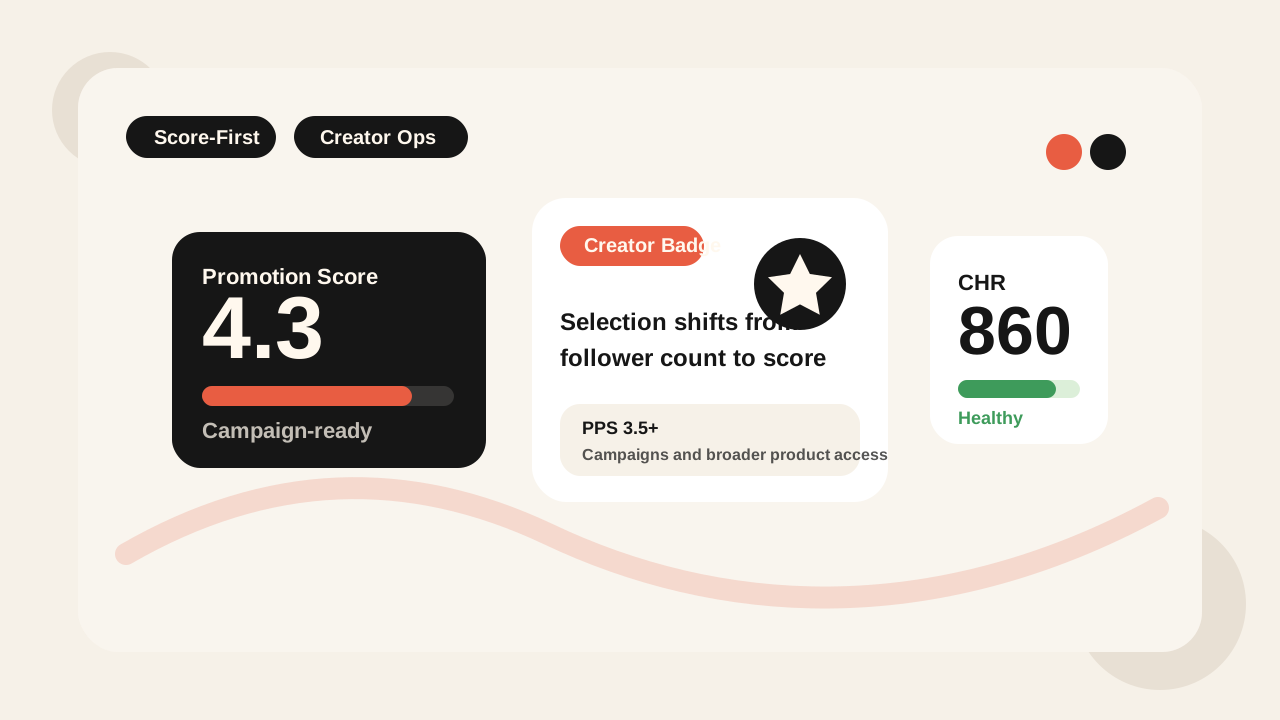
The updated CHR rules also published on June 30 define Creator Health Rating as a 0-1,000 account-health system. New creators start at 200 points. Once an account falls below 150, it enters a higher-risk zone and may lose campaign access or even e-commerce permissions. At the same time, TikTok's PPS guidance makes the upside of stronger content quality more explicit. Higher Promotion Performance Scores unlock broader product access, campaign eligibility, and sample coupons, while creators above 4.0 can begin displaying a badge.
Taken together, the meaning is straightforward. The creators who keep receiving traffic and collaboration opportunities will not necessarily be the ones who publish the most. They will be the ones who keep passing platform filters, maintaining account health, and producing stronger shoppable content consistently. TikTok is gradually translating "good content" from a soft judgment into a system of permissions, quotas, and reward allocation.
That also changes how brands should evaluate creators. It is no longer enough to ask whether a creator is willing to post today. Teams also need to know whether that creator is still in pilot, whether they have stable posting capacity, whether CHR is healthy, and whether PPS is moving upward. Those factors now directly shape whether the same creator can keep earning distribution, campaign access, samples, and product opportunities later.
How allymatic reads this shift
From the allymatic perspective, the most important adjustment today is not "find even more creators." It is to manage shoppable content as scarce publishing inventory.
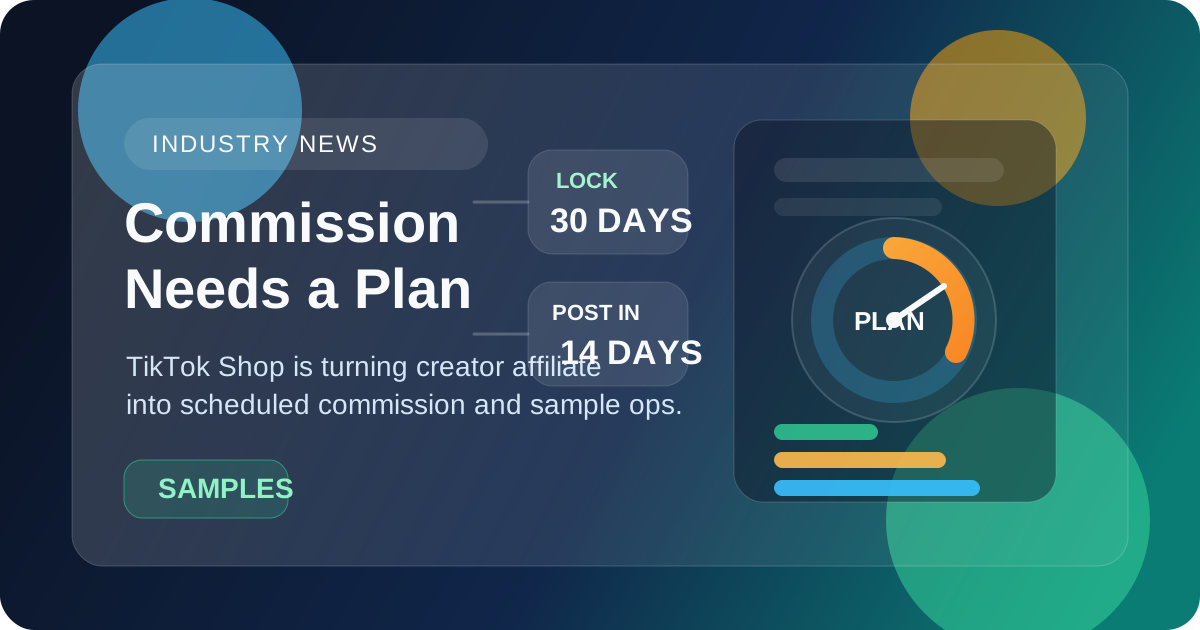
First, products should not be distributed evenly across every creator. They should be prioritized toward accounts most likely to clear checks, stay healthy, and sustain quality. Second, creator scheduling should not be driven only by output counts, but by which posts are worth occupying shoppable slots. Third, samples, commission, and campaign opportunities should be evaluated in the same operating framework as creator health, stage, and content quality, instead of being managed separately.
TikTok is turning creator commerce from "post more and see what happens" into precise management on top of limited content slots. The teams that accept that reality earlier will be the ones that upgrade creator collaboration from a volume tactic into a more disciplined, repeatable growth system.
Official Sources
Official Sources
Primary references used for this article.