Europe Is No Longer a One-Country Pilot: TikTok Shop Is Turning New Markets Into a Cross-Border Operating Network
Many teams still look at TikTok Shop Europe through a country-by-country lens: wait for one market to open, then patch in local creators, local logistics, and local campaign rhythms afterward. Whichever country starts moving first becomes the main focus.
TikTok's June 2026 signals point to a different model.
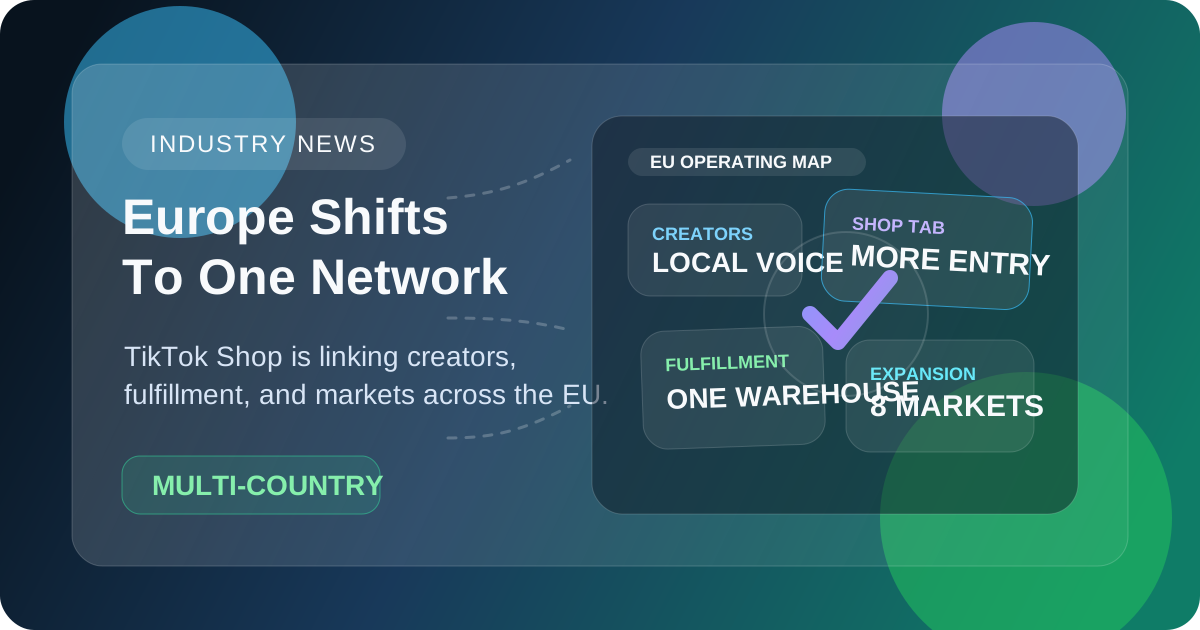
From June 1, TikTok Shop expanded cross-border seller applications across eight European markets: Germany, France, Italy, Spain, Ireland, Portugal, Greece, and Austria. From June 15, Germany, France, and Italy opened shopping access for local consumers. TikTok also confirmed that Shop Tab would roll out in Germany, France, and Italy in July. Together with the platform's continued emphasis on multi-country fulfillment, local logistics, and creator-led commerce, the signal is clear: Europe is no longer being built as a set of isolated pilot markets. TikTok Shop is shaping it into a regional operating network.
That matters for brands and TikTok Shop teams because the next competitive gap in Europe will not come only from opening more stores first. It will come from connecting content, creators, fulfillment, and campaign timing across markets before scale arrives.
TikTok did not just open more markets. It changed the operating unit
On the surface, this looks like a familiar expansion cycle: more countries open, more sellers can apply, and more consumers can buy.
The more important point is that TikTok is linking several previously separate layers into one sequence.
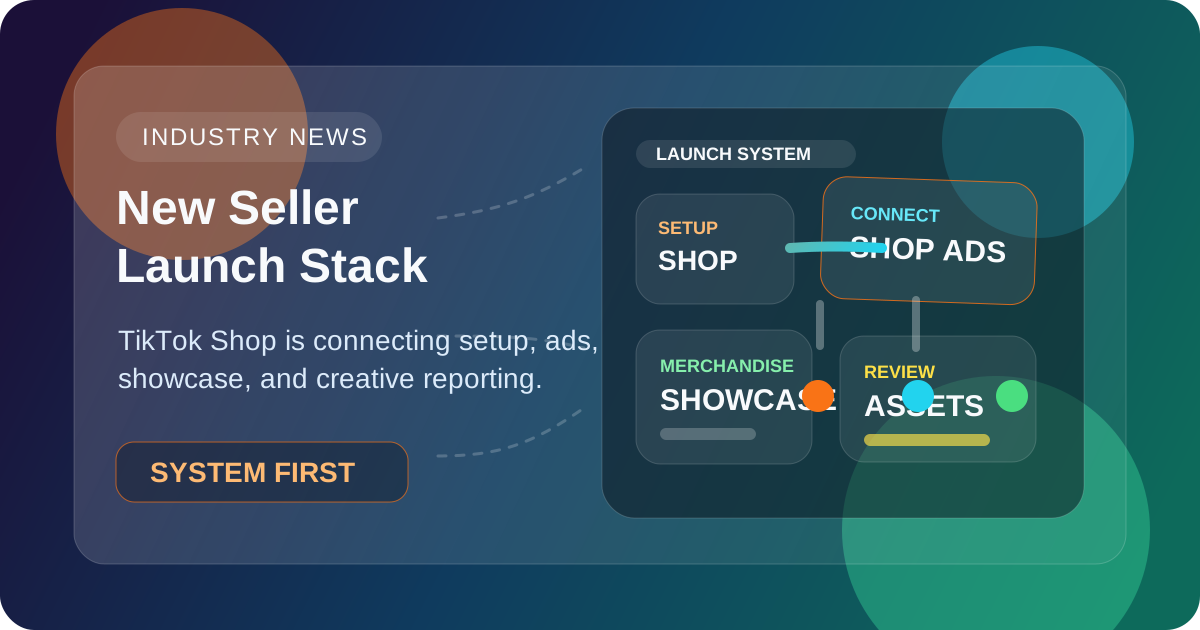
First, cross-border seller access expanded across eight countries at once. That signals TikTok is no longer relying on slow single-country validation alone. It is laying supply across the region earlier. Then Germany, France, and Italy opened to shoppers, which strengthens the consumer side of the loop. Then Shop Tab begins rolling out in July, which means TikTok is not only relying on conversion inside short videos and LIVE sessions. It is also building thicker browse-and-buy behavior inside the platform.
Put together, the message is straightforward: TikTok is scaling merchant supply, shopper demand, and in-app transaction entry points across several markets in parallel. The operating unit is becoming the region, not the individual country.
The real challenge is no longer a local creator list. It is multilingual supply
Another underappreciated shift is what this does to creator operations.
Public takeaways from the late-June TT123 Europe cross-border summit made the direction even clearer. TikTok Shop is being framed as a new blue-ocean opportunity for content commerce in Europe, with repeated emphasis on one-warehouse multi-country shipping, creator collaboration, and linked platform resources. In practical terms, Europe is not a market where brands can open first and organize creators later. Content supply now has to scale with market expansion from the beginning.
That changes the planning burden for teams.
In a single-country market, the question was often simple: do we have local creators who can accept samples, attach products, and maybe support LIVE? In Europe's multi-market phase, the questions become more operational.
- Who should tell the product story in French, German, Italian, Spanish, and English contexts?
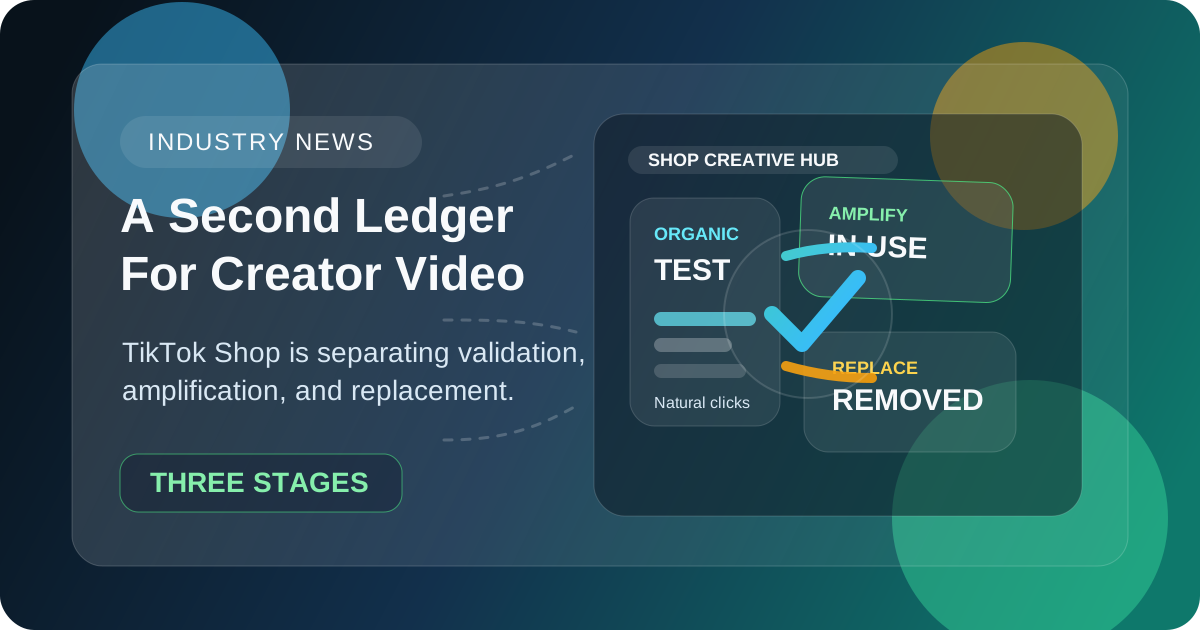
- Which creators are better for organic product testing, and which should be reserved for campaigns, LIVE moments, or later paid amplification?
- Which assets can travel across markets, and which must be rebuilt locally?
- Which markets can share sample and inventory rhythms, and which need their own schedules?
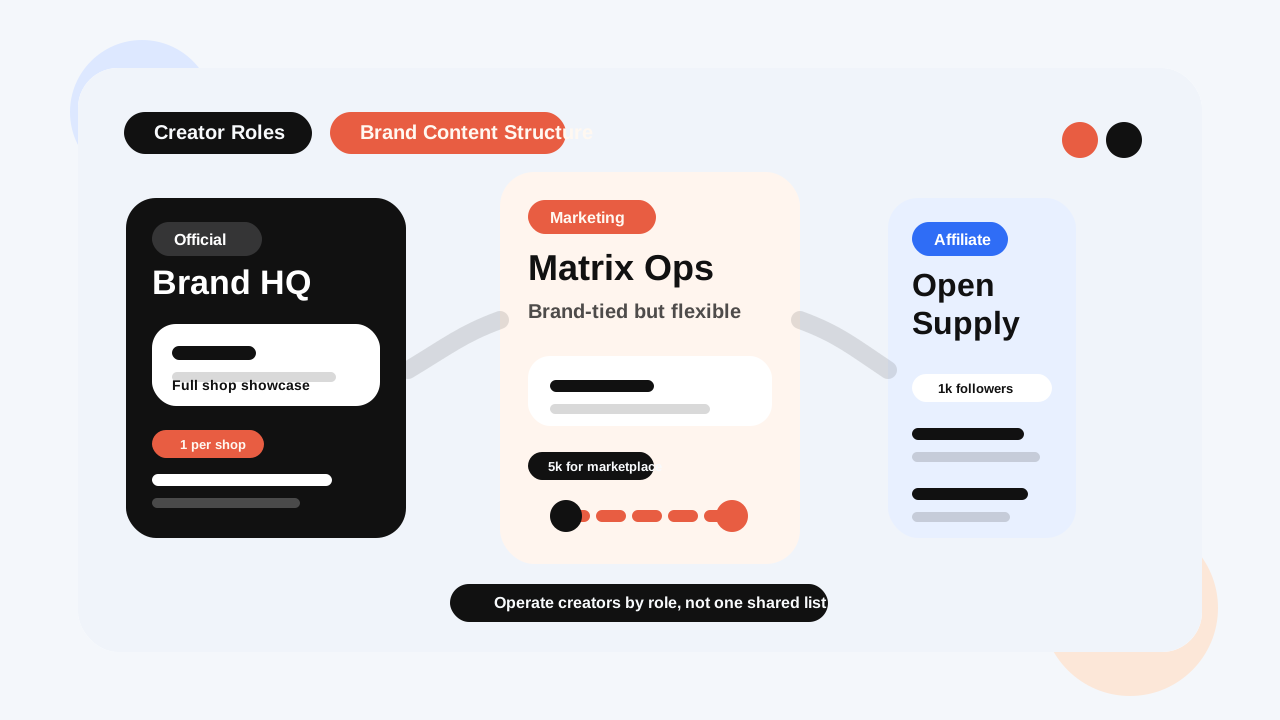
In other words, the creator unit is no longer just "country." It is increasingly a combination of language, category fit, and fulfillment readiness.
The Europe opportunity is turning from a traffic question into an orchestration question
When new markets open, many teams still default to entry eligibility and commission mechanics first. Those matter, but they are no longer enough.
What will separate teams in Europe is whether they can orchestrate several systems together earlier than others.
The first is fulfillment radius. TikTok keeps highlighting local warehousing and multi-country shipping logic in Europe. Brands should stop treating logistics as a back-end cost line only. It is now a front-end condition for creator collaboration and campaign timing. If shipping is slow or returns are messy, creator seeding and LIVE conversion get erased quickly by experience problems.
The second is content localization. Europe is not one unified content market. Germany, France, Italy, Spain, and the surrounding markets may sell similar products, but the buyer language, creator style, and LIVE education patterns differ meaningfully. A single English content layer may create surface-level coverage while failing to build depth anywhere.
The third is campaign coordination. Once the number of markets increases, teams naturally start splitting campaigns, samples, commissions, and content recovery into separate country workflows. That often breaks efficiency. A stronger model is to define anchor markets, secondary markets, and test markets first, then layer the same SKU priorities and content goals across them.
What brands should build now
If Europe is becoming a larger TikTok Shop priority in the second half of 2026, at least four operating moves should happen earlier.
First, prioritize market clusters instead of isolated countries. Treat Germany, France, and Italy as a core operating belt, for example, and Spain, Portugal, or Ireland as expansion belts. That is usually more efficient than spreading resources evenly.
Second, build multilingual creator pools before widening collaboration openings. Not every country needs the same volume of creators, but every priority market needs a reliable baseline of creators who can ship content, handle samples, and match campaign timing.
Third, put samples, inventory, shipping SLAs, and affiliate timing into the same operating view. When several European markets grow at once, the biggest problems usually come from operations lagging behind content momentum, not from a lack of reach.
Fourth, do not treat Europe as one store copied eight times. A stronger model is to turn products, content structures, creator roles, commission rules, and campaign modules into reusable blocks, then recombine them by market.
How allymatic reads this shift
From the allymatic perspective, the most important June signal is that TikTok Shop is moving Europe from country-by-country testing toward cross-border operating.
That changes the management layer that actually matters. The key question will no longer be just whether one country is open, whether one creator replied, or whether one market has started converting. The more important question is whether teams can connect multilingual content supply, creator tiering, local fulfillment, campaign timing, and later amplification into one working chain.
The teams that start treating Europe as a regional operating network earlier will be in a much stronger position when dense market openings continue. They will be scaling a system, not patching together last-minute motions.