Searching for MossCreator? Compare More Than Bulk DMs. Check These 5 Creator Workflow Breakpoints First.
If you are searching for `mosscreator`, the more useful answer is usually not whether it is a direct substitute for some other vendor. The better question is this: does your team mainly need help sending the first creator invite faster, or does it need one stable workflow that connects creator discovery, outreach, follow-up, samples, content, and ROI review? For most TikTok Shop teams, that is the real comparison boundary behind allymatic's tool selection hub, creator outreach, creator CRM, creator marketing management system, and creator ROI calculator.
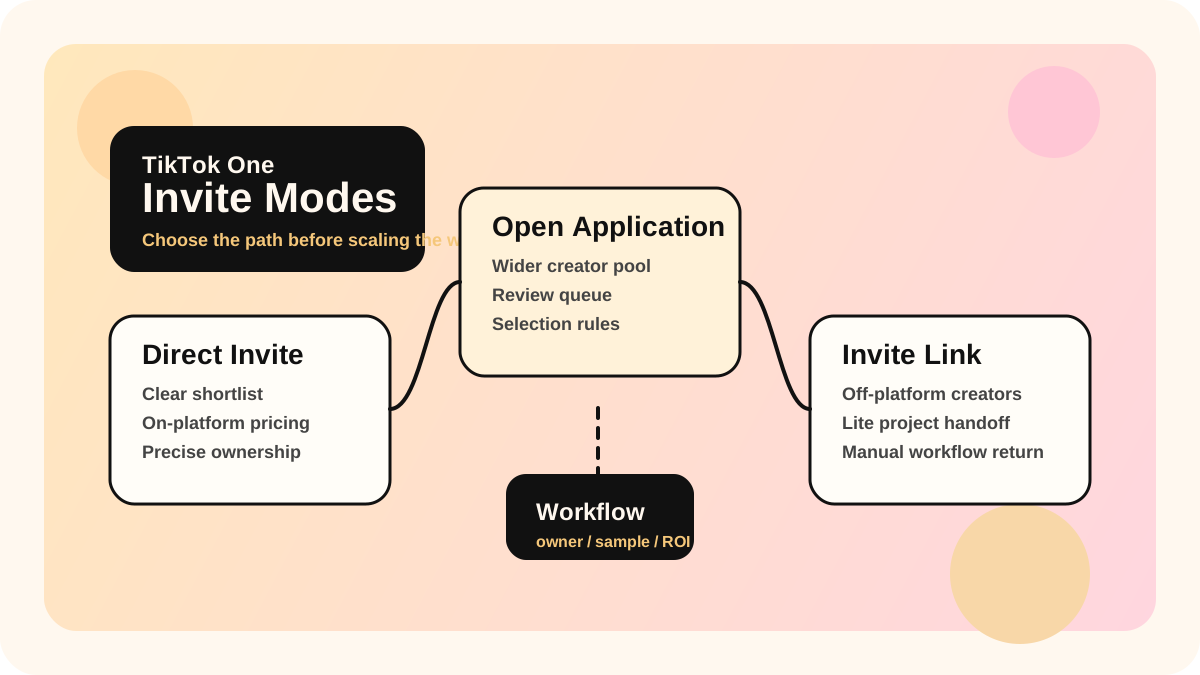
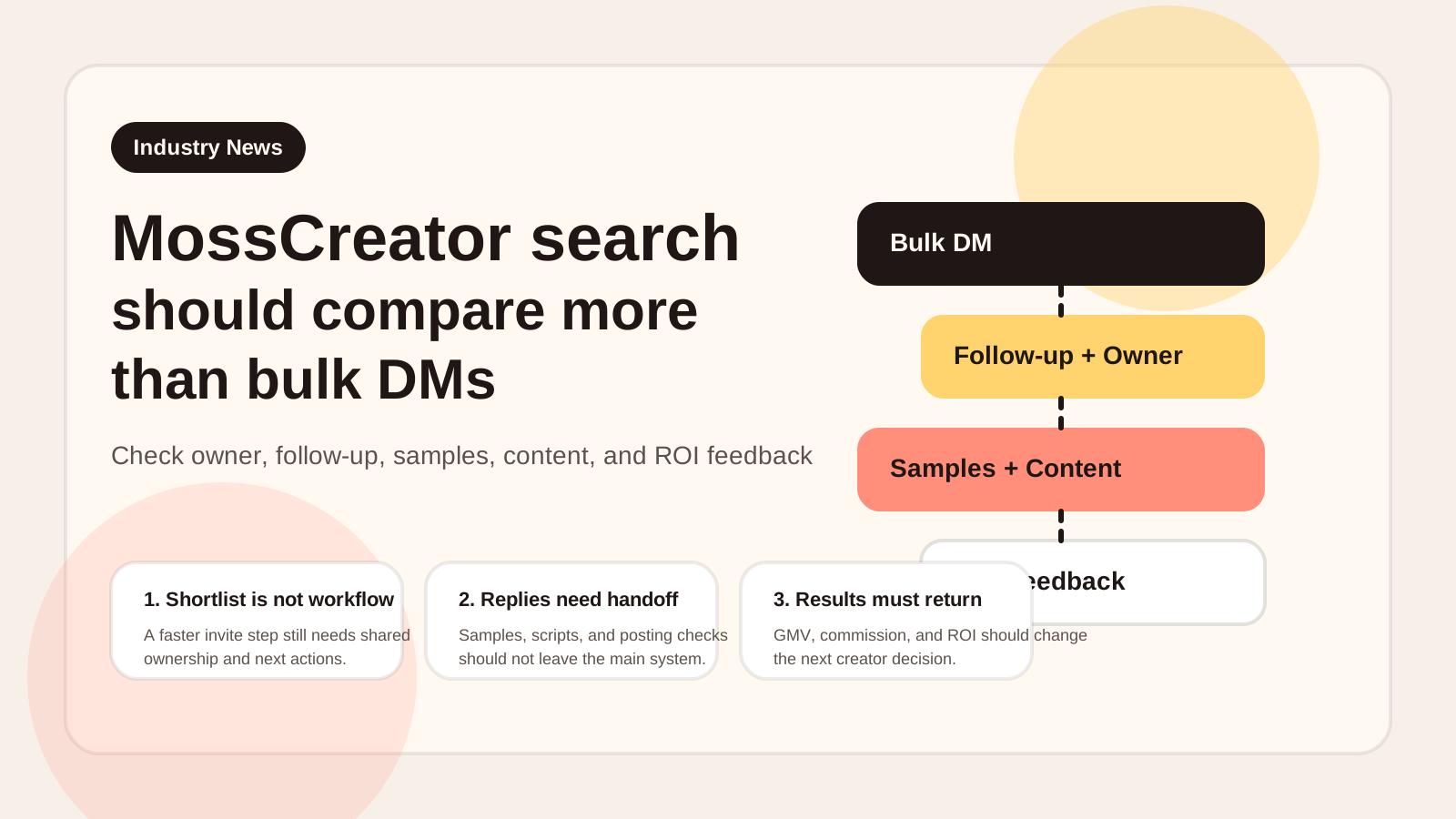
The short answer is this: if the team mainly struggles with first-contact speed, shortlist execution, and early reply rate, a tool in the MossCreator category may already solve an important front-half problem. But once creator work includes multi-person follow-up, samples, content timing, link activation, and reinvestment decisions, the comparison should move beyond who can send more messages. It should move to who can hold the rest of the workflow together.
Why this query deserves a direct answer
FastMoss' public MossCreator update from April 25, 2026 emphasizes batch DMs, a creator CRM board, task review, and grouped lifecycle stages. That suggests many people searching `mosscreator` are not looking for a vague creator marketing platform. They are looking for a more efficient outreach entry point.
At the same time, TikTok's 2026 documentation for Creator marketing projects, Target and Open collaboration, and flat-fee collaboration describes creator work as a fuller chain: write the brief, choose the collaboration model, manage samples or content, track publishing and feedback, and review performance later. In other words, the platform layer is increasingly structured around ongoing collaboration instead of one-time outreach.
That is why `mosscreator` is a meaningful search intent. Front-end outreach tools are getting stronger, while the back half of team coordination and review is where workflow gaps become easier to expose.
Check these 5 breakpoints before deciding whether you are comparing an outreach tool or a full system
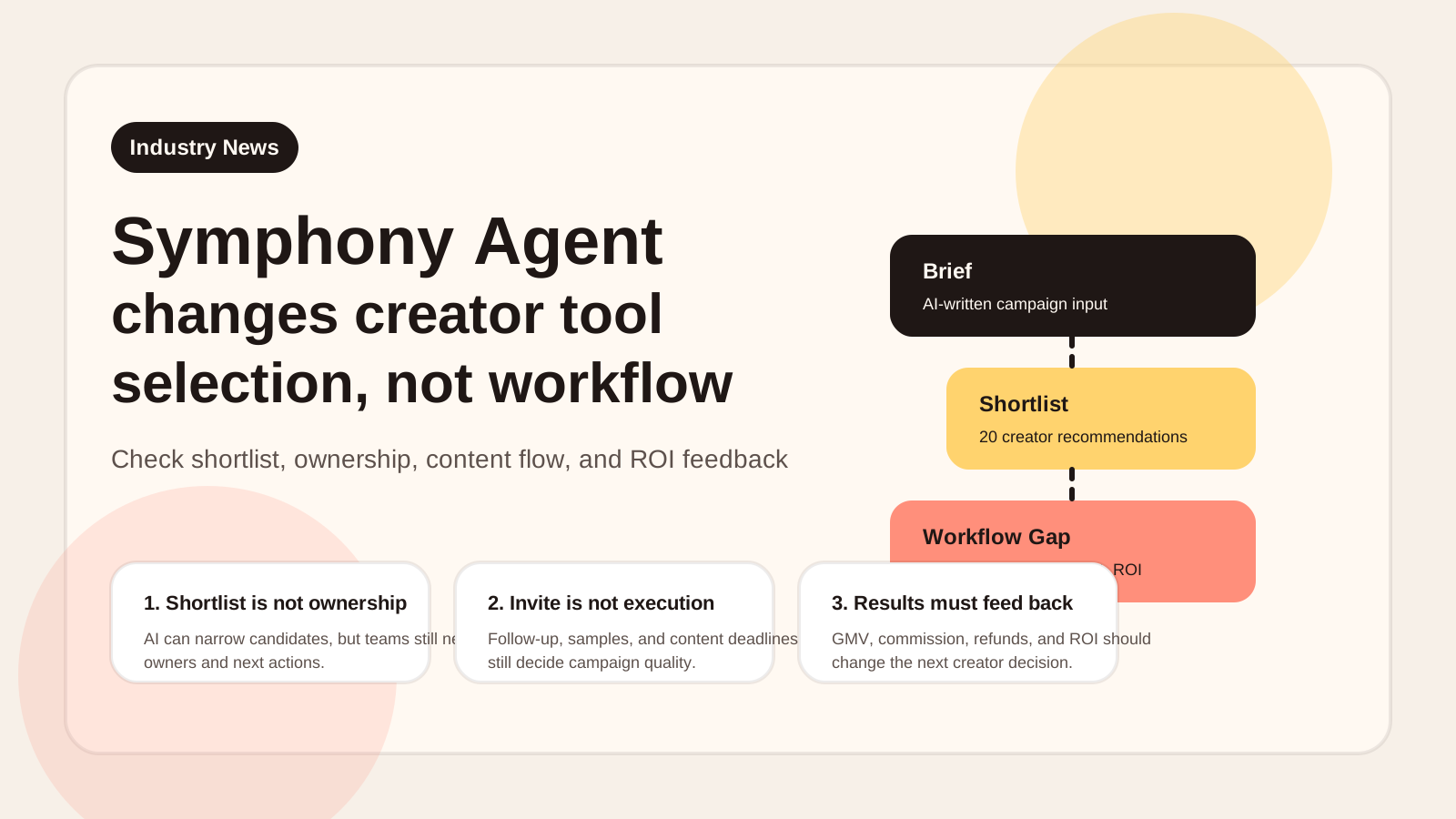
1. The shortlist exists, but ownership is still unclear
Faster shortlists do not automatically mean faster collaboration. The first real breakpoint is what happens after names are found. Who owns the creator? Who decides the next action? If the list gets bigger but ownership is still handled in chat threads, efficiency only moves forward in time. It does not become a closed loop.
2. The invite was sent, but follow-up is still fragmented
Creator collaboration rarely succeeds on the first message. More often, the important work is the second reminder, the third confirmation, the post-sample follow-up, or the content reminder before launch. If a tool solves the send step but not the next-step rhythm, it is closer to an outreach accelerator than a workflow layer.
3. The creator replied, but samples and content milestones do not connect
Once the team starts handling samples, scripts, posting dates, and shoppable links, the question is no longer whether outreach worked. The better comparison is whether the creator can move naturally beyond the creator outreach page into a shared execution chain inside the creator marketing management system and creator CRM.
4. The content went live, but results do not change the creator decision
Many tools can show contacts, invite records, and stage labels. But the workflow often breaks in review. The team knows a creator posted and may know there were orders, yet still cannot judge whether the collaboration deserves more budget once samples, commission, or flat fees are considered. If this layer is missing, high outreach speed still does not create a reusable creator asset base.
5. Leadership asks for the next move, and the team still has to search chats and sheets
This is usually the clearest boundary test. If management asks which creators deserve more investment, which ones should slow down, or which products should stop getting samples, and the team still has to gather answers from chat logs, sheets, logistics records, and dashboards, then the comparison has already moved beyond a point solution. The real question is whether collaboration status and ROI feedback live in one operating model.
When a MossCreator-type tool may already be enough
This category of tool can be a strong fit when:
- the main pain is first-contact speed and manual DM work,
- collaboration volume is still moderate,
- one or two people still run most creator work,
- the team cares more about reply rate and outreach efficiency than deep sample or content coordination, and
- the biggest issue is how to start more creator conversations, not how to run a long collaboration chain.
In that stage, improving outreach speed is a rational priority. The key is to stay clear that this mostly improves the front half.
When the team should keep comparing workflow systems
The comparison should move beyond outreach when:
- multiple creator batches are followed every week,
- creator replies quickly lead into samples, scripts, posting windows, links, or affiliate steps,
- duplicate outreach, missed follow-up, sample drop-off, and content delays are already common, and
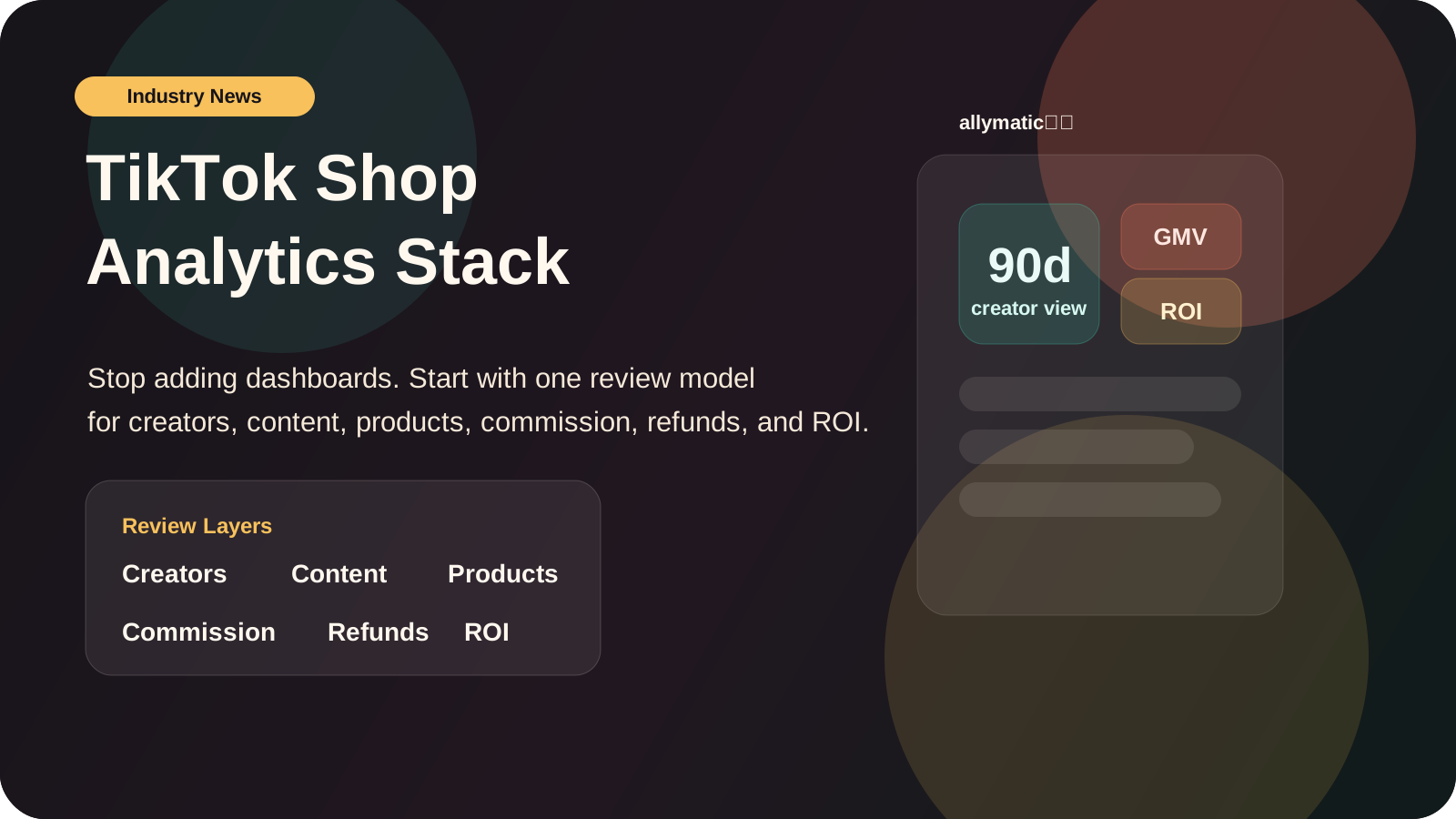
- review requires one shared view across creators, content, products, commission, GMV, and ROI.
At that point, the more useful comparison is workflow depth: can the system carry creator work from outreach into creator affiliate operations and ROI judgment instead of only speeding up the contact step?
The allymatic point of view: teams searching MossCreator usually need better post-outreach operating judgment
allymatic does not treat this as a simple competitor interception query. A more accurate reading is that the user already knows manual outreach is too slow, which is why they are searching for a faster tool. But the harder part usually happens after outreach.
That is why we recommend this order:
1. Confirm whether the problem is first-contact speed or full creator collaboration.
2. Check whether ownership, follow-up, samples, content, links, and ROI already share one status model.
3. Only then decide whether to add a point outreach tool or a fuller workflow system.
This matters because teams often confuse faster outreach with stronger creator operations. They are not the same thing.
Quick checklist
- If the main problem is sending the first invite, compare outreach efficiency first.
- If the main problem is that replied creators do not get picked up, compare ownership and follow-up first.
- If the main problem is sample and content drop-off, compare workflow milestones first.
- If the main problem is that review does not feed the next creator decision, compare ROI feedback first.
- If all four problems exist at once, do not stop at batch messaging.
FAQ
What is the most important thing to compare when searching for MossCreator?
Compare what happens after the shortlist, not just the bulk DM step. Ownership, follow-up, samples, content, and ROI feedback matter more once creator work becomes recurring.
What kind of team fits a MossCreator-type tool best?
It fits teams whose main bottleneck is first-contact outreach speed, whose collaboration volume is still manageable, and whose immediate goal is better outreach and reply execution rather than a deep multi-role workflow.
When should a team move from an outreach tool comparison to a full workflow system comparison?
When creator work already includes multi-person ownership, repeated follow-up, samples, content delivery, links, and reinvestment decisions, and when duplicate outreach or review gaps are becoming frequent.
Official Sources
Official Sources
Primary references used for this article.