How to Read TikTok One Project Reporting: Separate Organic and Paid Before the Next Creator Budget Decision
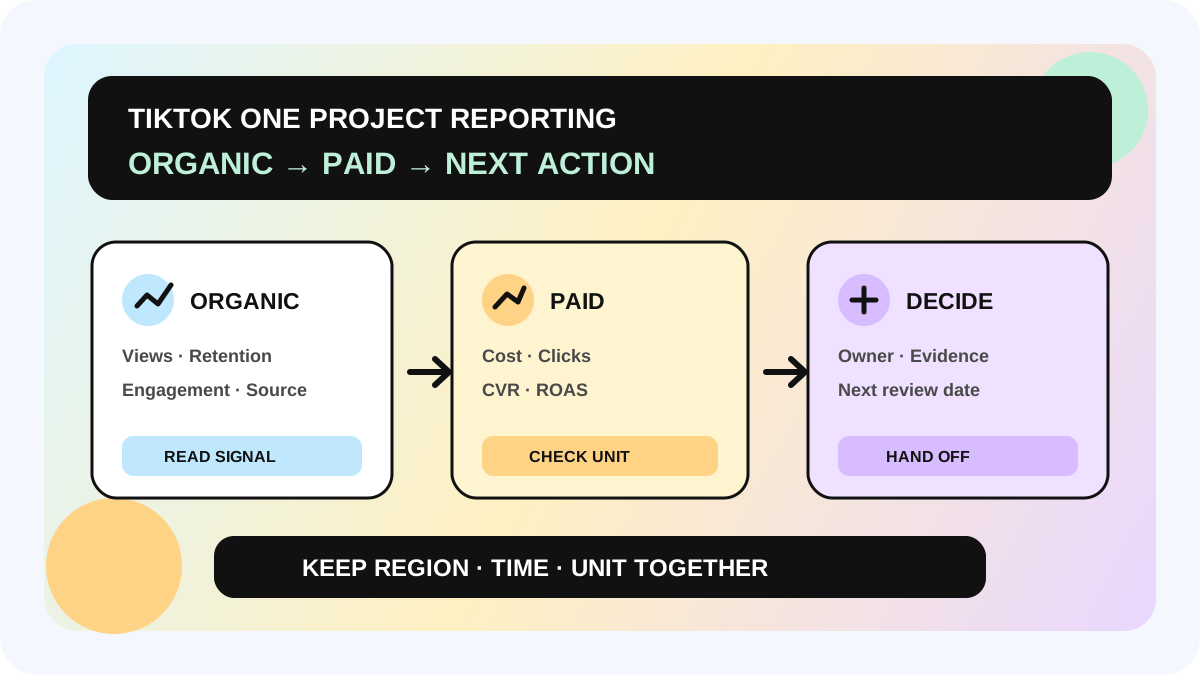
TikTok One Project Reporting is useful for three questions: how delivered content performed, whether results came from organic distribution or Spark Ads, and which videos deserve another test. It is not a replacement for TikTok Shop order, refund, commission, or profit records. A reliable review starts by locking the region, project, date range, and data timestamp, then handing off organic, paid, content-quality, and commercial evidence as separate layers.
This guide uses TikTok Business's official Project Reporting and Creator Marketing project documentation. Reporting is limited to projects and videos in the current region, while Anchor reports are also segmented by region. Refresh timing varies by report, and timestamps may lag 24–48 hours because of time-zone differences. Availability and interface details can vary by market, account, and later updates, so verify the live workspace.
Direct answer: what must a reviewable project report preserve?
| Required field | What to record | Why it matters |
|---|---|---|
| Scope | Region, project, video, date range | Prevents cross-market and cross-project comparisons |
| Data time | Export time and latest displayed timestamp | Separates real change from refresh lag |
| Delivery type | Organic, paid through Spark Ads, and total | Distinguishes creative evidence from amplification |
| Definition | Metric name, unit, formula, and source tab | Similar labels can use different units |
| Decision | Reinvest, test another angle, fix authorization, or pause | Moves the report into an owned next step |
Project data includes Overview, Engagement, Content performance, Ads performance, Anchor, and Audience. The video area includes Video list, Custom reports, and Spark Ads recommendations. A custom report can add available metrics to a video-level view, but columns that fit in one table do not automatically share the same meaning or maturity.
Understand three boundaries before discussing attribution
1. Project Reporting is region-scoped, not a global ledger
TikTok says projects and videos are visible within the current region. Multi-market teams should export each region separately and retain a region field in their operating system. Do not average US, Southeast Asian, and European projects before checking market, currency, objective, and reporting window. Anchor data also requires switching regional tabs.
2. Organic and paid belong in separate columns
Organic video views come from non-Spark Ads delivery; paid video views come from Spark Ads. Organic engagement rate divides organic interactions by organic views, while paid engagement rate divides paid interactions by paid views. Total views are useful for scale, but they cannot explain whether the creative found an audience without amplification.
A video with promising organic signals may enter a controlled paid test. A video driven mostly by paid reach needs cost, click, and conversion context. Before amplification, confirm publication and Spark Ads authorization through the content review and publishing handoff.
3. Different refresh schedules cannot support one false deadline
TikTok says Overview and Ads performance update in real time. Other reports update daily or every seven days and may show a 24–48-hour timestamp delay because of time zones. A weekly review should preserve the as-of time shown by each source. When a result is still maturing, label it “awaiting refresh” instead of producing a final ranking.
A five-step reporting-to-action handoff
Step 1: lock the comparison scope
Go to TikTok One → Tools → Reporting, select the project, and confirm the region. Record the objective, post date, content status, date range, and time zone. If a video is not Published, missing performance data is not evidence of failure. Return to the five-gate content workflow and verify delivery first.
Step 2: read content signals before ad results
Content performance can include completion rate, unique viewers, total play time, average view time, 2-second and 6-second views, and view sources. In TikTok One, the 2-second and 6-second video-view metrics are percentages. In TikTok Ads Manager, the labels refer to absolute counts. Store the unit with every export; 35% and 35 views are not comparable.
Ads performance is sourced from TikTok Ads Manager and may include Cost, destination CPC, CPM, CTR, CVR, CPA, Conversions, and ROAS. These metrics describe paid efficiency. They do not represent the creator's complete organic value.
Step 3: use an organic-to-paid decision matrix
| Observation | Next action | Do not conclude yet |
|---|---|---|
| Strong organic retention and engagement, no paid test | Add to a small Spark Ads test pool | “It will definitely convert” |
| Weak organic response, useful paid clicks | Review audience, opening, and landing page | “The creator failed” |
| Strong organic response, weak paid efficiency | Audit ad setup, objective, and authorization | “The creative stopped working” |
| Weak on both layers | Revisit brief, angle, and audience fit | “More budget will repair it” |
Connect the decision to a creator collaboration scorecard while preserving the source definition. A scorecard should explain judgment, not compress different stages into an opaque score.
Step 4: keep commercial outcomes in the correct ledger
Ads and Anchor reporting may provide clicks, conversions, purchases, or GMV signals. Final profit still depends on order maturity, refunds, commission, product margin, and other costs. Use the creator ROI calculator for that boundary; do not treat platform ROAS as net profit.
Step 5: export, assign an owner, and write the next move
TikTok supports CSV, XLSX, and ZIP exports. Attach the region, project, date range, as-of time, and field definitions to every export. Record the owner, reasoning, next review date, and action in the creator marketing management system. Preserve the raw export as read-only evidence and create a separate cleaned version.
Weekly review checklist
- [ ] Region, project, and date range are aligned
- [ ] Each source's as-of timestamp is recorded
- [ ] Organic, paid, and total are separate
- [ ] Units for 2-second and 6-second views are verified
- [ ] Ads metrics are identified as Ads Manager data
- [ ] Video status, publication, and Spark Ads authorization are confirmed
- [ ] Refund, commission, and margin boundaries remain outside the creative score
- [ ] Raw export, owner, next action, and review date are traceable
The allymatic view: a good report prevents one bad handoff
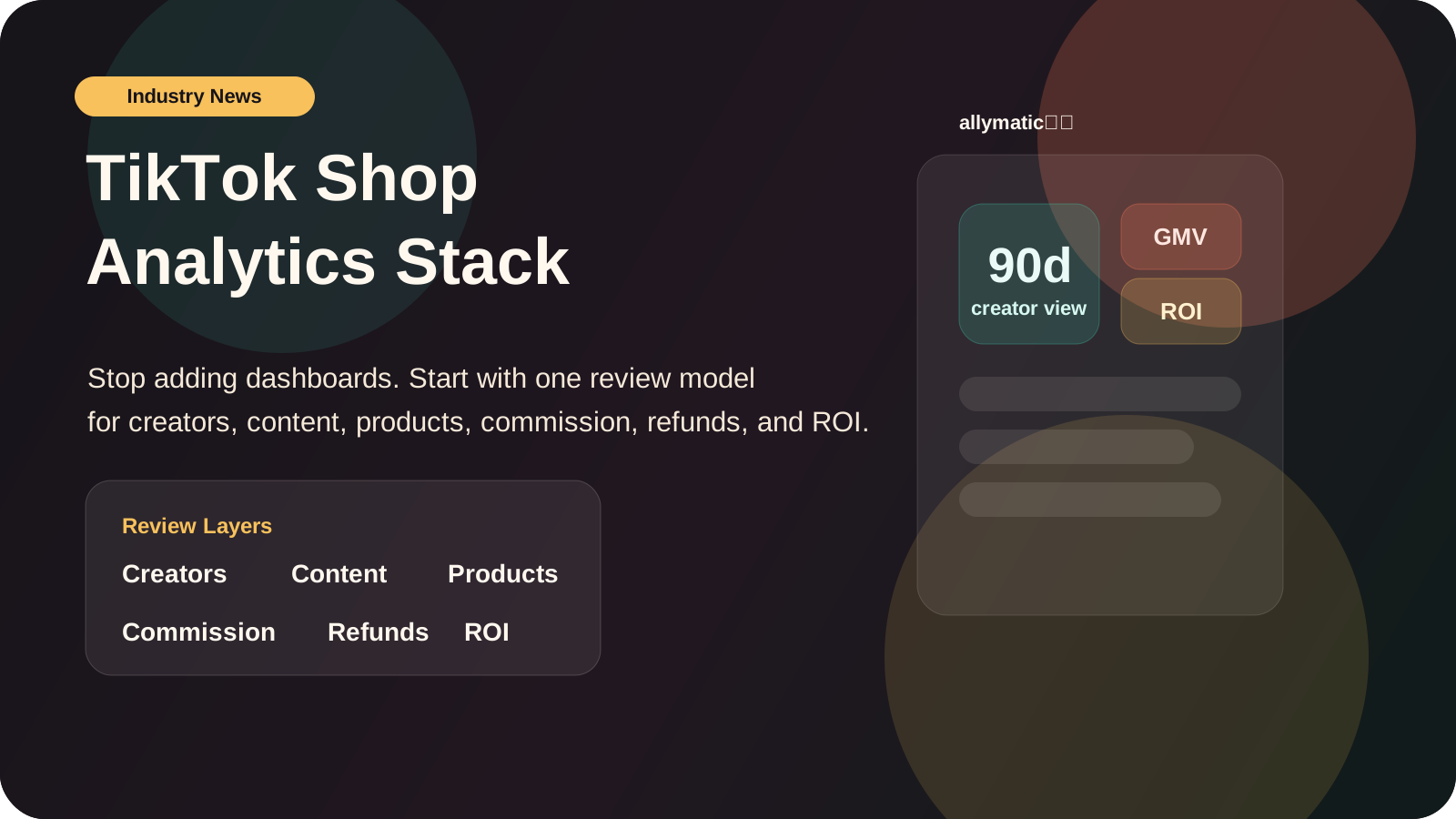
Creator teams rarely lack metrics. They make mistakes when regions, refresh times, delivery types, and units enter the same column and then drive budget decisions. allymatic recommends preserving Project, Creator, Region, Publish status, Organic snapshot, Paid snapshot, Authorization, Decision, Owner, and Next review date for every video. Automation can summarize and remind; metric definitions and budget boundaries still need a human owner.
Audit the last ten published videos. Can the team explain where each number came from, when it refreshed, whether it is organic or paid, and which action it triggered? If not, repair the handoff fields before adding another dashboard.
FAQ
Is TikTok One Project Reporting real-time?
Not every section. TikTok says Overview and Ads performance update in real time, while other reports may update daily or every seven days and can show a 24–48-hour time-zone delay.
What is the difference between organic and paid video views?
Organic views come from delivery without Spark Ads. Paid views come from Spark Ads. Review them separately, then use total views only to understand overall scale.
Can I directly compare TikTok One and Ads Manager 2-second views?
Not by label alone. TikTok states that TikTok One presents the metric as a percentage, while Ads Manager uses an absolute count. Align the unit and date range first.
Does Project Reporting replace TikTok Shop Affiliate Analytics?
No. Project Reporting is designed for project, video, ad, anchor, and audience performance. Orders, refunds, commissions, and shop affiliate operations still need their relevant platform and finance records.
Official Sources
Official Sources
Primary references used for this article.