How Should You Measure TikTok Creator Collaborations? Use a Scorecard That Keeps Delivery, Content, and Commerce Separate
If you are asking what features to look for in a measurement tool for creator collaborations, start with this answer: the tool should separate delivery, content, commerce quality, and the next investment decision. It should also preserve the date range, region, organic-versus-paid scope, unit, and source behind every metric. A tool that only ranks creators by GMV, produces one opaque score, or mixes views, orders, and refunds into one column is not enough for a reliable reinvestment decision. A practical starting point is the creator collaboration score, connected to a creator marketing management system, the creator affiliate workflow, and a separate creator ROI calculator.
Why the top-GMV creator is not automatically the best reinvestment
GMV alone leaves at least three questions unanswered. Did the creator deliver the agreed content and timing? Does the result remain healthy after refunds and estimated commission? Did the performance come from organic distribution or paid amplification? Engagement rate cannot stand in for commerce quality either. Strong viewing can show that the content holds attention without proving that the product click or purchase path worked.
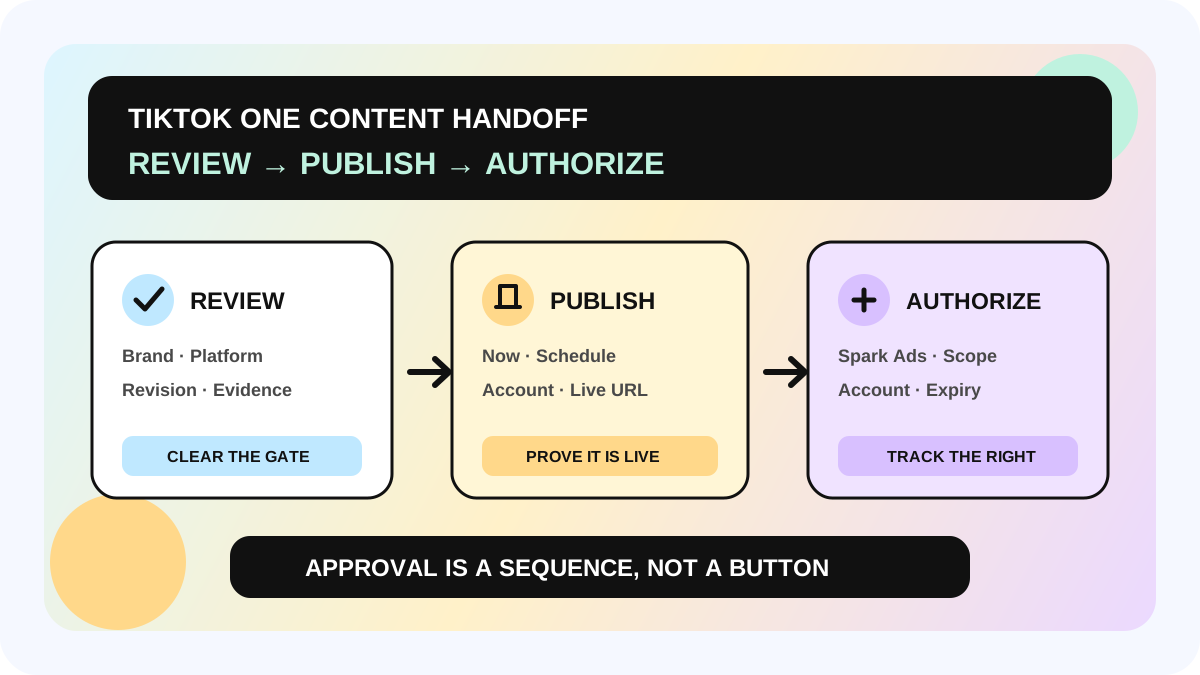
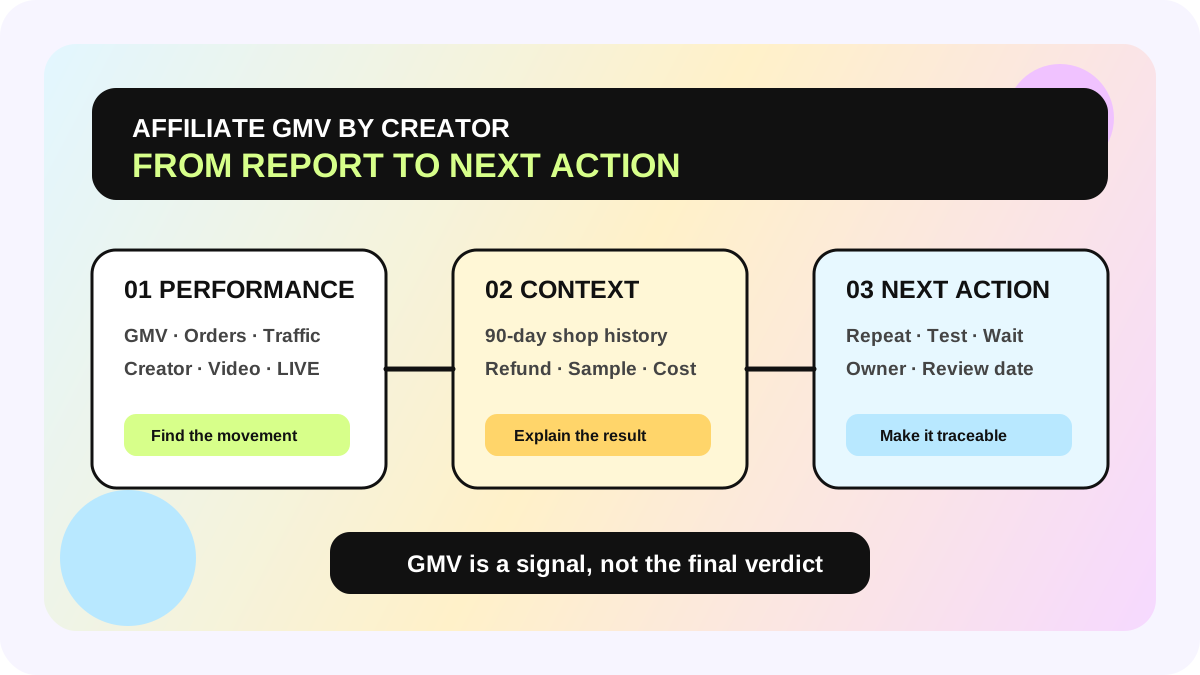
TikTok's own reporting structure points in the same direction. TikTok One Project Reporting separates overview, engagement, content, ads, anchor, and audience reporting, while distinguishing organic and Spark Ads views and engagement. TikTok Shop's Affiliate Seller Analytics v3, updated in July 2026, centralizes GMV, orders, items sold, UV, videos, LIVEs, and creator details in the Performance tab. Manage Creators adds a 90-day collaboration view that includes samples, videos, LIVEs, GMV, refunded revenue and items, and estimated commission.
These surfaces answer different questions. TikTok One is useful for project and creative performance. Affiliate Seller Analytics is useful for shop-level affiliate performance. Manage Creators is useful for reviewing a creator's recent history with one shop. A measurement tool should not copy one dashboard. It should connect these scopes without erasing their definitions.
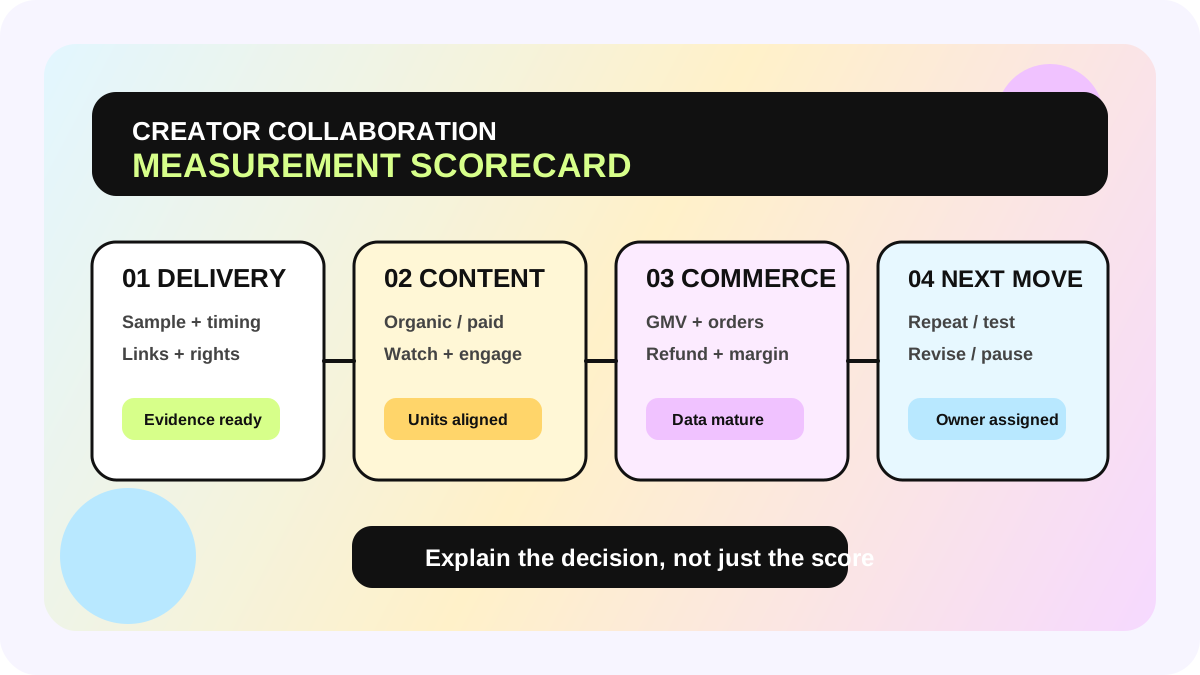
A creator collaboration scorecard needs four explainable layers
1. Delivery: confirm that the collaboration actually happened
Track whether the invite was accepted, the sample arrived, content was published inside the agreed window, required links or permissions are in place, and an owner is assigned to any exception. Delivery is not a punishment score. It separates weak performance from incomplete execution. If the delivery evidence is missing, low GMV is not yet a fair verdict on the creator.
2. Content: separate organic evidence from paid evidence
Keep views, average watch time, completion, engagement, and traffic source with their definitions. TikTok One explicitly separates organic and paid views and engagement. Even the same metric label can use different units across products: TikTok One presents 2-second and 6-second video views as percentages, while TikTok Ads Manager uses absolute counts for those labels. A useful tool stores the definition and unit, not only the column name.
3. Commerce quality: look behind GMV
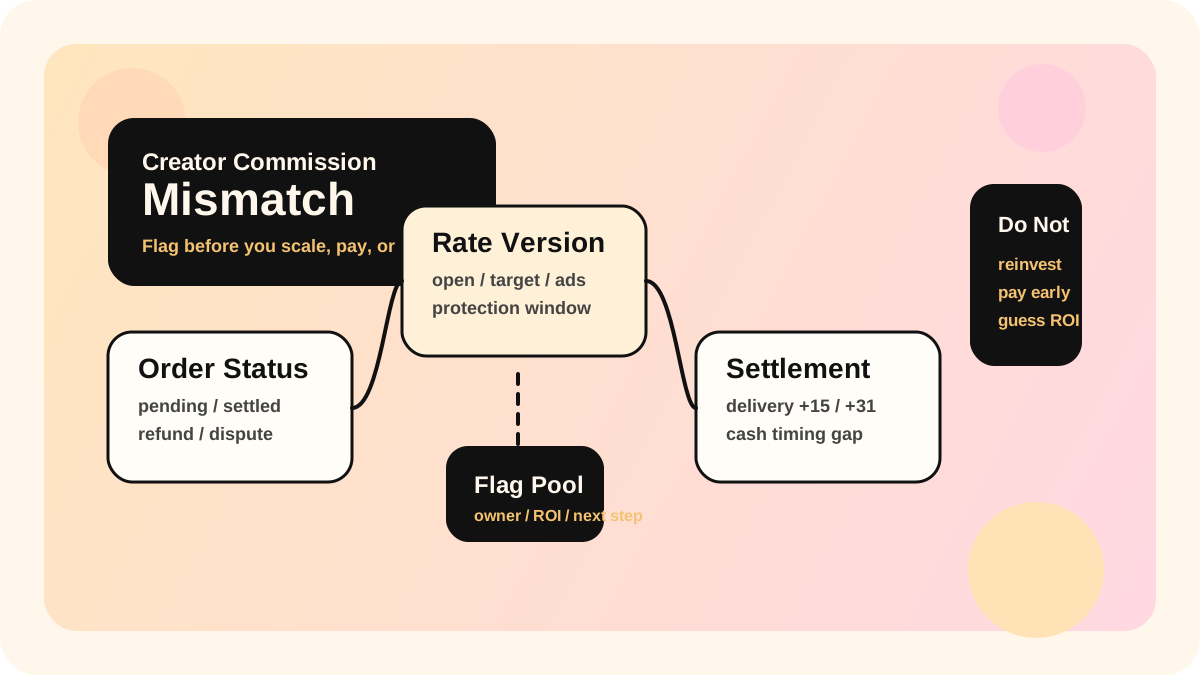
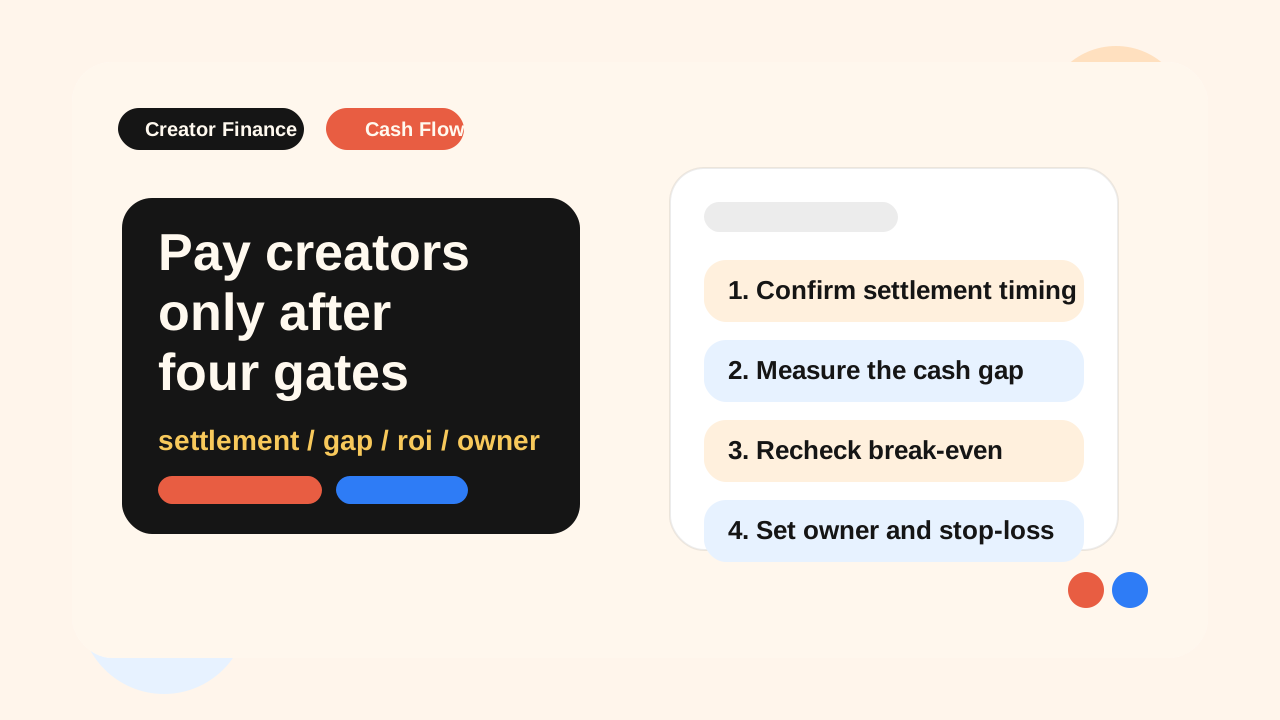
GMV, orders, items sold, and UV answer how much business was influenced. Refunded revenue or items, estimated commission, and the product margin boundary help answer whether that business is worth repeating. Same-day data is useful for monitoring, but it should not become final ROI immediately. If orders, refunds, or commission can still change, the scorecard should label the result as maturing instead of publishing a false-precision ranking.
4. Reinvestment: turn evidence into a next action
The last layer should not add more vanity metrics. It should produce a reviewable action: repeat the collaboration, test a different product angle, evaluate paid amplification, request one content revision, or pause. Every action should trace back to evidence. “Repeat” may follow reliable delivery and healthy commerce quality, not follower size. “Test amplification” should follow an organic retention or click signal and confirmed usage permission.
What TikTok One, Affiliate Analytics, and your CRM each answer
| Data surface | Best used to answer | Do not treat it as |
|---|---|---|
| TikTok One Project Reporting | How the project, videos, organic/paid content, and audience performed | One cross-region, cross-shop finance ledger |
| Affiliate Seller Analytics | Which creators, products, videos, and LIVEs drove GMV, orders, UV, and trends | Final profit from orders that have not matured |
| Manage Creators | A creator's 90-day sample, content, commerce, refund, and commission history with the shop | A complete record of briefs, rights, owners, and follow-up |
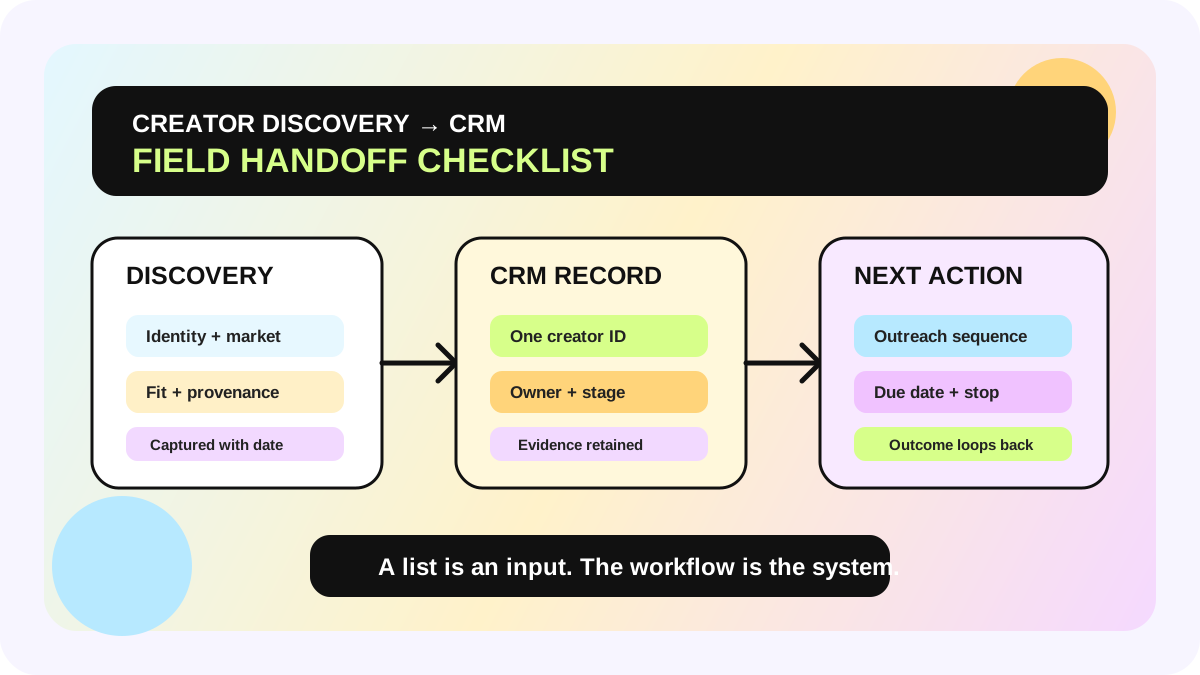
| Your operating workflow | Ownership, stage, exceptions, decision reasons, and next action | A replacement for platform source data |
Time and region also matter. TikTok One says Overview and Ads performance can update in real time, while other reports update daily or every seven days and may show a 24-to-48-hour timestamp delay. Reporting is region-scoped. Before comparing creators, align the market, evaluation window, and refresh time; otherwise a difference may only be a data-timing mismatch.
Eight checks for choosing a creator measurement tool
1. Can it keep delivery, content, commerce quality, and reinvestment action separate?
2. Does it preserve organic/paid scope, region, date window, unit, and source?
3. Can the team drill down by creator, video, LIVE, product, and collaboration batch?
4. Can it record samples, refunds, estimated commission, and exceptions instead of GMV alone?
5. Can it label data maturity so a Today snapshot does not masquerade as final ROI?
6. Can a reviewer record the decision reason, owner, next action, and later changes?
7. Can the team export or reopen source data instead of trusting a black-box score?
8. Can the result trigger the next outreach, sample, content reuse, amplification, or pause step?
When you should not issue a final creator score
Do not finalize a score when the sample has not arrived, content is still under review, the order window has not matured, refunds or commission are still changing, or regional reporting timestamps are not aligned. Use states such as “insufficient evidence,” “awaiting delivery,” or “awaiting settlement.” The purpose of a scorecard is to reduce false decisions, not manufacture certainty.
The allymatic view: a good tool makes judgment explainable
Creator teams often swing between two extremes: decisions based on memory, or every signal compressed into an automated score. The first is hard to review. The second hides definitions and uncertainty. A stronger system lets the team see what happened, where the evidence came from, why the decision was made, and who owns the next move.
Start with the creator collaboration score to build the four-layer scorecard, then use the creator ROI calculator for the commercial boundary. The score is not the output. A safer, faster next collaboration decision is the output.
FAQ
What are the three most important creator collaboration metrics?
There is no universal set of three. At minimum, combine delivery status, a content-quality signal, and mature commerce quality. Then choose whether completion, clicks, GMV, refunds, or reinvestment value matters most for the campaign objective.
Can I rank creators using GMV alone?
It is not recommended. GMV does not explain refunds, commission, margin, organic versus paid source, or delivery reliability. It is one commercial layer, not the whole decision.
Can Today data decide whether to reinvest?
Today data can surface a rising video or LIVE while it is active. Final reinvestment should wait until the important order, refund, and commission windows are more stable and the reporting timestamps are aligned.
Official Sources
Official Sources
Primary references used for this article.