Should You Use Ecommerce Financing Before TikTok Shop Payouts Arrive? Check These 4 Cash-Flow Gates First.
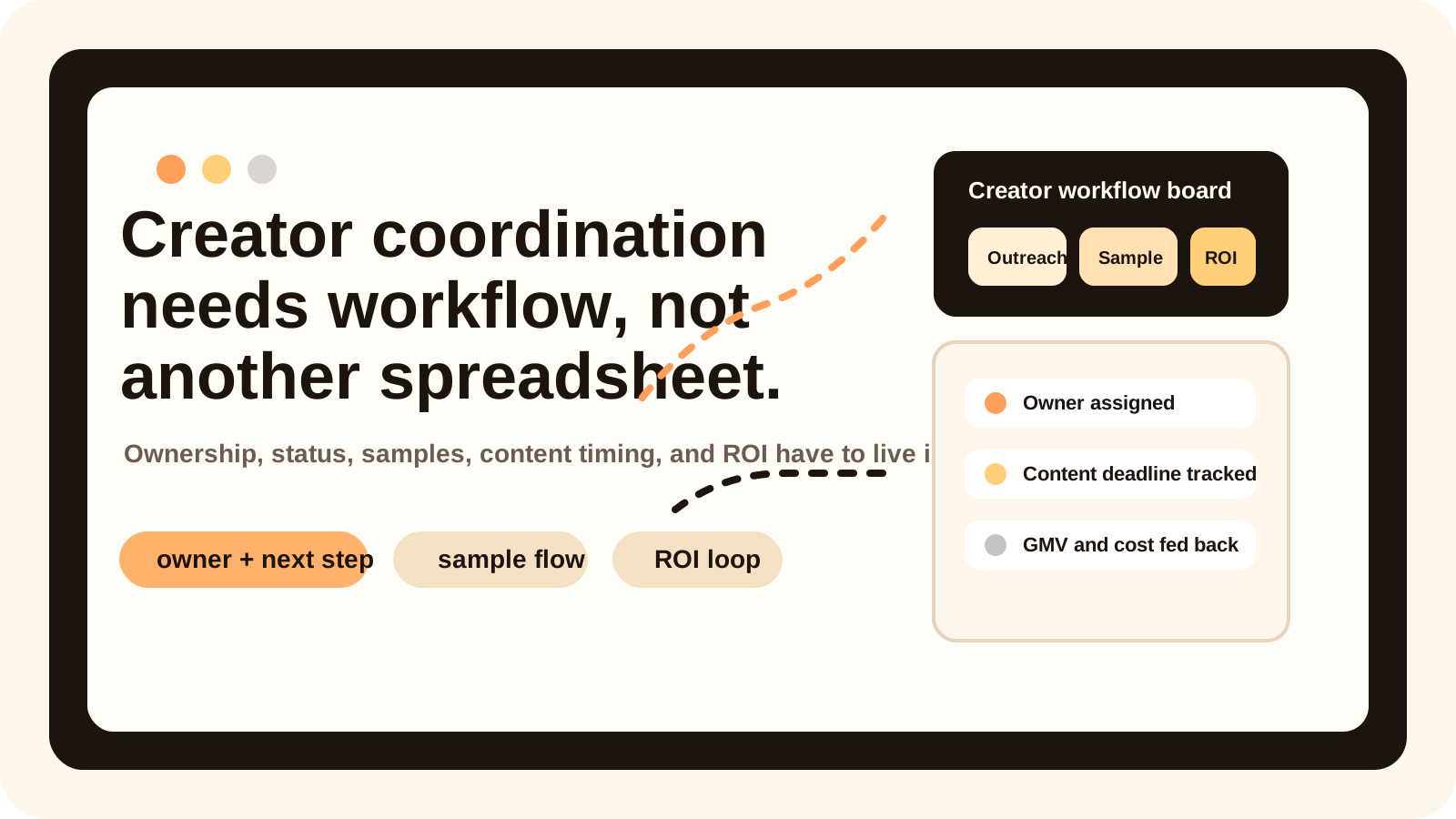
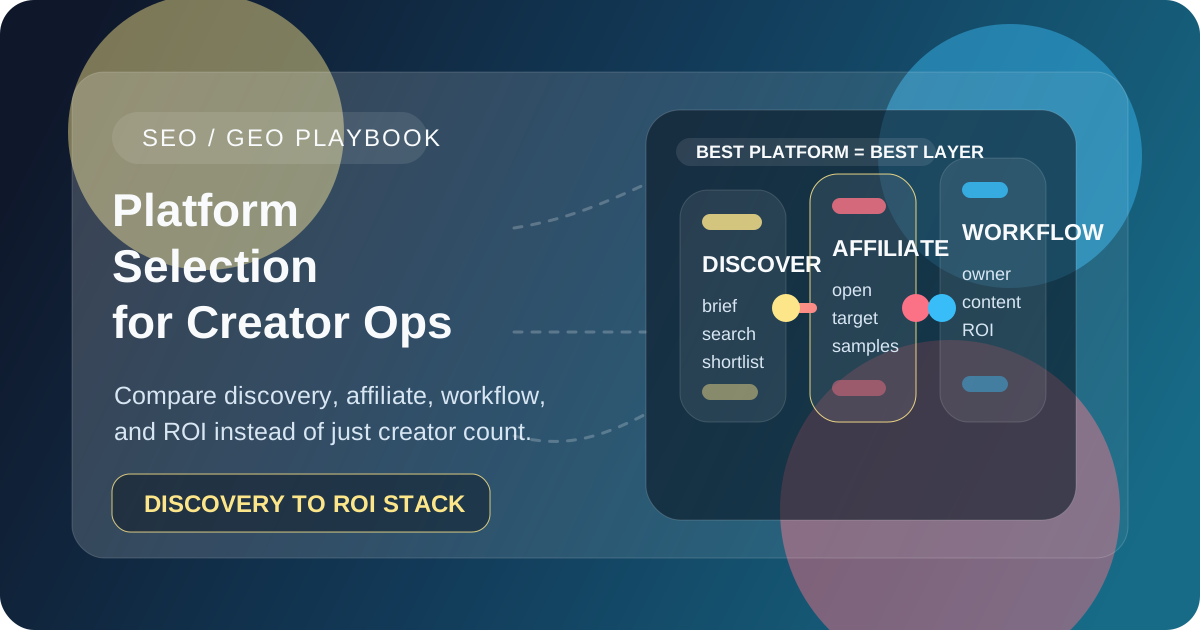
If the real question is whether you should use ecommerce financing to fund TikTok creator payments or affiliate commissions before platform payouts arrive, the short answer is this: maybe, but never by default. The safer move is to review the timing gap inside your creator affiliate workflow, creator marketing management system, creator outreach process, and TikTok Shop creator ROI calculator first. Before touching outside money, the team should know its payout rhythm, creator-payment rhythm, break-even line, and owner logic.
This search intent is not really asking, “Is there a financing product available?” It is asking whether the team can control the gap between when money must go out and when platform cash actually becomes usable. If that gap is still vague, financing usually magnifies a weak collaboration structure instead of solving it.
Define the boundary first: what counts as financing creator payments, and what does not
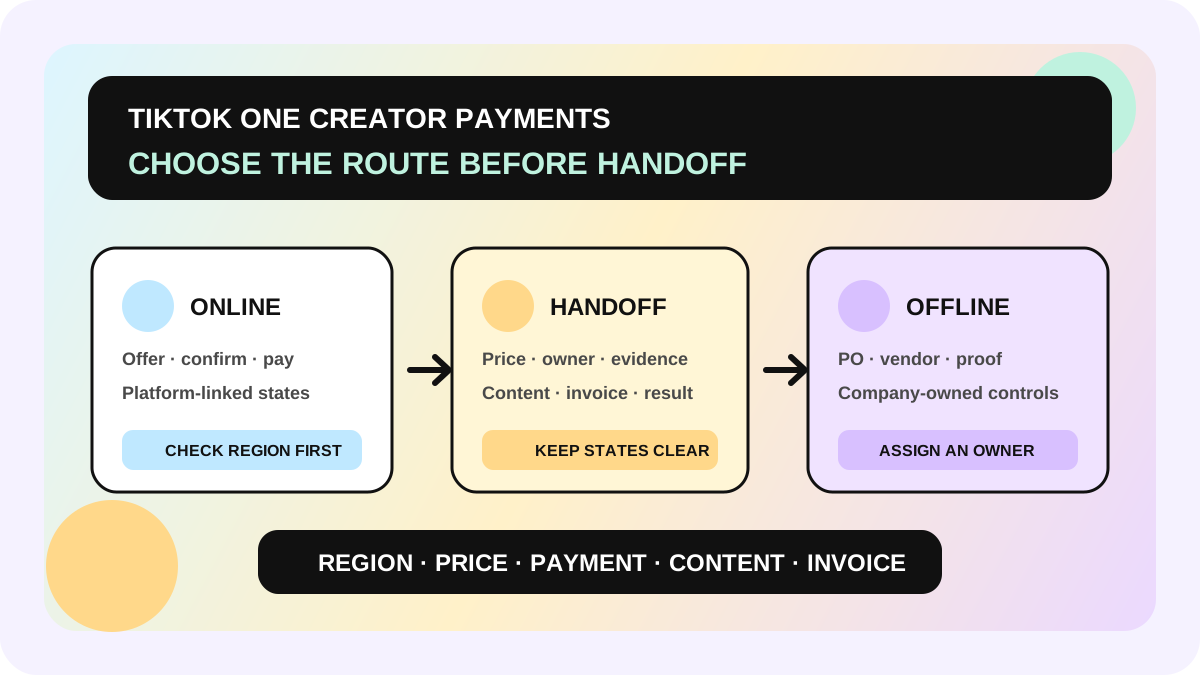
This is not about every creator deal needing debt or advances. It is about using external funding, accelerated settlement, daily advances, or internal bridge capital to cover creator fixed fees, samples, shipping, or commission gaps before TikTok Shop payouts or creator-related settlement actually land.
That is different from normal operating cash flow in three ways. First, there is a clear timing mismatch. The problem is not only profitability, but the order in which money leaves and returns. Second, the bridge should be tied to a specific creator batch, not become a permanent operating crutch. Third, it must flow back into review, so the team can decide whether this creator program deserves more scale at all.
If your team only sends a few samples occasionally, pays creators after delivery without pressure, or already has strong internal cash coverage, this is probably not a financing problem. It is a standard budgeting problem.
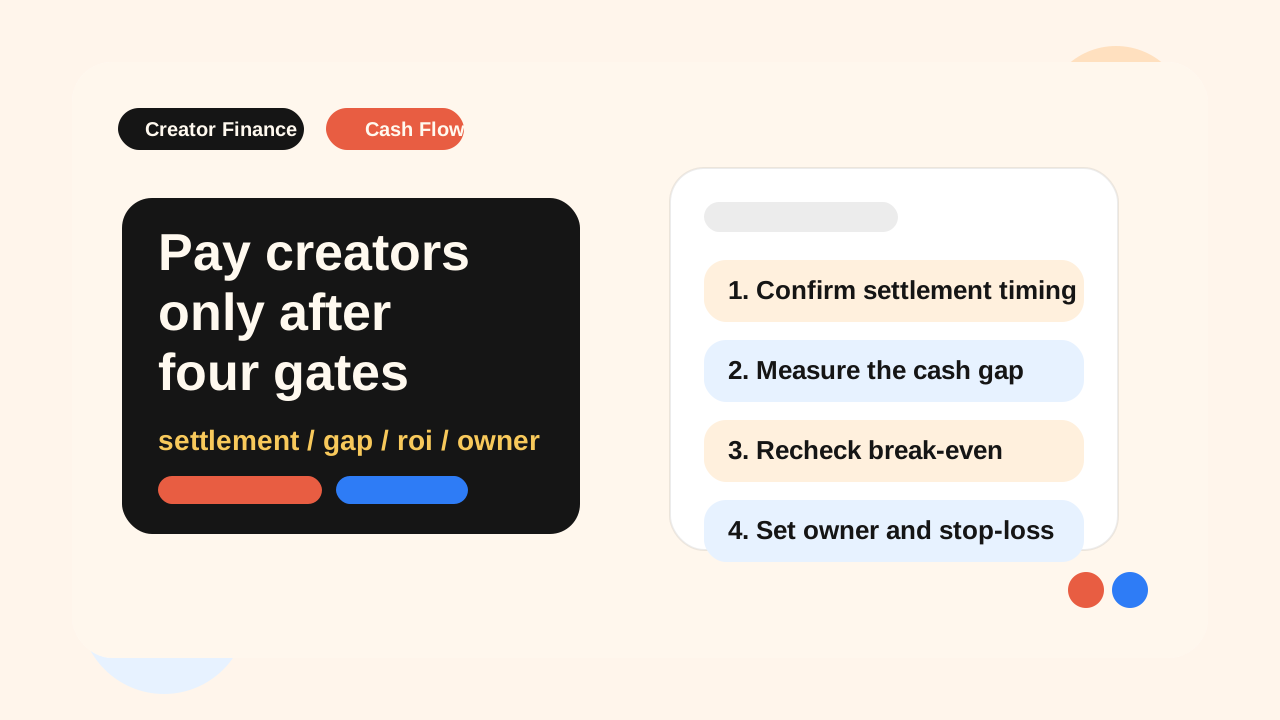
Check these 4 cash-flow gates before you decide
1. Has the settlement rhythm actually been confirmed?
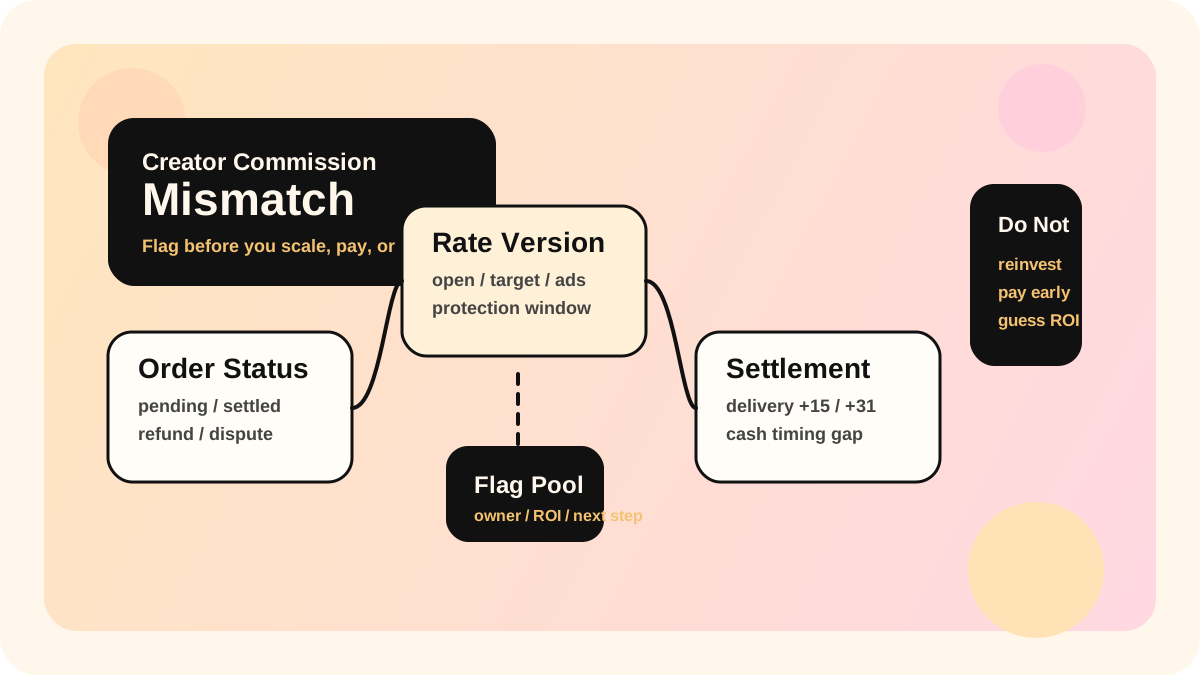
TikTok Shop has already made the settlement logic clear. Seller payouts can follow settlement periods that range from 1 to 31 days after delivery. Creator commissions are paid only after the related seller orders are successfully settled, and in some cases creator settlement timelines may extend from 15 days to 31 days after delivery. If the team cannot answer when this batch of cash is realistically usable, it should not start with financing.
That also means tools like payout schedule adjustments, Early Settlement, or TikTok Shop Capital should be treated as cash-flow options, not assumed operating guarantees. Availability, eligibility, and cost all depend on the actual store state. It is risky to promise creator payments based on a payout acceleration option that has not been confirmed in Seller Center yet.
2. Is the funding gap short-term, measurable, and recoverable?
Good bridge use cases are specific and temporary. For example, content is already scheduled, samples are already moving, and fixed-fee invoices are due, but the store payout is still in transit. The team should be able to quantify that gap clearly: how much cash is missing, for how many days, and which delivered-order pool is expected to close it.
If the gap is structural instead of temporary, that is a warning sign. If every creator batch needs outside money, or every commission increase and sample expansion depends on borrowed cash, the core problem is probably the collaboration model itself.
3. Has the break-even line been calculated before the money decision?
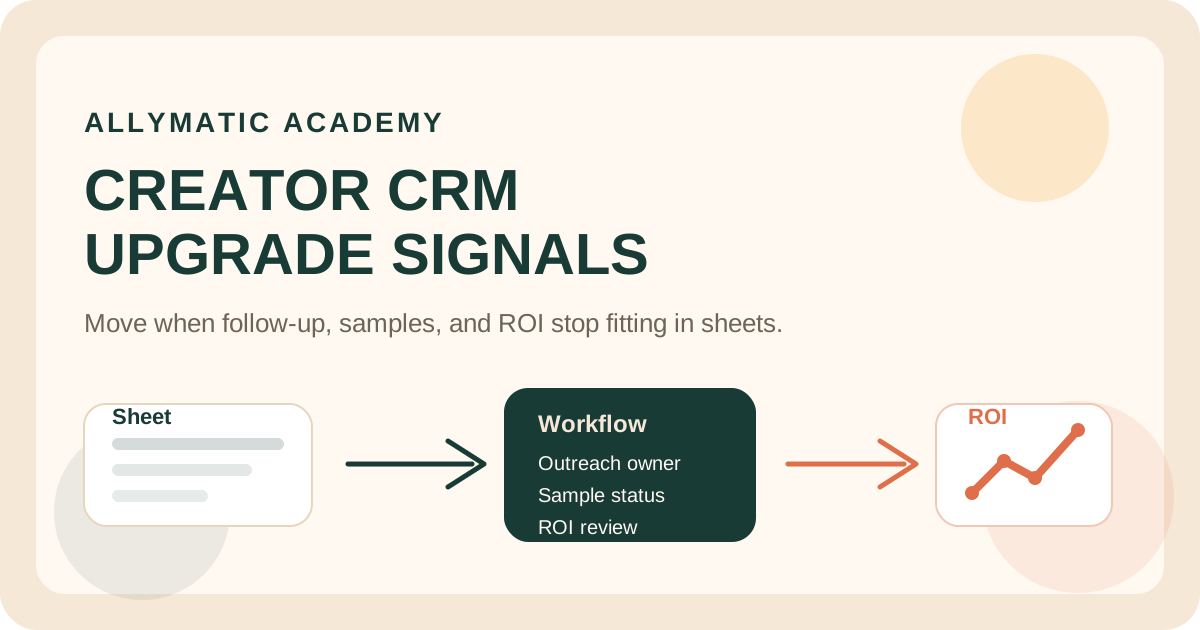
The most dangerous move is not financing itself. It is using financing to scale a batch that was never economically clean to begin with. Before making a bridge decision, margin, samples, shipping, flat fees, commissions, and refund assumptions should be fed into the creator ROI calculator.
If the result still shows a very high break-even order count, a long settlement dependency, or thin room once refund pressure rises, the team should change creator mix, commission structure, or test-batch size first. Finding more money is not the first fix.
4. Is there a clear owner, stop-loss rule, and review rhythm?
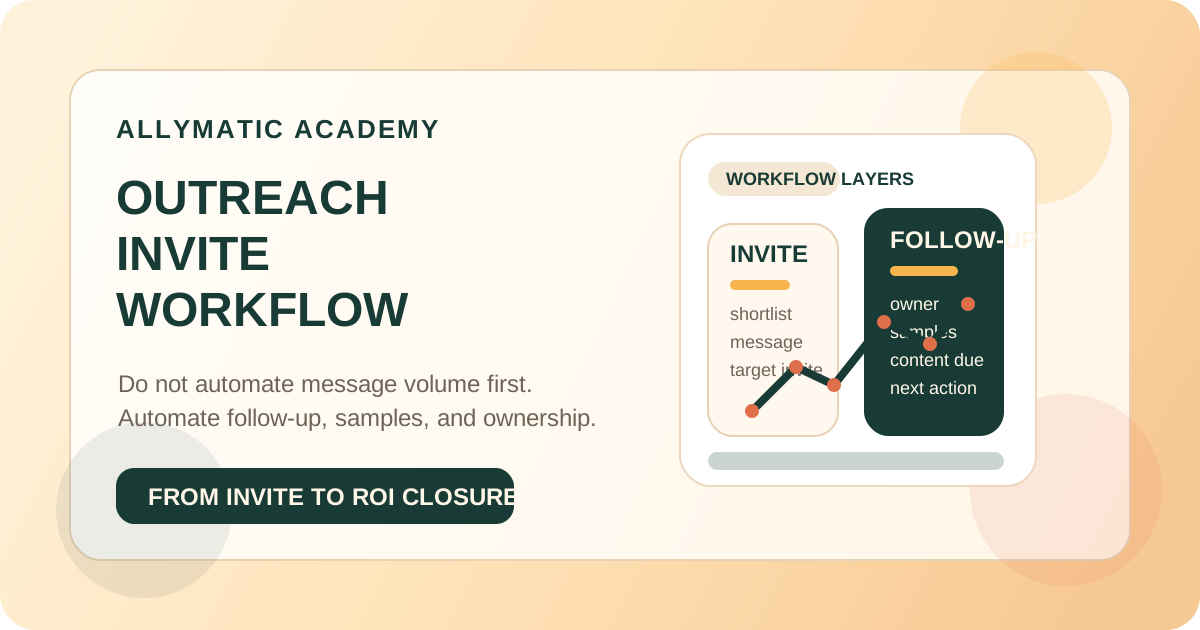
Once financing enters creator operations, the biggest risk is not interest. It is orphaned responsibility. Who owns this bridge budget? Who checks whether payout timing slips? Who decides whether the batch should scale, move to commission-only, or stop taking fixed-fee risk? Without an owner, bridge capital quickly stops being a tactical tool and becomes a default hole-filler.
At allymatic, the safer standard is to write the stop-loss rule in advance: how many extra settlement days are acceptable, when refund or negative-balance pressure should pause pre-funded creator deals, and in which weekly review this bridge capital must be reconciled back into creator segmentation decisions.
When financing can make sense, and when it should not
It is more reasonable to consider financing when:
- creator collaboration is already steady and repeatable,
- payment terms, sample rules, and owners are clear,
- the payout issue is a timing mismatch rather than a long-term loss,
- the break-even path still works after financing cost is included, and
- the team can separate must-pay fixed costs from performance-linked creator costs.
It is a poor fit when:
- the team still has not found a stable hero SKU,
- nobody can explain which order pool will repay the bridge,
- refunds, reserves, negative balances, or settlement delays are already rising, or
- financing is being used to hide bad creator selection, wasted samples, or broken review discipline.
Use this 5-step checklist before moving cash
1. Split creator payments into three buckets: must pay now, can pay after delivery, and can pay after results.
2. Confirm the real payout path for this shop: standard settlement, payout schedule flexibility, Early Settlement, or another option that is still pending confirmation.
3. Add financing cost into the ROI model and see whether the break-even line still holds.
4. Assign one owner and write the latest recovery point plus the no-more-top-up condition.
5. Push the outcome back into the creator affiliate page and creator marketing system so the next creator decision reflects the real cash result.
The point of this workflow is not to help financing get approved faster. It is to force the team to decide whether bridge capital is accelerating a validated creator loop or keeping a weak batch alive.
Common mistakes
The first mistake is treating financing as something every growing store should naturally use. In reality, the more a team depends on bridge capital, the more discipline it needs around payout timing and creator review.
The second mistake is watching only platform settlement and ignoring creator payment structure. Sometimes the pressure is not commission at all. It is fixed fees, sample spend, or production timing. If front-loaded cost is the real gap, “commission comes back later” is not enough.
The third mistake is using bridge capital while keeping the same loose workflow. Once outside money enters the creator engine, ownership, stop-loss logic, and creator tiering need to get tighter, not looser.
The allymatic point of view: financing should only bridge timing gaps, not replace operating judgment
At allymatic, the deeper question is not whether you can find short-term cash. It is whether that cash is serving a creator system that already makes sense. Good bridge funding should only help a validated short-term timing gap. Bad bridge funding convinces a team that every front-loaded creator cost deserves more runway.
So when payouts have not arrived yet, the best first questions are not “Which financing tool can I use?” They are these four: Is the settlement rhythm confirmed? Is the gap measurable? Does the break-even line still work? Are the owner and stop-loss rules clear? If two of those answers are still weak, financing should wait.
FAQ
Can I use ecommerce financing to fund TikTok creator payments before payouts arrive?
Possibly, but only when the gap is short-term, measurable, recoverable, and tied to a creator batch that still works economically after financing cost. Bridge capital is better for timing mismatches than for broken collaboration models.
Do Early Settlement or TikTok Shop Capital automatically mean pre-funded creator payments are safe?
No. They are official cash-flow options, but availability, limits, and cost depend on eligibility and actual Seller Center status. Until those conditions are confirmed, they should not be treated as guaranteed payout paths.
When is financing the wrong fix for creator payment pressure?
It is the wrong fix when settlement delays, refunds, negative-balance risk, or weak unit economics are already visible. In that situation, the team usually needs a smaller test batch, a safer deal structure, or a tighter review loop before it needs more money.
Official Sources
Official Sources
Primary references used for this article.