How Do TikTok One Creator Project Payments Work? Choose Online or Offline Before the Handoff
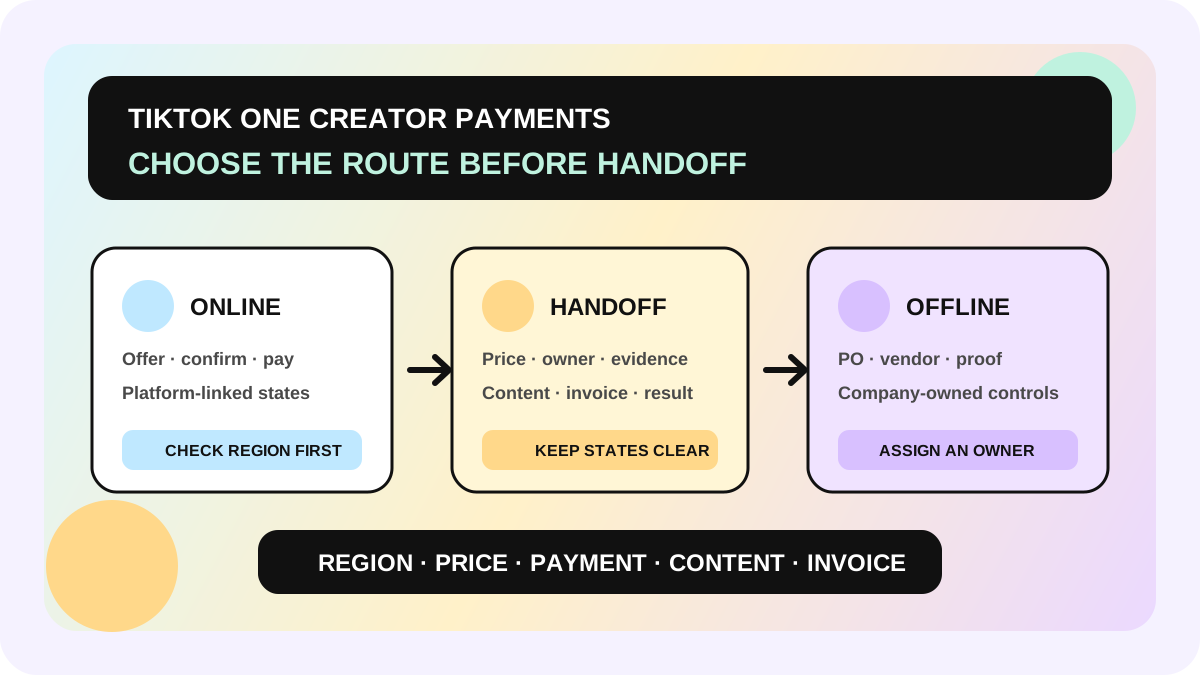
Payment should not be the last unresolved detail in a TikTok One creator project. The practical answer is: choose Online Payment or Offline Payment from the project region, invitation route, finance requirements, and agreement with the creator; then connect pricing, approval, payment, content review, publishing, and invoice status in one workflow. Online Payment keeps more negotiation and payment state inside TikTok One. Offline Payment preserves the company's normal process, but the team owns the evidence, timing, tax documents, and exception handling.
This guide uses TikTok Business Help Center advertiser-payment and Creator Marketing documentation last updated in March 2026. Online cross-border payment is available only in select regions. Payment methods, bank transfer, invoicing, taxes, and post-pay can also depend on region or eligibility. The live account, confirmation page, and current terms remain the operating source of truth. This is an operations guide, not legal, tax, or accounting advice.
Direct answer: when should you use Online vs. Offline Payment?
| Decision | Online Payment is a better fit | Offline Payment is a better fit |
|---|---|---|
| Invitation route | Direct invitation or Open application with in-platform pricing, counteroffers, and Pay now | Invitation link, or a collaboration where both parties agree to use normal business practices |
| Regional availability | The account supports the project region and cross-border combination | The account says online cross-border payment is unavailable, or local finance requires another route |
| Control system | The team wants acceptance, payment, and project status connected inside TikTok One | The company already has purchase-order, vendor, invoice, and payment approval controls |
| Evidence owner | TikTok One can display platform status, while an internal owner still reconciles it | The team must retain all payment evidence, deadlines, tax documents, and exception records |
Online does not mean finance runs itself. Offline does not mean an informal transfer. Choose the path that keeps region, price, approval, deliverable, and evidence consistent.
Which official project states must stay separate?
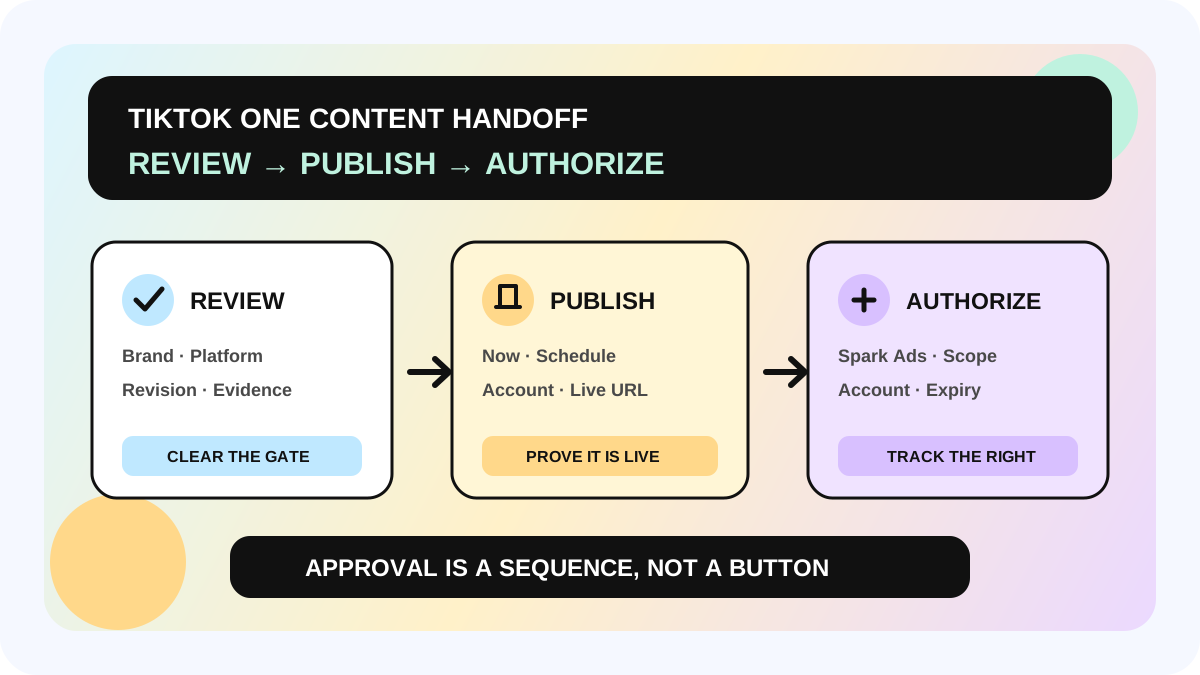
TikTok One Creator Marketing projects have several connected milestones. With direct invitation and open application, a creator can propose a new price before accepting. After the advertiser accepts and confirms the final price, payment is completed; only then does the creator start producing the video. TikTok's project guide says the platform collects and holds the payment, then pays the creator after the content moves through approval and publishing.
Invitation links have a different boundary. TikTok explicitly says this route supports offline payment and pricing rather than online price setting and negotiation. A link can bring the creator into the project, but it does not automatically move the advertiser's purchasing, payment, invoice, and reconciliation process into TikTok One. Review the TikTok One invitation mode guide together with payment requirements instead of choosing the easiest link to distribute.
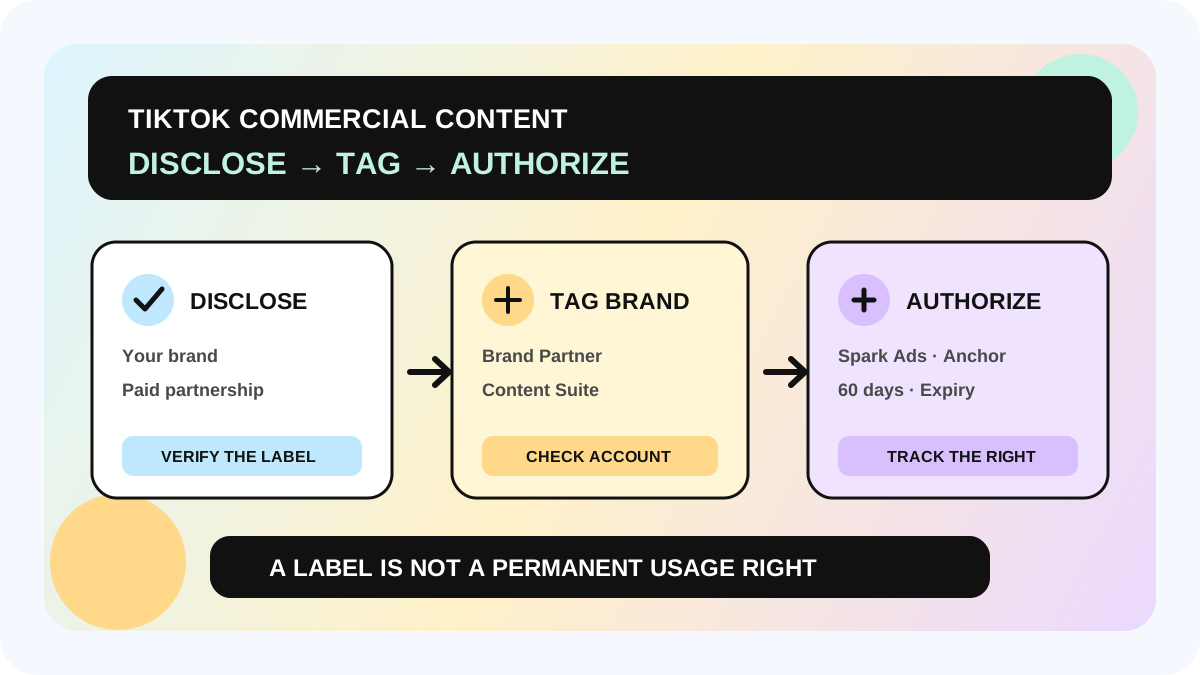
Content approval, publishing, and ad authorization must also remain distinct. Payment milestones are connected to content delivery, but Spark Ads authorization is still a separate request. Finance records should point to the creator, project, order, and deliverable; content or media owners should separately track authorization scope and expiry.
Run five availability checks before launch
1. Confirm the project region
TikTok One limits project and creator information to countries or regions included in the current region. A cross-region program may need separate project copies. Record the advertiser entity, project country or region, creator location, and settlement currency instead of assuming one global project covers every market.
2. Read the payment options in the live account
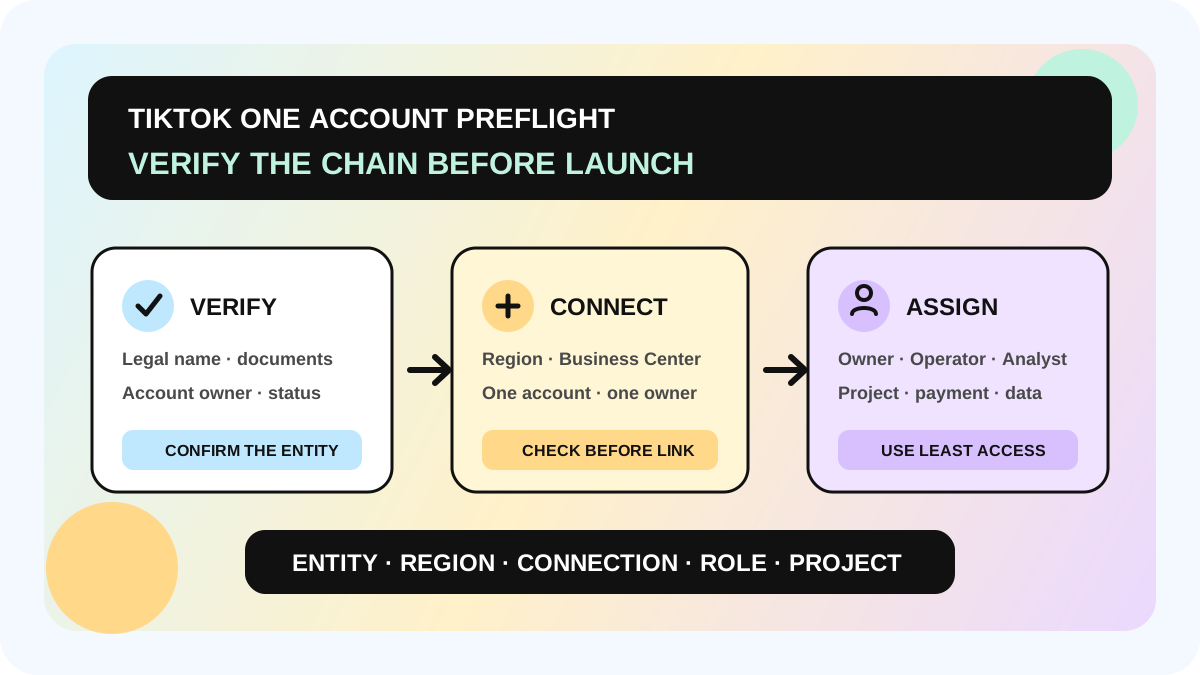
Before the first Online Payment project, TikTok says advertisers need to add a payment method and submit business and tax information. Online cross-border payment is supported only for select region combinations; an unsupported project shows a message during payment input. Do not infer availability from another advertiser's screenshot or an older help page.
3. Name purchasing and approval owners
The marketing owner explains the objective, creator, deliverable, and pricing rationale. The finance owner controls the payment route, budget, evidence, and reconciliation. The regional owner confirms local account access, currency, and availability. Store these responsibilities in the creator marketing management system so the project is not owned while the payment is orphaned.
4. Separate platform fees, provider fees, and taxes
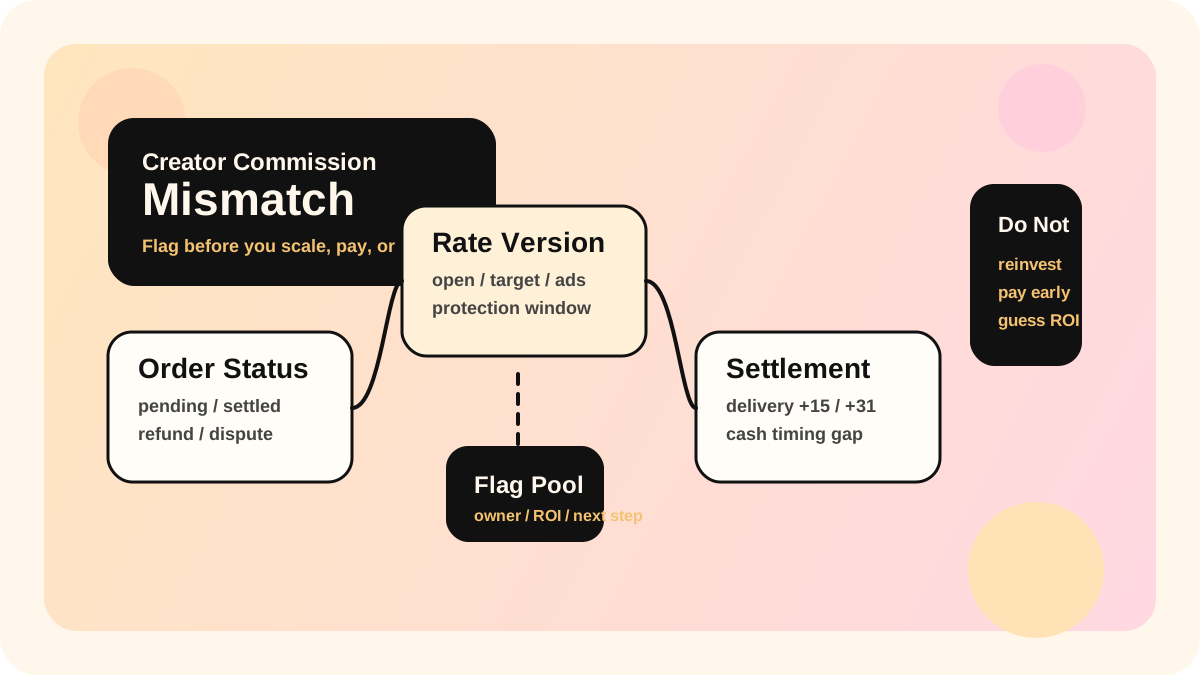
TikTok says its TikTok One payment service does not charge service fees to advertisers or creators, while individual payment-service-provider fees may apply. Applicable sales tax or other taxes can be calculated on the confirmation page. Record the amount and currency actually shown; “no TikTok service fee” must not be rewritten as “the transaction has no cost.”
5. Define the exception path
Assign an owner for payment failure, information still under review, creator counteroffers, unavailable online cross-border payment, invoices not yet generated, and content that does not pass review. Discovering an unready card, vendor, or tax profile after the creator reserves production time creates avoidable delay.
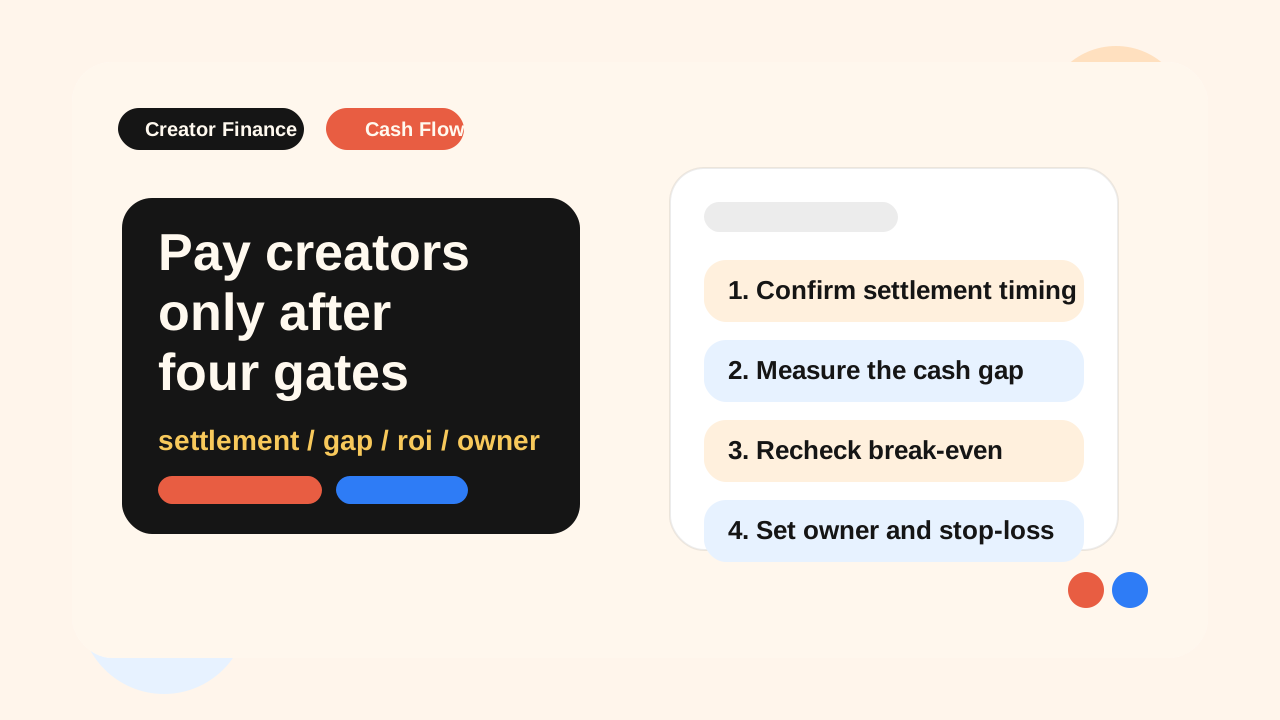
A seven-step creator payment handoff workflow
Step 1: lock the payment assumption in the brief
Before creator outreach, record region, invitation route, assumed Online or Offline Payment, currency, budget ceiling, negotiability, deliverables, expected post date, and ad-authorization need. Mark unknowns as “to verify”; do not send them to a creator as approved terms.
Step 2: let finance run a readiness check before the invite
For Online Payment, verify the method, business and tax profile, budget, and regional availability. For Offline Payment, verify vendor onboarding, purchase order, payment cycle, and required invoice or evidence. If a critical control is not ready, do not ask a creator to commit production capacity yet.
Step 3: version every price change
In a direct invitation or open application, the creator may submit a counteroffer. Preserve the initial offer, counteroffer, approver, confirmation time, and final amount. Do not overwrite the old number in a sheet. Payment should begin only from the confirmed version.
Step 4: tie payment status to a specific order
Useful internal states include `payment pending`, `paid/held`, `failed`, `offline evidence pending`, and `ready for reconciliation`. Every record should identify creator, project, order, region, amount, currency, and owner. A screenshot dropped into a group chat is not a payment ledger.
Step 5: connect content and payment milestones without collapsing them
In production, submitted, platform review, under revision, ready to publish, and published are content states. Payment confirmed, held by platform, paid offline, and received by creator are payment states. Link the timelines, but do not use one field for both. Otherwise “video submitted” becomes “finance settled,” or “paid” becomes “content approved” when neither is true.
Step 6: archive invoices and records by region
TikTok One generates and tracks invoices for each order. Its help page says invoices are generated when a project is complete and the status changes from pending to purchase; Payment in Account Settings displays creator details for the current region. Reconcile by region, project, and order instead of relying only on a global total.
Step 7: return the final cost to collaboration review
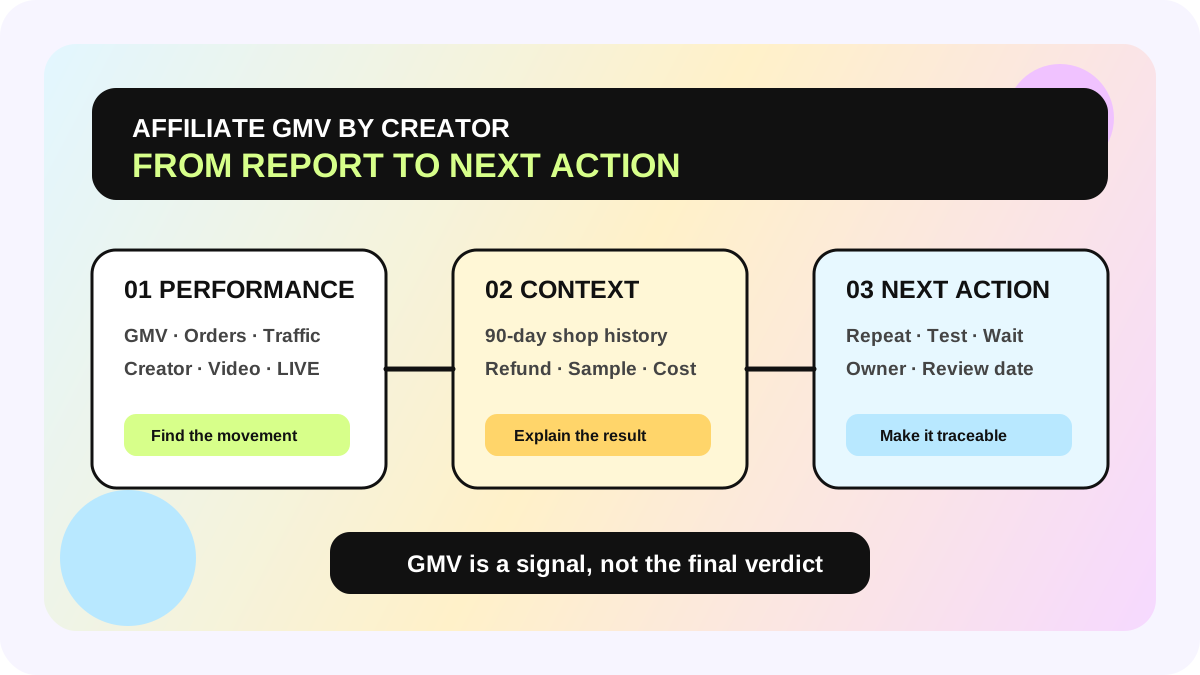
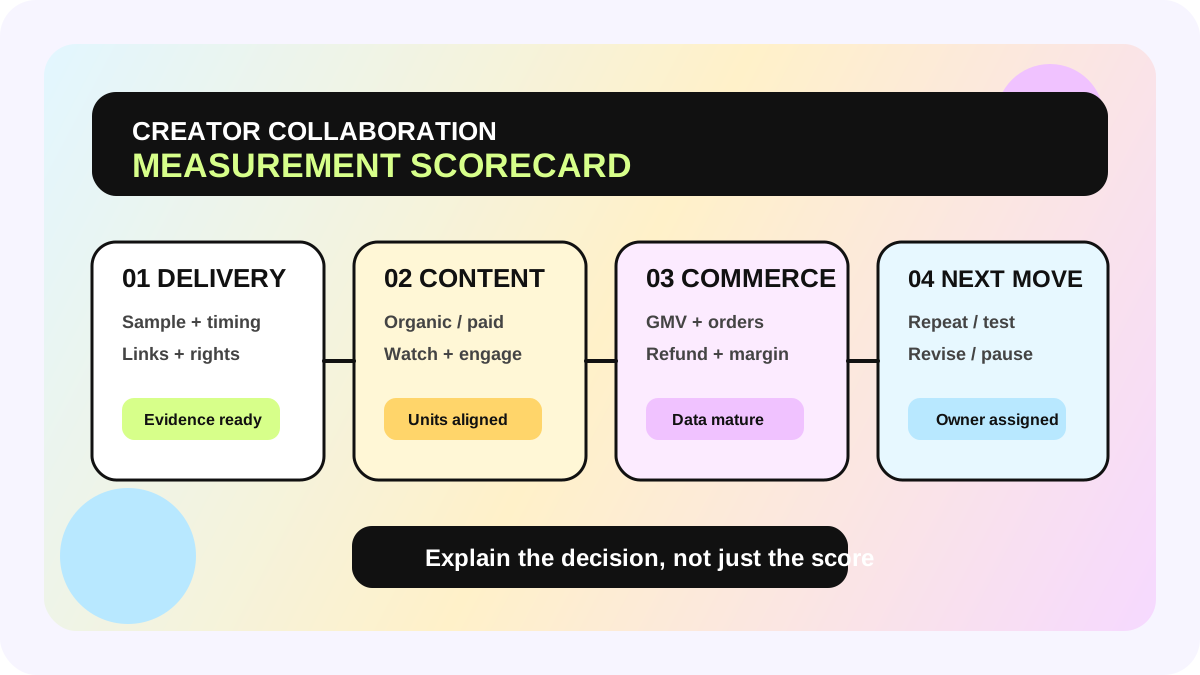
After completion, send the final fee, provider charges, applicable taxes, internal handling cost, and verifiable outcome back into the creator affiliate workflow. Payment completion is not the learning endpoint. The team needs to know which invitation, region, and creator combination deserves another project and where the next handoff can remove delay.
Pre-launch checklist
- [ ] Project region, creator location, currency, and paying entity are aligned
- [ ] The account actually shows the intended payment option; no other-market assumption was used
- [ ] Final price, approver, confirmation time, and order are recorded
- [ ] Online payment profile or Offline purchasing and evidence process is ready
- [ ] Content, payment, publishing, and ad authorization use separate status fields
- [ ] Invoice and payment evidence are archived by region and order
- [ ] Exception owner and escalation route are named
- [ ] Local professionals review any tax, contract, or payment-term uncertainty
The allymatic point of view: payment is project design, not project cleanup
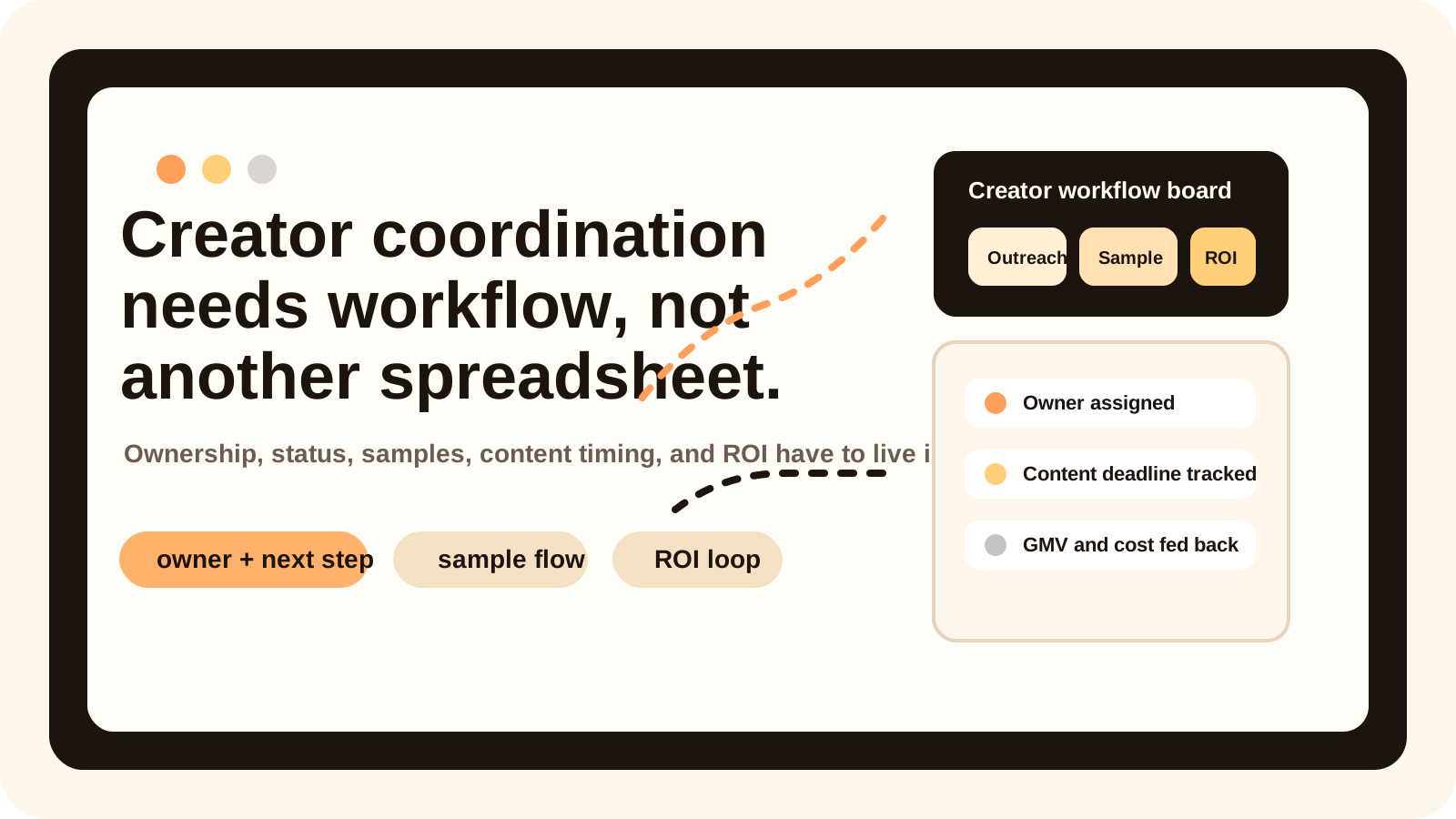
Many creator projects do not stall because the content is impossible. They stall because the payment route, regional account, and finance process were discovered too late. Moving payment into the front of the brief tells marketing when it can commit, finance what it must prepare, and the regional owner what the account can actually support.
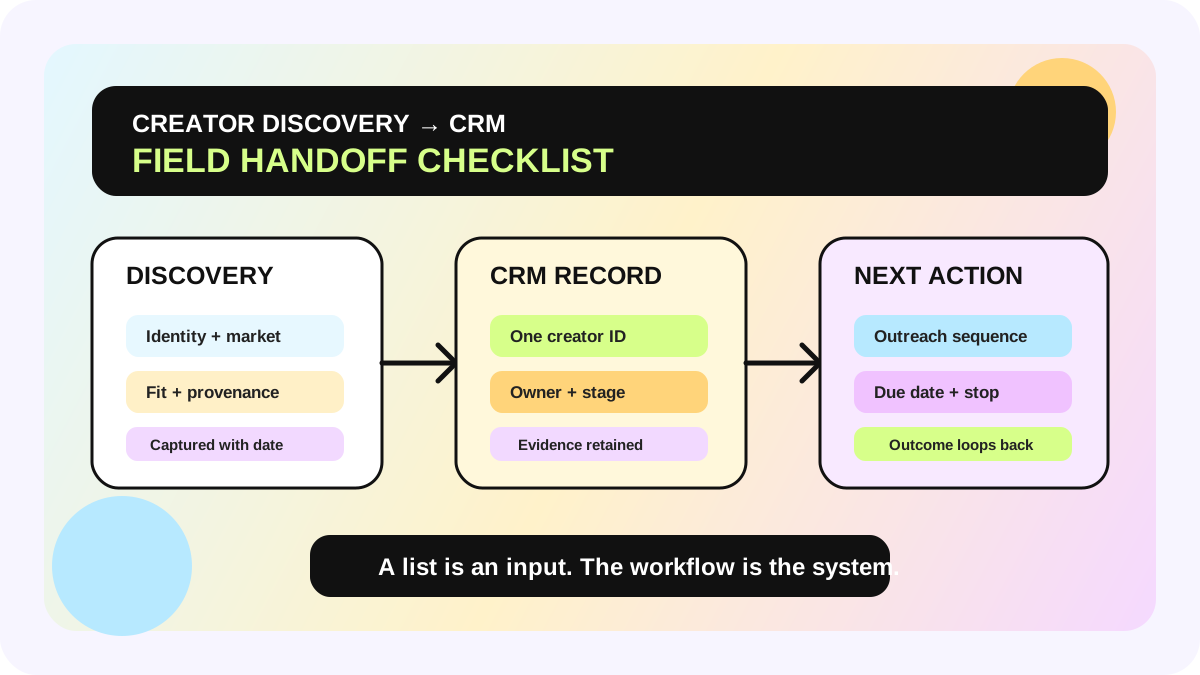
A scalable creator workflow should answer four questions for every order from pricing through delivery: who approved it, who pays it, where the evidence lives, and what state comes next. To map these fields into an existing operating system, talk to allymatic.
FAQ
Is TikTok One Online Payment available for every cross-border collaboration?
No. TikTok says online cross-border payment is available in select regions and is expanding. Unsupported combinations show a message during payment input. Follow the live account and current terms.
Can an invitation link use online price negotiation?
TikTok's Creator Marketing guide says invitation links support offline payment and pricing. Teams that need in-platform offers, counteroffers, and Pay now should evaluate direct invitation or open application.
Does TikTok One mean the payment has no fees at all?
TikTok says its payment service does not charge advertisers or creators a service fee, but payment-provider fees may apply and taxes may be added on the confirmation page. Use the amount shown in the account.
When is an invoice available?
TikTok says invoices are generated per order after the project is complete and the status changes from pending to purchase. They are available under Payment in Account Settings, with details limited to the current region view.
Official Sources
Official Sources
Primary references used for this article.