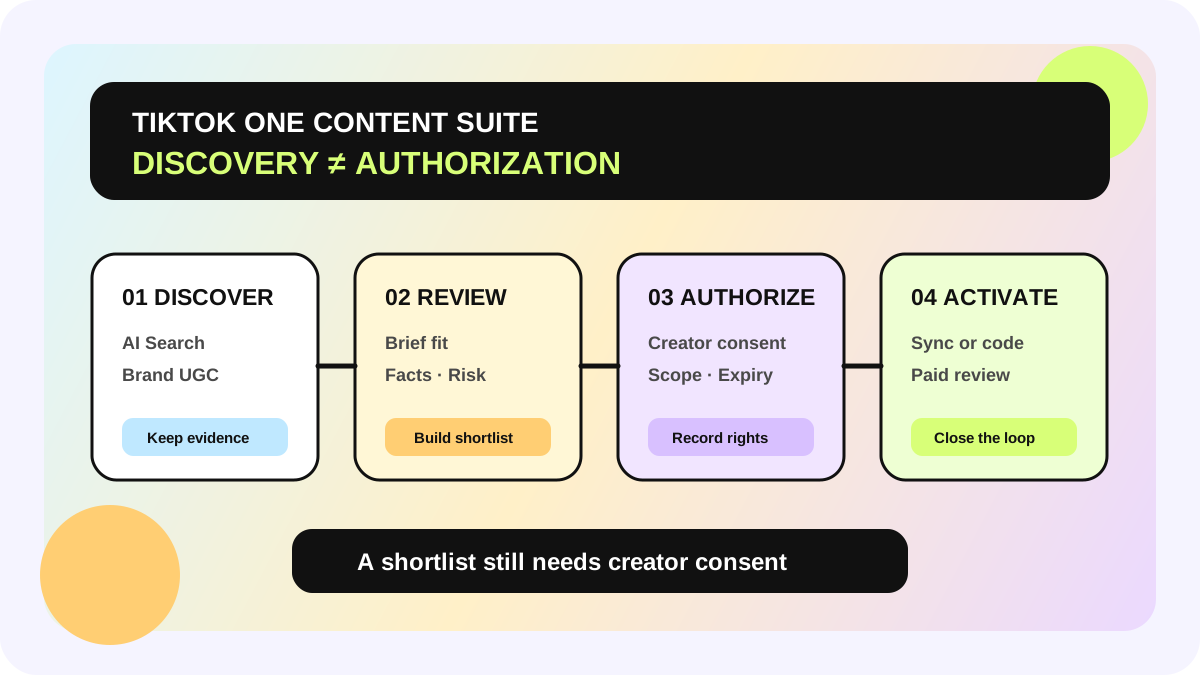
How Should You Use TikTok One Content Suite? Find Brand UGC First, Then Secure Spark Ads Authorization
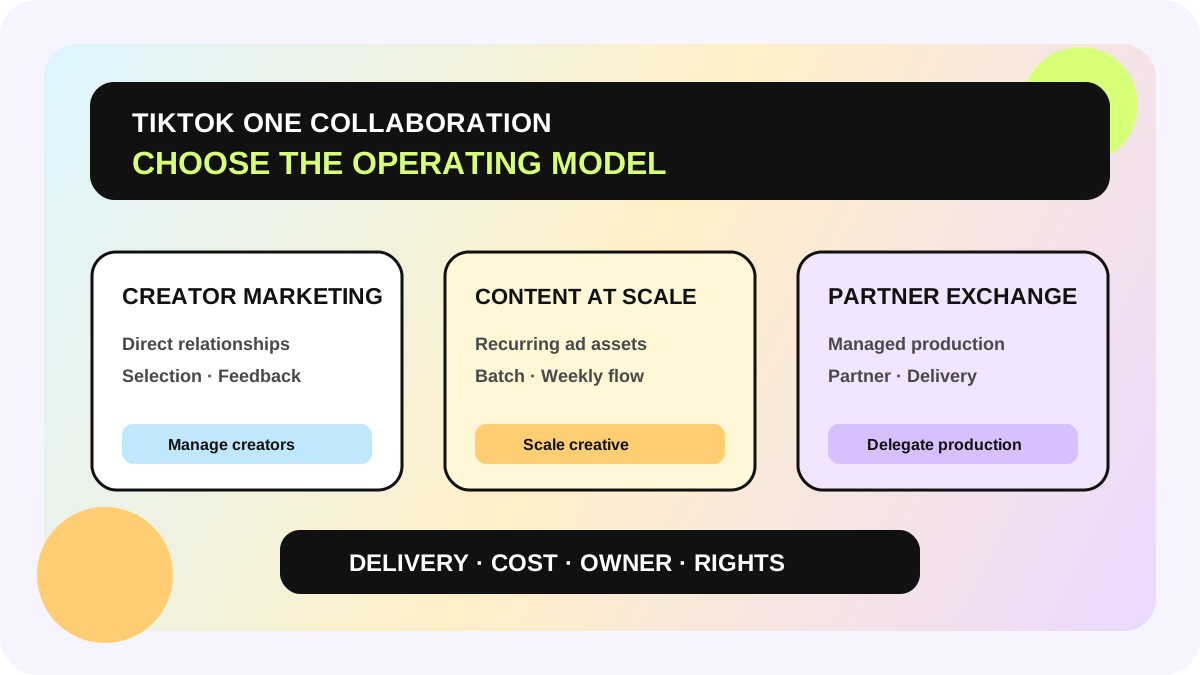
TikTok One Content Suite brings creator videos and UGC that already mention a brand or product into one discovery-to-activation workflow. Teams can use AI Search to screen videos against a campaign brief, audience, tone, or brand guideline, use Projects to continue with structured briefs, use Creators to organize relationships, and request Spark Ads authorization for the content they actually want to activate.
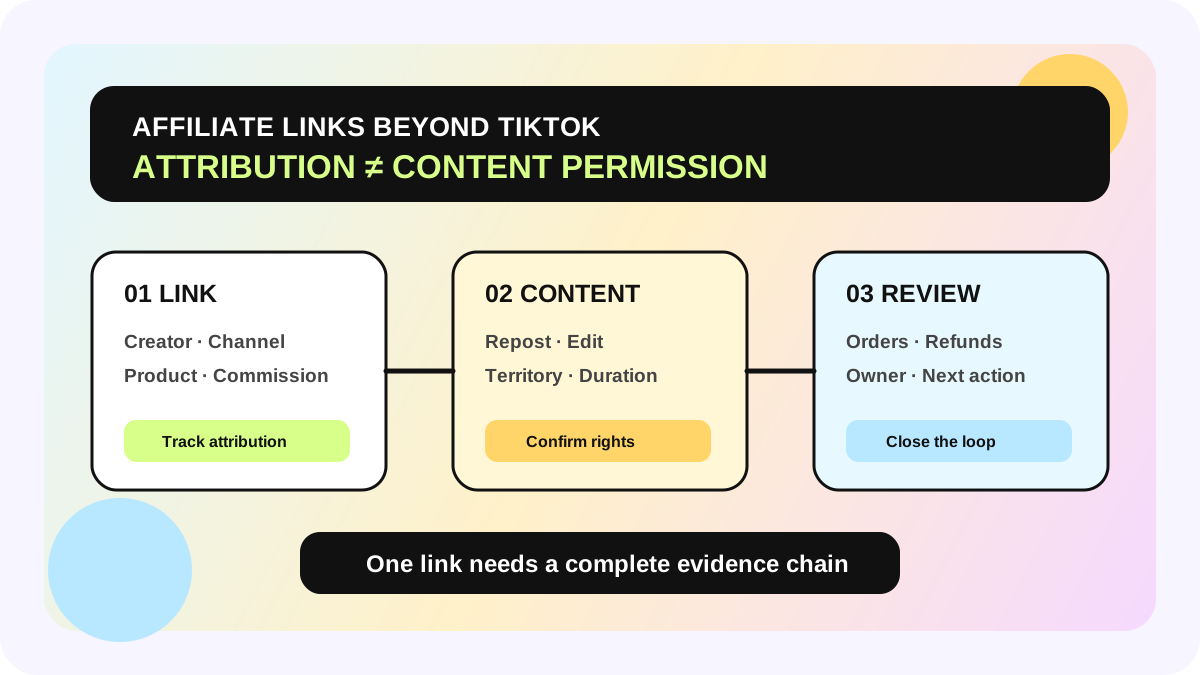
The essential boundary is simple: discovering a video does not grant usage rights, and adding it to a shortlist does not permit downloading, editing, or advertising with it. Content Suite shortens the path from discovery to an authorization request; creator approval remains a separate gate. It suits brands with meaningful existing mentions and recurring creative demand. It is not an automatic rights-acquisition tool, a substitute for human creative review, or a performance guarantee.
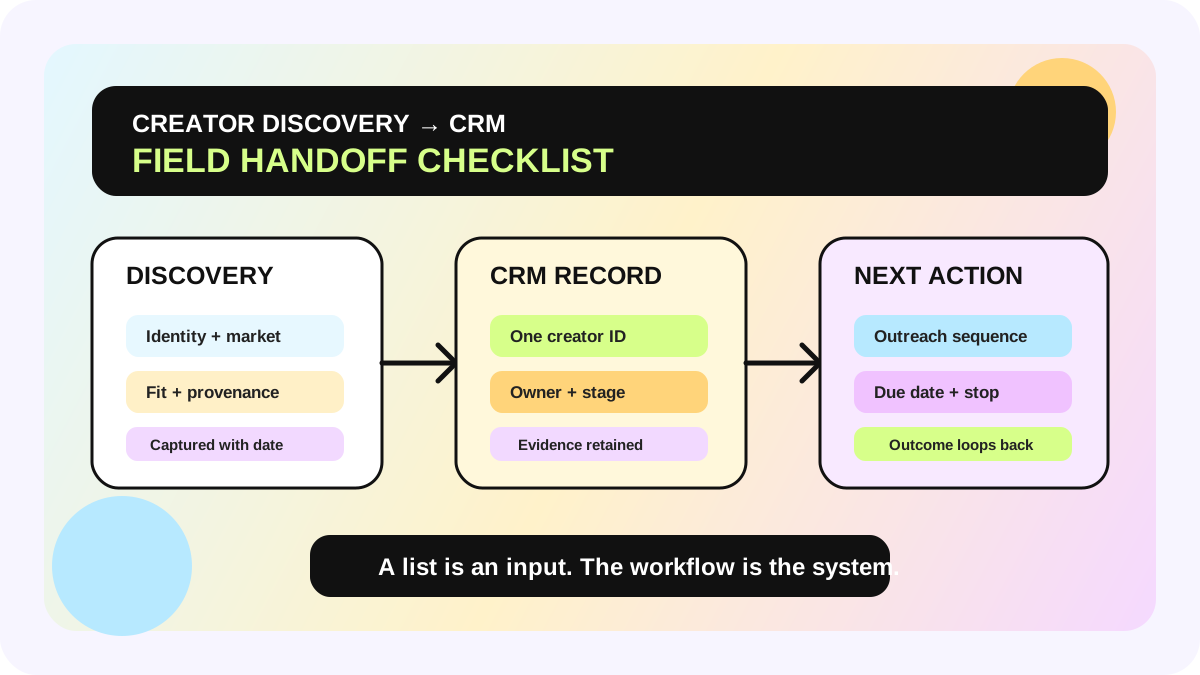
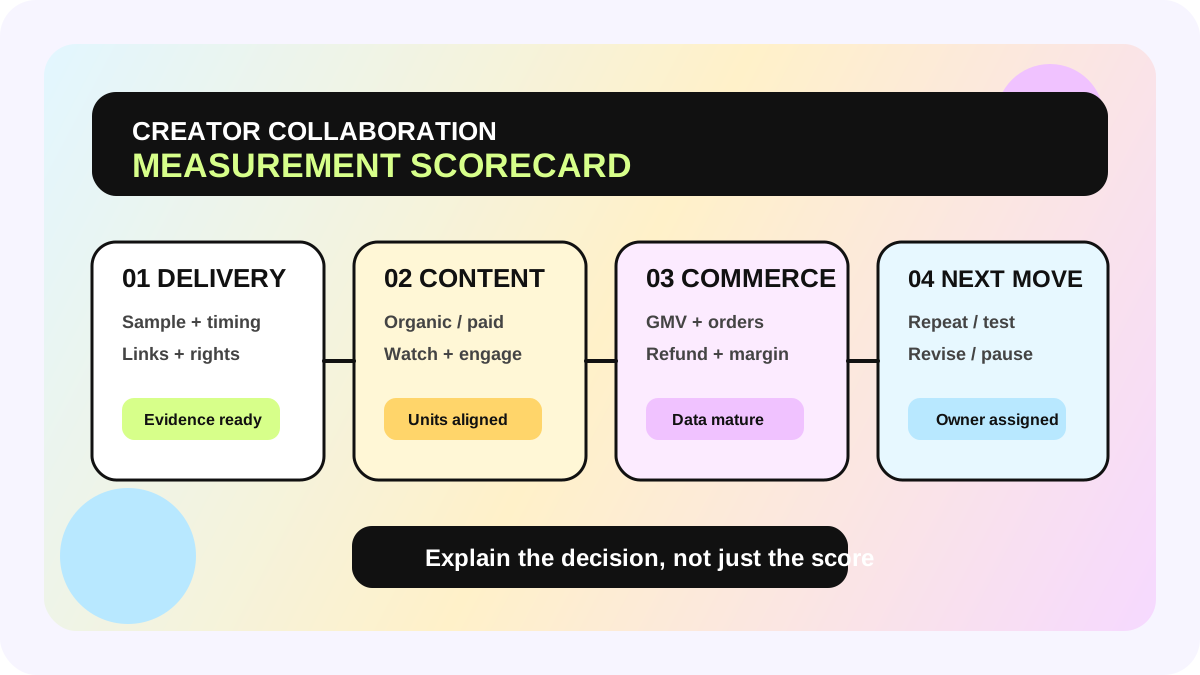
Connect the process to a shared creator marketing management system, a reliable creator discovery-to-CRM handoff, the boundary between affiliate content and ad assets, and a transparent creator collaboration scorecard so that videos, creators, authorization, and next actions do not disappear into separate tools.
Separate four states: discovered, shortlisted, authorized, and activated
| State | What the team can do | What the state does not automatically mean |
|---|---|---|
| Discovered | Review public content surfaced as relevant to the brand | The brand has advertising or off-platform usage rights |
| Shortlisted | Evaluate the video against the brief, audience, tone, performance context, and risk | The video will perform or is ready to launch |
| Authorized | Use the applicable video-level or account-level Spark Ads permission | Unlimited duration, editing, territories, or cross-platform use |
| Activated | Sync authorized content to Ads Manager or use a code to create a Spark Ad | Authorization is permanent or organic results prove ad incrementality |
TikTok says Content Suite identifies relevant public videos through brand names, keywords, account tags, hashtags, voiceover, and on-screen text. It then organizes candidates using signals related to the video, creator, sentiment, organic metrics, historical ad potential, brand safety, creator age, and ad suitability. AI Search can take a prompt, campaign brief, or brand guideline and produce a more focused ranked set.
TikTok also states that Content Suite AI Search is available to select customers and is expanding over time. Projects and Creators should likewise be treated as account-visible capabilities, not proof of universal availability. A product announcement does not establish identical access across markets, accounts, or member permissions.
What the three Content Suite modules actually solve
AI Search: move from brand-keyword hunting to brief-led discovery
A plain keyword search can return many mentions without explaining which video fits a target audience, campaign tone, or creative job. AI Search lets the team express a fuller intent and receive a shortlist that can be reviewed. It reduces manual hunting; it does not replace product fact checks, brand-safety review, or human creative judgment.
Projects: turn existing brand affinity into the next collaboration
Projects helps advertisers brief creators who already post about the brand and organize the path to future campaign content. Its operating value is not mass automation. It is preserving why a creator was selected, what the new content should add, who owns follow-up, the deadline, and delivery state. Pair it with a TikTok One AI search and brief-matching method without creating conflicting project records.
Creators: turn one video discovery into a relationship asset
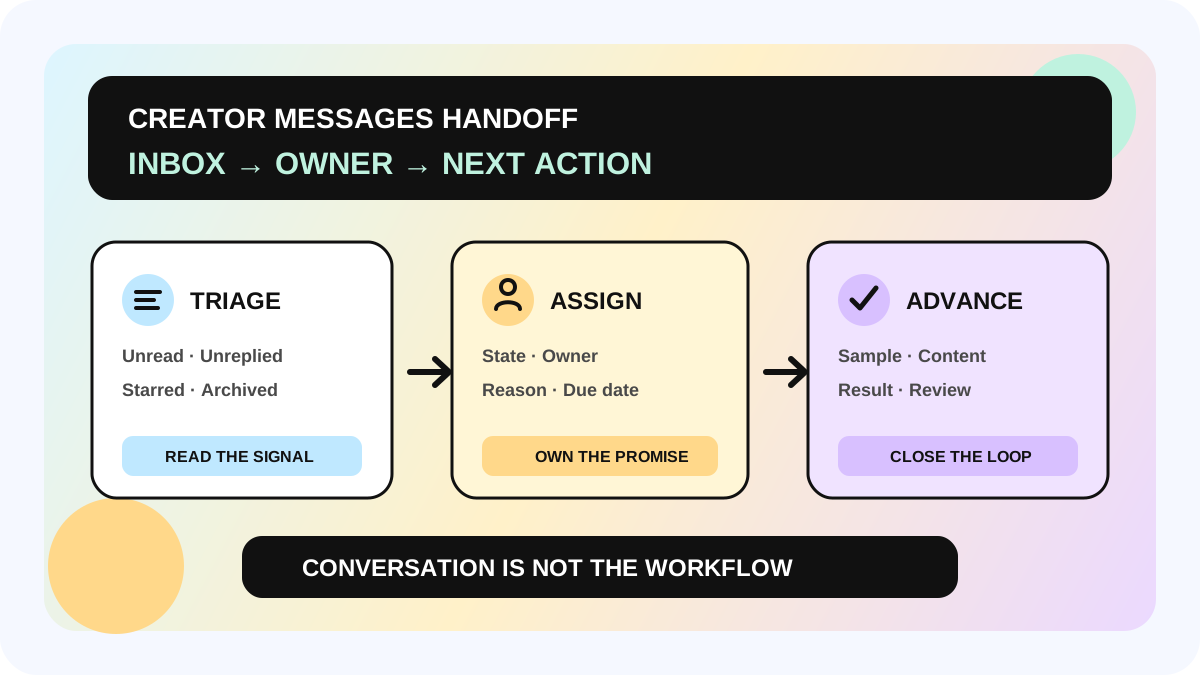
Creators helps a team see people already discussing the brand, locate past collaborators through Spark Ads history, and maintain custom lists such as ambassadors or affiliates. A list is not yet a CRM. Add an owner, collaboration stage, authorization state, content URL, last contact, and next action before it becomes an executable relationship workflow.
When a Content Suite test is worth running
A useful pilot usually starts with a brand that already receives recurring mentions or product UGC, reviews a meaningful volume of creative each week, has a clear Spark Ads path, and assigns handoffs among creative, creator, media, and legal or compliance owners.
Do not scale yet if there is almost no relevant content, the team has not defined what “launchable” means, the goal is to download assets for off-platform reuse, nobody owns authorization expiry, or predicted performance is being treated as guaranteed results. TikTok explicitly says past performance does not guarantee future performance; campaign evidence must close the loop.
From AI Search to Spark Ads: a seven-step workflow
1. Write a search job, not just a brand name
Include the campaign goal, audience, product or usage scene, desired tone, required claims, prohibited language, and content date range. Replace “find 20 good videos” with a reviewable request such as “find new-customer education videos that naturally demonstrate the problem without exaggerated outcome claims.”
2. Preserve discovery evidence for every candidate
Keep the video URL, creator, discovery date, search prompt, matched brand or product, organic observation window, content language, market clues, and shortlist rationale. A downloaded file or screenshot alone loses provenance and makes duplicate processing harder to detect.
3. Apply three human gates before shortlisting
First, verify brand and product facts. Second, test audience, use case, tone, and campaign fit. Third, review risk signals such as creator eligibility, sensitive claims, competitor presence, music, and third-party material. Platform filtering removes noise but cannot know every product promise or market requirement.
4. Choose between authorizing the existing post and creating a new Project
If the existing video already delivers the intended message, request authorization for that post. If it has the right direction but lacks a required fact, specification, or CTA, use Projects to send a clearer brief for new content. Do not use authorization as a shortcut for forcing edits into an organic post that should remain intact.
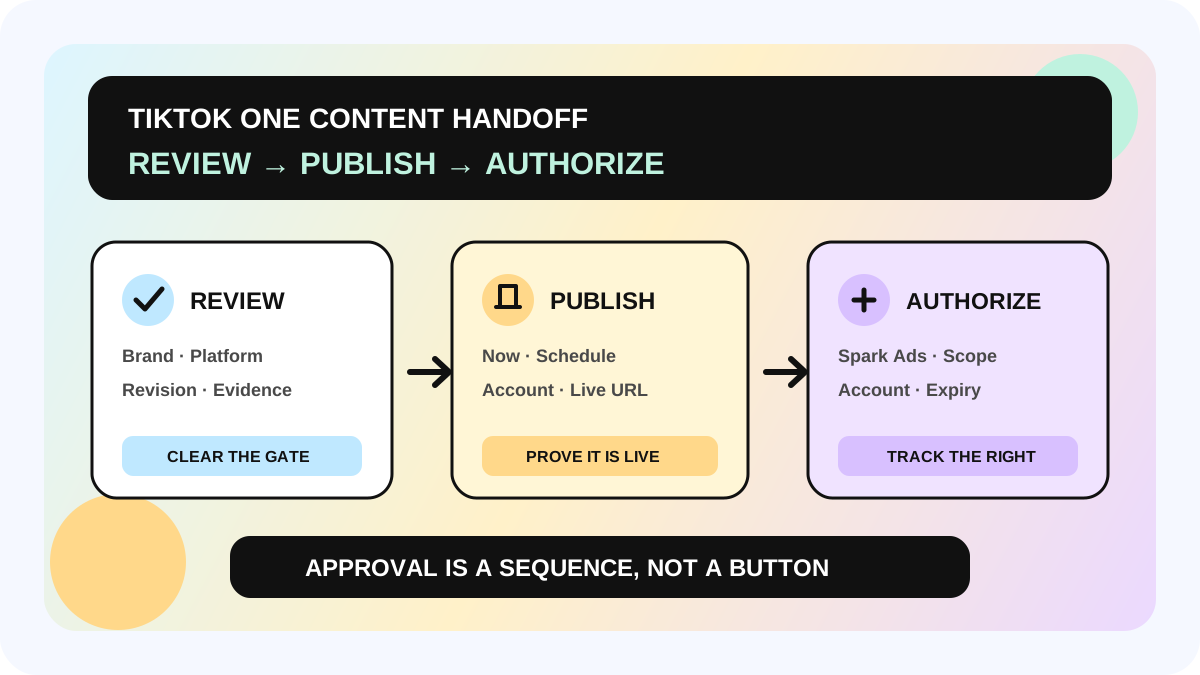
5. Manage authorization as its own object
TikTok's guidance distinguishes video-level and account-level authorization requests. Creator guidance describes a 365-day video-level authorization scenario, while account-level access continues until the creator turns it off; the live invitation is the final source for scope and duration. Record authorization type, requested time, accepted time, expiry, ad account, usage state, and revoke or renewal action.
6. Sync only authorized content and retain the activation path
Authorized videos can be synced into the TikTok Ads Manager Creative Library or used through a Spark Ads code. TikTok's operating guide notes that auto-sync is not enabled by default for Content Suite inside TikTok One. Record whether the team used manual sync, auto-sync, or a code and verify the destination ad account.
7. Review organic performance, paid performance, and relationship value separately
Organic views and engagement describe how the content originally met its audience. Paid results reflect budget, targeting, and campaign configuration. Creator relationship value also includes communication, response time, authorization stability, and willingness to collaborate again. Do not compress these into an opaque score. End with a specific action: continue, change audience, renew authorization, issue a new brief, or stop.
A minimum operating record
Each actionable record should include `video URL`, `creator ID`, `discovered at`, `search prompt`, `shortlist reason`, `fact/risk review`, `project ID`, `authorization type`, `authorization expiry`, `ad account`, `activation status`, `owner`, and `next action`.
If the brand also wants to repost off-platform, edit source files, use the video on a product page, or run it through another advertising platform, track the relevant agreement and scope separately. Spark Ads authorization answers a TikTok advertising use case; operations should not silently expand it into a broader legal license. Refer questions about rights to qualified advisers in the applicable market.
Pre-launch checklist
- [ ] The live account shows Content Suite and AI Search access has been verified
- [ ] The search job includes goal, audience, use case, tone, and exclusions
- [ ] Every candidate preserves URL, creator, prompt, date, and shortlist rationale
- [ ] Humans review product facts, campaign fit, and risk rather than trusting rank alone
- [ ] The team explicitly chooses existing-post authorization or a new Project brief
- [ ] Authorization type, scope, expiry, ad account, and revocation state are separate fields
- [ ] Only authorized content is synced or activated with a Spark Ads code
- [ ] Organic, paid, and creator-relationship evidence are reviewed separately
- [ ] Every record has an owner, next action, and review date
The allymatic view: UGC is abundant; an auditable discovery-to-authorization chain is scarce
Many brands already have a large pool of relevant videos. The real bottleneck is that discovery, judgment, outreach, authorization, and media activation live in different systems. Content Suite shortens that distance, while the operating system must still answer why a video was selected, who reviewed it, what the creator authorized, when it expires, where it was activated, and how results return to the relationship record.
Start with one campaign, 20–30 candidates, and five to eight authorization requests over two weeks. Validate shortlist quality, creator response, and sync accuracy before expanding. Once the fields and ownership are stable, connect Projects, Creators, authorization expiry, and paid review in allymatic instead of optimizing for the largest possible scraped library.
FAQ
Can a brand advertise with UGC as soon as Content Suite discovers it?
No. TikTok's documented flow is discovery and review, followed by a creator authorization request. The team can sync or activate the post only after receiving the applicable Spark Ads authorization.
Does every TikTok One account have Content Suite AI Search?
TikTok says AI Search is being made available to select customers and is expanding over time. Access may differ by market, account, permission, and rollout stage, so verify the controls in the live TikTok One or Ads Manager account.
What is the operational difference between video-level and account-level authorization?
Video-level permission applies to a particular post and defined duration, which supports tighter control. Account-level authorization covers a broader set and may continue until the creator disables it. In either case, record scope, duration, destination ad account, and revocation state rather than inferring unlimited rights.
Official Sources
Official Sources
Primary references used for this article.