Stop Looking Only at Creator Commission: The Real TikTok Shop US Cost Floor Is Rising
For a long time, many TikTok Shop teams evaluated creator affiliate with only two numbers in mind: the commission rate offered to creators and the number of samples they were willing to ship. If both looked acceptable, the team moved into outreach, follow-up, posting, and scaling.
That logic is becoming less reliable in June 2026.
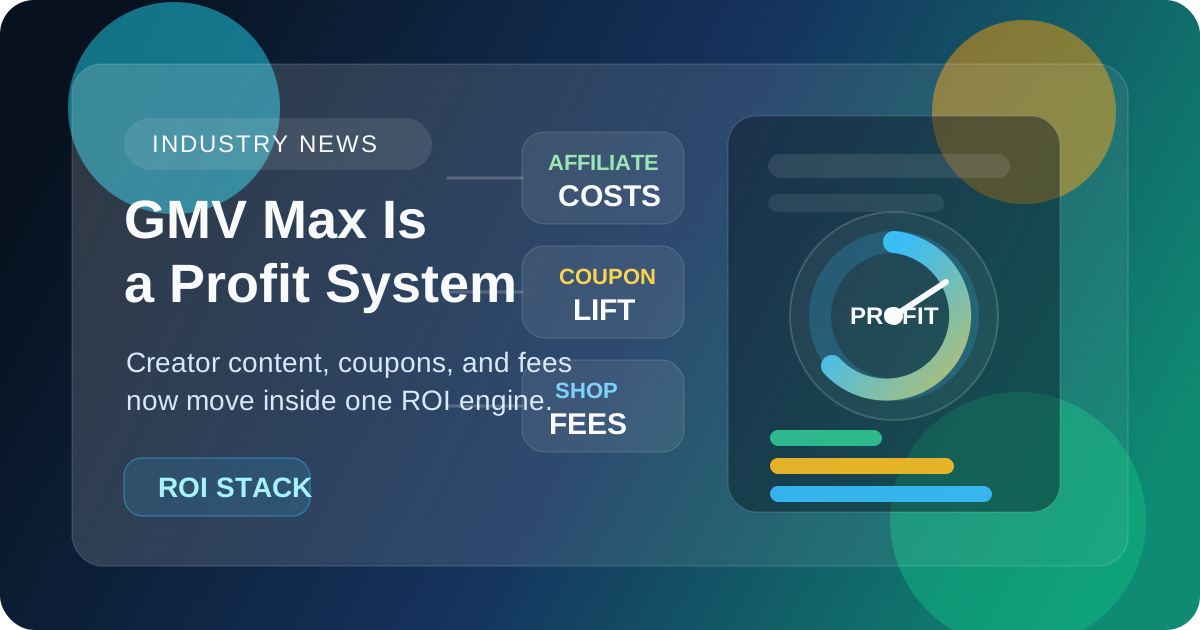
Several US-market signals now point in the same direction: the real TikTok Shop cost floor is moving upward. Platform commission rules are back in focus, return-cost responsibility is changing, and official guidance still treats affiliate commission as a variable that should evolve with GMV and operating stage. For brand teams, the key question is no longer only whether creators are willing to work with you. It is whether the collaboration still leaves enough contribution margin after the platform's newer cost structure takes effect.
Why cost should be modeled before scale
Many teams still treat creator affiliate as a top-of-funnel growth action. They use samples and commissions to generate content first, then decide later whether to scale based on visible orders. That can work in looser conditions, but it becomes risky when platform fees, return costs, and fulfillment economics become harder to ignore.
First, platform commission is no longer a footnote. Recent US fee guidance being resurfaced again is a reminder that the platform deduction happens on the settlement logic of completed orders, not on a simplistic sticker-price view. Once discounts, refunds, taxes, and shipping-related adjustments enter the calculation, margin estimates based only on selling price minus creator commission become misleading very quickly.
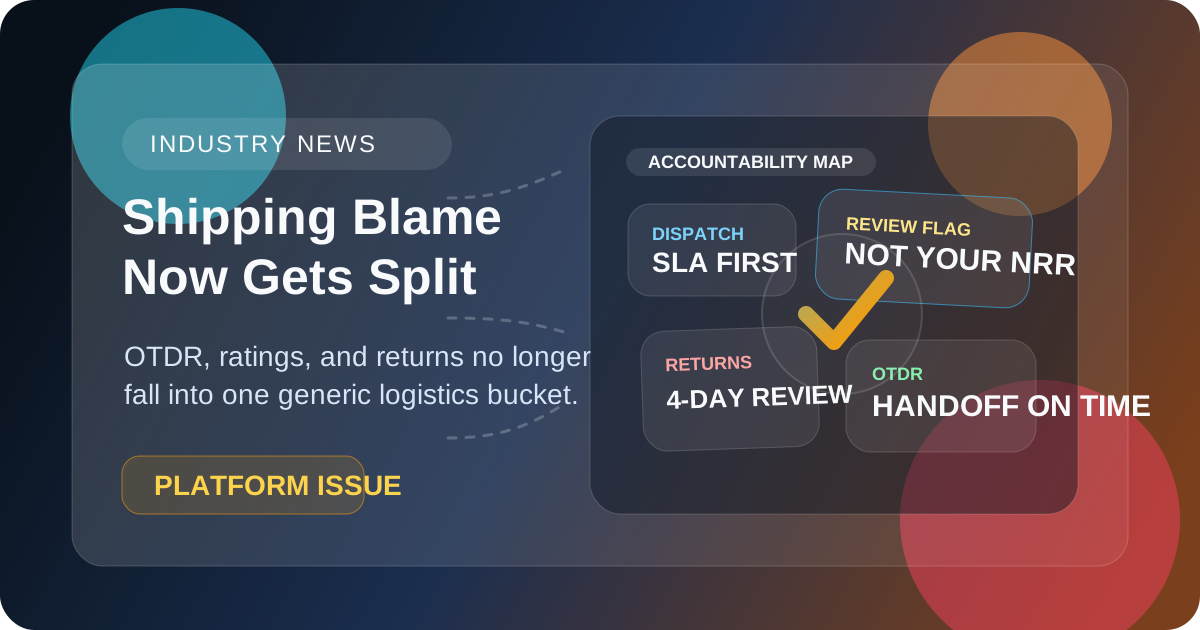
Second, return-cost responsibility now matters much more to creator ROI. Recent industry coverage around US buyer-return shipping changes suggests that lower-ticket products can lose profit much faster in a sell-first, return-later pattern. For teams running dense sample programs and heavy creator seeding, that is not only a customer-service issue. It changes how front-end creator collaboration should be designed.
Third, affiliate commission itself cannot stay as one static number across every product and every stage. TikTok's own best-practice guidance still points new shops toward stronger initial commissions, then recommends gradually lowering them as GMV grows. That makes commission an operating lever, not a permanent default. Once platform commission, return-cost sensitivity, and variable affiliate payouts all stack together, brands need a more disciplined margin model.
The unit of analysis has to change
From the allymatic perspective, the most important adjustment is not another approval step or another outreach template. It is changing the unit of analysis from a creator's quoted rate to a SKU's contribution-margin range.
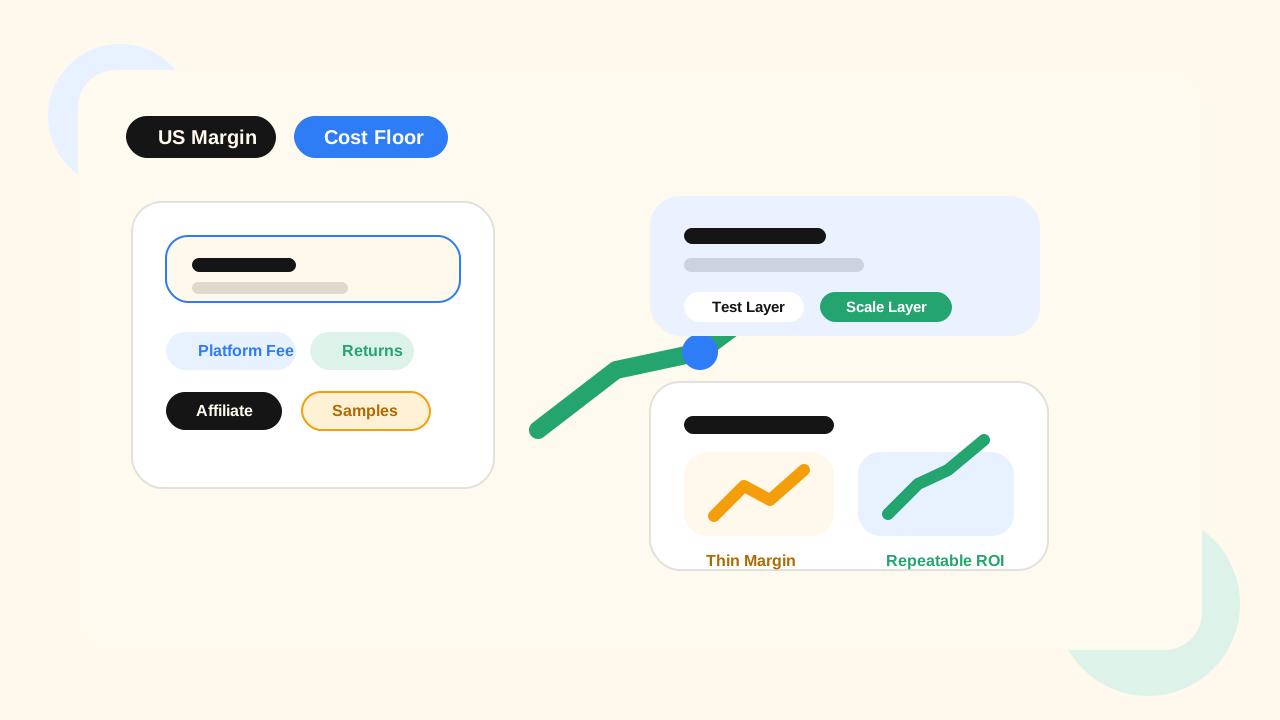
Before a team expands creator collaboration on a product, it should at least estimate four things:
- the realistic post-discount revenue that will actually settle,
- the share likely to be consumed by platform commission, transaction fees, and expected returns,
- the room left after samples, incentives, and affiliate payout,
- and whether the SKU is suitable for testing, controlled scaling, or only small-batch content validation.
Without that groundwork, the common result is familiar: GMV rises on the dashboard, but the team becomes less confident about increasing budget because margin boundaries keep moving in the postmortem. It looks like a creator-efficiency problem, but it is often a product and cost-model problem.
A better three-layer operating model
If a team still wants to grow aggressively in TikTok Shop US, a more resilient way is to separate products and creator actions into three layers.
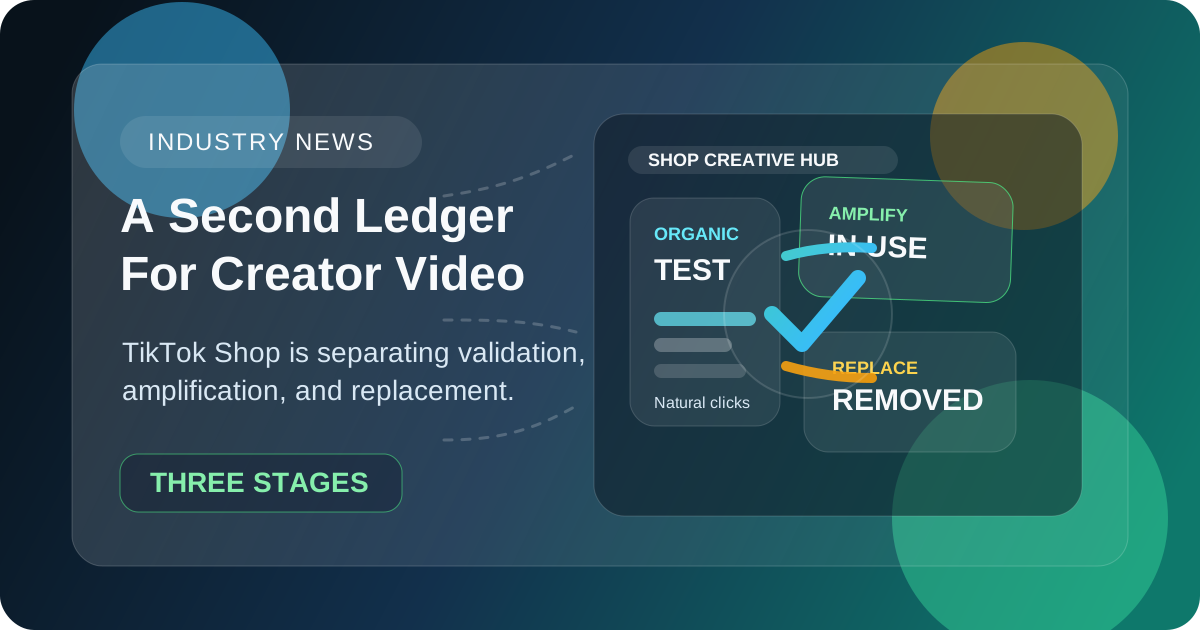
The first layer is the testing layer. The goal here is to validate content expression and click response. Higher sample cost can be tolerated in this layer, but broad seeding of low-margin SKUs is dangerous. The real question is whether the product survives both creator storytelling and return pressure.
The second layer is the efficiency layer. Only products that have already shown stable order potential should move here. This is where creator segmentation and commission discipline matter most. The question is no longer whether a creator can post. The question is which creator groups can still preserve enough contribution margin under the current fee structure.
The third layer is the scale layer. Only when product margin, return behavior, content conversion, and creator reliability are already reasonably visible should teams stack on heavier paid amplification or denser sample distribution. Otherwise, it becomes easy to create high GMV and weak profit at the same time.
This three-layer approach is not about being conservative. It is about putting samples, commission, and assortment decisions inside the same operating framework. Many teams still decide how many samples to send before deciding which SKUs can actually carry that cost curve. The more sustainable sequence is the opposite: decide which SKUs deserve that cost curve first, then work backward into sample density, commission bands, and creator types.
The broader signal for brands
The US TikTok Shop shift does not mean creator affiliate is becoming less valuable. It means stronger teams will have to connect platform fees, return responsibility, and content cost much earlier in the same operating equation.
As the market matures, rough volume-first scaling becomes a more expensive illusion. The combinations worth truly scaling are the ones that can still leave margin and support repeatable reinvestment under the newer cost structure.
For TikTok Shop teams heading into the second half of 2026, that may matter more than simply finding another batch of creators.