Creator Volume Is No Longer the Point: TikTok Shop Is Rebuilding Collaboration Around Eligibility First, Samples Second
If your team still treats TikTok Shop creator collaboration as a volume game where the goal is to send more invites, ship more samples, and widen the pool as quickly as possible, the latest official updates suggest that this operating logic is becoming outdated.
On June 10, 2026, TikTok Shop refreshed its sample guidance. Around June 11, 2026, it also surfaced an updated Creator Eligibility Policy. Read together, these updates point in the same direction: creator collaboration is moving away from an open-entry model and toward a gated system in which eligibility, pilot-stage limits, and execution history determine who gets access to better products, more samples, and higher-value cooperation.
That matters because this is not a cosmetic policy change. It directly affects how brands should classify creators, how they should think about sampling budgets, and how they should decide which relationships deserve deeper follow-up.
TikTok is tightening the collaboration entry point before it expands the collaboration pool
The first shift is in creator eligibility.
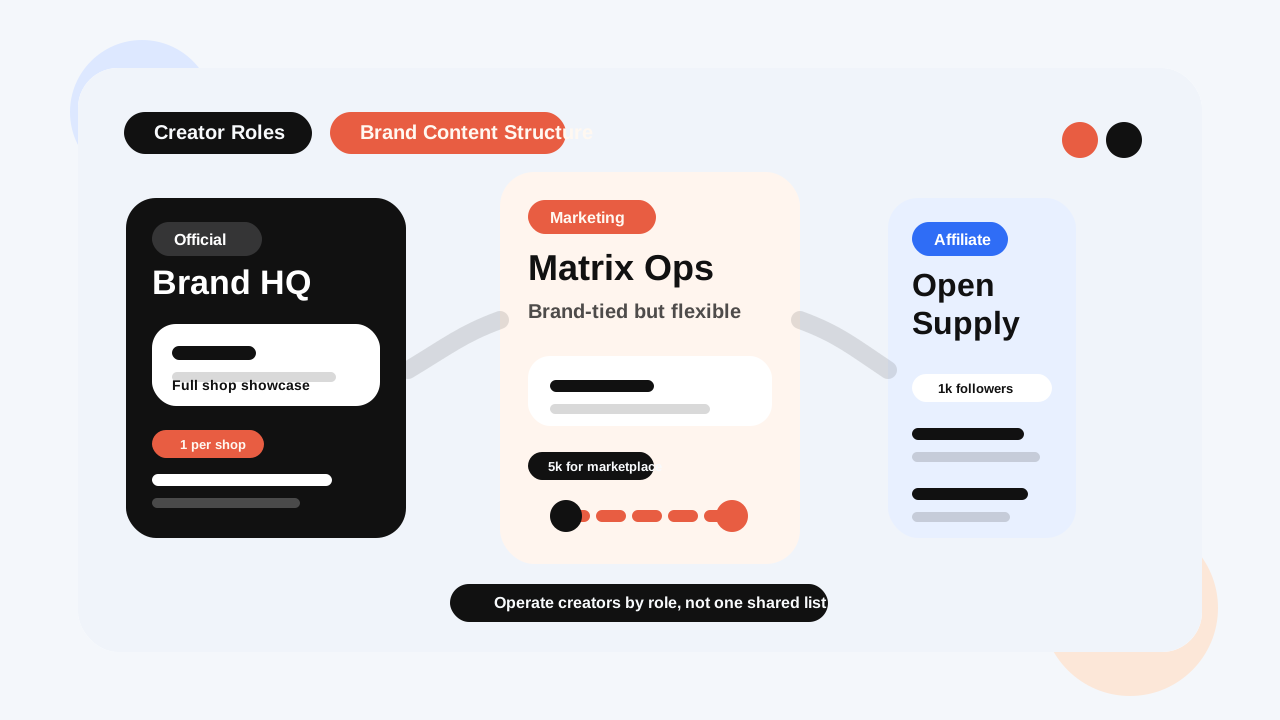
TikTok Shop now draws clearer distinctions between Official Shop Creators, Marketing Creators, and Affiliate Creators. These are not just labels. They imply different access routes, different commerce permissions, and different scaling paths.
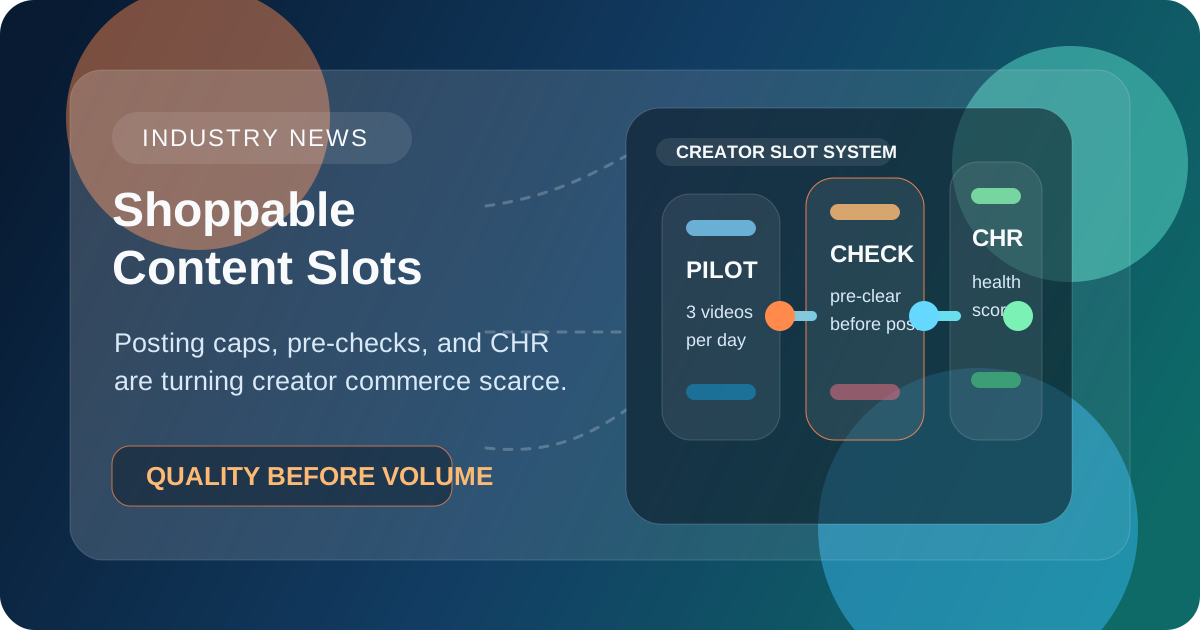
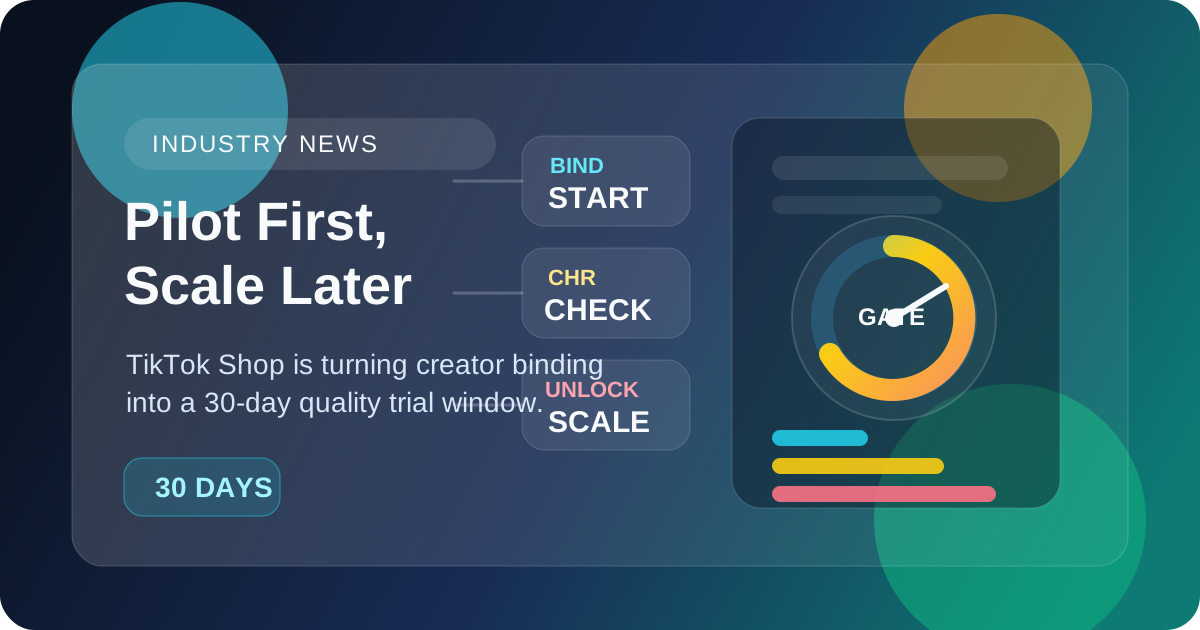
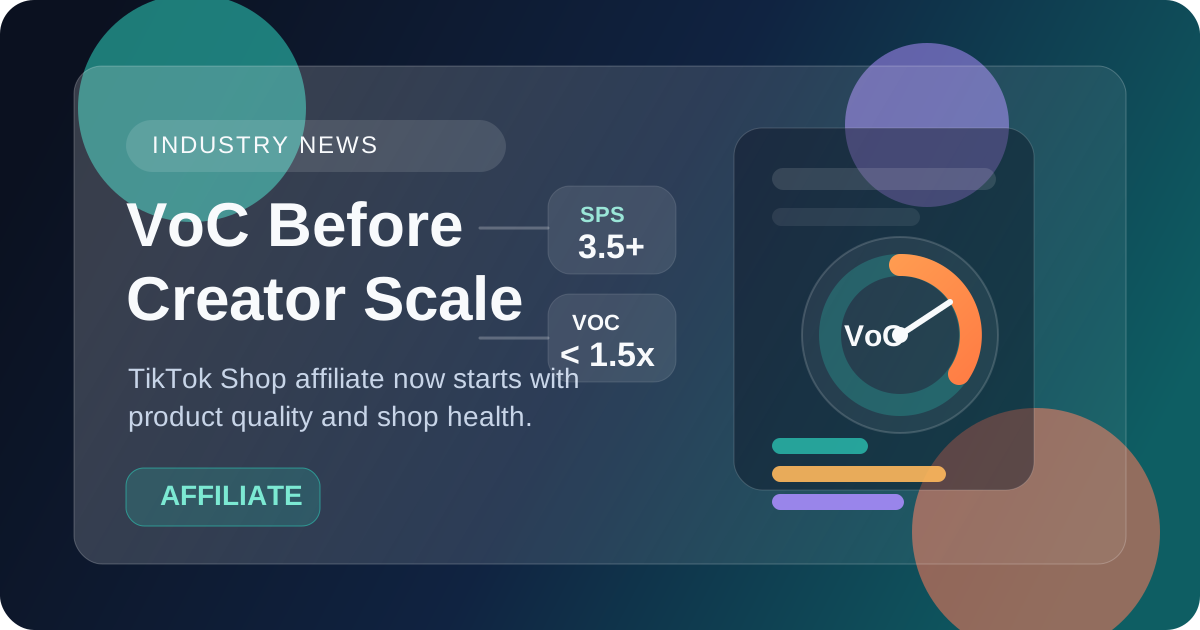
The most important update for brand teams is the structure around Affiliate Creators. According to the latest eligibility policy, creators with fewer than 5,000 followers are automatically enrolled in at least a 30-day Pilot Program after verification. During that period, they can only promote products from shops with a Shop Performance Score of 95% or higher, they are limited in how many shoppable videos and LIVEs they can publish, and they are not eligible to join campaigns.
If TikTok designates an account as an Extended Pilot Creator, the restrictions become even tighter.
This means TikTok is no longer treating early-stage creator supply as a wide-open lane. It is explicitly controlling which products lower-maturity creators can access, how much shoppable content they can post, and whether they can enter more valuable collaboration formats.
For sellers, the takeaway is simple: a large creator pool is no longer the same thing as a usable creator pool. A creator may technically be able to promote products, but still be far from campaign-ready, still be limited in product access, and still be unsuitable for higher-priority inventory or launch moments.
Samples are no longer just perks. They are becoming an execution filter
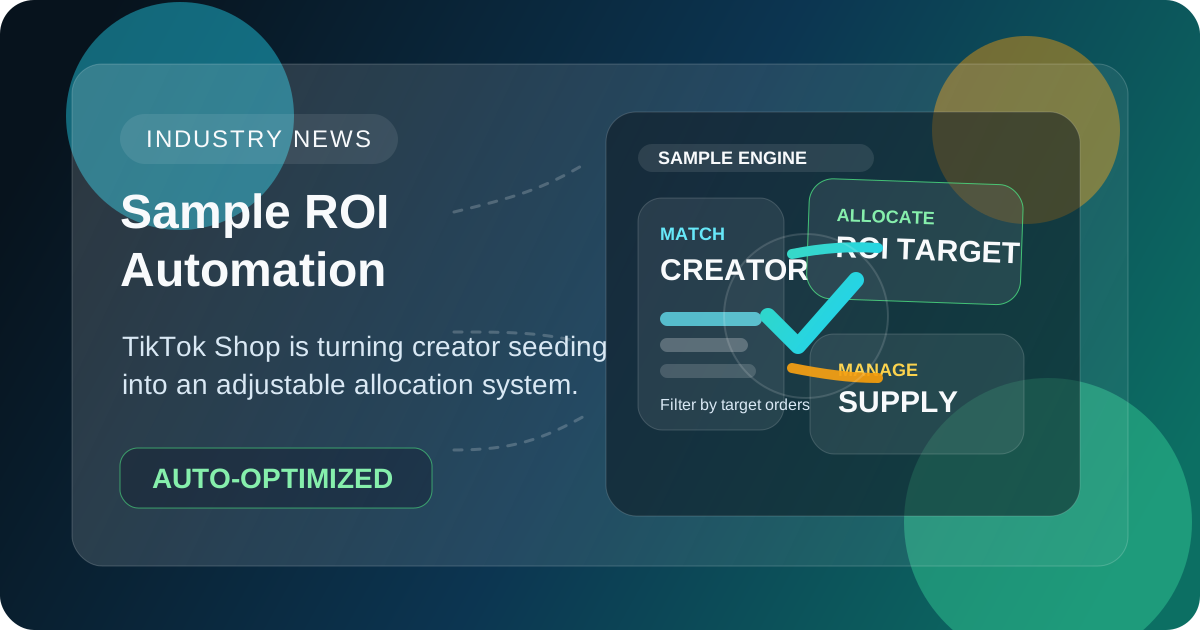
The second shift is even more practical: samples are being turned into a trust and execution mechanism.
TikTok Shop's June 10 sample guide makes the difference between Free Samples and Refundable Samples much more explicit. On the surface, this looks like a help-center clarification. In practice, it reshapes how brands should read creator readiness.
TikTok is now steering creators through two different sample paths:
- Creators who are eligible but have not yet earned stronger trust can use Refundable Samples. They buy the product first, create content, and get refunded automatically if they meet the seller's stated sales target.
- Creators who have generated TikTok Shop sales within the last 120 days are better positioned to access Free Samples, which means requesting products directly from sellers without paying upfront.
This is a meaningful structural signal. TikTok is turning samples from a generic collaboration benefit into a form of supply qualification. Creators without recent sales are not excluded from collaboration, but the platform is clearly nudging them toward a lower-trust, prove-it-first path instead of direct free-sample consumption.
The guide also hardens the rules around sample volume and sample obligations.
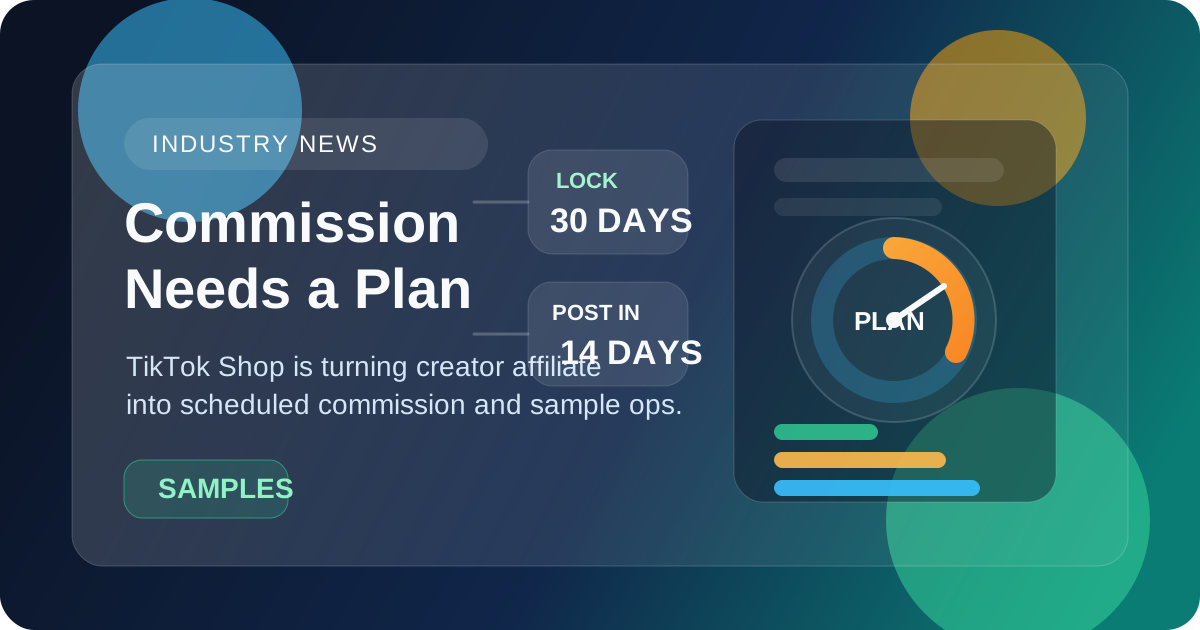
The number of active free-sample requests a creator can hold at once now scales with monthly GMV: up to 5 active requests below $5,000 monthly GMV, up to 20 between $5,000 and $150,000, and up to 50 above $150,000. After receiving a sample, creators are required to post a public video within 14 days or complete a shoppable TikTok LIVE of at least 10 minutes with the product link attached. Repeated misses can reduce future sample opportunities or remove access entirely.
That is no longer the old logic of "ship it out and see if they post." Samples are being managed as a quota-based, time-bound, execution-enforced operating layer.
Put together, these rules shift affiliate supply from a quantity pool to a quality pool
The real significance appears when the eligibility rules and sample rules are read together.
TikTok Shop is gradually compressing one of affiliate marketing's oldest distortions: the difference between apparent creator volume and real executable creator supply. Many teams can generate long creator lists, plenty of sample requests, and a decent number of positive replies. But the share of creators who actually receive the product, publish on time, stay compliant, and continue generating orders is often much smaller than the top-of-funnel activity suggests.
TikTok's new structure is clearly aimed at reducing that gap.
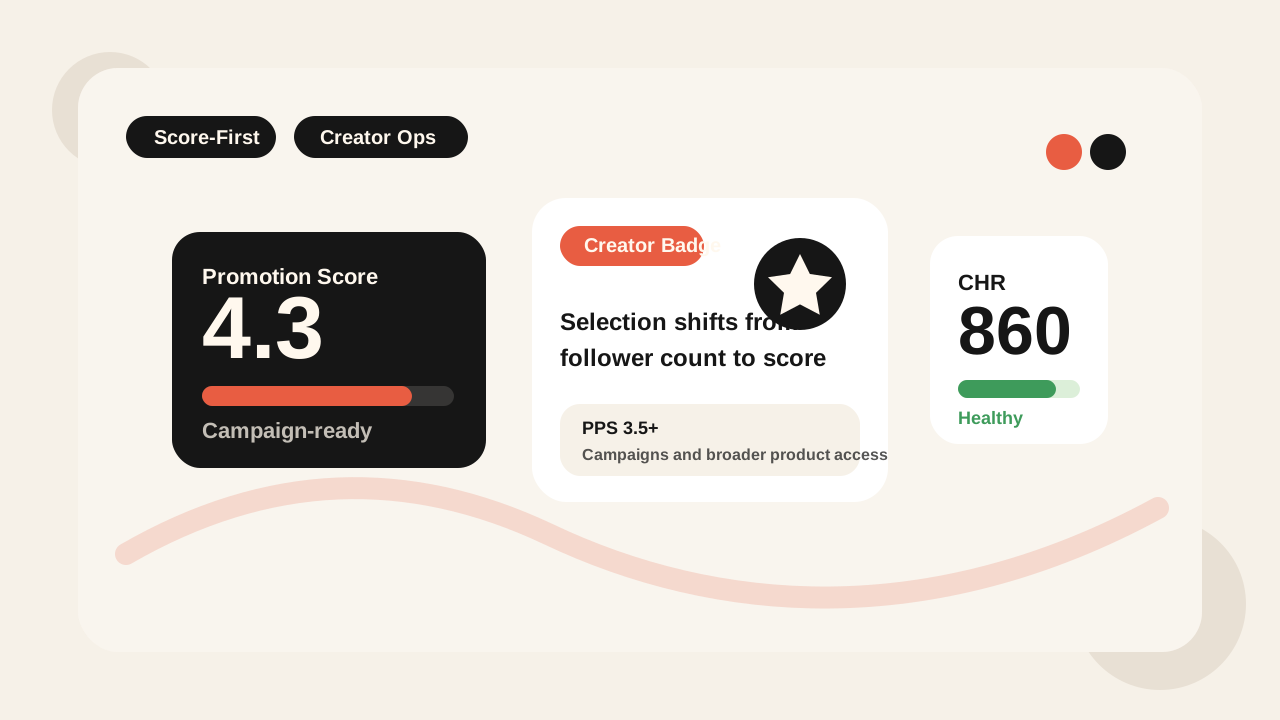
New creators must pass eligibility checks and operate inside pilot-stage limits. Sample access is increasingly tied to recent selling history, monthly GMV, and posting obligations. Higher-value campaign participation is reserved for creators with better health, better performance, and more mature operating signals.
In other words, the platform is not only asking who is willing to collaborate. It is screening for who is more likely to complete the collaboration and produce sellable outcomes.
For brands, this means the real management unit is no longer just the creator list. It is creator status.
At minimum, teams should think in three layers:
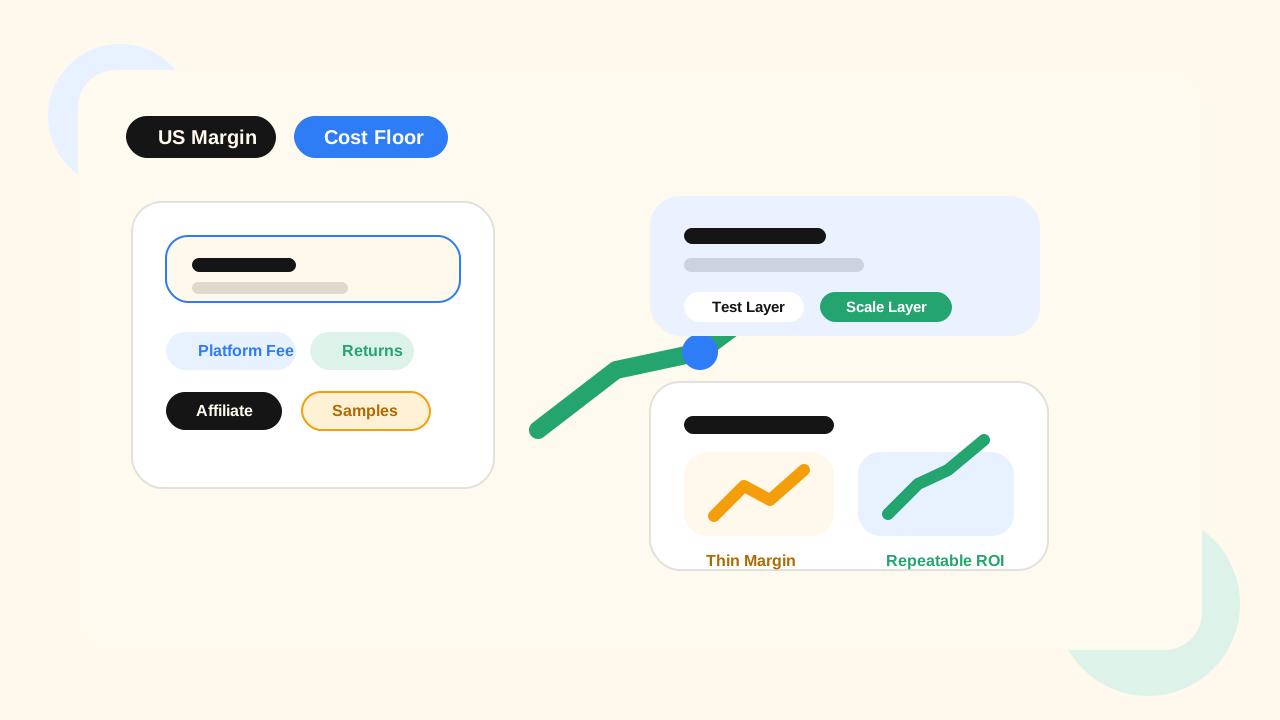
- Pilot-stage creators: accessible for testing, but not suitable for the same rhythm or inventory strategy as mature creators.
- Sample-execution creators: people who have shown they can receive products, publish on time, and complete baseline obligations.
- Scale-ready creators: suitable for campaigns, priority commissions, launch moments, and more valuable product allocation.
If these layers are still mixed together operationally, teams will continue to overestimate how much usable creator supply they actually have.
The next competitive edge is not more outreach. It is better creator-state management
From the allymatic perspective, the key shift is not that TikTok added a few more rules. It is that TikTok Shop is turning creator collaboration into a more executable supply system.
That change pushes brands to become more precise.
They can no longer treat every new creator as the same kind of partner. They can no longer assume that free sampling should be the default starting move. They can no longer evaluate a creator only by responsiveness without also considering qualification stage, recent selling history, and sample-fulfillment reliability. And they can no longer rely on chats and personal memory once a sample is sent out. Sample requests, approvals, delivery, the 14-day posting window, content recovery, and scale-up decisions now need to live in one connected workflow.
The teams that gain the most from this shift will probably not be the ones sending the most messages. They will be the ones that first unify creator eligibility, sample cost, fulfillment timing, and scale decisions into a single operating system.
TikTok is already helping the market do the filtering. The next job for brands is to stop collecting more names than they can interpret and start identifying sooner which creators are actually ready for the next level of collaboration.